Every line stops at 300x, so the clock decides the round
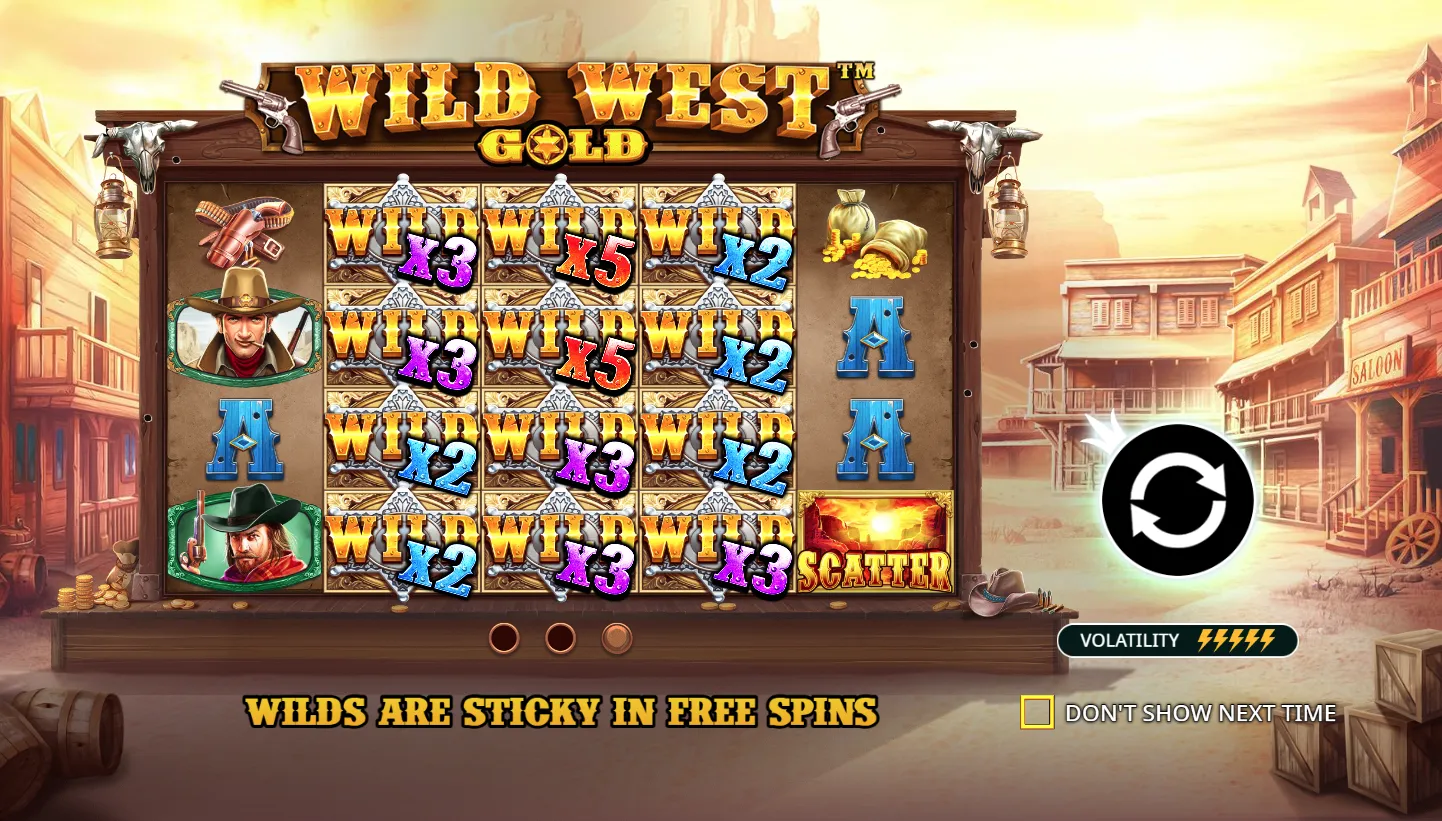
Wild West Gold takes the loop The Dog House is built on, multiplier wilds confined to the middle three reels that lock in place for the whole free spins round, and spreads it over 40 lines on a 5x4 grid. My reading of its maths comes down to one point. The rules put a hard ceiling on what a single line can pay, so the size of a wild matters less than the number of spins it stays on the board, and everything outside that clock, the base game and the buy button included, is worth only what it feeds into it. That makes a sound engine for one feature and a thin frame for a whole game.
The ceiling is simple to derive. The best symbol pays 20x the total bet for five on a line. A line crosses reels 2, 3 and 4 once each, wilds land on those reels and nowhere else, and the largest wild is 5x, so the most any line can hold from wilds is 15x. Twenty times fifteen is 300x, and that is the most a line pays in the base game, in free spins and in a bought round alike. A three-of-a-kind covers only two of the wild reels, so it tops out at 10x, and the best one pays 15x.
The reel layout adds two constraints. Pays start on reel 1 and a wild never lands there, so a wild can only extend and multiply a line that a regular symbol has already begun. Reel 5 cannot hold a wild either, so five of a kind needs the same regular symbol at both ends of the line. A middle section full of locked 5x wilds can pay no more than four of a kind on a line whose outer symbols differ, and four of the best symbol at 15x is 75x.
The loop is a reused one rather than this game's invention. The Megaways follow-up keeps multiplier wilds at the centre of its free spins, and The Dog House Megaways offers a locked-wild round as one of its options, so this is a shared template and what I am judging is the execution. The overlay retrigger lengthens the loop here rather than adding a second idea to it.
The base game forgets its wilds, which makes it filler
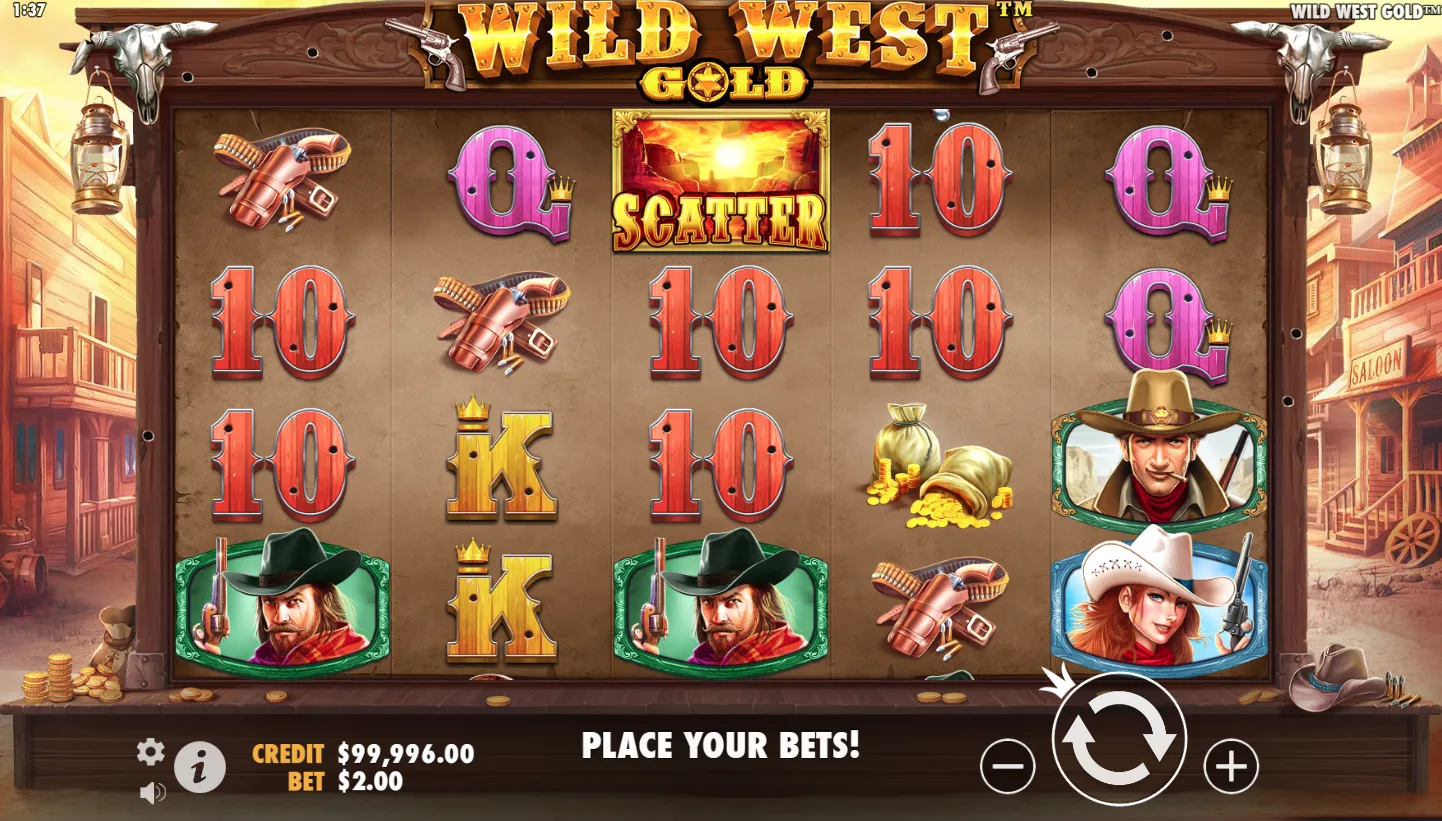
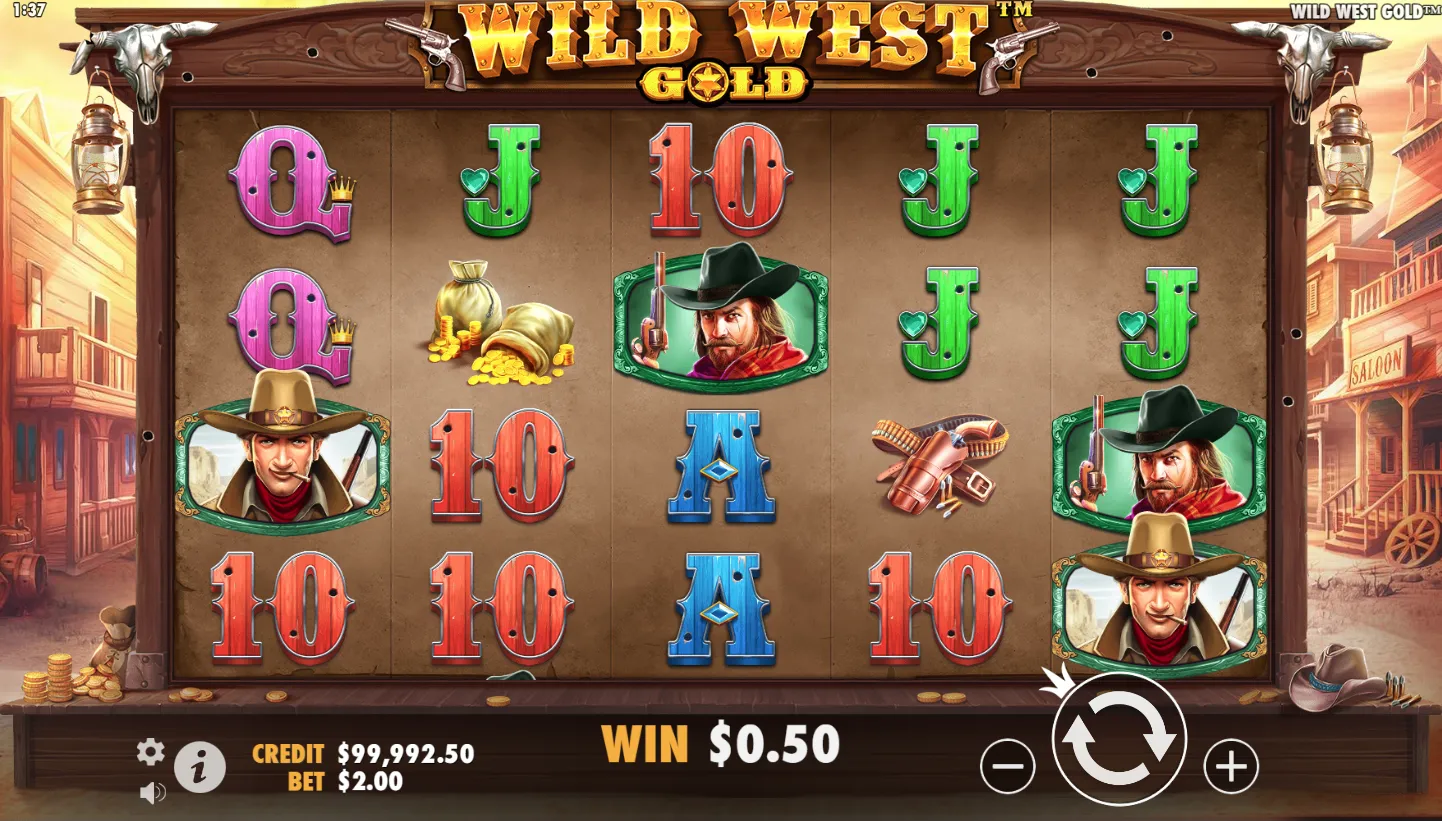
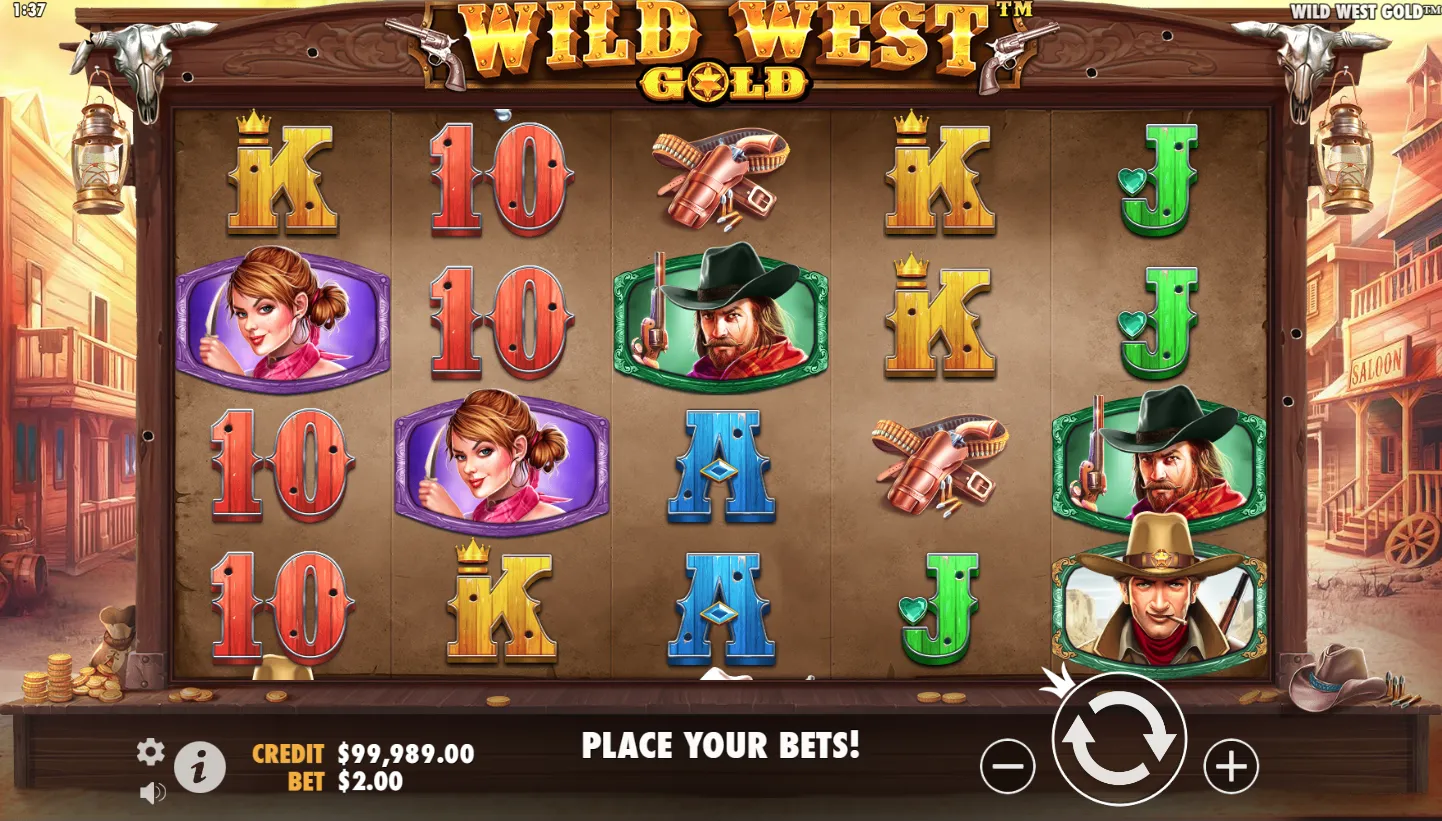
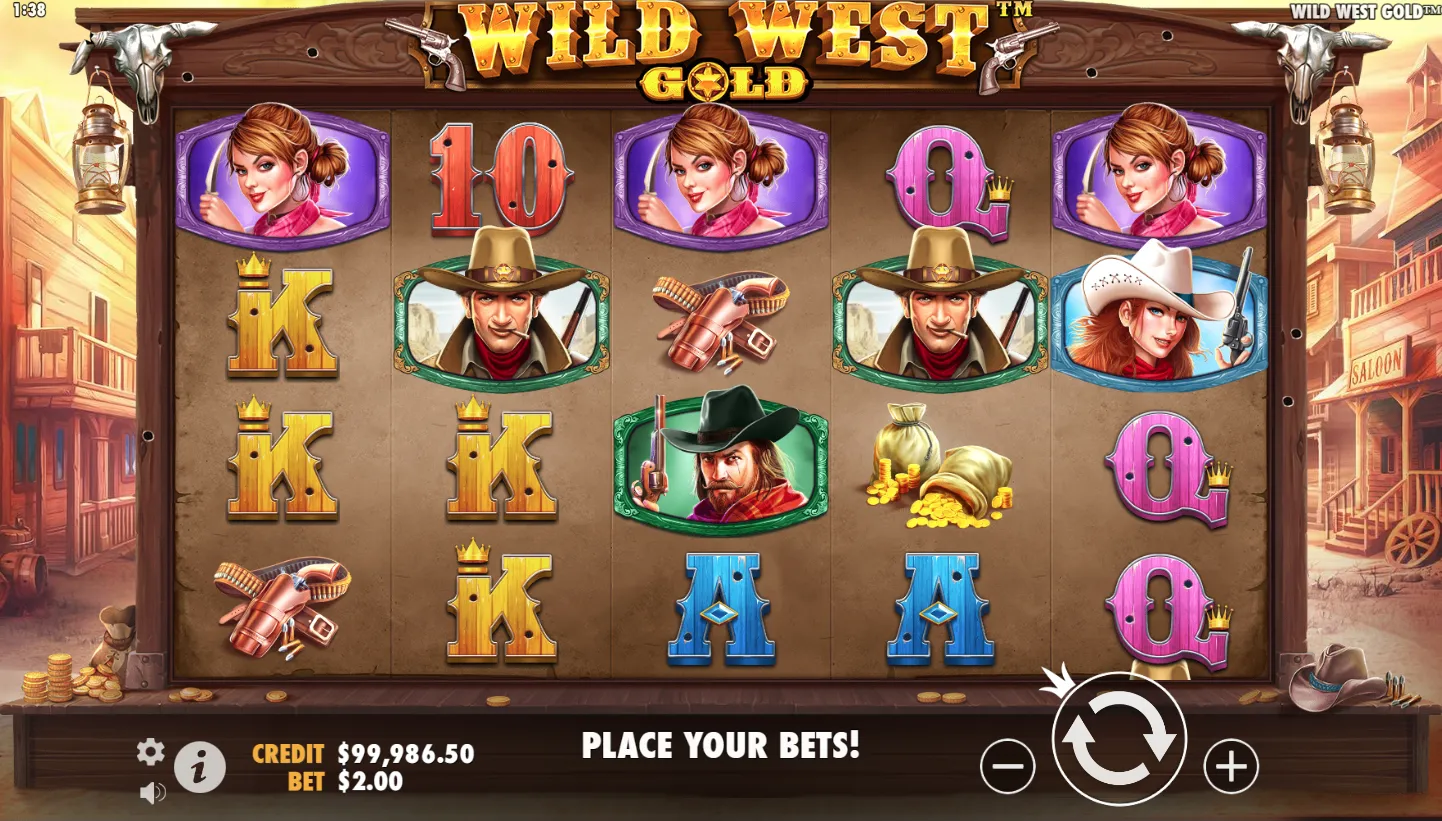
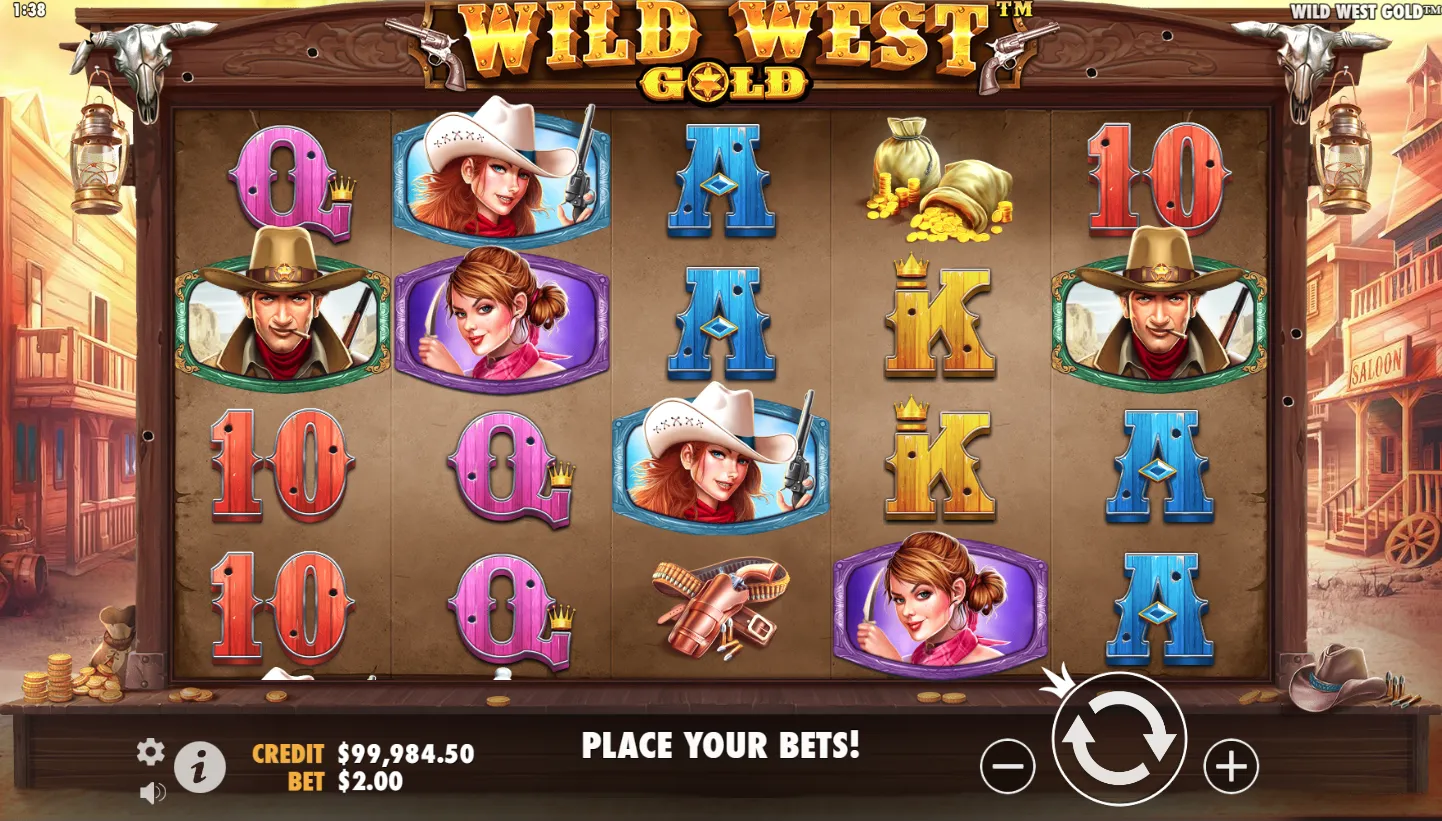
A base-game wild clears after its spin, so every spin is a fresh attempt at the 300x line ceiling with nothing kept from the last one. The paytable underneath is thin. A spin with no wild on the board pays at most 800x, five of the best symbol on all 40 lines, which is eight percent of the 10,000x cap. The ten, jack and queen pay 0.1x the total bet for three of a kind, and when two 5x wilds lift that line to the 10x maximum a three-of-a-kind can hold, it pays exactly the stake.
The line arithmetic does allow the cap from a single base spin, since 40 lines at 300x come to 12,000x. Getting there means averaging 250x on all 40 lines at once, and the only line wins that large are five of the best symbol under wilds worth 13x or 15x. I treat that as arithmetic, not as a feature. The base game's working job is to land scatters on reels 1, 3 and 5 together, and a spin that misses leaves nothing behind for the next one to build on.
An early 2x wild outworks a late 5x one
In the Free Spins Round a wild on the middle reels stays where it landed, at the multiplier it landed with, until the round ends. Each wild becomes a stake in the spins still to come. On an unextended 8-spin round, counting a wild's multiplier times the spins it works, a 2x wild on the first spin scores 16 and a 5x wild on the last scores 5. On that count the 5x overtakes the opening 2x only if it lands by the fifth spin, which leaves it four spins and a score of 20.
Additive multipliers keep the round legible. A line reaches 15x only through three 5x wilds, and its wild total never falls during the round because a locked wild keeps its value. That is the arc: a board that can only strengthen, racing a spin counter that runs down until an overlay pushes it back up. The weakness is the same arc read backwards. A round whose first wild lands on spin 7 has spent six spins on the special reels paying the thin paytable at face value, and that is the round the 10x floor exists for.
Overlays matter more to the cap than any single wild
Two overlays add 4 spins, three add 8, four add 12 and five add 20. Per overlay that is 2, then about 2.7, then 3, then 4 spins, so the ladder improves as it climbs, and its top rung adds two and a half times the round's starting length. An overlay can sit on a locked wild, so a board already full of multipliers does not shut the retrigger out. That is the right design, because every added spin replays each wild the board already holds.
The cap, the ladder and the round length meet here. A bought round has to average 1,250x a spin to reach 10,000x inside its 8 starting spins, the equivalent of more than four maximum 300x lines on every spin. One five-overlay retrigger takes it to 28 spins, and the required average falls to about 357x, a little over one maximum line a spin. A single wild adds at most 5x to the lines through its cell. Twenty extra spins cut what each spin has to pay by more than two thirds.
The cap also cuts the other way. A round that reaches 10,000x ends on the spot and forfeits whatever spins it had left, so on the strongest boards the added length stops counting exactly where the arithmetic says the round was built to go. I do not hold that against the game, since a round that forfeits spins has already paid 100 times the buy price.
At 100x the buy is fair and no better
Buy Free Spins costs 100x the total bet and opens the same round with the same 8 starting spins. Its range runs from the 10x floor to the 10,000x cap, a tenth of its price at the bottom and 100 times its price at the top, so the worst bought round loses 90x. Breaking even takes 100x, which is one line of five of the best symbol under a single 5x wild, or seven lines of five tens, jacks or queens at the full 15x, which comes to 105x. The purchase does nothing to help a round clear that bar. It buys the timing gamble exactly as three scatters would deliver it.
That is why I call the price fair and not good. The top of the range is a clean 100 times the cost and the floor trims the worst case, but 100x for an 8-spin round decided by when its wilds land is a narrow thing to pay for, and the late-wild round described earlier is the one a buyer is most exposed to.
The return setting is worth checking before the buy price. At 96.51% the house keeps 3.49% of stakes over the long run, and at 94.53% it keeps 5.47%, an edge more than half again as large. The rules screen shows which setting is in use.
Wild West Gold suits someone who wants one feature with a clear arc and will treat the base game as the cost of reaching it. Anyone after a base game with ideas of its own, or multipliers that compound instead of adding, is better served elsewhere. The sticky middle-reel loop is done competently here and nothing else is attempted, which is what a 6.8 describes.