The multipliers outgrow the ceiling
I read Wild West Gold Megaways as a free spins engine that is bigger than the lid on it. Sticky wilds whose multipliers multiply each other reach 625x on a single way, so eight sheriff ways through four x5 wilds fill the 5,000x cap by themselves. Below the engine sits a base game whose paytable pays next to nothing unmultiplied, and above it a cap that lands once in 51,948,051 spins. A strong middle between a thin floor and a low top is what a 6.8 looks like.
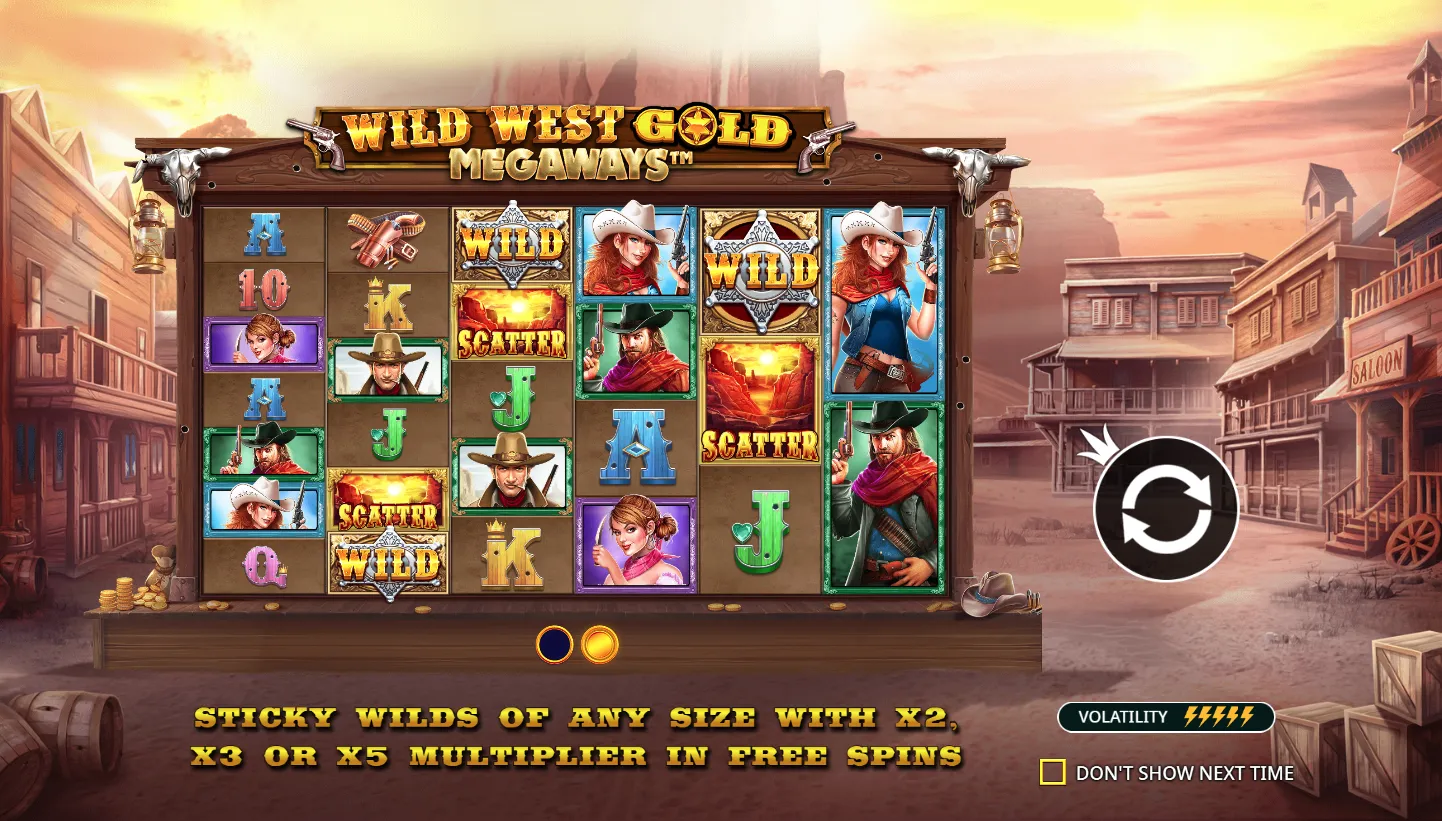
The engine is inherited. Wild West Gold turns every free spins wild into a sticky wild with a random multiplier, and this game moves that rule onto six reels that land 2 to 7 symbols each. The Dog House Megaways, from the same studio, puts multiplier wilds on the middle reels of a Megaways grid and offers a sticky wild free spins option; here there is one round and no choice. What variable reels require of a sticky wild is somewhere to stand, and the minimum reel size rule supplies it: a reel never lands fewer symbols than the sticky wilds it holds, so a collected wild cannot be squeezed off a short reel. That makes the game a refinement of an existing idea rather than a new one, and the refinement is sound.
Without a wild, the paytable is filler
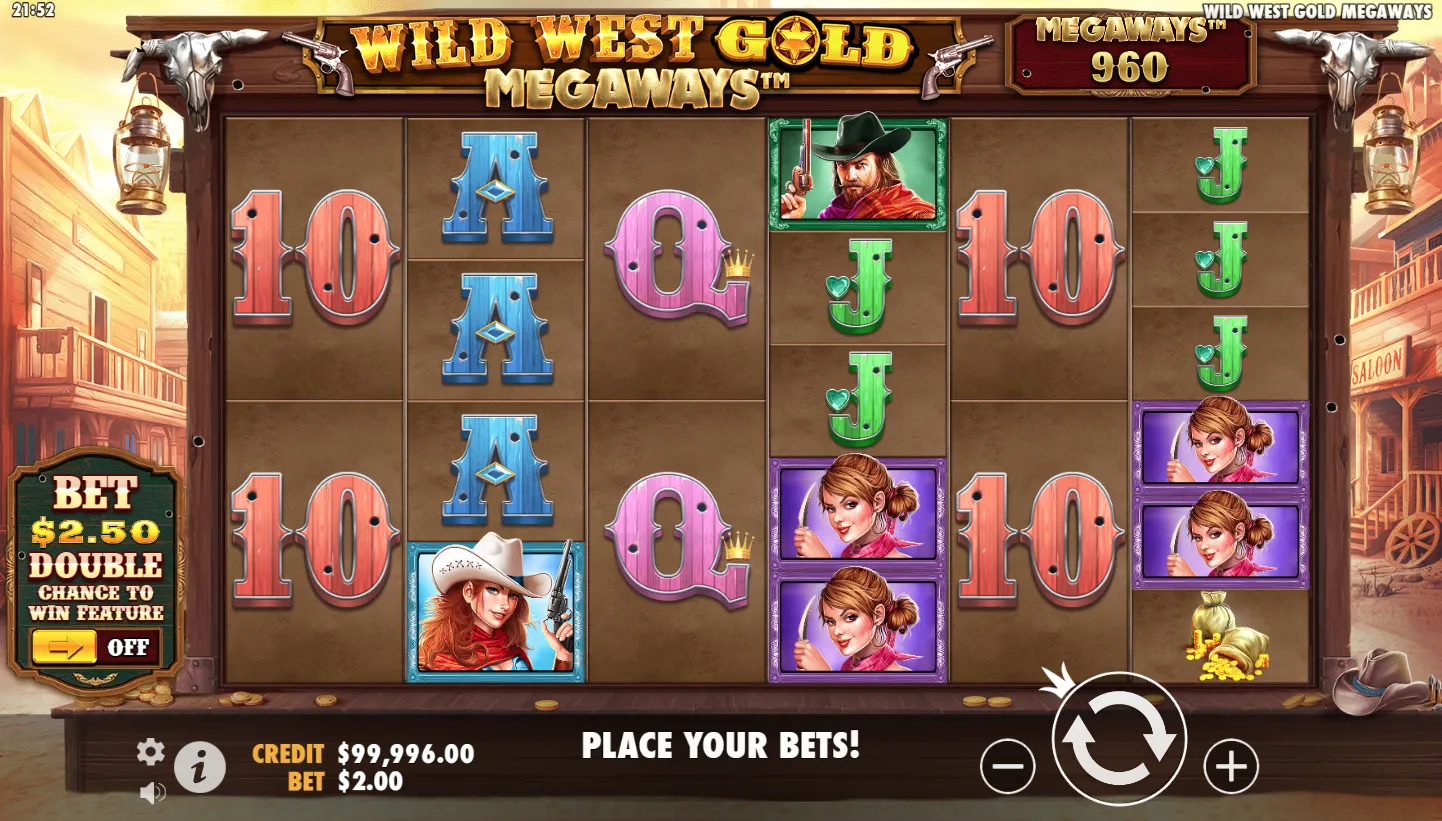
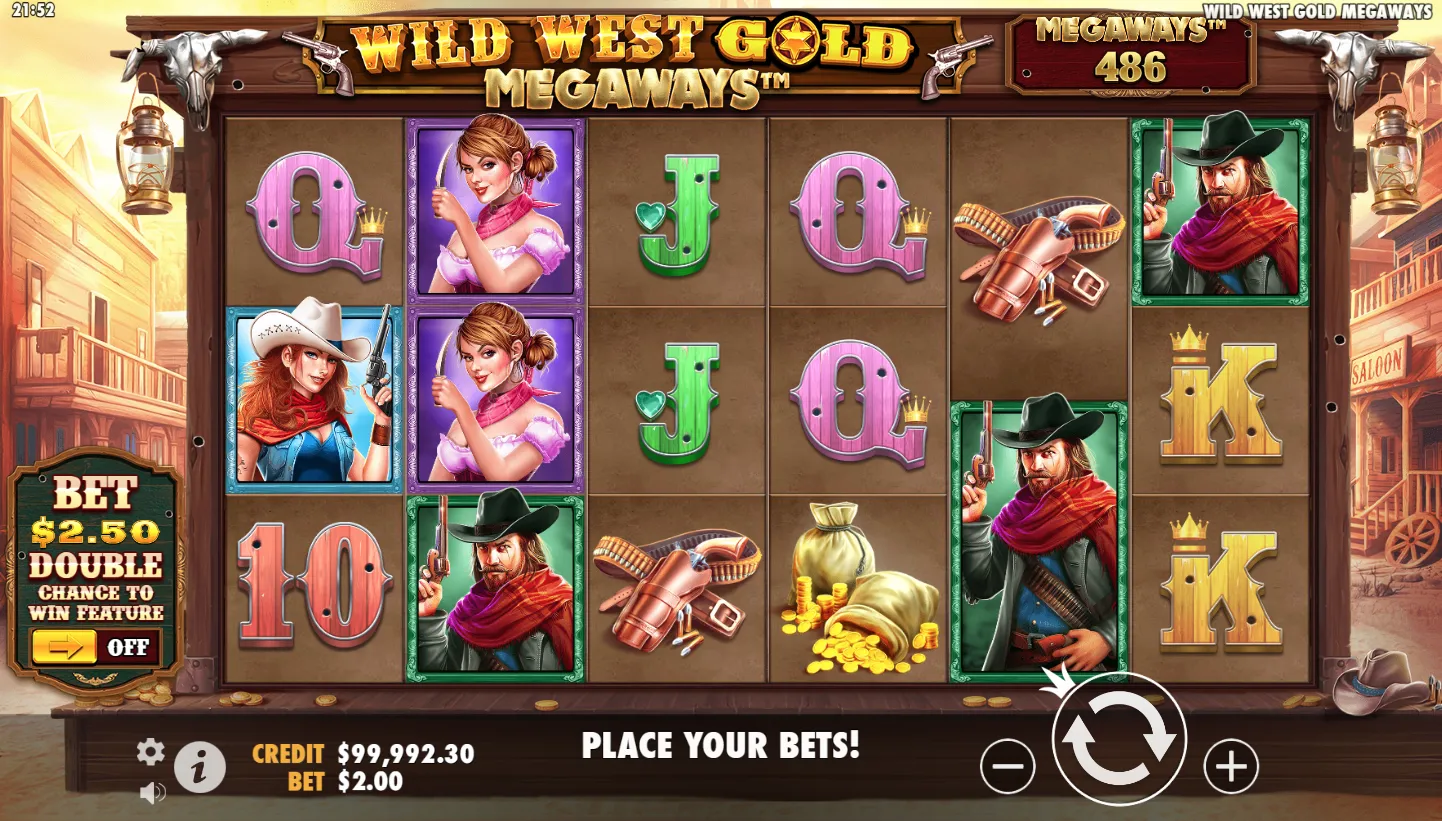
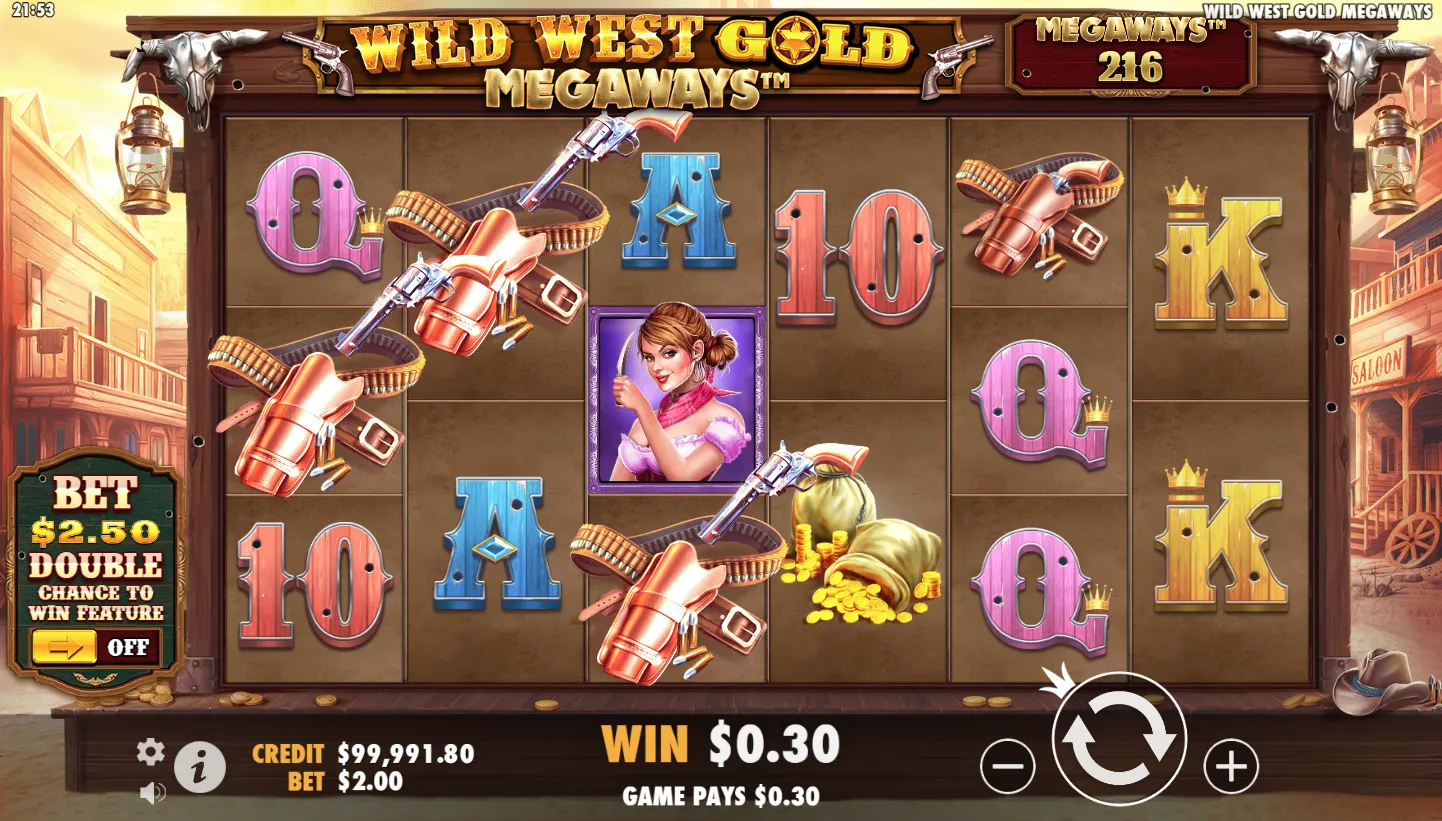
The regular symbols exist to be multiplied. The sheriff pays 1x total bet per way for six of a kind, and I count the other ten regular symbols all paying less than that even at six. The five card symbols stop at 0.3x, and the queen, jack and ten open at 0.05x for three. Wins do not cascade, so a board pays once and is replaced.
Reaching the cap without a multiplier shows how little the table does alone. At 1x per way, the sheriff by itself needs 5,000 six-of-a-kind ways on one spin to reach 5,000x. Ways multiply across the reels, and the fewest matching symbols whose reel counts multiply past 5,000 are four on five reels and five on the sixth: 25 sheriffs or plain wilds out of the 42 positions a full seven-row screen holds. That is a drawing, not a route to the top.
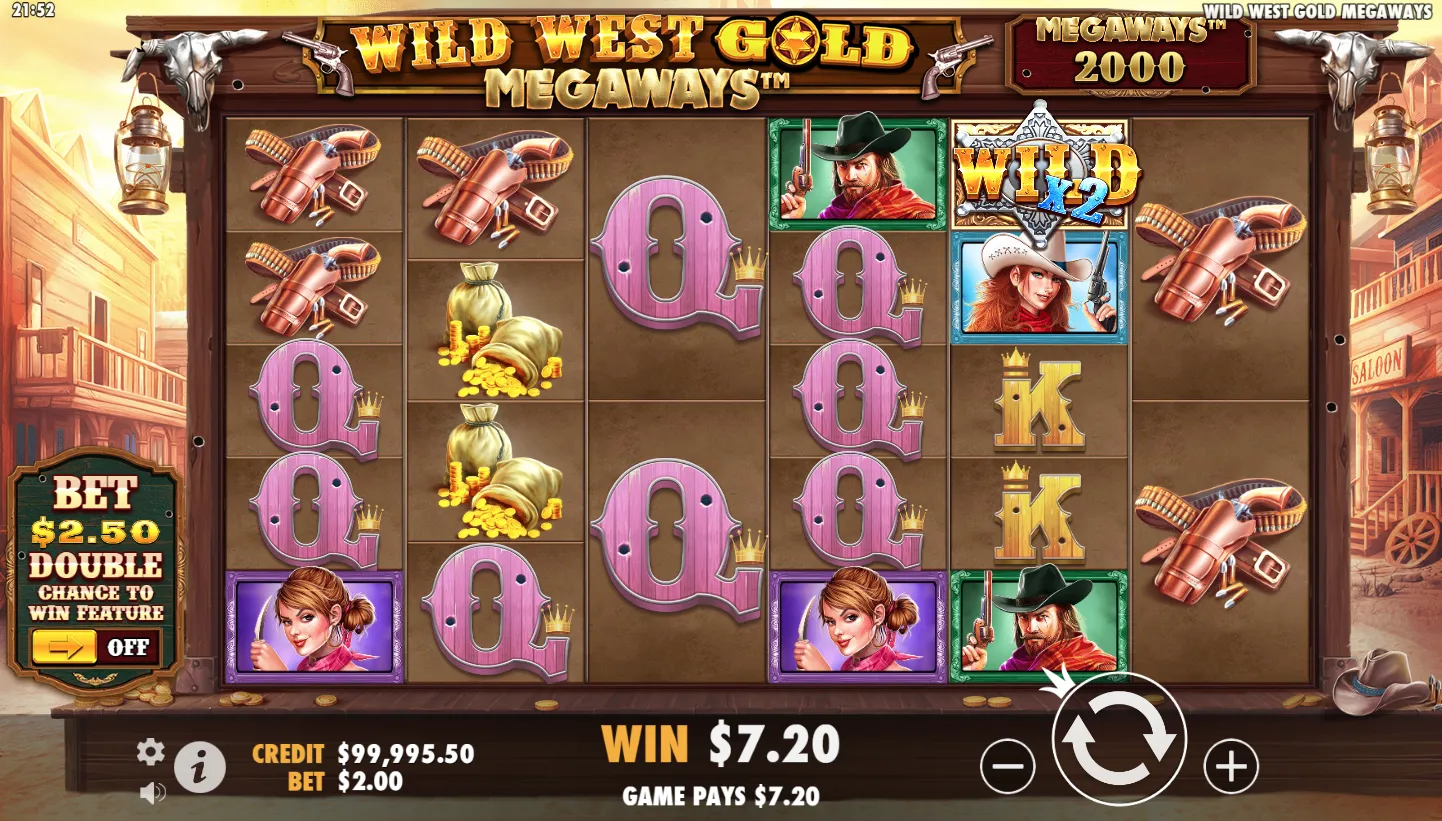
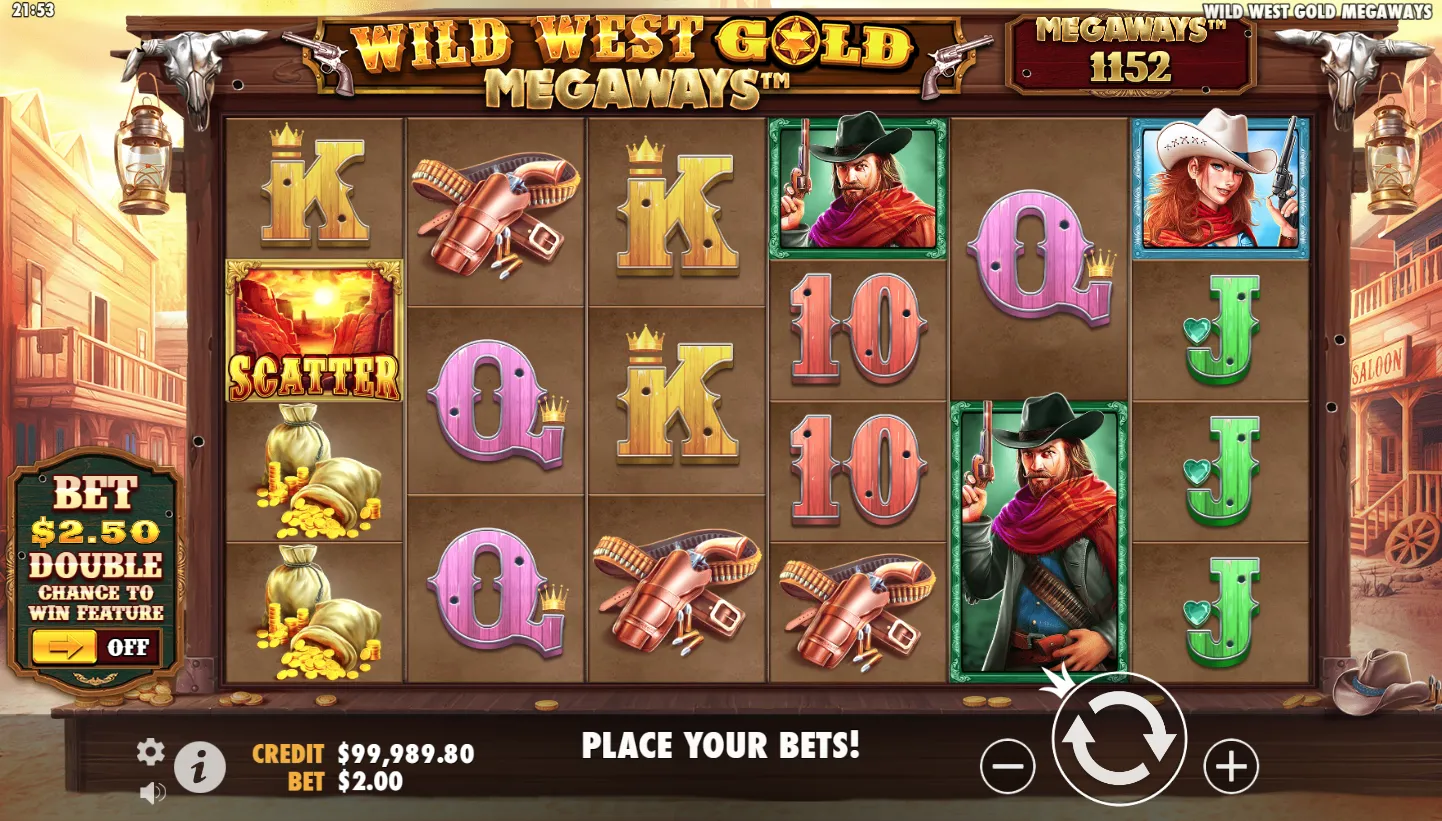
The base game's real money sits in two places. The scatter pays 4x to 500x on the spin that starts free spins. The wild lands on reels 2 to 5 and can arrive with x2, x3 or x5, and the multipliers of wilds sharing a way multiply, from 16x when four x2 wilds line up to 625x when four x5 wilds do. Because no wild lands on reel 1, every way win takes its symbol from the first reel, and a six of a kind needs the real symbol on reel 6 as well. A multiplied wild lifts only the ways that pass through it, a base-game wild can land plain, and a spin without one pays the rates above.
Seven spins is a short fuse for sticky wilds
Free spins open with 7 spins whether 3 or 6 scatters started them. Every wild that lands takes x2, x3 or x5 and holds its reel until the round ends, so when a wild lands matters as much as its multiplier. An x2 on the first spin is in play for seven spins; an x5 on the sixth, without extra spins, for two.
Multiplication happens across reels and never within one. A way crosses each reel once, so two wilds on reel 3 share no way and split that reel's ways between them. A way's multiplier climbs only as wilds spread over reels 2 to 5, and four x5 wilds on four different reels give the 625x that is the most one way can reach. The minimum reel size rule is a safeguard rather than a source of value: it keeps collected wilds in view and adds no multiplier of its own.
Extra spins come only from scatter overlays, and they need company. Two to six in view on one spin add that many spins, a single overlay adds nothing, and a round that never shows two on the same spin gets its seven spins and no more.
This is where the engine meets its lid. At the bottom of the ladder, four x2 wilds turn a 0.25x card six of a kind into 4x per way. At the top, one x5 wild on each of reels 2 to 5 makes a sheriff six of a kind pay 625x per way, and eight such ways make 5,000x: two sheriffs on reel 1 and four on reel 6 are enough. The queen, jack and ten get there on 32 ways at 156.25x each. Once the round's total reaches 5,000x it ends on the spot, a win that would pass the cap pays only up to it, and the spins still left are forfeited. The best boards this engine can build are worth more than the game will pay for them.
5,000x is a small top for a game this volatile
Volatility is 5 out of 5, and the prize at the top of that risk is 5,000x at 1 in 51,948,051 spins. By my arithmetic the cap is worth 5,000 divided by 51,948,051 of a bet per spin, just under 0.0001x, which is less than a hundredth of a percentage point of the 96.44% return. Nearly the whole return is paid below the ceiling. For a game this volatile that is a modest top, and it is one reason the score stays in the sixes.
The Double Chance ante moves these numbers without moving the cash ceiling. It raises the bet multiplier from 20x to 25x, 25% more per spin, and adds scatters to the reels. The cap becomes 4,000x the larger stake, the same cash as 5,000x the standard bet, and its chance improves to 1 in 27,522,935, which is 1.89 times as likely per spin and about one and a half times as likely per unit staked. The return falls from 96.44% to 96.41%, three hundredths of a point, and the buy is switched off while the ante stays on. For a player chasing the round without buying it that is a sensible trade, though the cap it improves is still worth only about 0.015 of a percentage point of return.
The 100x buy is the fairest price in the game
The buy returns 96.45% against 96.44% for standard play, so buying the round gives up no return against spinning for it. The trigger spin lands 3 to 6 scatters that pay the normal scatter win of 4x to 500x, which puts between 4% of the price and five times the price back before the first free spin. The best case is the cap: 5,000x is 50 times the 100x cost. The worst start is 4x back with 96x riding on seven spins and whatever wilds land in them.
Fair is not the same as generous. Fifty times the price is the ceiling on every purchase, and a 100x ticket into a game this volatile deserves more headroom than that. The buy is still the cleanest way into the part of the game that matters, though it is off while the ante runs and switched off in some markets.
Casinos can also run the game at 94.32%, at 92%, or at 87.04% to 87.08% with casino jackpot pots attached, up to 9.4 points below the 96.44% default. The rules screen shows the setting in use, and at 92% or below I would leave the game alone.
It suits the buy, not the base game
This is a game for a player who judges a slot by its bonus round and is content to buy it or run the ante to reach it. The engine rewards early wilds spread across four reels, the buy gives up nothing in return, and the ante is fairly priced. A player who wants the base game to hold interest between features should look elsewhere, because without a multiplied wild it pays filler rates and nothing cascades. So should anyone who expects a five-out-of-five game to offer more than 5,000x, since this engine can reach its lid on eight multiplied ways.
Put together, a strong engine, a thin frame, a rare and modest top and an honestly priced buy come to 6.8: a good idea held back by the maths around it.