Addition sets the scale of the whole game
The Dog House is built out of addition. Wild multipliers add, the spin-count grid adds, line wins add, and the 6,750x cap is nothing more than the total of the best board the reels can form. That one design habit explains why I rate the game 7.2 and why it stops there. Addition makes the bonus legible, because every sticky wild is worth a number I can work out. It also holds the ceiling low, and it hands the one quantity in the game that really compounds, the number of spins a sticky wild gets to work, to a draw made before the round begins.
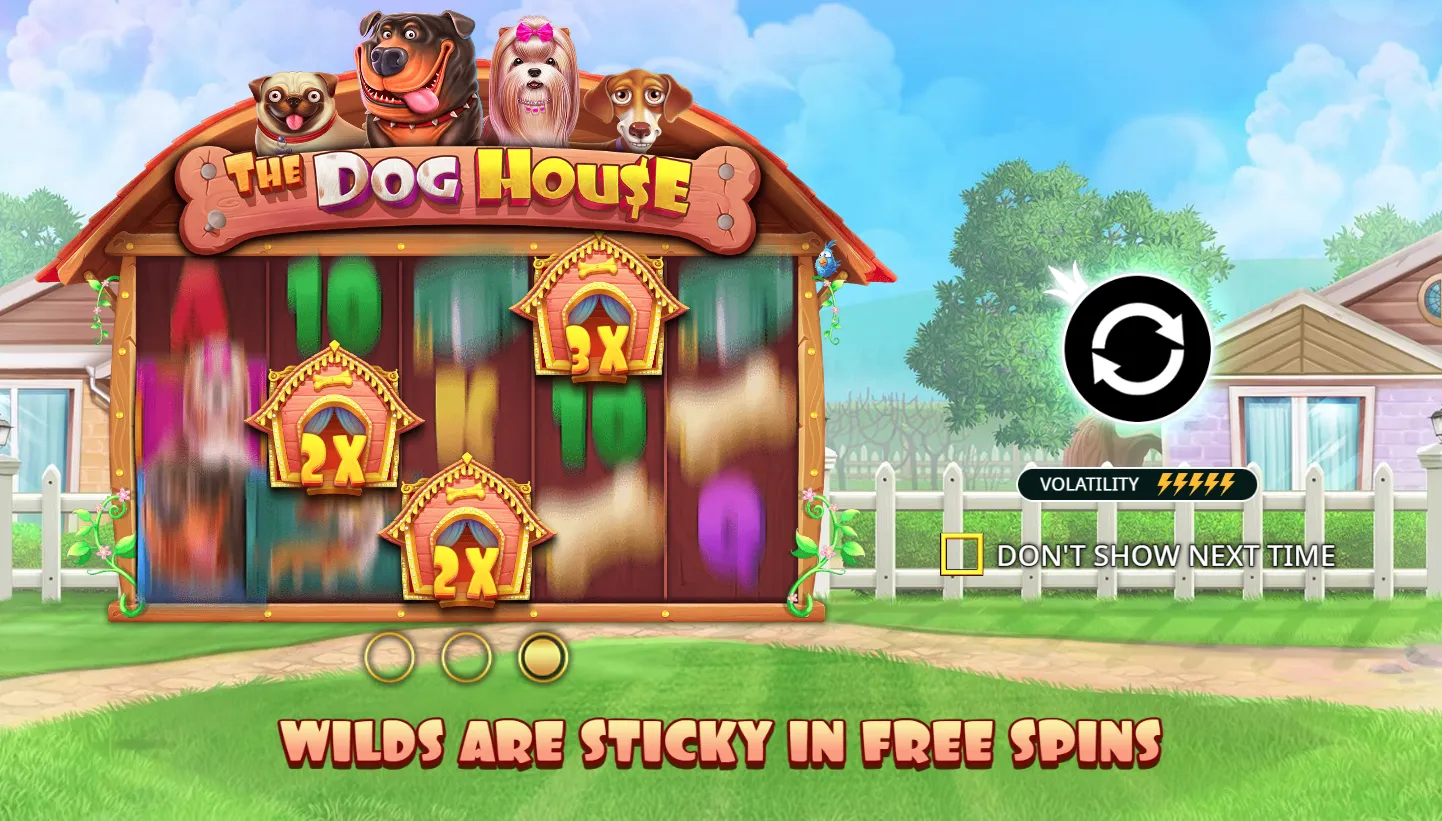
The sticky multiplier wild is the part worth placing. The Dog House Megaways keeps the multiplier wilds and offers a free spins mode where they stick, and Wild West Gold turns multiplier wilds sticky for the rest of its free spins in the same way. A sequel that keeps the mechanic, and another game running the same rule, tell me the idea held up. Since the Megaways game is this one's sequel, here the idea sits in its original frame: twenty fixed lines and a single bonus round.
The additive rule decides everything after it. Three 3x wilds on one line give 9x, not 27x. Five Rottweilers on a line pay 37.5x the bet, twenty such lines pay 750x, and 750x at 9x is exactly 6,750x: Rottweiler stacks on both outer reels with 3x wilds on all nine middle cells. Compounded multipliers would have taken that same board to 20,250x. The rules take the smaller number, and the whole game lives underneath it.
The base game is a delivery route for three paws
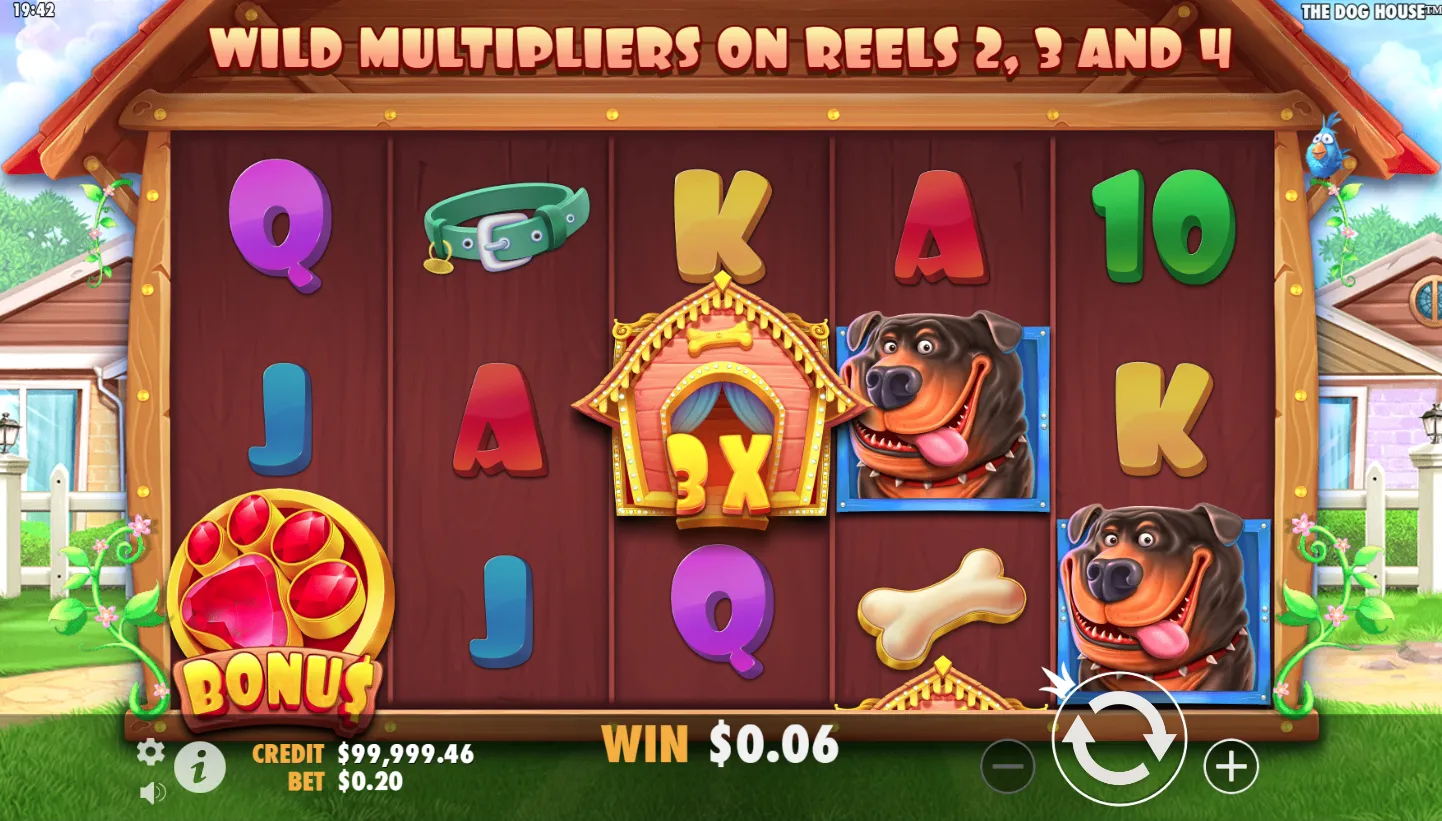
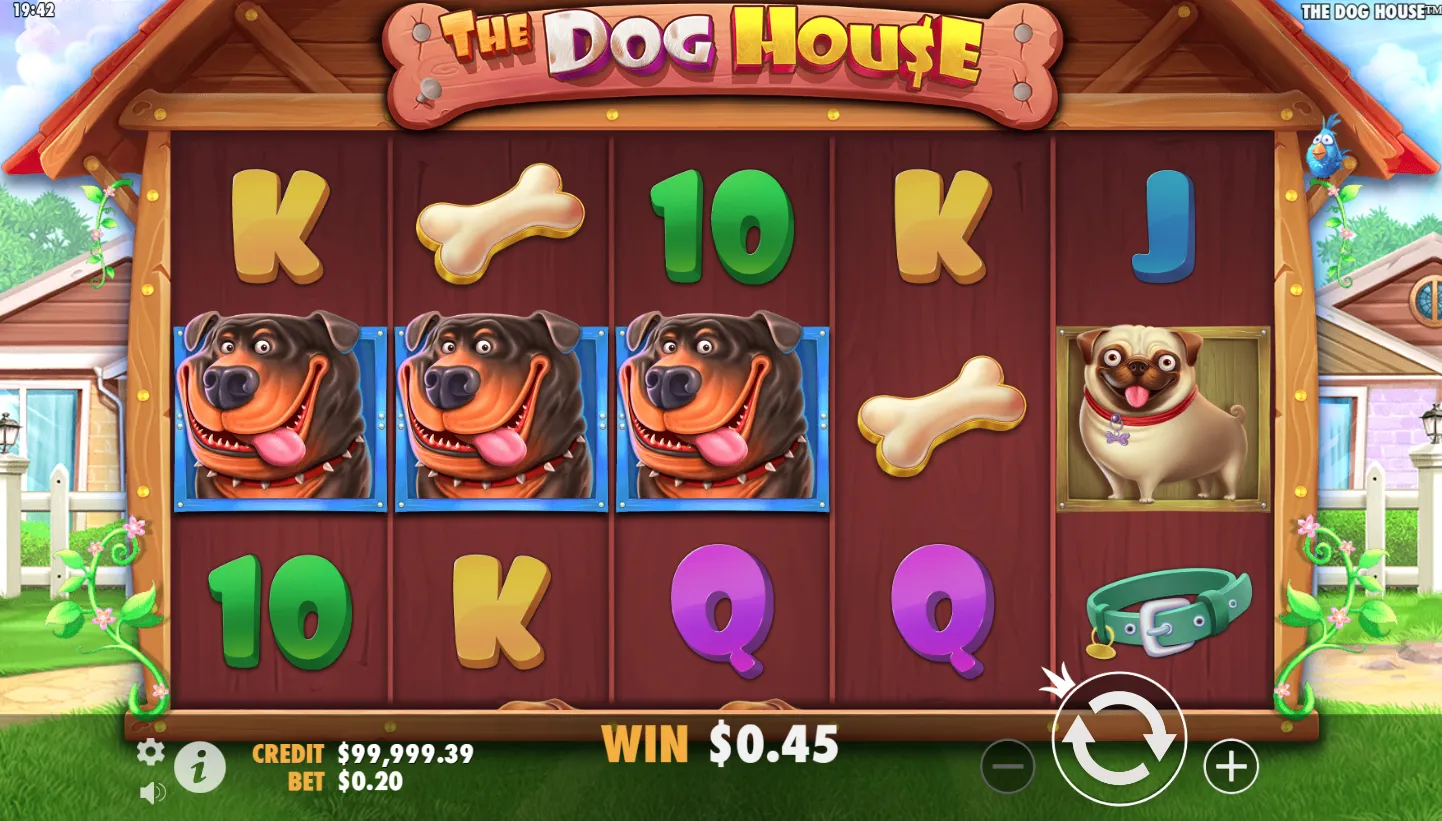
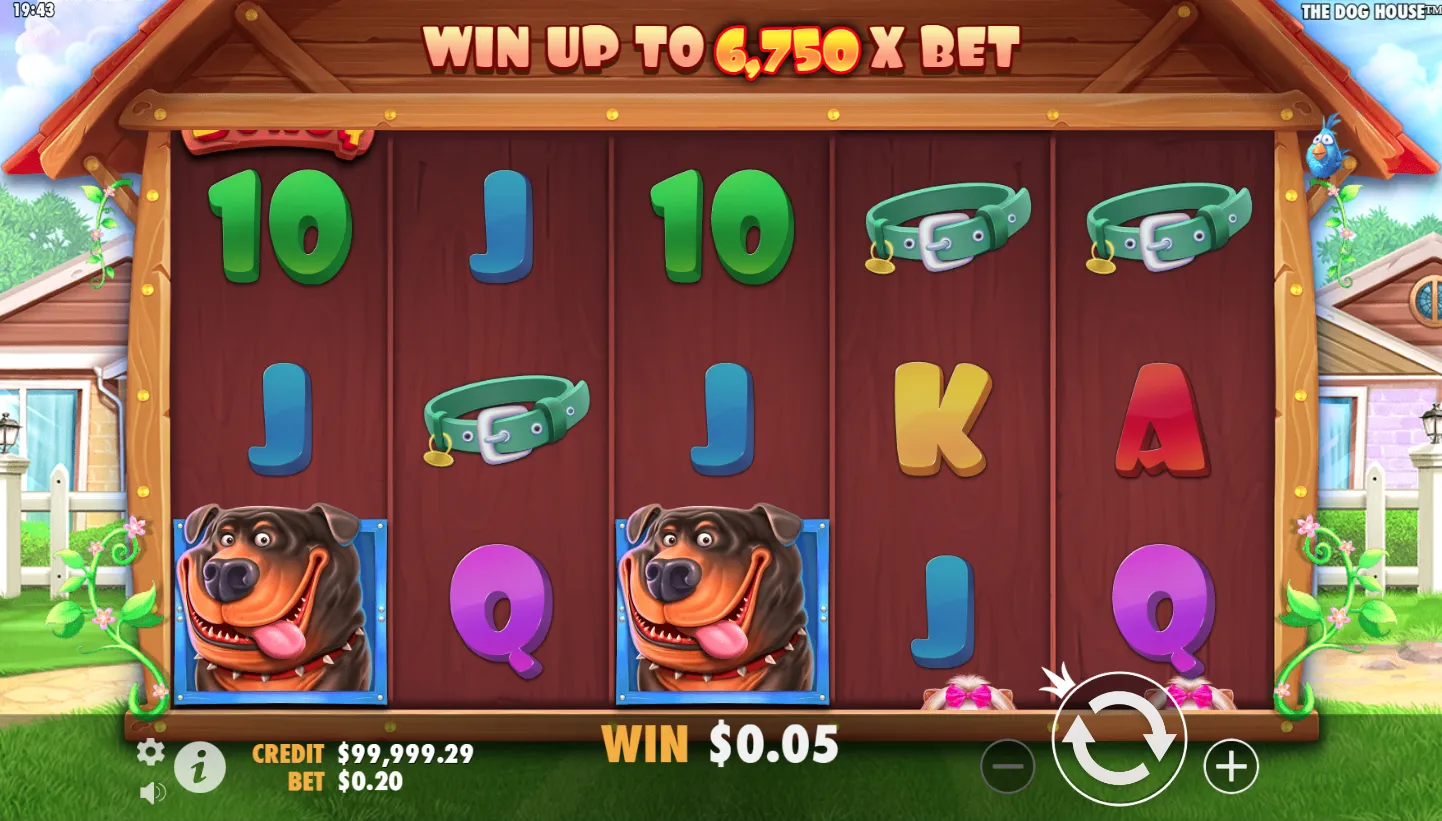
Outside free spins a wild's multiplier lasts one spin, and the reel layout trims it further. Wilds land only on reels 2, 3 and 4, and lines pay from the left, so a three-of-a-kind can borrow wilds from reels 2 and 3 only. Its best multiplier is 6x. The 9x line needs a wild on reel 4 as well, which already makes it a four-of-a-kind.
The paytable does not make up the difference. I count eight of the eleven line symbols returning the stake or less for three of a kind, from the dachshund at 1x down to 0.1x for the queen, jack and ten. Three tens on a 6x line still return 0.6x. The best single line the base game can form is five Rottweilers at 9x, which comes to 337.5x, and it needs three 3x wilds on one line in a phase where none of them stay. A hit frequency of 27.55% puts a win on roughly one spin in 3.6, and the arithmetic above says most of those wins are small.
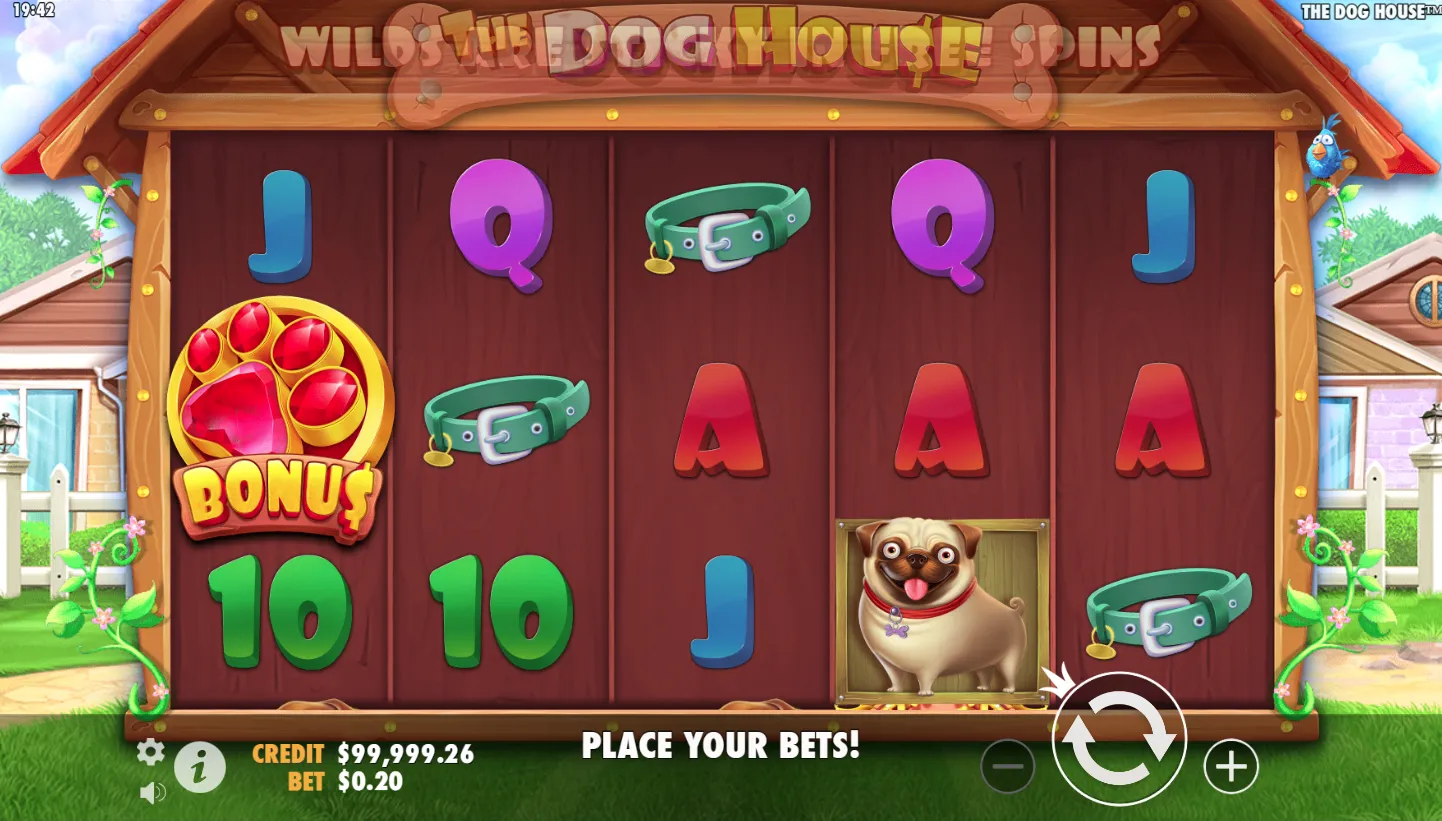
Three paws, which can appear only on reels 1, 3 and 5, pay 5x the bet, the same as five dog bones on a line. That prize softens the trigger spin and does nothing else. With no feature purchase, the paws are the only door into the round, and the base game's job is to open it.
Time is the only multiplier that compounds
Before the first free spin, a 3x3 grid of cells worth 1, 2 or 3 spins each fixes the round at somewhere between 9 and 27 spins. Nothing moves that number afterwards. The free spins reels drop the paw, and the round cannot be retriggered.
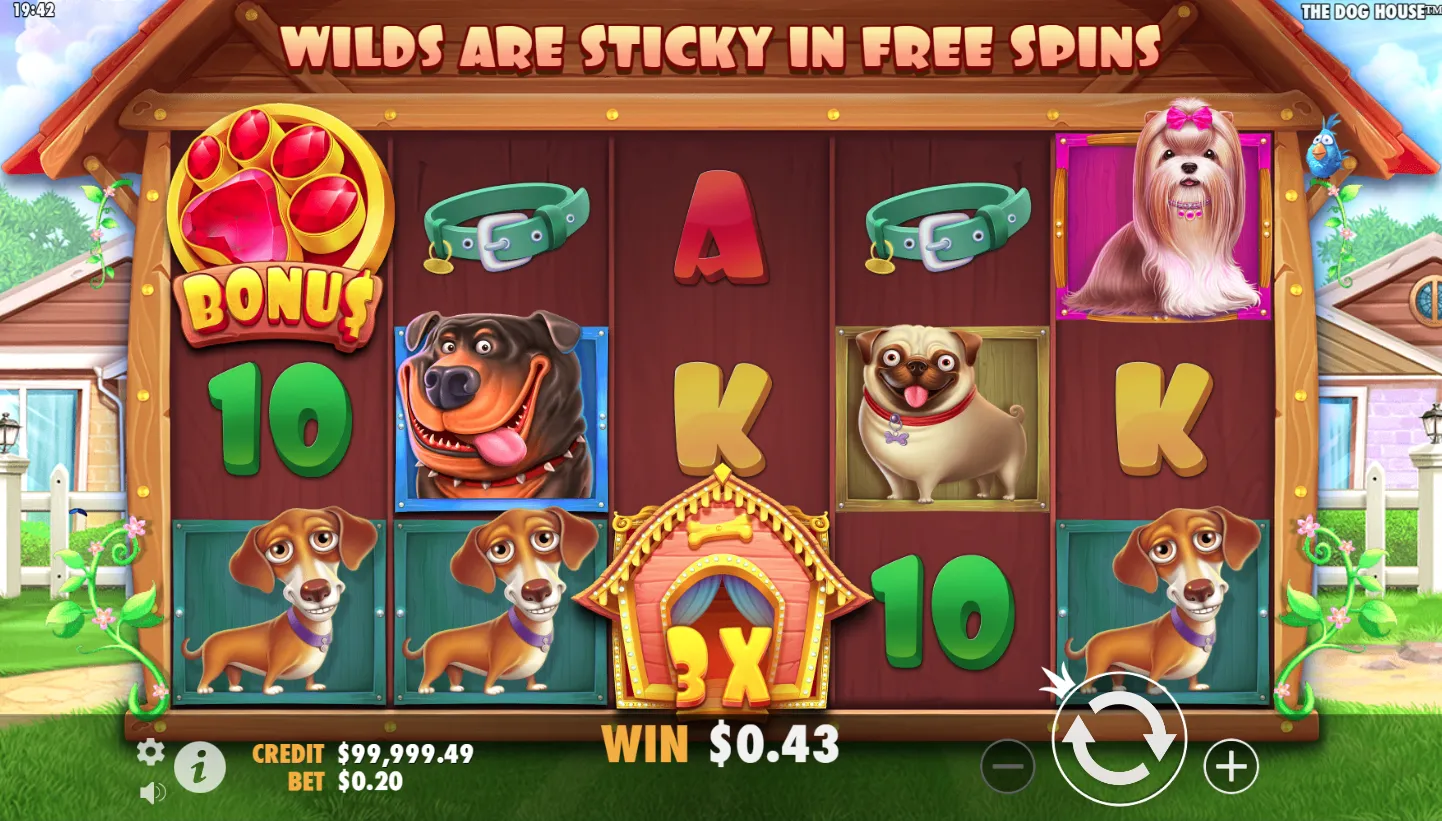
That fixed length does more work than any multiplier on the board. A sticky wild's value is its multiplier, times the lines passing through its cell, times the spins it stays for. The first two factors are small and bounded. The third is set by the draw. A wild on the opening spin works on all 27 spins of the longest round and on all 9 of the shortest, a threefold difference settled before the reels move. The same wild arriving on the ninth spin works 19 times in the longest round and once in the shortest.
Position adds a second lever. Every line crosses each reel exactly once, so three sticky wilds filling one middle reel sit on all 20 lines for the rest of the round. The Rottweiler stacks on reels 1 and 5 are what turn a built board into a payout. With 3x wilds on all nine middle cells, a stack on reel 1 alone makes every line four Rottweilers at 9x, and 7.5x times 9 across 20 lines is 1,350x. A second stack on reel 5 lifts that same spin to 6,750x.
So I read the round as a draw, a race and a wait: the spin count, how early the wilds stick, and whether the stacks arrive while spins remain. A short round whose first wilds land on its last two spins has almost nothing to build with, and no paw can extend it.
The cap binds on exactly the round the design exists to produce
The cap covers the whole round. A round that reaches 6,750x ends at once, and anything still due is forfeited. Set that against the board arithmetic and the ceiling stops being abstract. A finished board of nine 3x wilds reaches the cap after five spins with a reel-1 stack at 1,350x each, or on a single spin with both stacks. A finished board of nine 2x wilds puts 6x on every line, so both stacks together return 4,500x, and a second spin like that would overshoot the cap by 2,250x that the round never pays.
An ordinary round never touches the cap. It binds on the round the mechanics are built to create: a long draw, early wilds, a full middle, spins left over. That is the round where a sticky-wild game should separate itself from a plain lines game, and it is precisely where The Dog House stops paying. The additive rule shrinks the ceiling, the cap enforces it, and a high-volatility game whose value sits almost entirely in one bonus ends up under a 6,750x roof. I consider that low.
A sound idea in a frame that settles too much too early
The 7.2 is earned by the sticky wilds and held down by everything around them. The central rule is sound and its arithmetic is honest: I can derive the cap from the paytable, and I can put a value on a wild the moment it sticks. The frame is thin. A random length with no retrigger decides a large share of the bonus before its first spin, and additive multipliers keep the top end at 6,750x.
The return deserves a check first. The default is 96.51%, and a lower setting of 95.51% exists. That single point raises the house edge from 3.49% to 4.49%, close to 29% more, and the rules screen shows which setting a casino runs.
The game suits a reader who wants a bonus that visibly builds and can be reasoned about wild by wild, and who accepts a base game that mostly waits for paws. Anyone who wants a round able to extend itself, or a ceiling well beyond 6,750x, should look elsewhere.