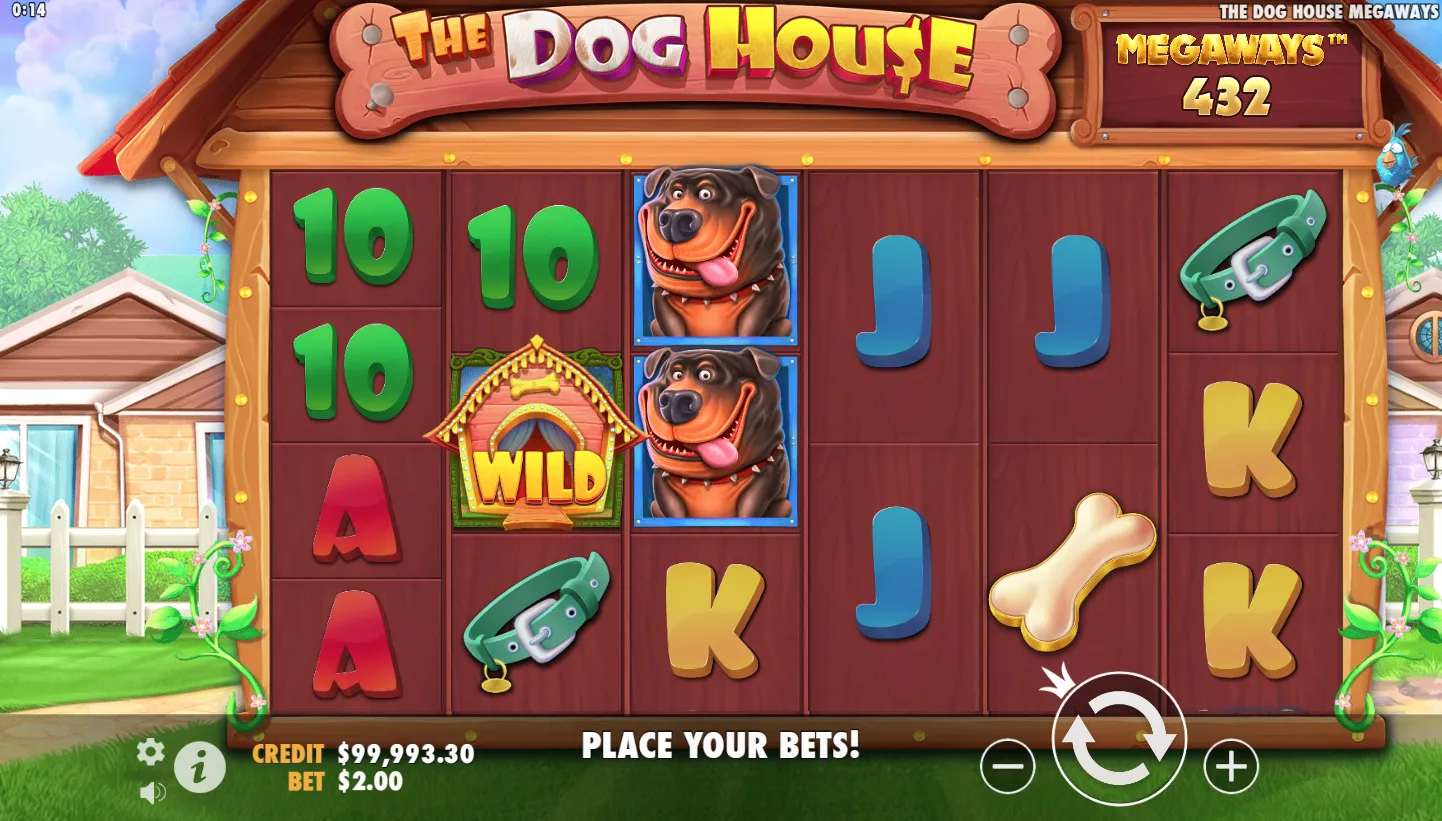
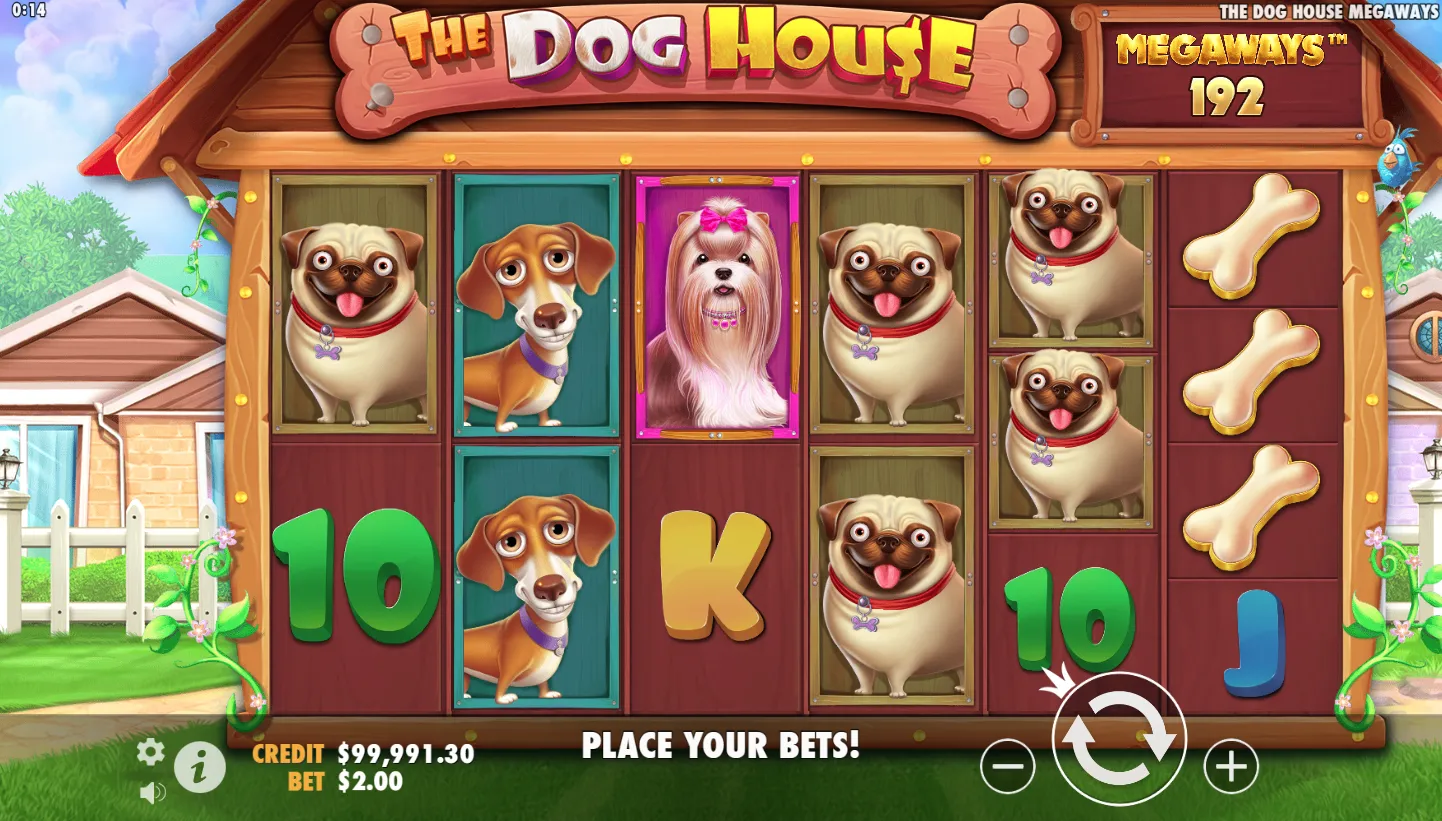
Megaways gave the sticky wild a second job
I value The Dog House Megaways exactly as highly as its Sticky Wilds round, and I rate that round for a reason that is easy to read past: a locked wild here holds two things, its multiplier and the height of its reel. Everything else I find in the game is frame. The base game, the Raining Wilds alternative and the flat 100x buy sit around that one mechanism without adding to it, which is why a genuinely good idea lands at 7.2 rather than in the 8s.
I read the idea itself as inherited. The Dog House already locked multiplier wilds for its whole free spins round, and Wild West Gold turns multiplier wilds sticky for the rest of its round as well. This game is a refinement of that formula rather than an invention, and the refinement belongs to the grid. Megaways reels change height on every spin, so a sticky wild needs a rule for what happens when its reel shrinks. The rule here is generous: each reel stays at least as tall as the number of wilds stuck on it. A reel holding three sticky wilds multiplies the ways count by at least three on every later spin. Put two sticky wilds on each of reels 2 to 5 and there are at least 16 wild-only routes across the middle of the grid, each joining reel 1 to reel 6 with its own product of multipliers. That floor is what makes the round compound, and nothing else in the game gets better as a round goes on.
The cap belongs to the multipliers, not the paytable
Without a wild, the best single way I can find is six Rottweilers at 7.5x, and I make 12,305x about 1,641 times that. Volume alone needs a crowded board to matter: three Rottweilers on each of the six reels make 729 six-of-a-kind ways and still pay 5,467.5x, less than half the cap. I count eight of the eleven paying symbols returning 1.5x or less for six of a kind, and the richest three-of-a-kind way pays 0.75x, so a three-reel way reaches the stake only when a multiplier wild sits on it.
Multipliers change the scale, and I see why: they multiply rather than add. Four 3x wilds on one way make it an 81x way, and six Rottweilers through it pay 607.5x. Twenty of those ways come to 12,150x, just under the cap. A twenty-first would push the total to 12,757.5x, so the round stops at 12,305x instead and forfeits whatever features remain. With reels 1 and 6 each up to seven symbols tall, the arithmetic allows 49 such ways through a single 3x wild on each of reels 2 to 5, 29,767.5x, almost two and a half times what the game will pay.
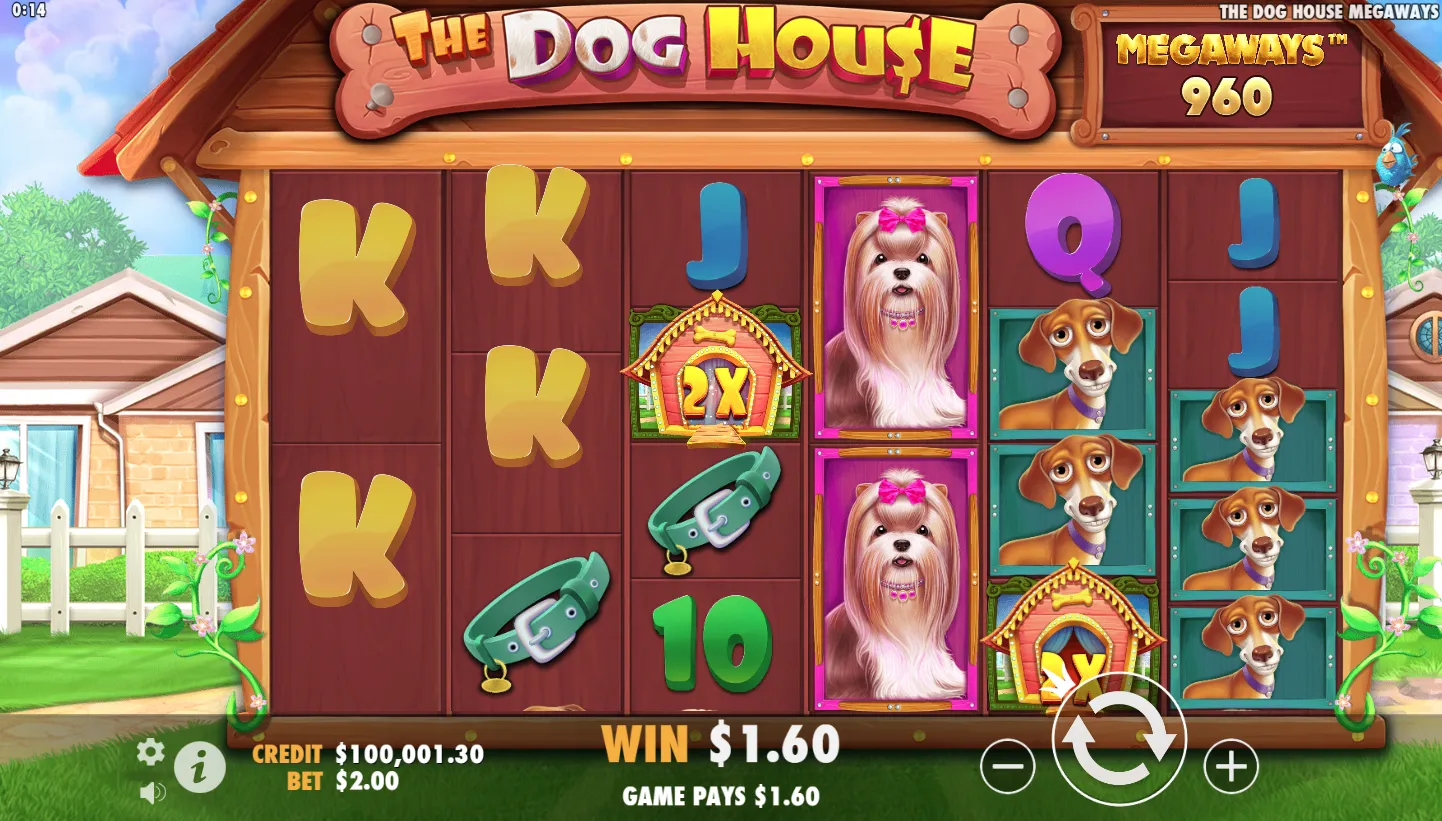
That set of wilds can form in the base game, where wilds can take 2x or 3x, and in Raining Wilds, where up to six multiplier wilds drop in on each spin. I would not call the cap a free spins monopoly. What Sticky Wilds changes is how long the structure lasts. In the base game and in Raining Wilds the wilds leave after one spin, while in Sticky Wilds a 3x wild on each of reels 2 to 5 stays for every remaining spin and waits for Rottweilers on the outer reels. The ceiling stays remote all the same. The maximum comes no more often than once in a billion spins, and scatters start free spins once per 372 base spins on average, so even crediting every capped win to a scatter-started round puts the cap at no better than one such round in about 2.69 million.
Three scatters and six scatters sell different rounds
Neither mode retriggers, so the scatter count fixes the length of the round the moment it lands. Raining Wilds runs from 15 spins to 30. Sticky Wilds runs from 7 to 20, and that gap matters more than the raw counts suggest because a sticky wild keeps working. I take one wild landing per spin purely as a unit of count. A wild that arrives on spin k of an n-spin round sits on the reels for the n − k + 1 spins that remain, its own included, and across the whole round that sums to n(n + 1) / 2 wild-spins: 28 for seven spins, 78 for twelve, 120 for fifteen and 210 for twenty. Six scatters give Sticky Wilds 2.9 times the spins of three scatters and 7.5 times the wild exposure. Raining Wilds keeps nothing, so its exposure only doubles between the 15-spin and 30-spin rounds.
At three scatters Sticky Wilds also gives less than half the spins of Raining Wilds, 7 against 15, where at four and at six scatters it gives two thirds. I read the three-scatter Sticky round as the weakest case in the game. Seven spins leave no room for locked wilds to compound, a wild landing on the last two spins works once or twice before the round closes, and a round that collects nothing early has no retrigger to extend it. I do not see the mode choice as a matter of taste. It turns on the scatter count, and picking Sticky Wilds by habit at three scatters takes the shortest version of the best idea.
A flat 100x is the wrong price for a round that compounds
The buy costs 100x the total bet, lands a random three to six scatters and then offers the same mode choice. Per spin, that prices Sticky Wilds at 14.3x the bet in a seven-spin round, 8.3x at twelve, 6.7x at fifteen and 5x at twenty. Raining Wilds costs between 6.7x and 3.3x per spin for the same 100x. The best case is identical across all eight outcomes: the cap divided by the price, just over 123 times the cost of the buy.
My objection is to the flat price rather than the headline number. One price covers rounds whose wild exposure differs by 7.5 times in the mode the whole game is built around, so the random scatter count settles most of a Sticky purchase's value before the first spin and the cost never moves with it. A buy that fixed the count, or charged by it, would follow the mechanic. This one, as I read it, gambles on it. Three scatters from the buy leave a choice between 15 spins that never build and 7 that barely have time to.
The frame is thin enough to change who this is for
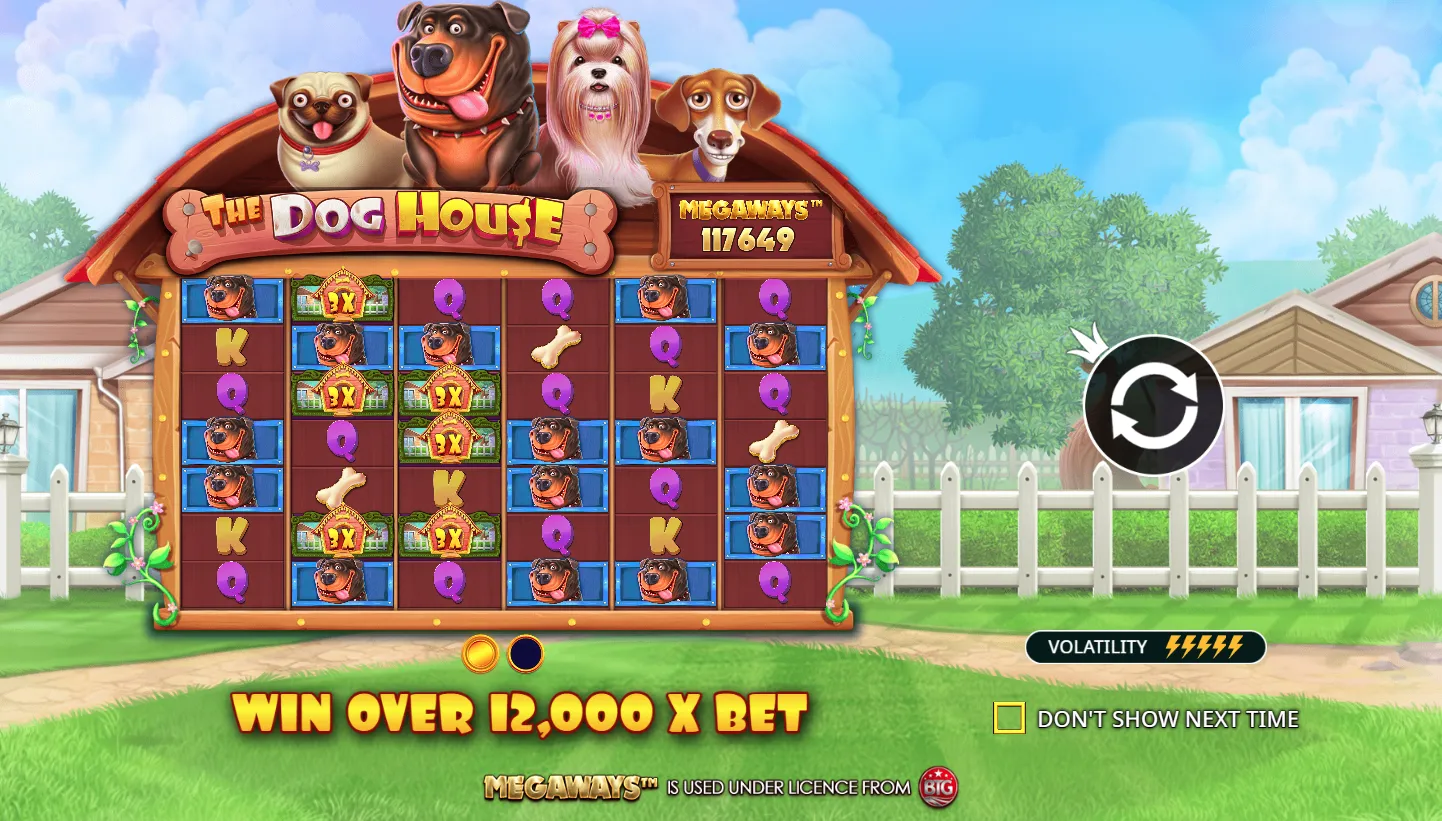
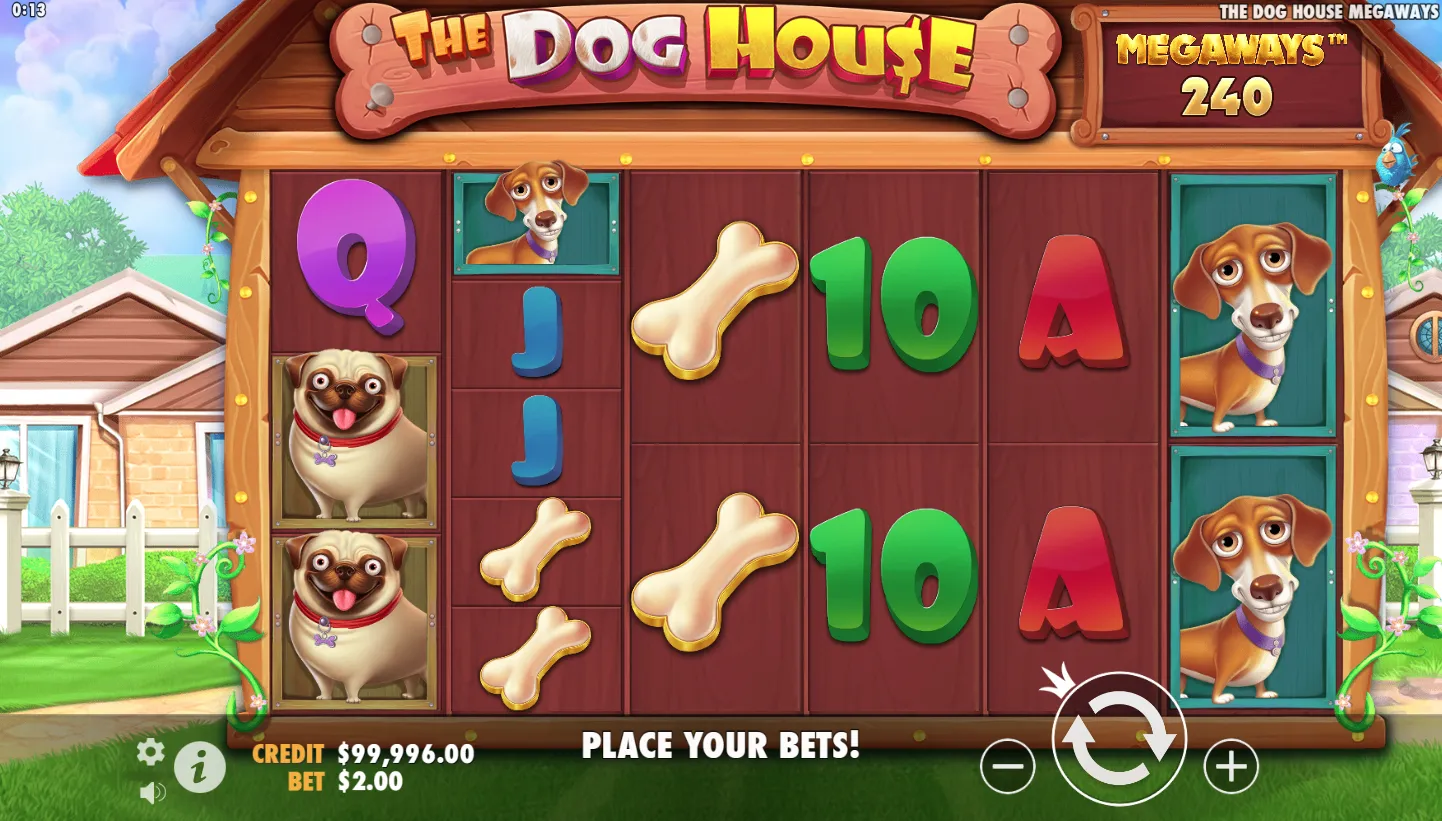
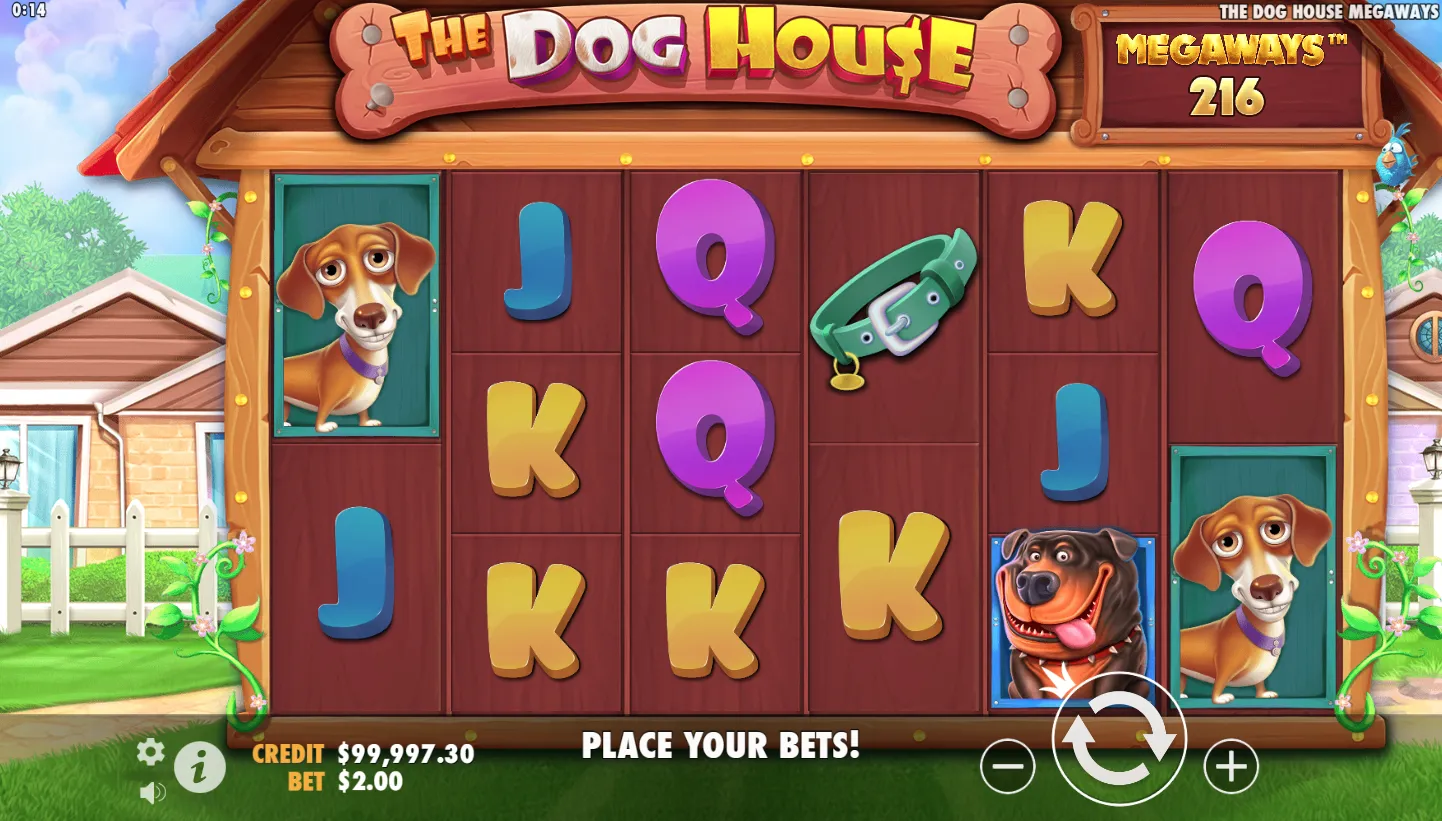
I see the base game's job as delivering scatters. A win lands on 23.26% of spins, about one in 4.3, so 76.74% of spins return nothing, and the wins that land come from a paytable that barely registers without a multiplier wild. Adding wins across up to 117,649 ways explains why single values can be this small, but it leaves the base game's value sitting almost entirely on a wild confined to reels 2 to 5, with the round that matters arriving once per 372 spins on average.
The return setting moves the cost more than two points sound like. At 96.55% the long-run cost of play is 3.45% of stake, at 95.53% it is 4.47%, and at 94.55% it is 5.45%, which is 58% more than at 96.55%. The rules screen shows the build in use, and at 94.55% I treat this as a worse game rather than the same one.
I would point this game at a player who wants one compounding free spins mode badly enough to sit through a long, thin base game for it, and who accepts that the scatter count rations how much room that mode gets. Anyone after base-game wins with substance, or a buy whose round length is known before paying, should look elsewhere.