A sequel that added boards instead of spins
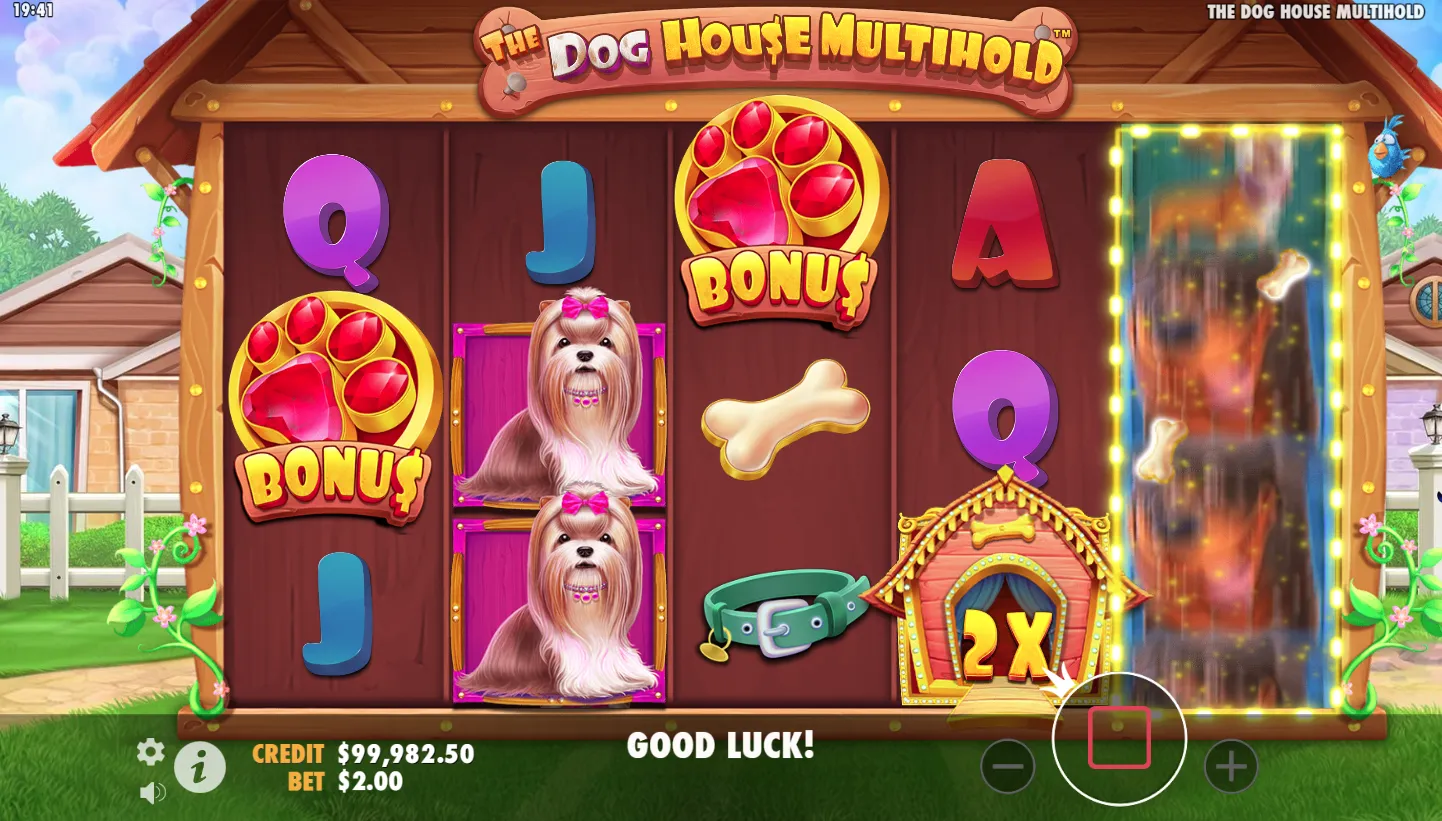
The Dog House Multihold has one good idea and too few spins to use it. Its free spins copy every sticky wild from the newest board onto the next, so a strong early layout can end up paying across 80 lines at once. The round that hosts this idea starts with 7 spins, and its three possible unlocks add one to three spins apiece, so no round runs past 16. I read the copying as a real multiplier on a good start and the spin budget as the reason most rounds never get far enough to use it. That tension is the game, and it is why the score sits just under 7.
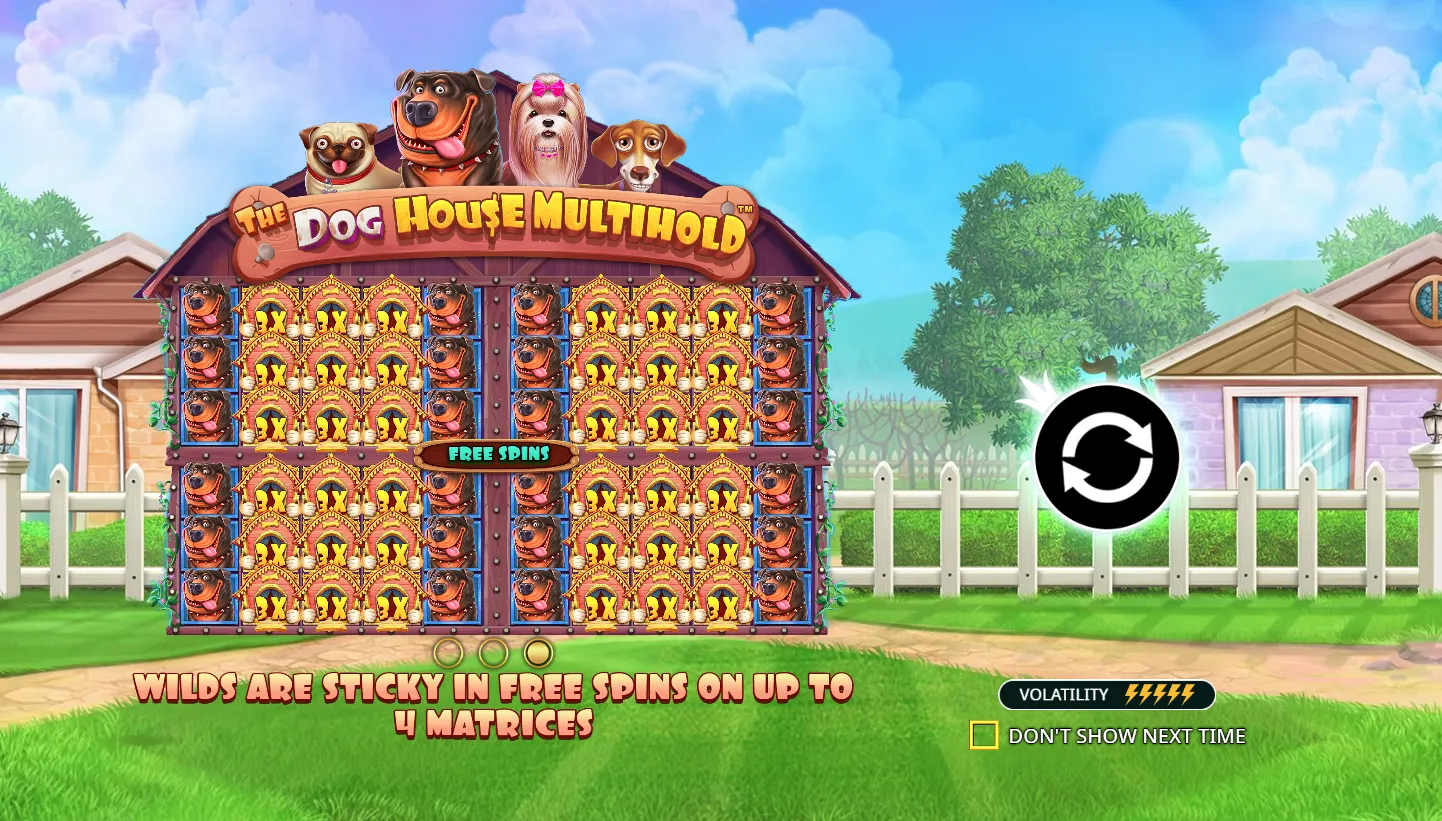
The frame comes from its own series. The Dog House put multiplier wilds on the middle reels and made them sticky in free spins on a 20-line board. Wild West Gold built its free spins around multiplier wilds that stick for the round, and The Dog House Megaways moved the pairing onto a Megaways board. Multihold keeps the pairing and adds a second axis: up to four 5x3 boards, opened one at a time, each paying its own 20 lines and each inheriting the sticky wilds of the board before it. This is a refinement, not an invention, and it is aimed at the right place. In a sticky wild round the layout is the asset, and copying it pays that asset more than once. What the refinement left untouched is the length of the round.
The base game is eight-ninths wild
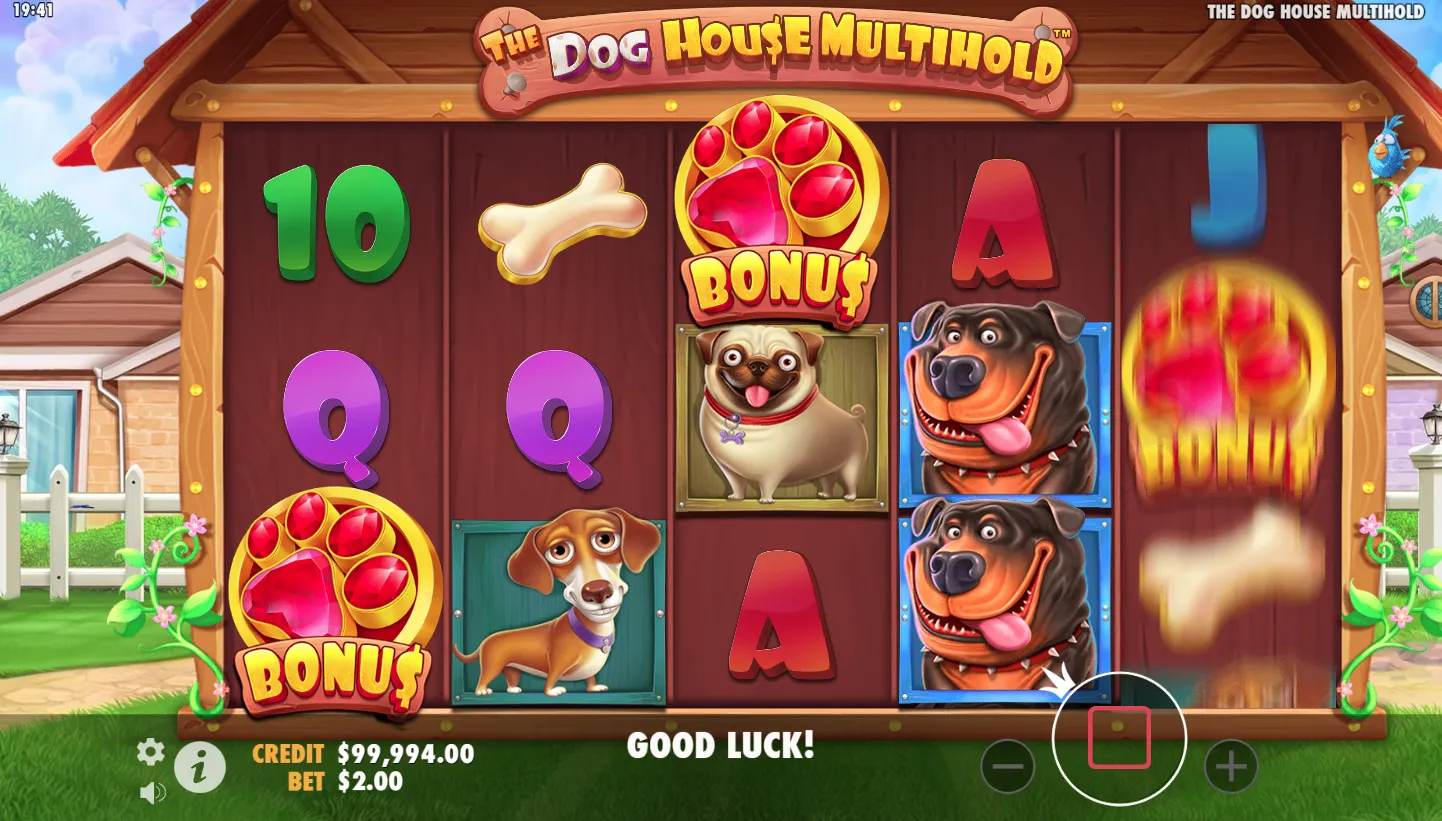
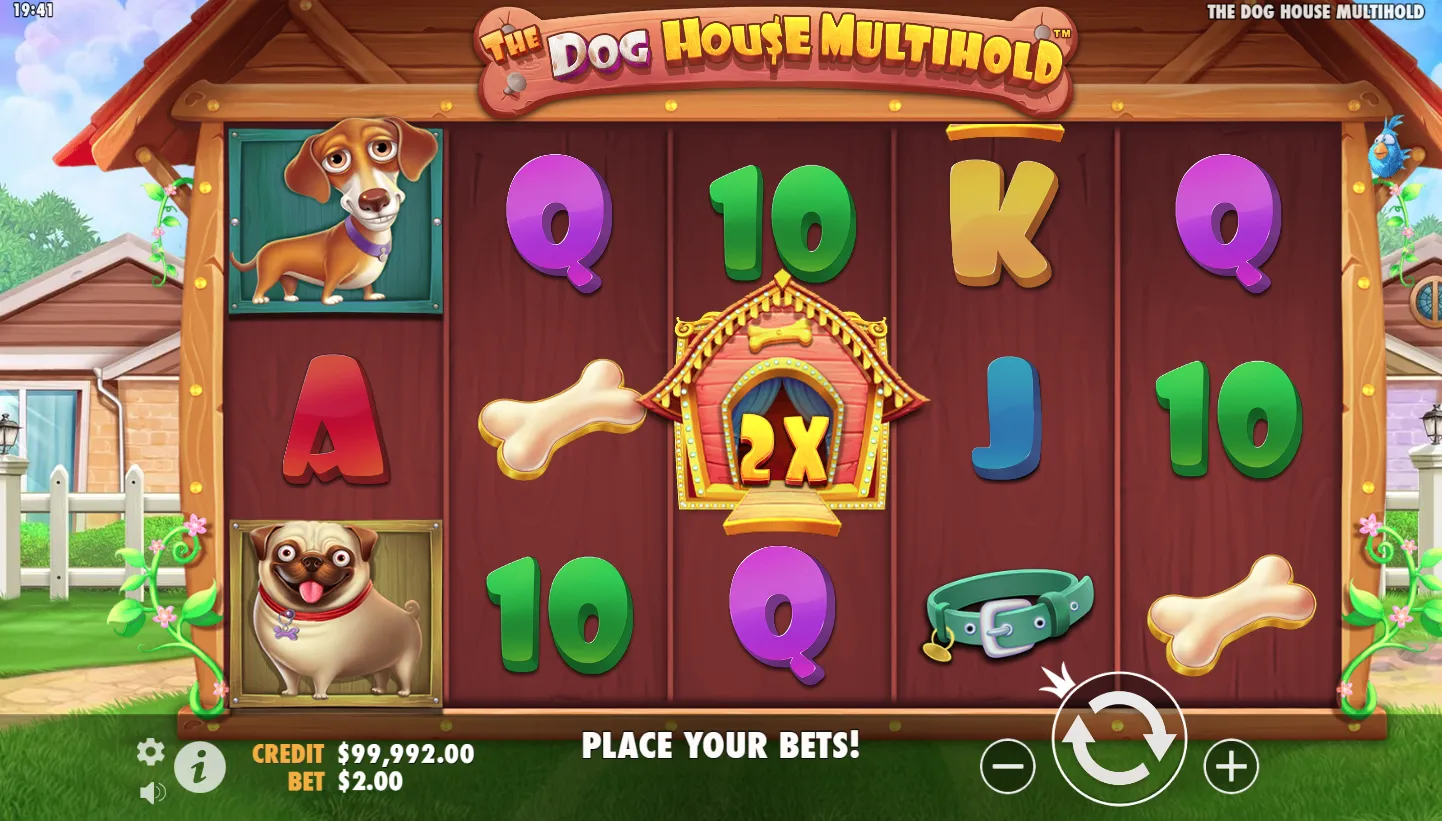
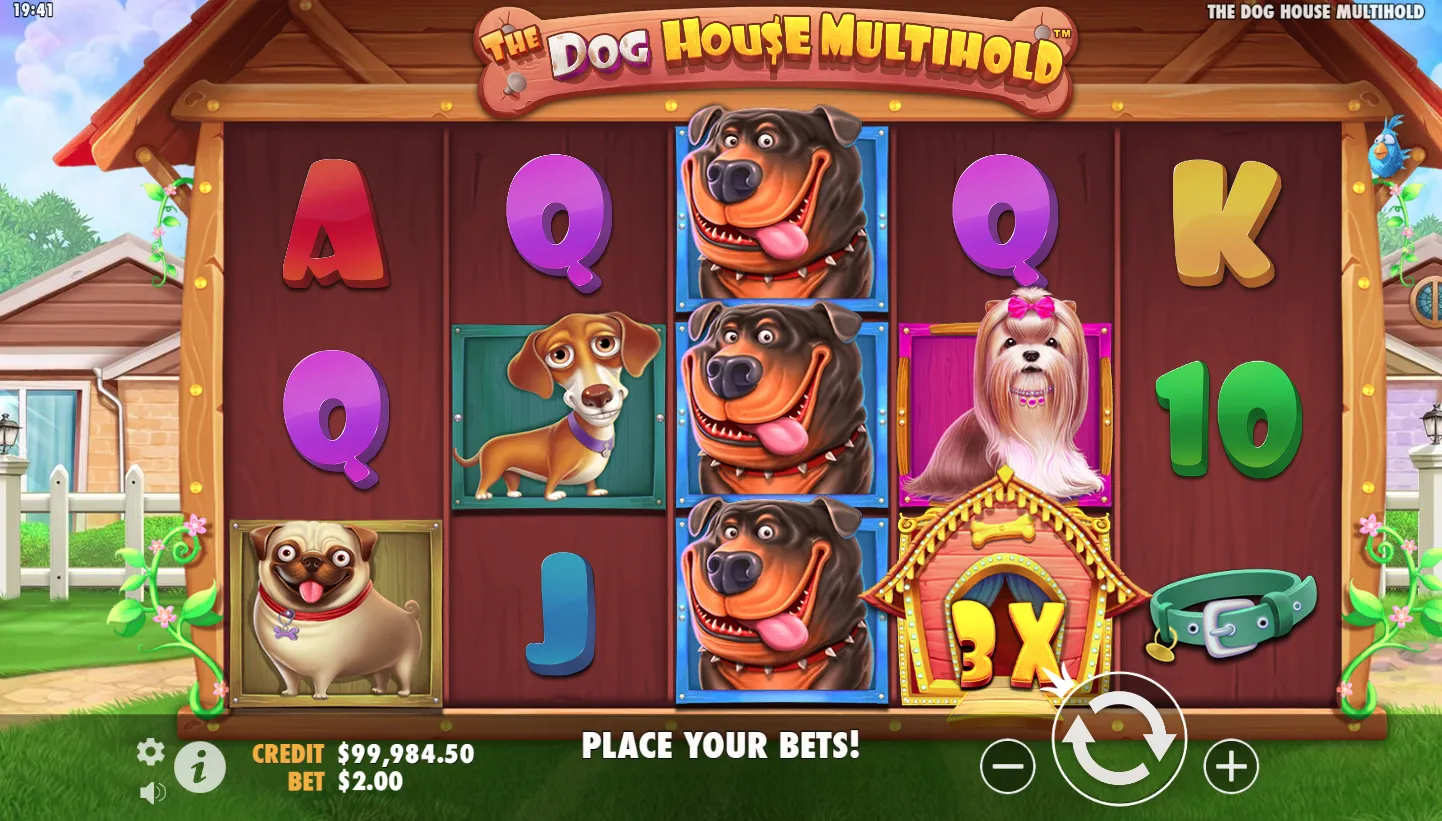
Take the wilds away and the best screen this paytable allows is the top symbol on all 20 lines at 25x, which comes to 500x, one eighteenth of the 9,000x cap. Fill the three middle reels with 3x wilds and the same screen reaches the 4,500x line ceiling. So 4,000x of the base game's best result, eight ninths of it, exists only because of the multipliers. Below the top symbol the pays fall away quickly: I count seven of the eleven paying symbols at 5x or less for five of a kind, and three of them at 0.1x for three.
Reel geometry trims the wilds as well. Wins start on the first reel and wilds never land there, so every winning line needs a paying symbol on reel 1. A win of exactly three symbols can hold wilds only on reels 2 and 3, which stops its multiplier at 6x; the best three of a kind, the top symbol at 2x, reaches 12x. The full 9x belongs to lines of four or five.
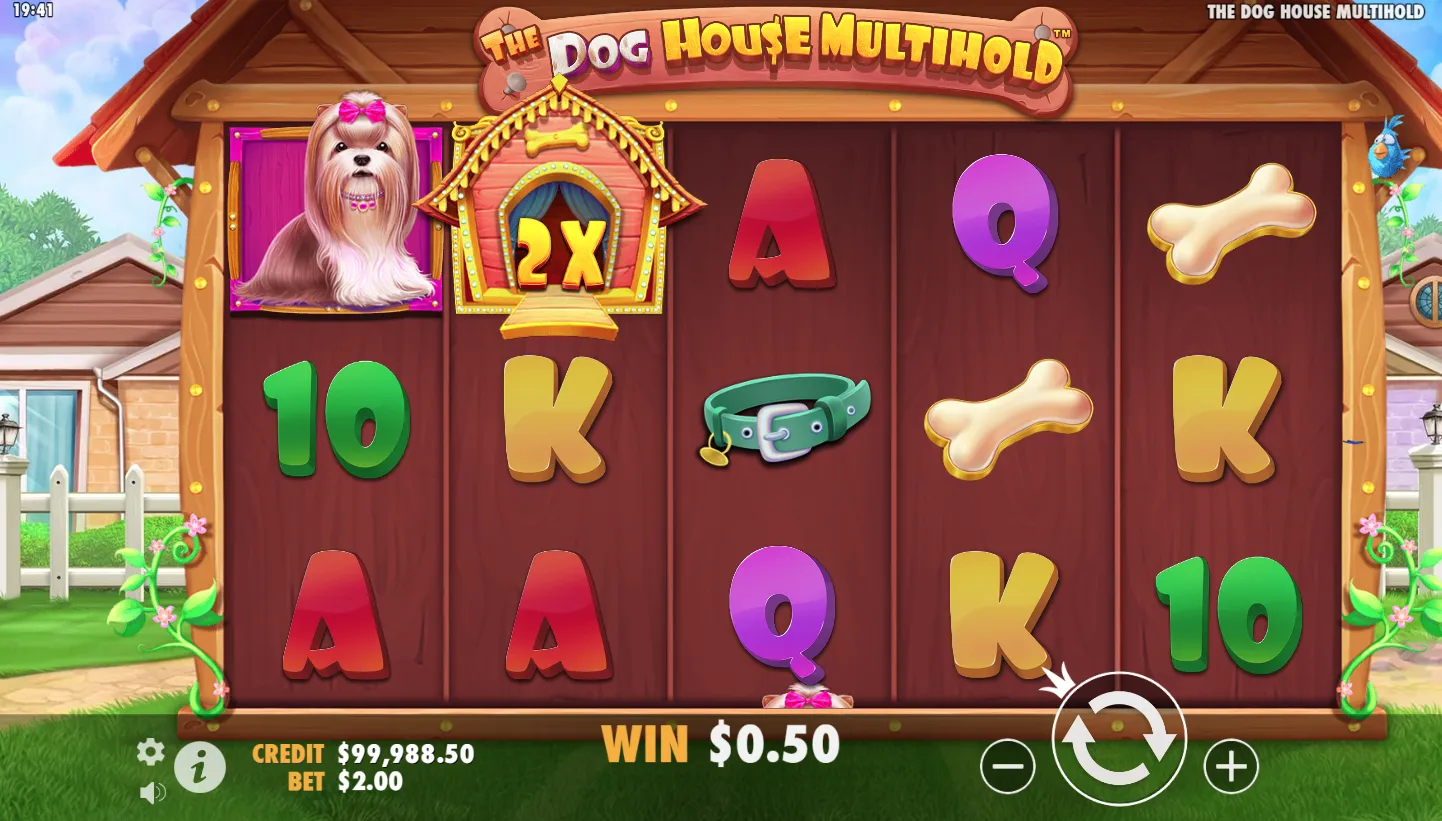
At a 24.21% hit rate a win comes about once every 4.13 spins, and the 1-in-175.54 trigger works out to roughly 42 winning spins between rounds on average, with the paytable leaving the size of those wins to the wilds. The trigger itself pays 2x. I treat the base game as a queue for free spins, because its numbers give it no other job.
Only the newest board is still growing
The unlock rules make the round serial. Scatters land only on the newest board, and only the newest board collects new sticky wilds. Once the second board opens, the first never gains another sticky wild; it keeps paying with what it holds, frozen at the layout it had when it stopped being newest. The second board freezes the same way when the third opens. At any point in the round one board is both the only source of new sticky wilds and the only route to more spins, and every older board is a copy of a past state.
Timing therefore decides the round, and the spin budget makes timing scarce. Call one board paying for one spin a board-spin. A round that never opens a second board gets at most 7 of them. The hard ceiling is four boards over 16 spins, 64 board-spins, just over nine times as much paying surface from the same trigger. Late unlocks drag real rounds toward the bottom of that range: a board that opens on the last spin, with no unlock after it, has only the one to three spins its own unlock added left to run. An early unlock on the second spin copies a young layout forward for most of the round. A first unlock on the seventh spin copies a mature layout onto a board with almost no time left.
The cap then trims the rounds where the idea works. No board can pay more than 4,500x on one spin, half the cap, so a single board needs at least two spins to reach 9,000x, while two boards at the line ceiling reach it together in one. Four would come to 18,000x, twice what a round may pay. The best layouts the copying mechanic can build pay more than the cap allows, and reaching it ends the round with any remaining spins forfeited. No base spin can pass 4,500x either, so every 9,000x win comes through free spins, and dividing the 1 in 5,266,088 max-win chance by the 1-in-175.54 trigger rate puts it at about one triggered round in 30,000.
The 100x buy is fair and does not lengthen the fuse
Buying the round costs 100x and returns 96.08%, so a purchase gives up 3.92x on average, against 3.94x for the same 100x staked in regular play at 96.06%. A 0.02x difference per buy makes the price fair and level with the base game, not a discount worth chasing. Its best case is the 9,000x cap, 90 times the price. The purchase removes the average wait of 175.54 spins, but it buys the same round: 7 starting spins, the same serial unlock chain, the same 16-spin ceiling. A fair price for a short fuse is still a price for a short fuse. The UK build has no buy at all.
Return setting moves the cost of play far more than the buy decision does. On the 95.14% build, 100x of stake gives up 4.86x on average, almost a quarter more than at 96.06%. That 0.92x gap is 46 times the 0.02x separating the buy from regular play.
The idea is better than the round built around it
This game suits a player who wants a high-volatility bonus settled in its first few spins and who accepts that the copying mechanic needs early unlocks to show its best side. It does not suit anyone after a base game with substance, since the paytable stops at 500x before wilds, or anyone who wants sticky multiplier wilds without an unlock race; The Dog House runs that idea on a single 20-line board. I rate the board-copying mechanic above the round that hosts it. The 6.7 holds both halves: a genuine idea and a fair buy, kept under 7 by a round of at most 16 spins that asks four boards to share it.