The most copied maths of the last five years
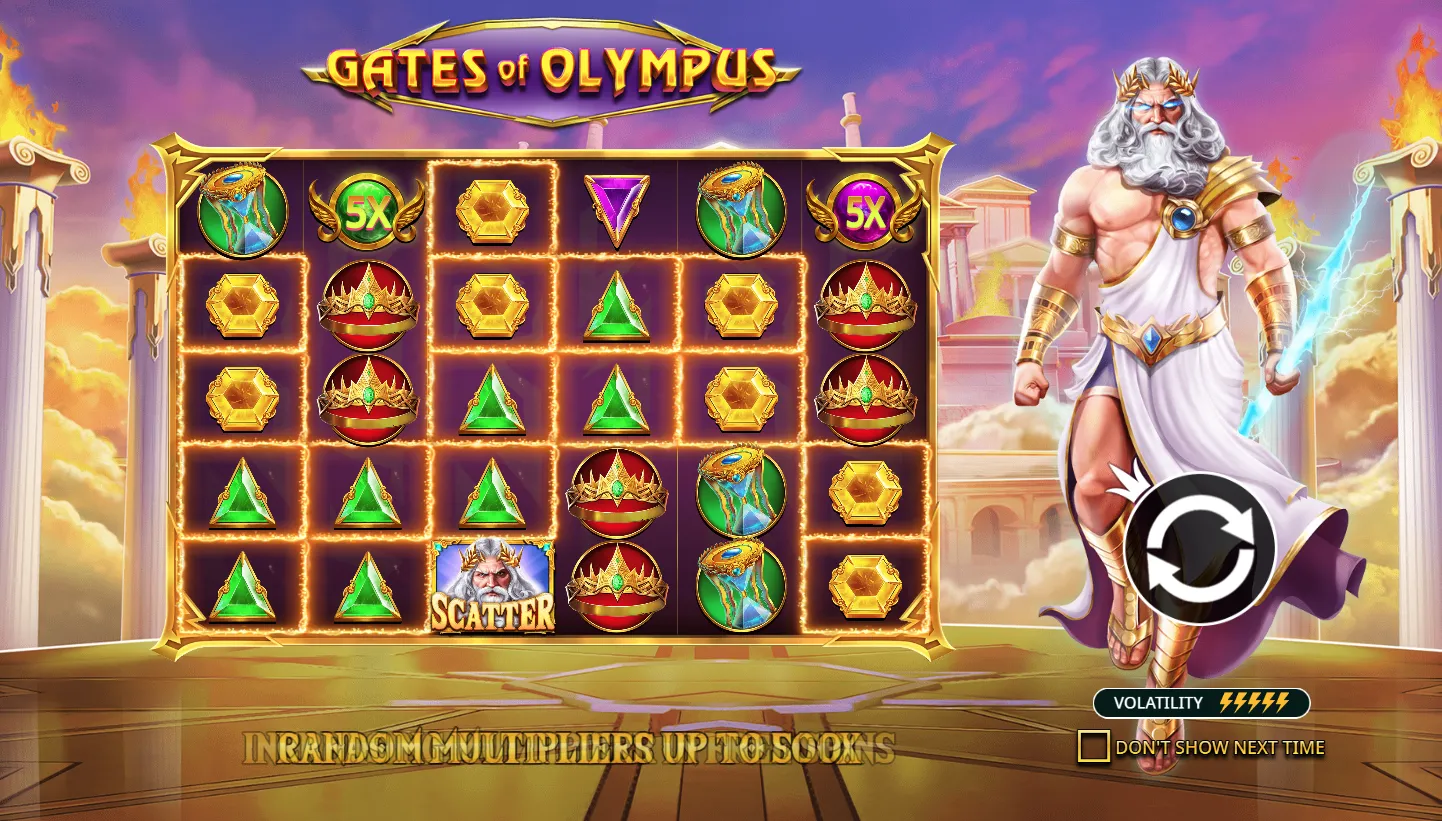
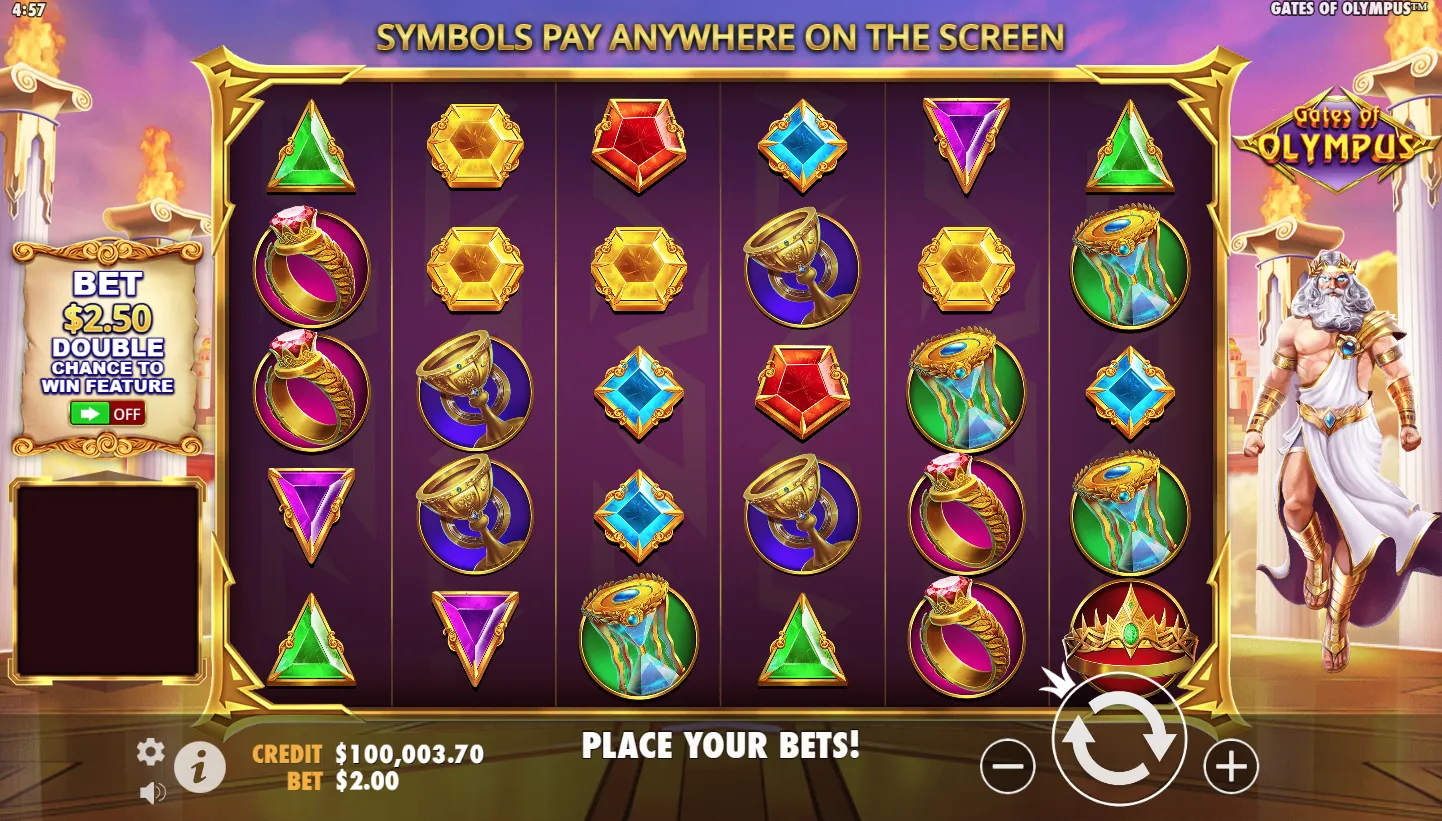
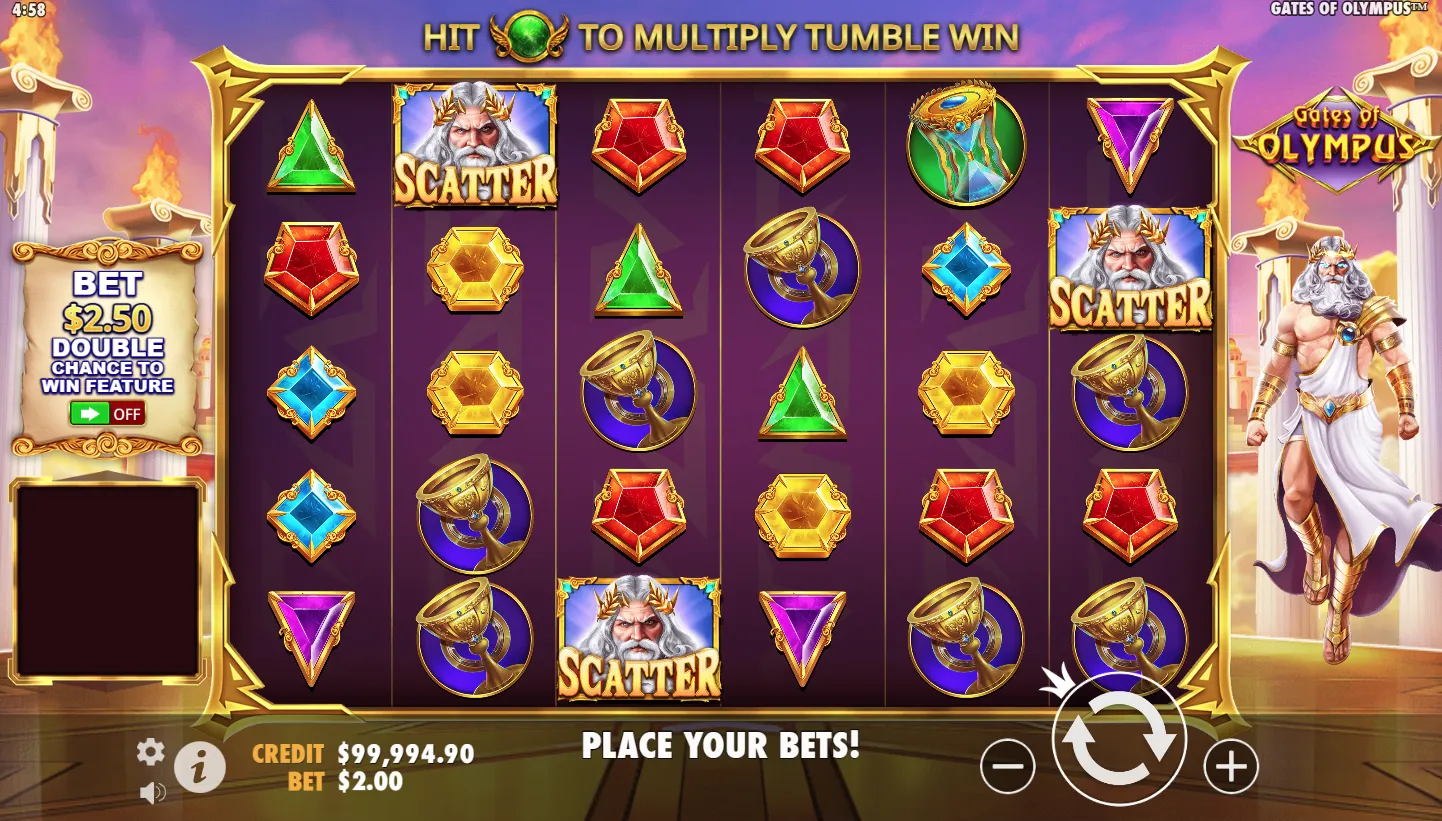
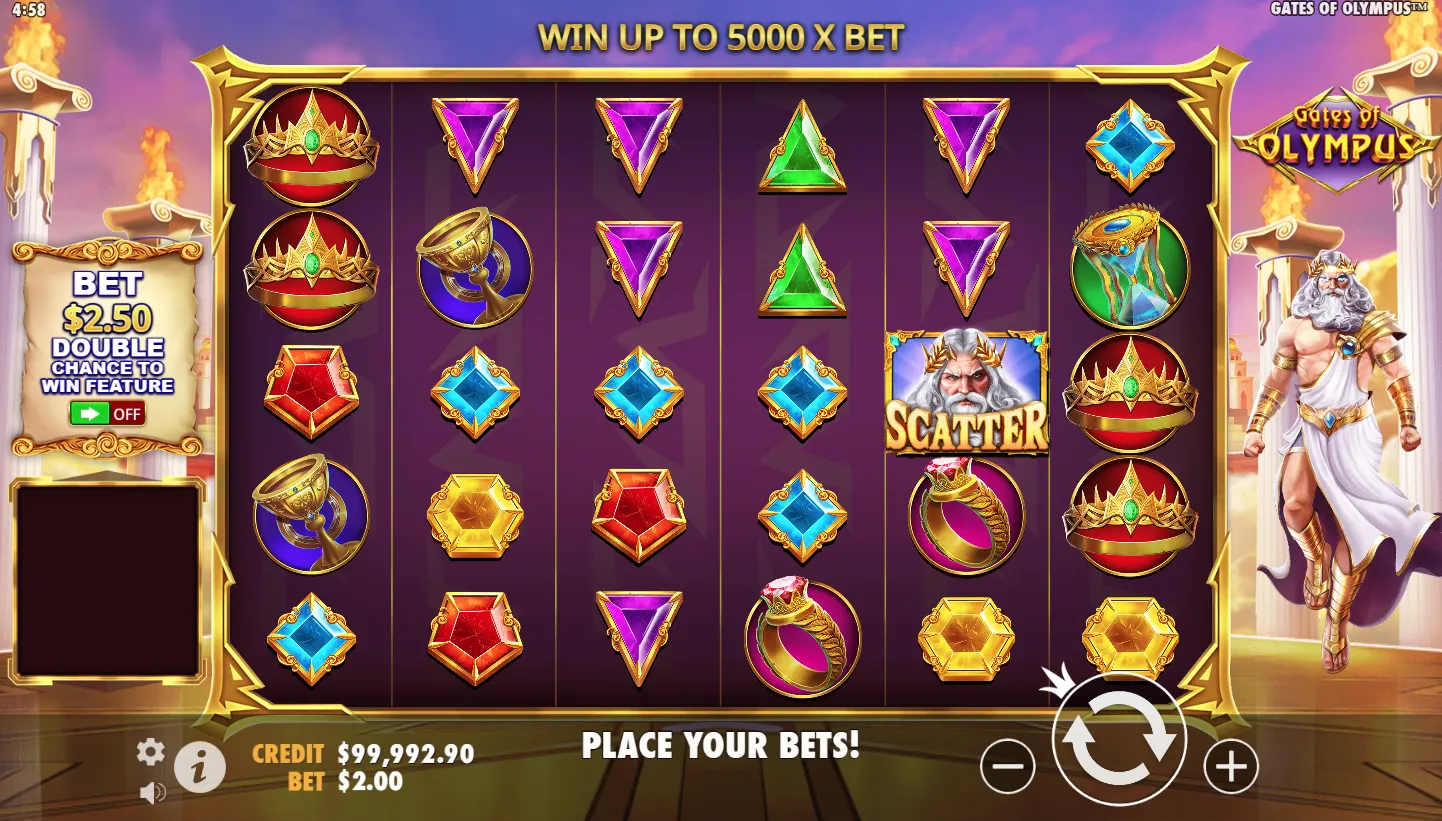
Gates of Olympus came out in February 2021, and the shape of it is now everywhere. Pay anywhere by symbol count, tumbling wins, and multiplier symbols that land at random and get added together. That combination was not the default before this game and it has been the default ever since. What gets lost in the cloning is how deliberate the original is. Every number in it points the same direction, and once you see the direction, the game stops looking like a slot with a good bonus and starts looking like a machine built for one moment.
The paytable is supposed to be bad
Start with the table, because it is where most readers stop and it is the most misread part of the game. Nine paying symbols, three count bands, and five of those nine return the stake or less for eight or nine of a kind. The blue gem pays 0.25× for its lowest band. Twelve or more crowns, the best result a single symbol can produce, pay 50×. There is no wild.
Line that up against a round cap of 5,000× the bet and the arithmetic is blunt. The whole paytable reaches one hundredth of the ceiling. Everything above that has to arrive from multiplier symbols, which means the base game is not really a pay-per-spin game at all. It is a lottery for orbs, dressed in enough small wins to keep the reels turning. The Zeus scatter paying 100× for six or more is the tell. The largest single pay in the game belongs to the one symbol that is not doing the paytable's job.
That is not a flaw, and I think calling it one misses why this game took over. A thin table is exactly what makes an orb landing feel like an event, and tumbling means every win buys another look at the board. Small win, refill, another chance at a multiplier, repeat. That loop is the product. Plenty of pay-anywhere slots before it paid better and none of them were copied, because paying better is not the same as being built to be watched.
The round-long total, and the catch
Four Zeus scatters open fifteen free spins and three more during the round add another five. Inside the round one rule changes and it changes everything. A multiplier that lands on a winning sequence joins a total that lasts the whole round and never resets. A round that collects a 25×, a 50× and a 100× early is carrying 175× into everything that follows.
Everything that follows with a fresh orb on it. That is the single most useful thing to understand about this game. The total pays only on sequences where a new multiplier also lands. A winning free spin with no orb on the board is paid at face value, however tall the total has grown. So a 300× total is not a 300× round. It is a 300× coupon that only gets stamped when the board cooperates twice in the same sequence.
That one rule is why two rounds from the same trigger finish nowhere near each other. The total is not a balance you are spending down, it is a bonus you have to keep re-earning.
Understand that and the game reads differently. The free spins are not fifteen spins at a rising multiplier. They are fifteen chances to land an orb on a winning board, with the payoff for doing so getting better each time it works.
Where it has actually aged
Here is the real criticism, and it is not the paytable. Every round stops at 5,000× the bet. The multiplier ladder runs to 500×. One 500× orb on a 10× sequence reaches the ceiling exactly, ends the round on the spot, and forfeits whatever free spins were still to come. The design tops out before its own best mechanic has finished working. In the 96.50% build the odds of that ending are one in 697,350 spins, so it is rare rather than routine, and rare does not make it any less odd. The game holds a 500× symbol and a 5,000× ceiling in the same hand.
Pragmatic Play appear to agree, because both follow-ups moved the number. Gates of Olympus Super Scatter runs the same engine up to a 50,000× cap. The 1000 version rebuilt the multiplier range around a different maximum. Which leaves the original as the version of itself with the lowest ceiling. That is a strange place for the game that defined the format to end up, and it is the honest reason to look at the shelf above it.
Which of the two purchases I would take
They are not equally good and the popular one is the weaker one. The ante raises the stake from twenty coins to twenty-five and doubles the natural chance of the trigger. Twenty-five percent more money for twice the frequency, with the return unchanged, is a genuinely fair trade. I would go further and call it underpriced, which is not a sentence I write about ante bets often. It buys down variance for a quarter.
The buy costs 100× the total bet for the same fifteen spins, two thousand coins on the standard stake. Its return also matches base play, so nothing dishonest is going on. Then look at what the ceiling does to it. The round is capped at 5,000×, which is fifty times what the round cost. Every feature buy has a best case expressed as a multiple of its own price, and fifty is thin for a game this volatile. The ante can be run all session. The buy is one swing with a known and fairly low roof.
One more thing that belongs in any decision here. The return is not fixed. Casinos can run this game at 96.50% or at 94.50%, and the ante and the buy both follow whichever build the casino installed. Two points of return is a lot to hand over on a game you intend to play at length, so the rules screen is worth opening before the ante is.
The score
Four years on, this is still the cleanest expression of the engine it invented. The free-spins total is a better idea than almost everything built on top of it, the ante is priced in the player's favour, and the buy is honest even where I would not take it. The paytable is thin on purpose and I will not mark it down for doing its job. What I do mark down is a 5,000× ceiling on a 500× ladder, especially now that the same studio sells two versions of this game with more room in them. A landmark that has been outbuilt by its own children lands at 7.6, and it stays there because nothing that copied it has improved the part that mattered.