A borrowed board with a ladder sized to its ceiling
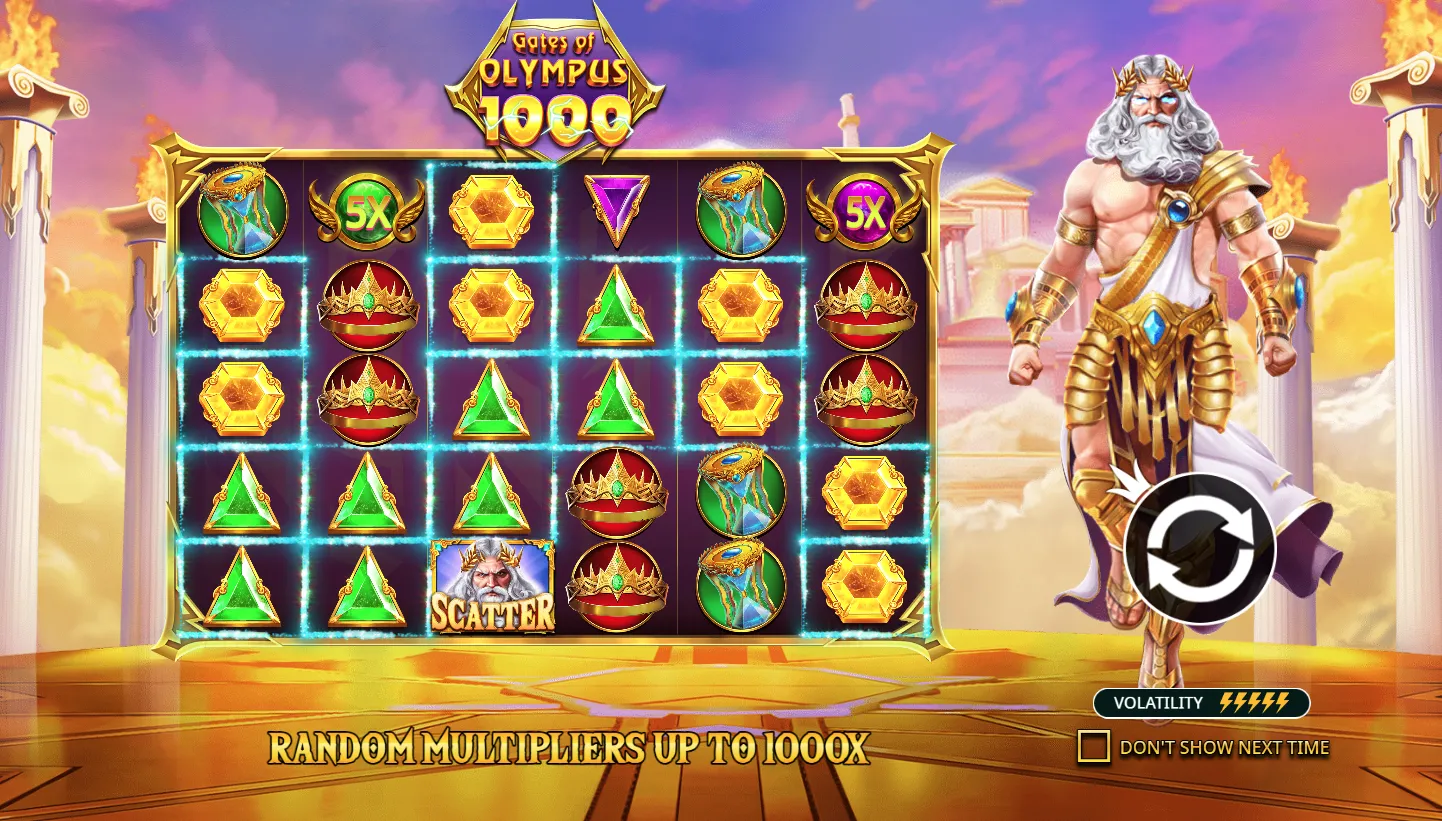
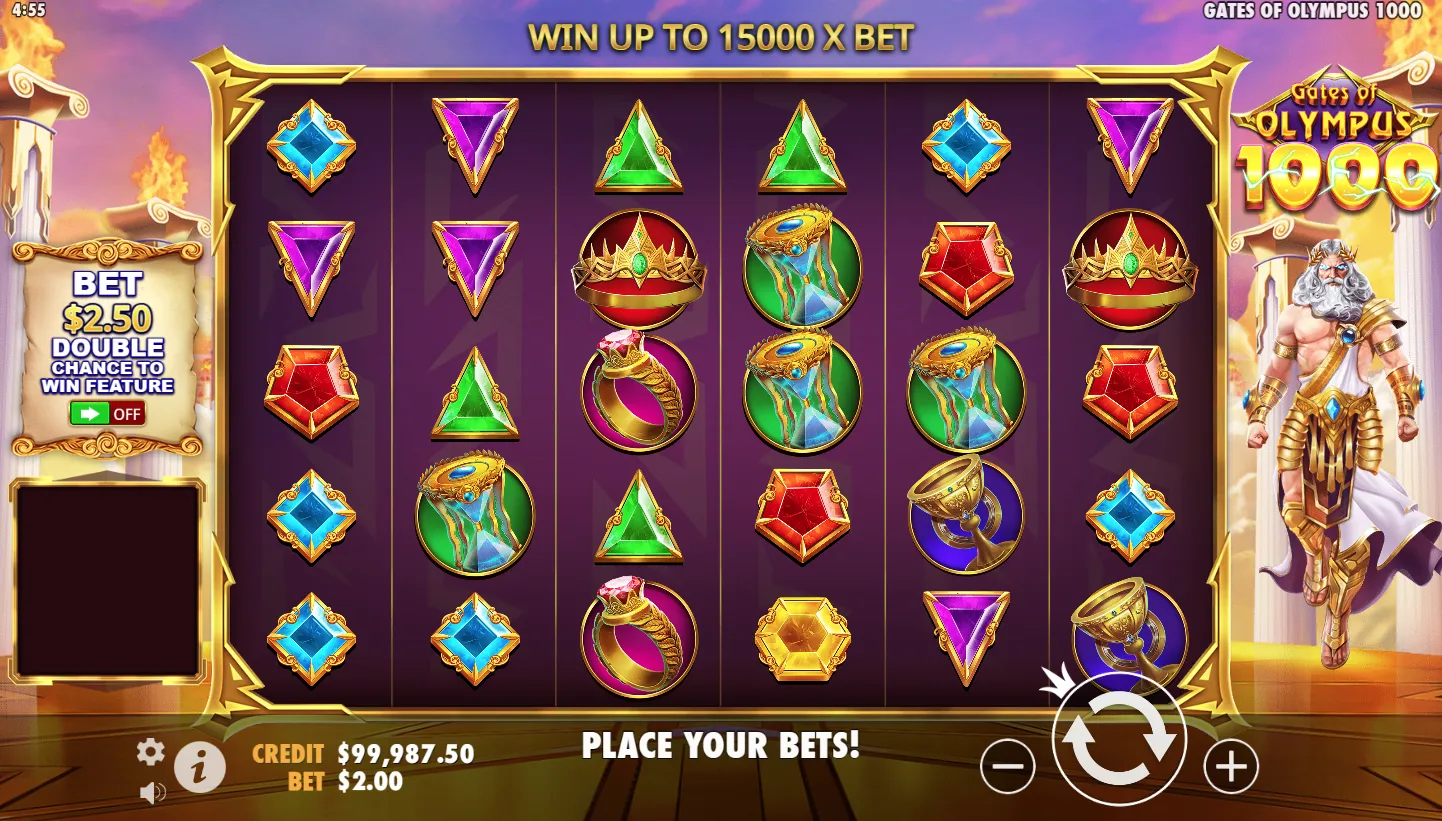
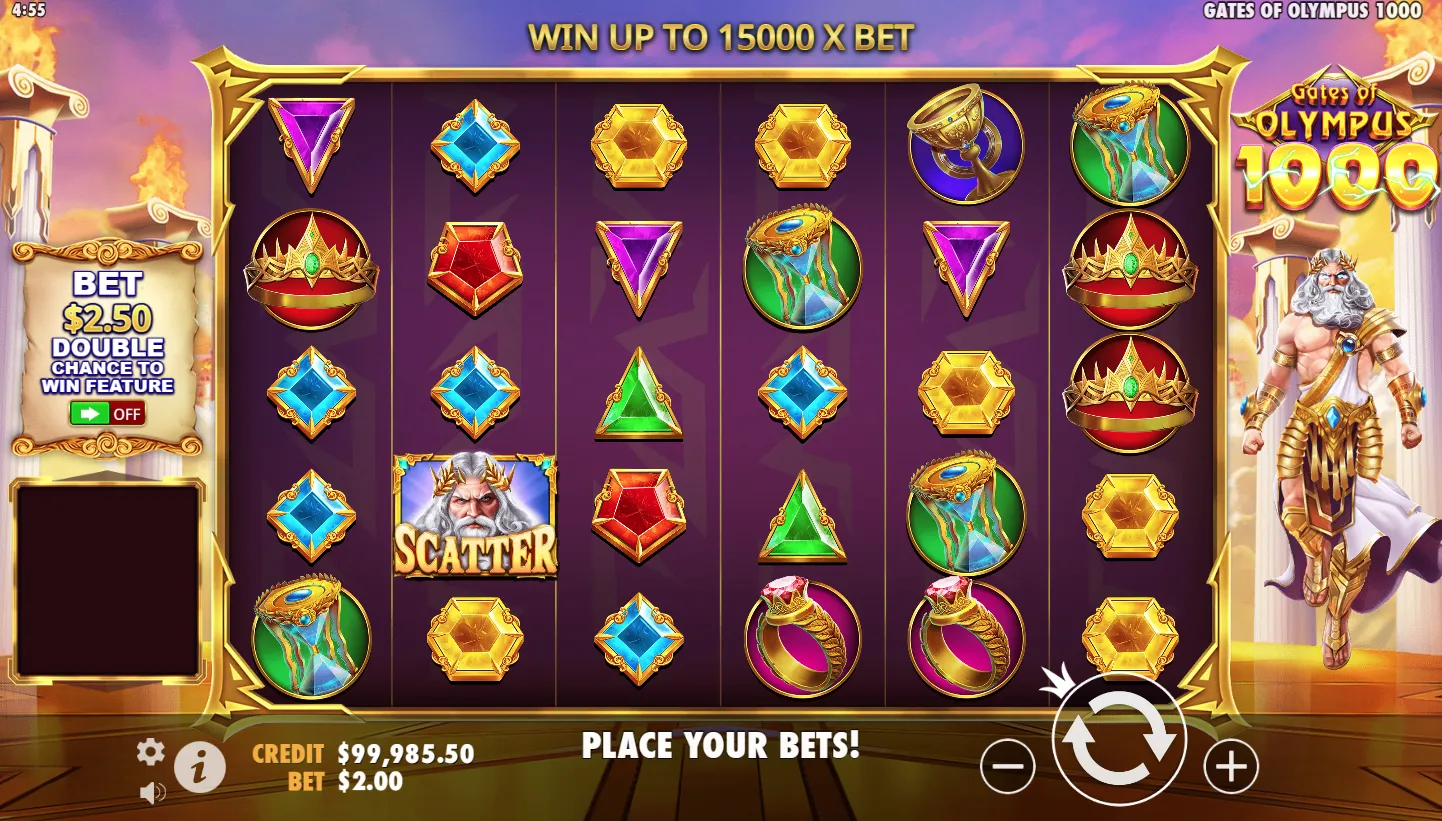
Gates of Olympus 1000 invents nothing. It runs on the 6x5 pay-anywhere tumble board of the original Gates of Olympus, it shares the rule that multiplier values are added together on a winning tumble sequence with Starlight Princess 1000 in the same line, and Gates of Olympus Super Scatter is yet another variant on that board. The name points at the top of the multiplier ladder, and I think the game's whole case rests on the ceiling set above it. I read those two numbers as set for each other: a 1000x multiplier on a 15x win is exactly the 15,000x cap. I find no mode priced as a trap, so the question this game poses is narrow. Can one symbol carry a board whose paytable, ante and free spins total add so little of their own? Mostly, and the distance between mostly and fully is what holds my score down.
The paytable cannot get near the cap alone
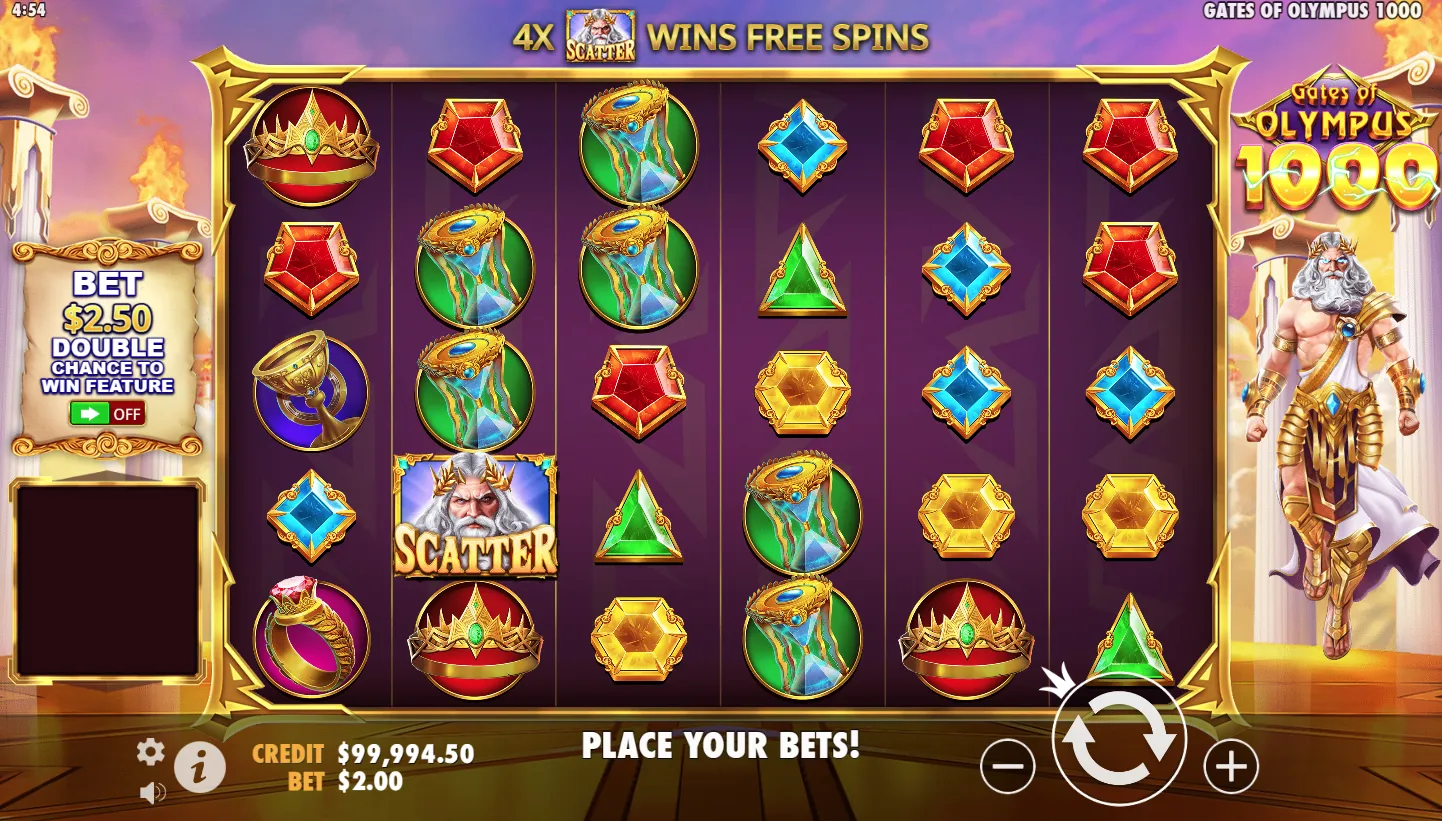
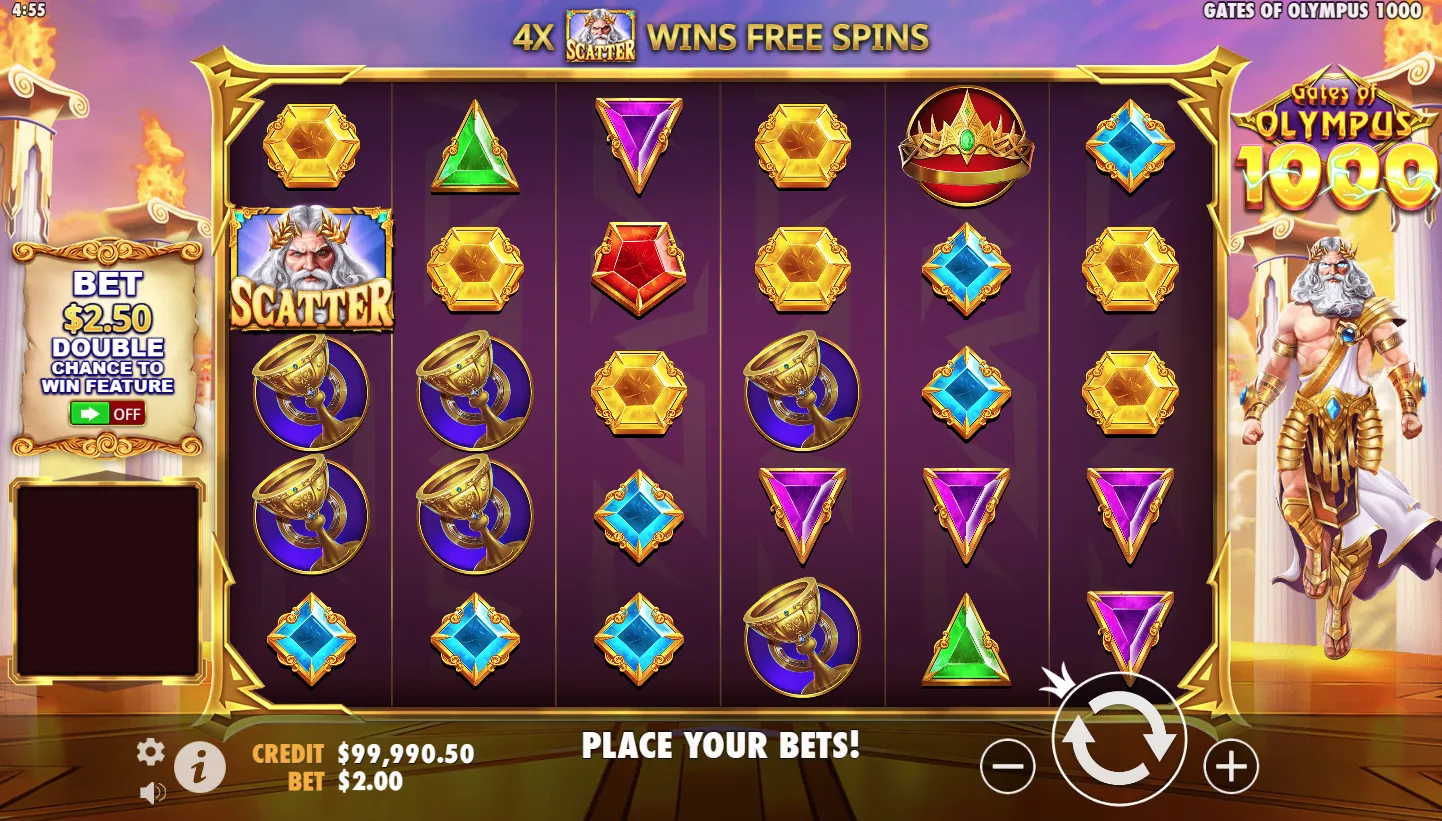
There is no wild, and I count four of the five gems paying under the base bet for eight or nine copies, from 0.8x down to 0.25x. The richest single board of symbol wins I can build on 30 cells is twelve crowns beside twelve hourglasses, 50x plus 25x for 75x. The best three-way split I can find, twelve crowns, ten hourglasses and eight rings, reaches only 62x. Scatters aside, 75x is one two-hundredth of the cap.
Closing that gap on one board takes multipliers summing to 200x. Only three of the sixteen values, 250x, 500x and 1000x, clear that alone, and every lower value needs company.
Spins where no multiplier lands pay the flat table, and the bottom of the ladder barely changes that. A 2x on eight of the lowest gem returns 0.5x. A 6x on eight of the second gem returns 4.8x. The multiplier symbol pays nothing by itself and is wasted on a sequence without a win, so I read the base game as a run of sub-stake returns broken by the moments a multiplier and a win coincide. That is the design rather than a defect, but a 30-cell board promises more texture than this table delivers.
The cap is cut to fit the 1000x
When I divide the cap by the top multiplier I get 15, and that one quotient explains most of the game. The table has 27 pay bands, nine symbols at three counts each. Under a lone 1000x, 23 of them pay in full, the ring at twelve or more lands exactly on 15,000x, and three run into the ceiling: the crown at ten or eleven, the crown at twelve or more, and the hourglass at twelve or more. The crown's top band would be worth 50,000x, so the cap throws away 70% of it.
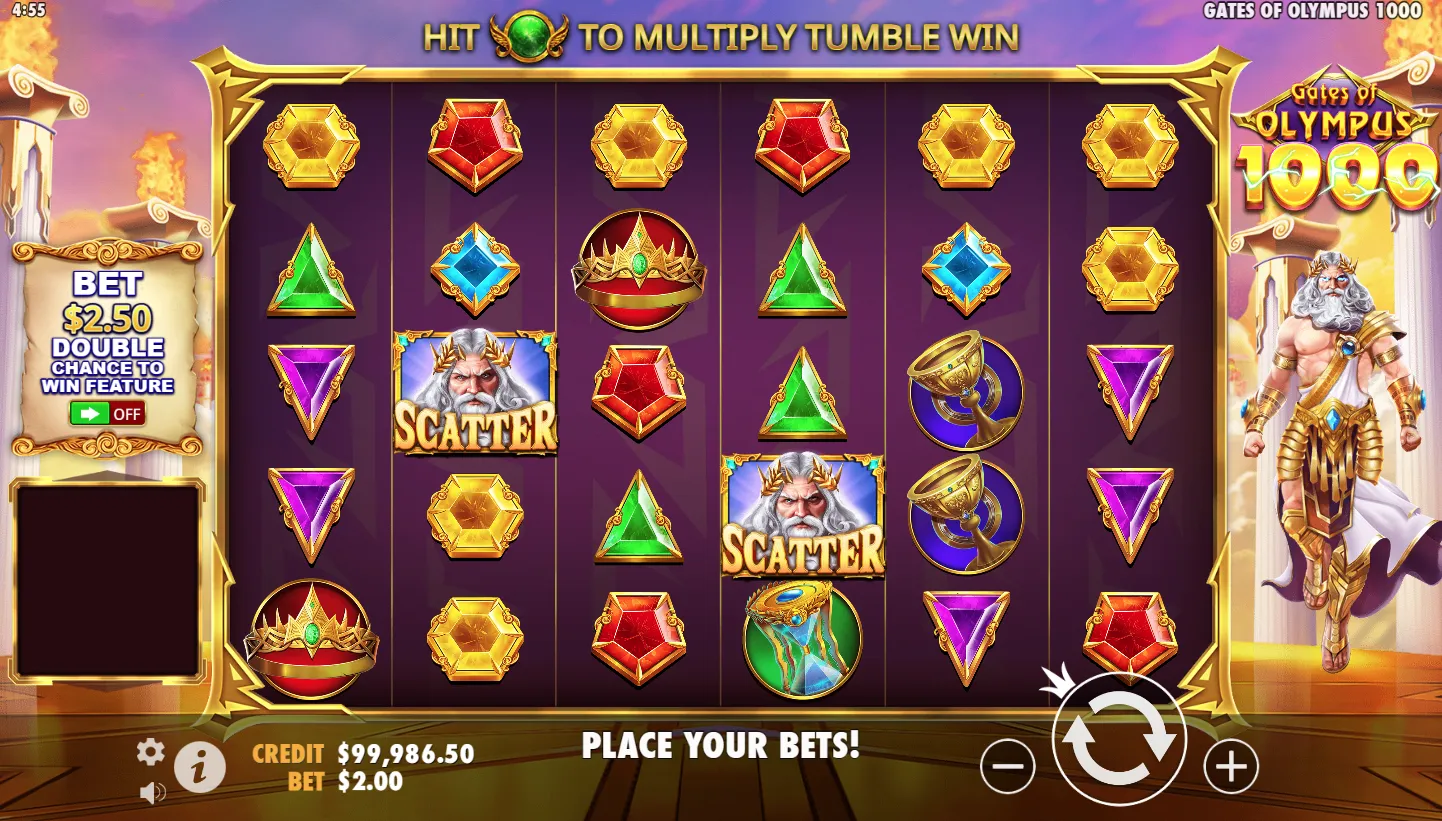
This is where the 1000x earns its place. A ceiling of 15,000x lets the biggest multiplier act on nearly every ordinary win and pay the whole product, so I treat it as a working value rather than a number printed for the badge. Tumble wins in a sequence are added before the multiplier applies, which means a chain of small wins that sums past 15x reaches the cap as surely as one big group.
The same division sets the limit. A 1000x on a strong sequence pays no more than a 1000x on a middling one, and the cap ends the round at once, forfeiting every feature still to come. The top rung is built to meet the ceiling, never to see past it.
The free spins total waits for a coincidence
Four scatters start 15 free spins on their own reels, and three more during the round add five. I rate its defining rule as its weak point. A multiplier that lands on a winning spin joins a total that lasts the round, but the total multiplies a win only when a fresh multiplier lands on that same winning spin. A win with no new multiplier pays its symbol wins and nothing more, however large the total has grown.
I value the round by how often a win and a fresh multiplier coincide, not by what the total displays. A large total is a promise that the next coincidence will be expensive; if none comes, the round ends on what the flat table paid in between. The arithmetic turns sharply once a 1000x has joined. From that point any winning spin with even a fresh 2x is multiplied by at least 1,002, a 15x win on that spin caps the round, and the spins left over are forfeited. The round's best outcome is also its abrupt end.
The ante trades base-game wins for rounds
The ante raises the stake from 20 coins to 25 while every symbol win stays a multiple of the base bet. Measured against what is actually staked, each symbol win shrinks to 80% of its value: the crown's 50x becomes 40x of the stake, and the cap falls to 12,000x of it. The return holds at 96.50% because the doubled trigger chance makes up the difference. Reaching a free spins round naturally costs 62.5% as much stake with the ante on, twice as likely at 1.25 times the price per spin. I call the trade fair, but it moves value out of the spins that run every time and into the round that runs rarely, on a game whose base spins were already thin. It also locks the buy out.
The buy is honest and changes only the wait
Buy Free Spins costs 100x and returns 96.49%, so a purchase returns 96.49x on average and costs 3.51x in expectation, about what a hundred base spins cost at 96.50%. Its best case is the cap, 150 times its own price. Against a natural trigger of 1 in 448 spins, the buy swaps 448 spins of waiting for the expected cost of about a hundred, and gives up the base-game chances those spins carry, a base-game 1000x included. I see nothing in the price that works as a trap. What it buys is only the free spins round, with a total that idles between fresh multipliers.
Who the maths suits
I would point this game at a player who wants the multiplier ladder and accepts that most spins return a fraction of the stake while a multiplier and a win fail to coincide. Anyone who wants the paytable itself to carry weight, a wild to repair near-misses, or a free spins total that pays on every win should look elsewhere, because the 1000 in the title names the top multiplier, not a richer frame. The return setting matters more than the mode: at the lowest casino setting of 94.50%, the expected cost of a hundred base bets rises from 3.5x to 5.5x, 57% more, and the rules screen shows which setting is running. My score rests on a ladder and a cap that work as a matched pair and on prices that set no trap, and it stops short of the next band because the board around them is thin.