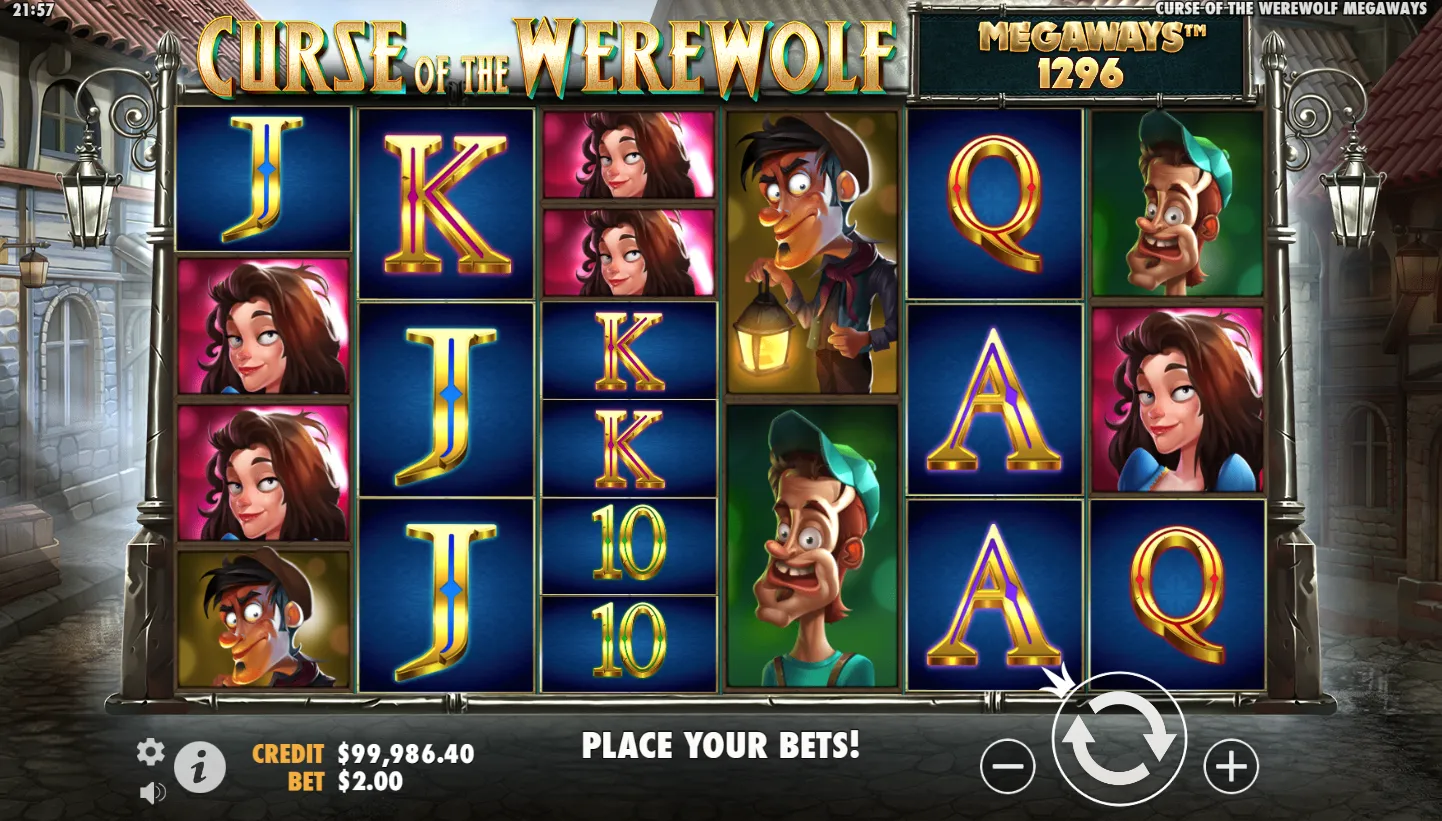
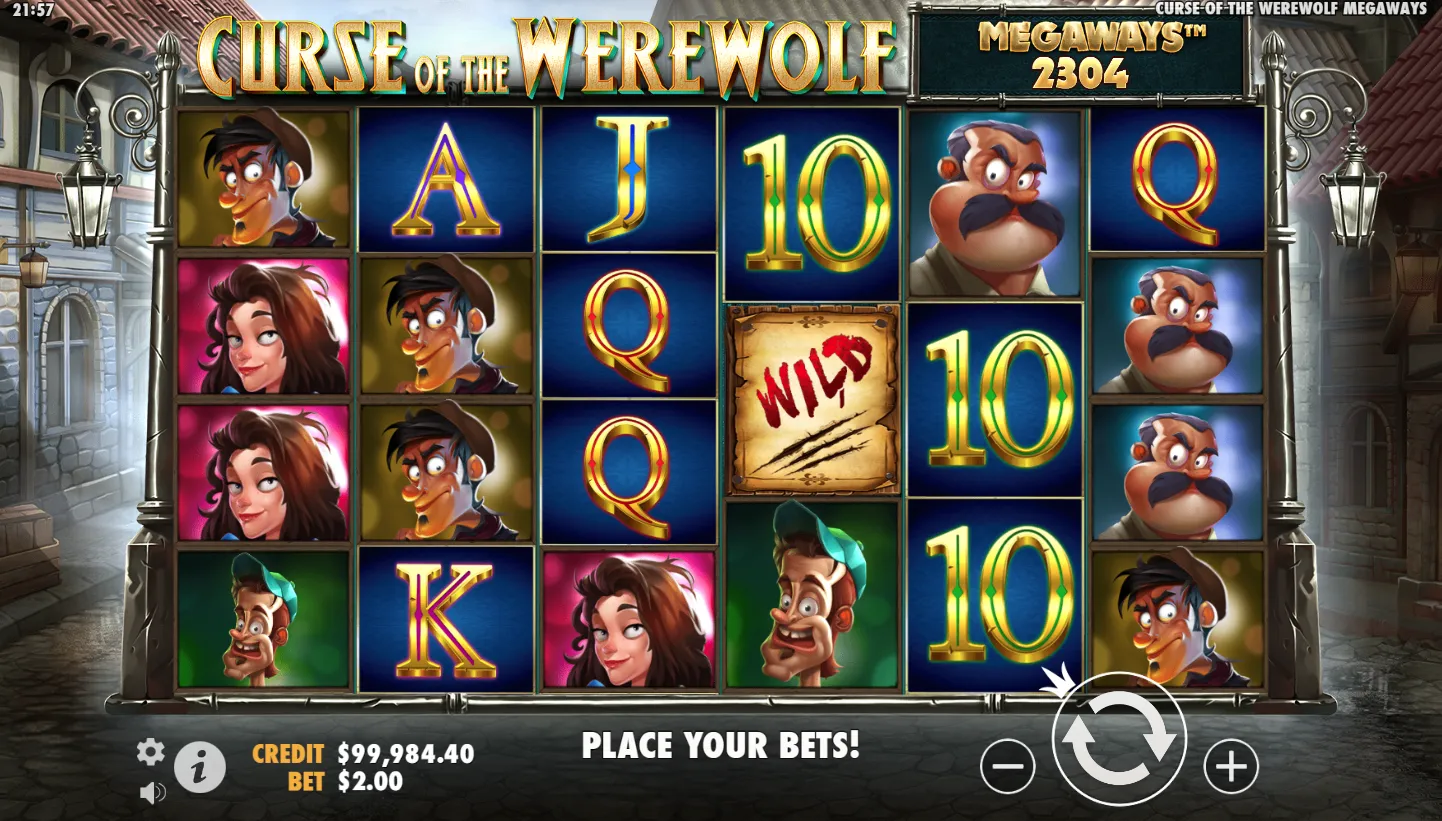
Every road in this game runs through one symbol
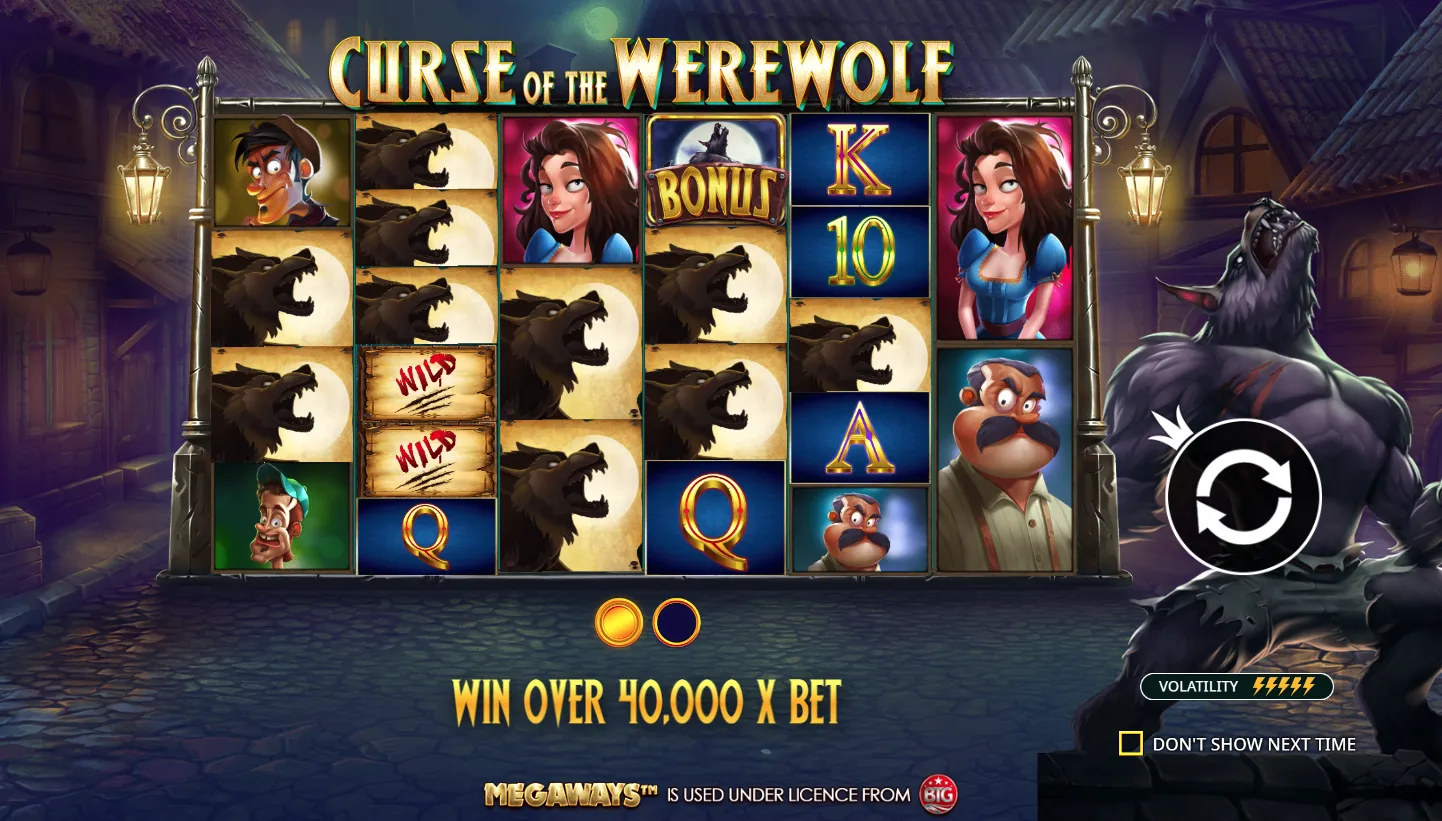
I read Curse of the Werewolf Megaways as a game about a single symbol. The Werewolf pays 10x per way for six, and the other nine symbols in the paytable top out at half of that or less. The free spins exist to turn four of those lesser symbols into Werewolves, and because a ways win multiplies the matching count on each reel, a conversion is worth far more than the gap between two paytable lines. Villager conversion is a good idea and it earns most of the 6.6 on this page. Everything else in the design is a way of waiting for it.
The frame is the one Pragmatic Play also uses for Great Rhino Megaways and Power of Thor Megaways: six reels, each landing a random height, with the ways count following from the heights. Free spins that build value for the rest of the round are shared with The Dog House Megaways, from the same studio. What this game adds is the method. It builds without a multiplier of any kind, by rewriting the reel strips so that more of what lands is Werewolf. That method is the part I call its own, and it sets the game apart from its siblings. It cannot carry the spins where it is absent, and that is most of them.
A conversion is worth far more than the line it replaces
Read line by line, conversion looks modest. Six green-cap villagers pay 1.5x and six Werewolves pay 10x, an upgrade of under seven times. Converting the Lamplighter, whose six pay 5x, looks like a mere doubling.
That reading misses how ways count. A symbol's ways are its copies on each reel multiplied together, substitutes included, so a conversion does not upgrade a line. It merges two counts into one. Take a screen where every reel shows one Werewolf and one green-cap villager: one Werewolf way at 10x and one villager way at 1.5x, 11.5x in all. Convert the villager and the same twelve positions hold two Werewolves a reel, which is 64 ways and 640x, about 56 times as much. From two a reel to three multiplies the Werewolf ways again by about 11, and from three to four by under 6, so each step adds more in absolute terms than the last.
The leftmost reel matters most in that product. The Wild lands on reels 2 to 6, so it can raise five of the six factors and never the first. On reel 1 the count comes from Werewolves and from symbols that count as one, which in free spins means golden Attacking Werewolves and converted villagers. Conversion is the device that puts more Werewolves on the first reel strip for the rest of the round.
The cost of this design is the stretch before a conversion lands. Lives taken from a villager who still has some left change nothing on the reel strips, so the life-taking half of each golden hit is deferred value until one villager reaches zero. Four villagers at five lives each put twenty lives between the first free spin and a board where the Werewolf is the only high symbol, and a hit removes one to five of them. Until the first villager turns, the round pays paytable values on reels richer in Werewolves than the base game, with nothing on top.
The cap sits just above four Werewolves a reel
With no multiplier in any phase, the only route to 40,976x is volume. That figure is 4,097.6 six-Werewolf ways' worth of pay, because the best single way in the paytable is 10x.
Four Werewolves or substitutes on every reel make 4,096 ways, 16x short of the cap. Put a fifth on any one of those reels and the product becomes 5,120 ways, or 51,200x, which the cap cuts back to 40,976x. A full screen of Werewolves at six rows a reel would make 46,656 ways and 466,560x, more than eleven times the cap.
The cap is therefore not a distant ceiling. It sits inside the range a heavily converted round on tall reels can produce, and every board with at least four on each reel and five on any of them ends its round on the same 40,976x, forfeiting whatever features remain. I do not hold that against the game. The cap is 409.76 times the buy price, and at 1 in 1,000,000,000 spins it belongs to the design rather than to anyone's expectations. It does mean the top of the conversion ladder is one fixed number rather than a climb.
The base game is three one-spin gambles on a flat paytable
Each device that lifts a base-game spin lasts that spin only: the Mystery symbol, the Super Spin, the Guaranteed Win spin and the Wild. Nothing builds from one base spin to the next. The hit rate of 22.4% already counts Super Spins and Guaranteed Win spins, so more than three base spins in four pay nothing at all.
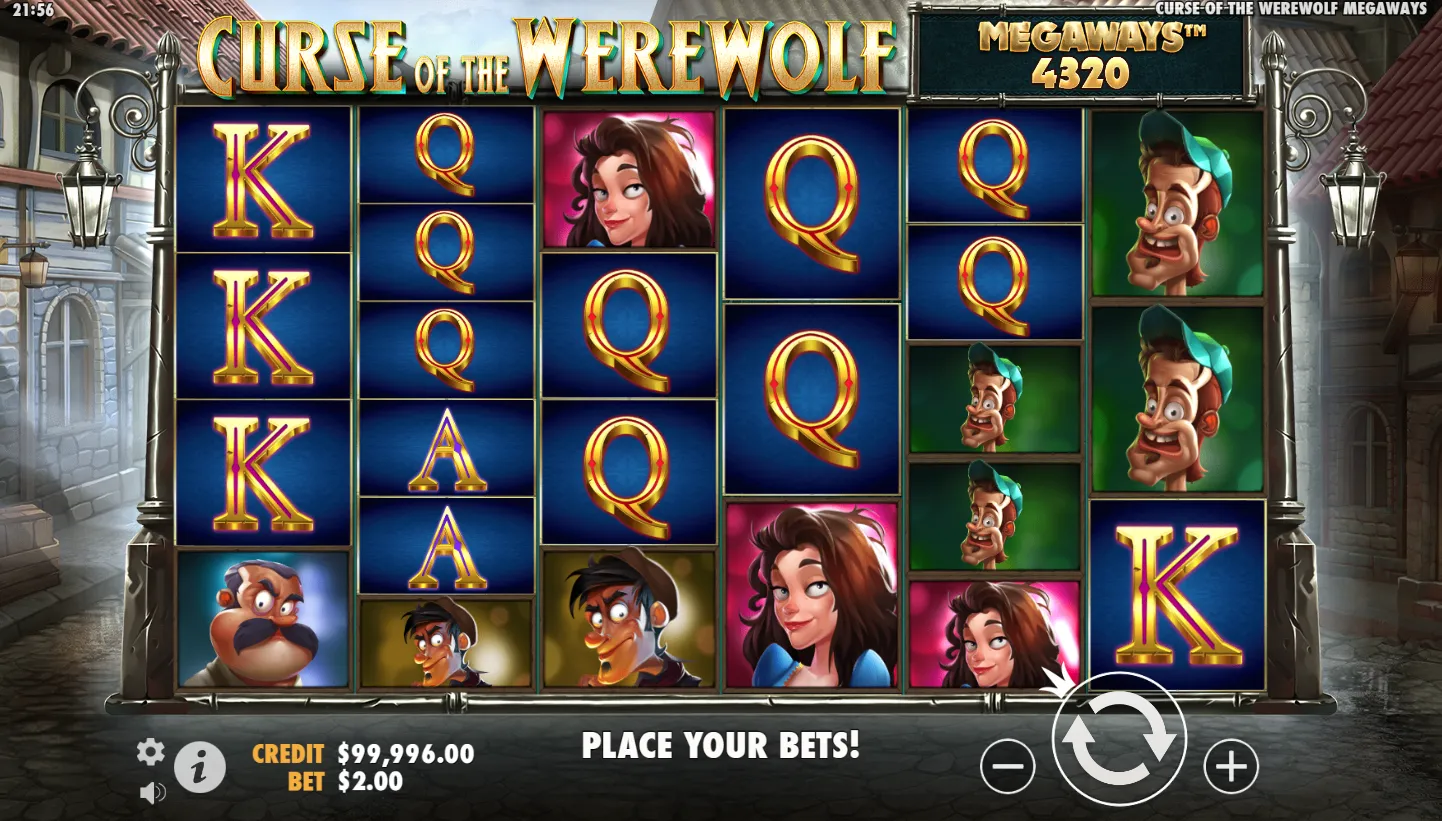
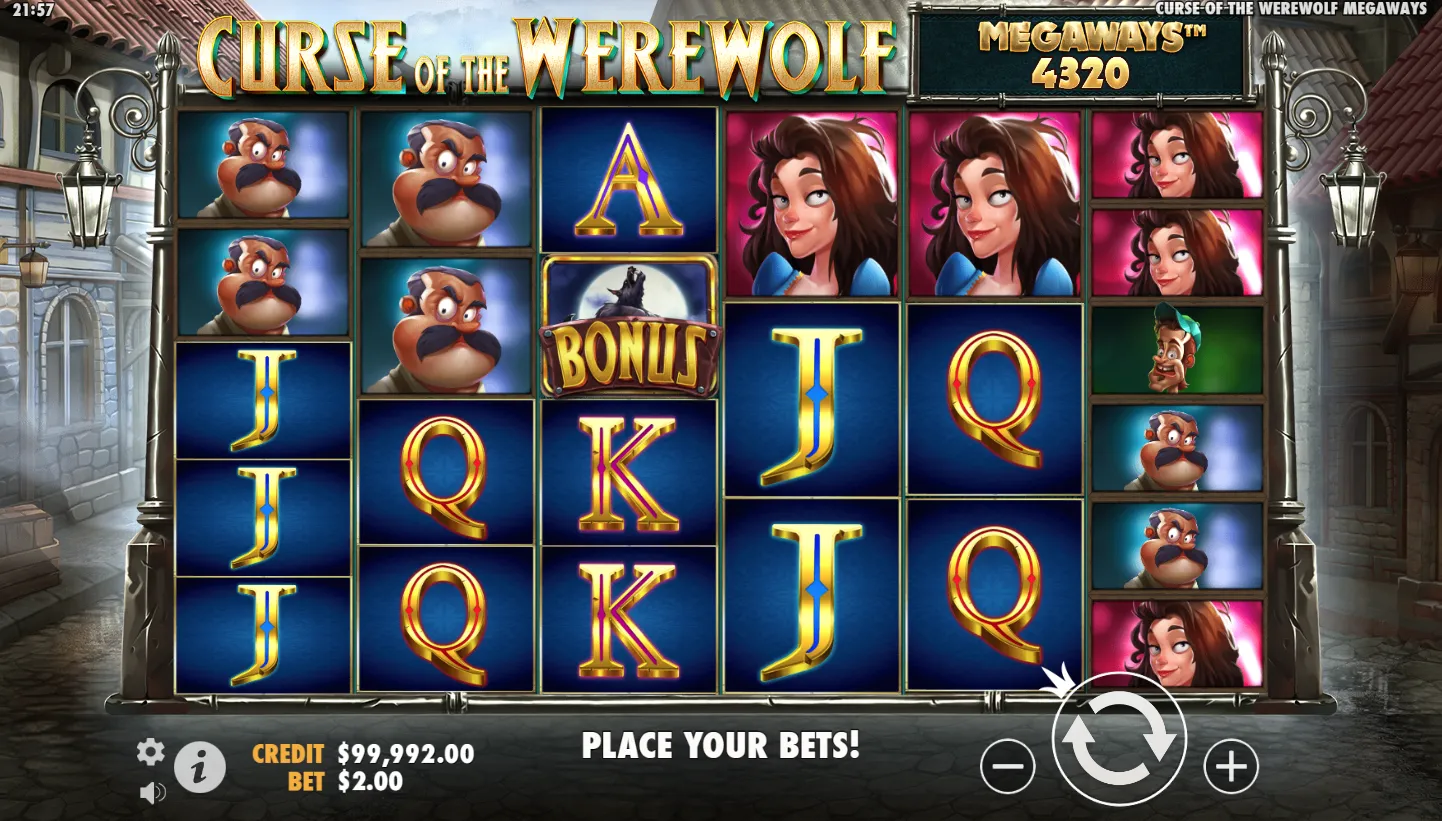
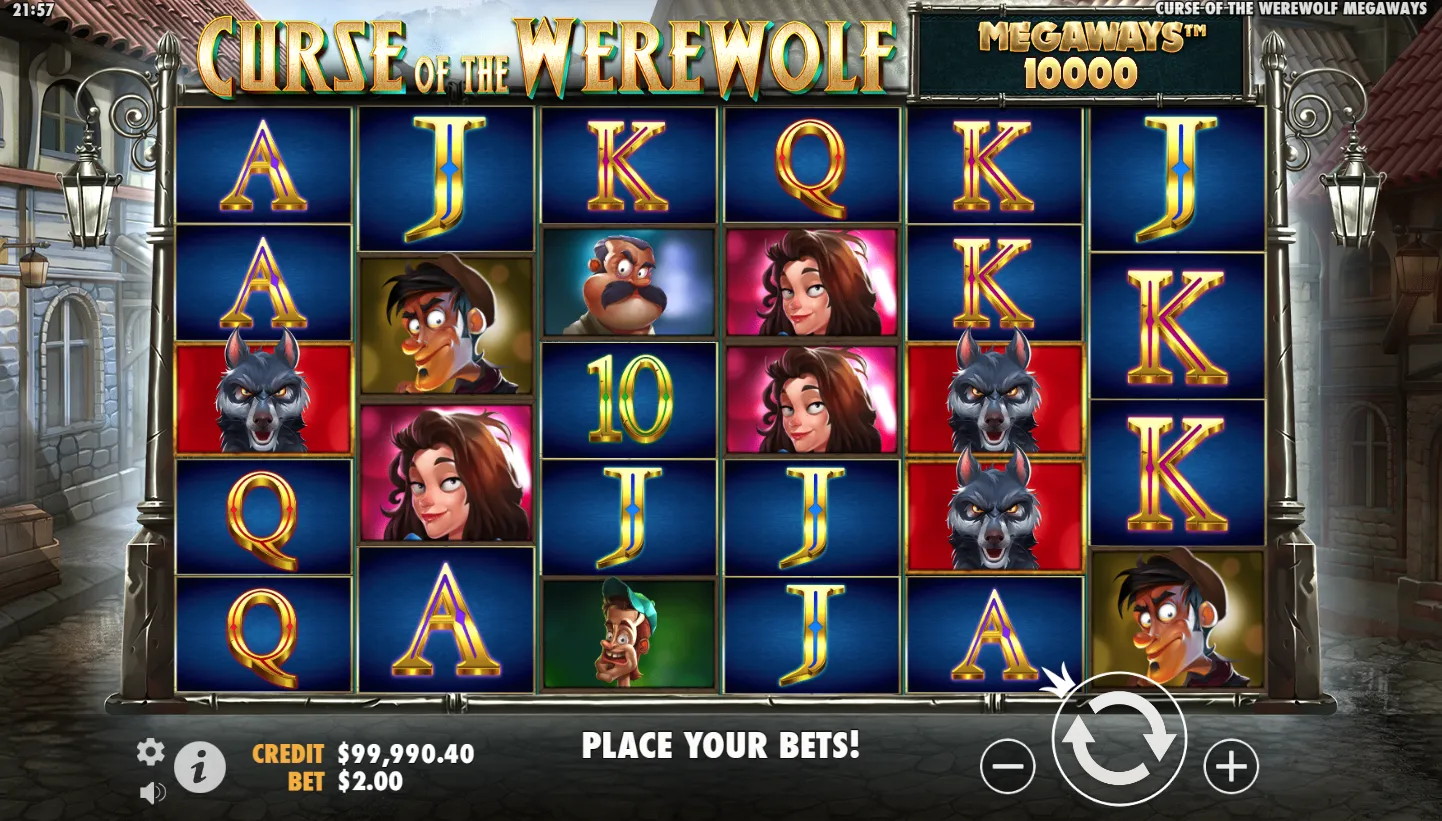
The modifiers do less than their names suggest. A Mystery symbol can become any of the ten paying symbols, and five of those are royals worth 1x or less for six. A Super Spin stacks high symbols, yet a stack pays nothing unless its match starts on reel 1 and runs across at least two adjacent reels for the Werewolf and three for the rest. The Guaranteed Win spin is the one certain payer, and its reels hold no Bonus symbols, so the one modifier sure to pay can never start the free spins.
That is a base game built to fill the time until a 1 in 314 trigger, not one that earns on its own. I would accept that more readily if the round it waits for had a multiplier. It has none.
The 100x buy is priced for the ceiling, not the floor
Buy Free Spins costs 100x and lands three to six Bonus symbols at random, so it opens a round of 8 to 15 spins that then plays like a natural trigger. The best case is the cap, 409.76 times the price. To return the price at all, the round has to pay the equivalent of ten six-Werewolf ways, and at the low end it has eight starting spins to do it, with nothing to multiply them.
Against the natural route the price looks cheap. At a 1 in 314 trigger rate, an average wait puts 314x through the game at 1x a spin, and 100x is under a third of that. The comparison flatters the buy, since those base spins pay back part of what they take, so I judge the price on the round alone. The ceiling is generous for 100x. The floor is a round whose golden hits never finish a villager, which leaves the price paying for eight spins of a flat paytable on richer reels. I call that a fair price for the top of the range and a poor one for the bottom. The buy is not offered in the UK or Germany, where the 1 in 314 trigger is the only way in.
The default return is fair and the lowest setting is not
Volatility is 5 out of 5, and the arithmetic above explains why: a flat paytable, no multiplier, and a single idea whose value arrives in steps. The game suits a player who wants one visible build inside the free spins and accepts a base game that mostly waits. It does not suit anyone who wants the base game to earn between features, or who needs a multiplier to rescue a short round.
At the 96.50% default, the expected cost of play is 3.5% of stake. At 94.50% it is 5.5%, more than half as large again, and a game that spends most of its spins waiting for one feature pays that difference on every one of them. The rules screen shows the setting in use, and I would check it first. Conversion is the reason to play this game. The flat paytable, the missing multiplier and a return casinos can cut by two points are the reasons it stops at 6.6.