Five matching reels are the only board this game pays for
Bloodthirst prices nearly everything against one board state: five Monster Reels of the same monster on a single spin. The Takeover ladder above that state is so steep that the line game, the reel prizes and the three-scatter round all sit far beneath it. Immortals is the only part of the game that can build towards that board rather than wait for it to land whole. I read this as a one-feature slot whose one feature is well made, which is enough for a 7.1 and not for more.
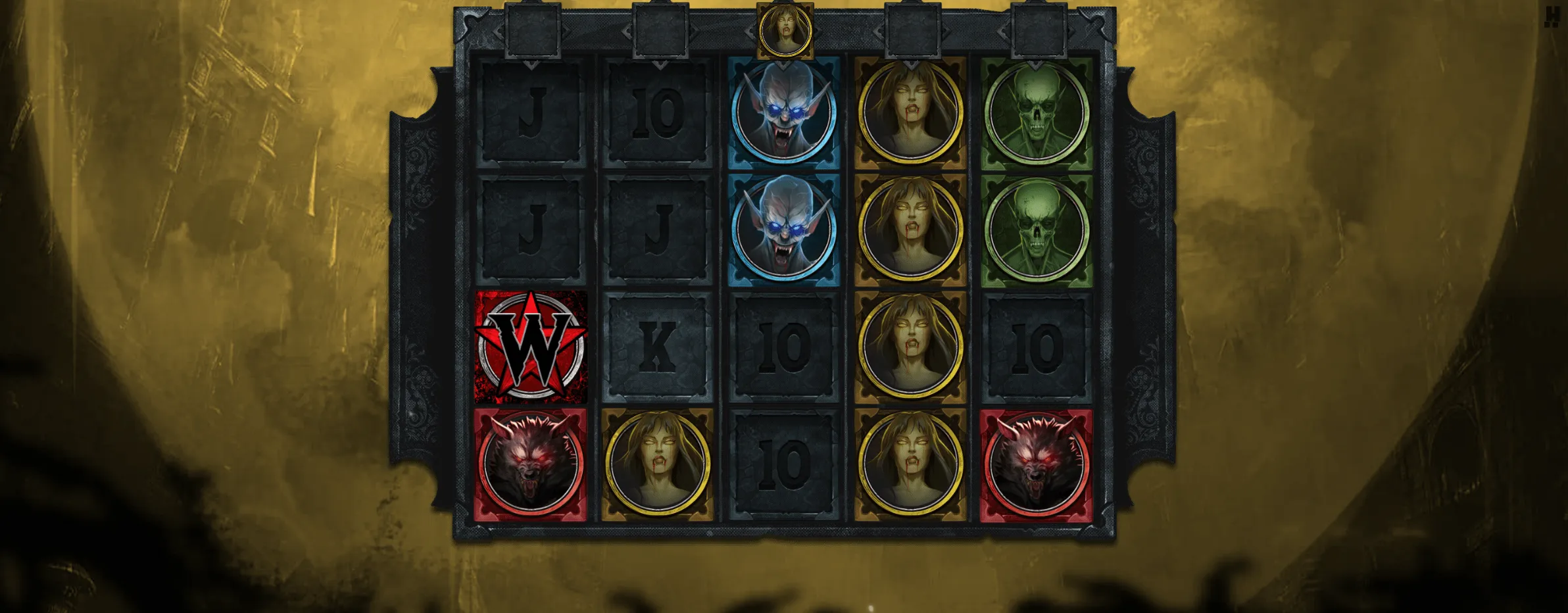
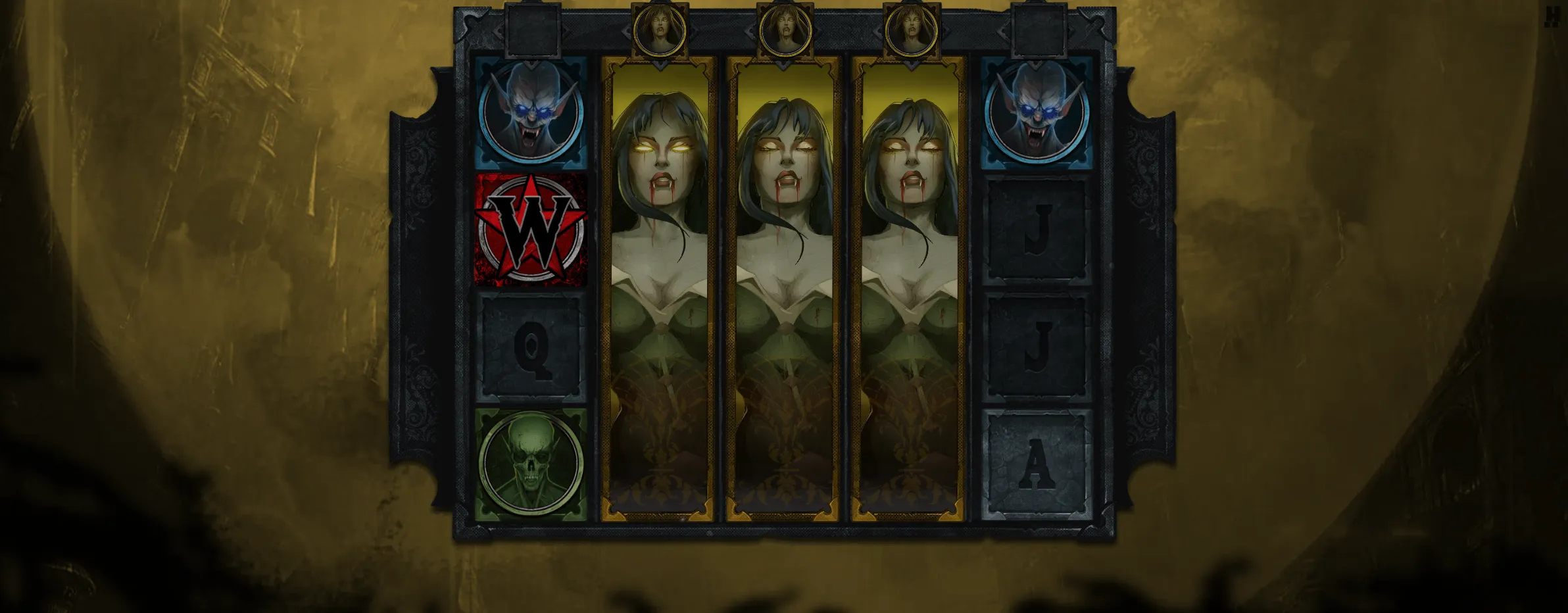
None of the parts are unfamiliar. The 5×4 grid, the ten lines, the 10,000× cap and a symbol that expands over its reel with a whole-grid outcome when all five expand all match Gladiator Legends. A lighter three-FS round beside a stronger four-FS round whose reels activate and repeat their feature every spin is the shape of Xmas Drop, and the persistent activation is the same device as the Maxx Bonus in LIT City. What Bloodthirst adds is the wiring between those parts. An activated reel here does more than repeat a prize: it counts towards the five-reel Takeover condition, so a finished board pays its Takeover again on every spin left in the round. That connection is the game's single real idea, and every number below either feeds it or fails to.
The Takeover is small change for a Ghoul and a fortune for a Demon
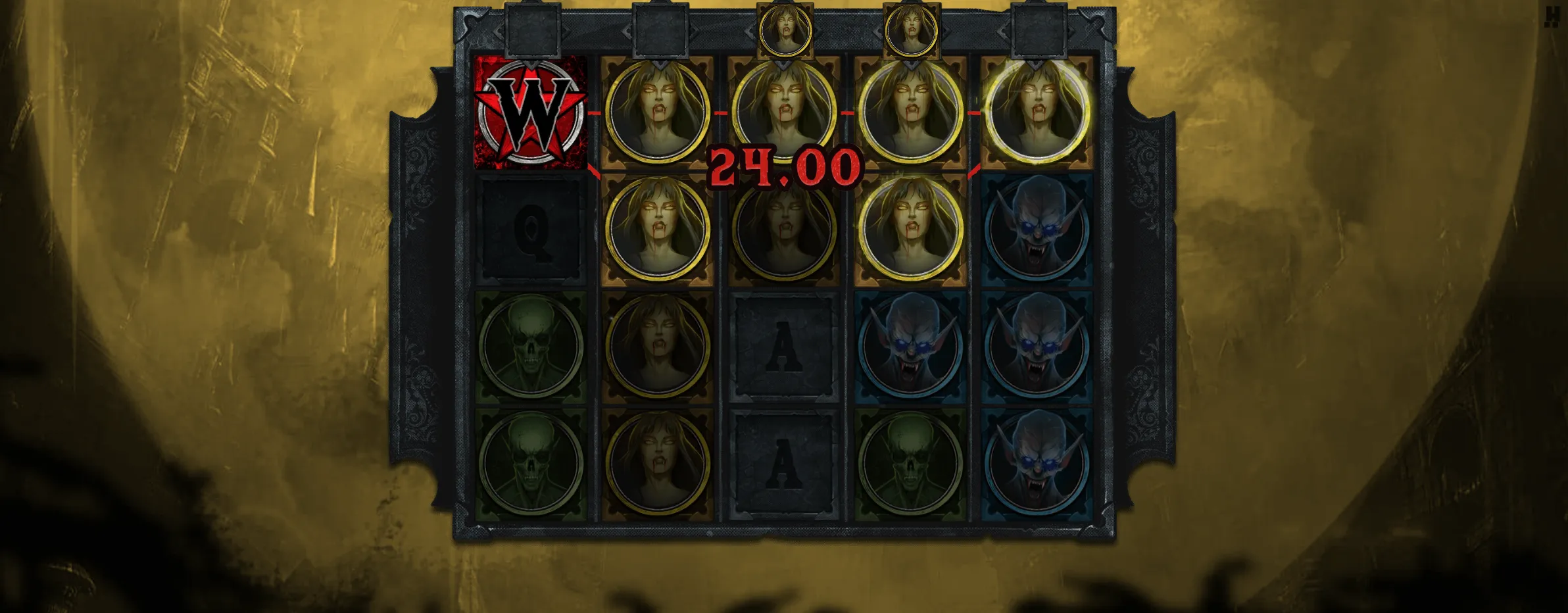
Without the Takeover rule, five full reels of one monster would pay that monster's five-of-a-kind on all ten lines plus five reel prizes. I work the four cases out like this:
- Ghoul: 60× in lines and 25× in reel prizes make 85×, against a 100× Takeover.
- Vampire: 60× and 50× make 110×, against 250×.
- Werewolf: 100× and 75× make 175×, against 1,000×.
- Demon: 100× and 100× make 200×, against 2,500×.
The premium runs from under 1.2 times for a Ghoul to 12.5 times for a Demon. The paytable does not even separate the monsters within each pair: Ghoul and Vampire both pay 6× for five, Werewolf and Demon both 10×. The whole hierarchy lives in the feature prizes, and most of its value sits on the top rung.
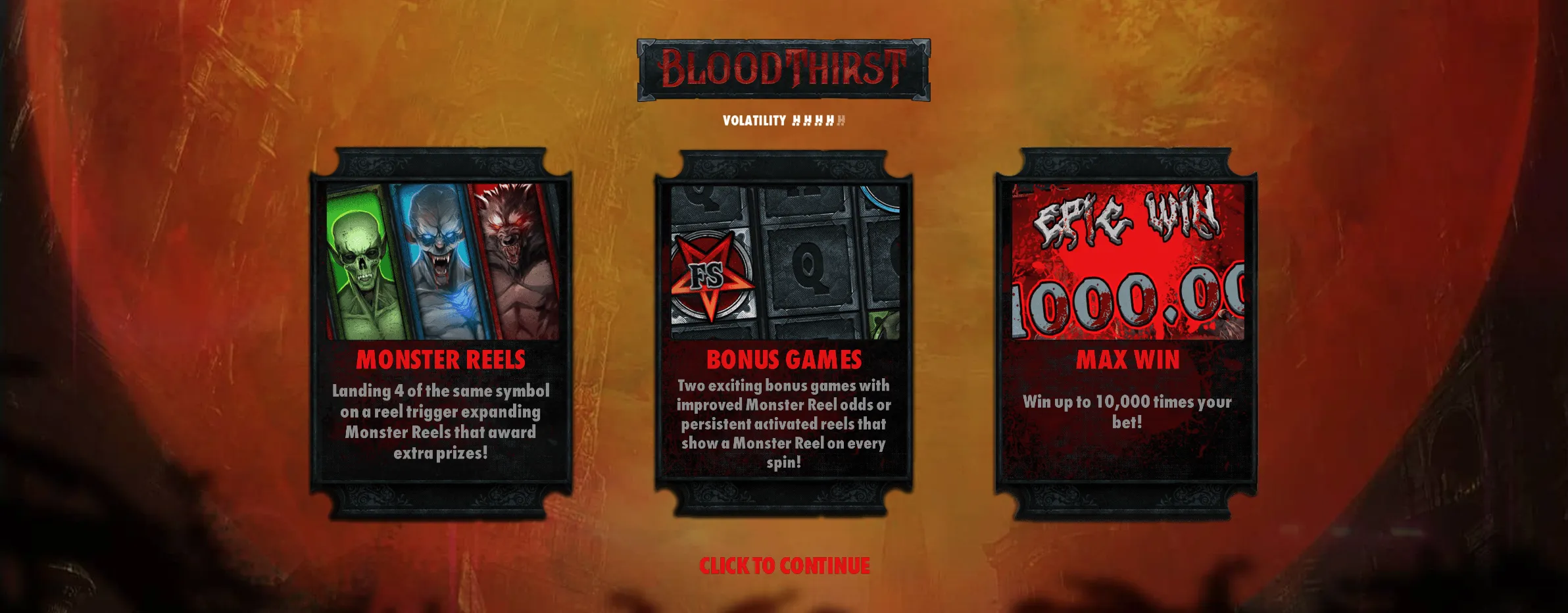
Against that, the line game barely registers. Ten lines of five Wilds is the most line wins can reach on one spin, 200×, or 2% of the cap. Five of a card rank returns the stake, three return a tenth of it, and 79% of spins pay nothing. No spin in any mode pays more than a Demon Takeover, so a single spin gets a quarter of the way to the cap at best, and 10,000× needs at least four Takeover spins inside the same bonus. A 1 in 4,000,000 chance per round multiplied by 10,000× comes to 0.25 percentage points of the 96.19% return. The cap is a ceiling, not a meaningful share of what the game pays back.
The Bloodthirst round forgets every spin
Three scatters open ten spins of the base game with better stacking odds, and each of those spins starts from an empty slate. A Monster Reel on the third spin does nothing for the fourth. The four-Takeover minimum holds here, and I get it by elimination. Three Demon Takeovers make 7,500×, while a spin without a Takeover cannot reach 300×: lines top out at 200×, and the richest reel prizes short of a Takeover, four Demon reels beside a Werewolf reel, add 95×. Seven such spins cannot close the missing 2,500×. In this round each of those Takeovers is five full stacks of one monster landing together, with nothing carried over to help.
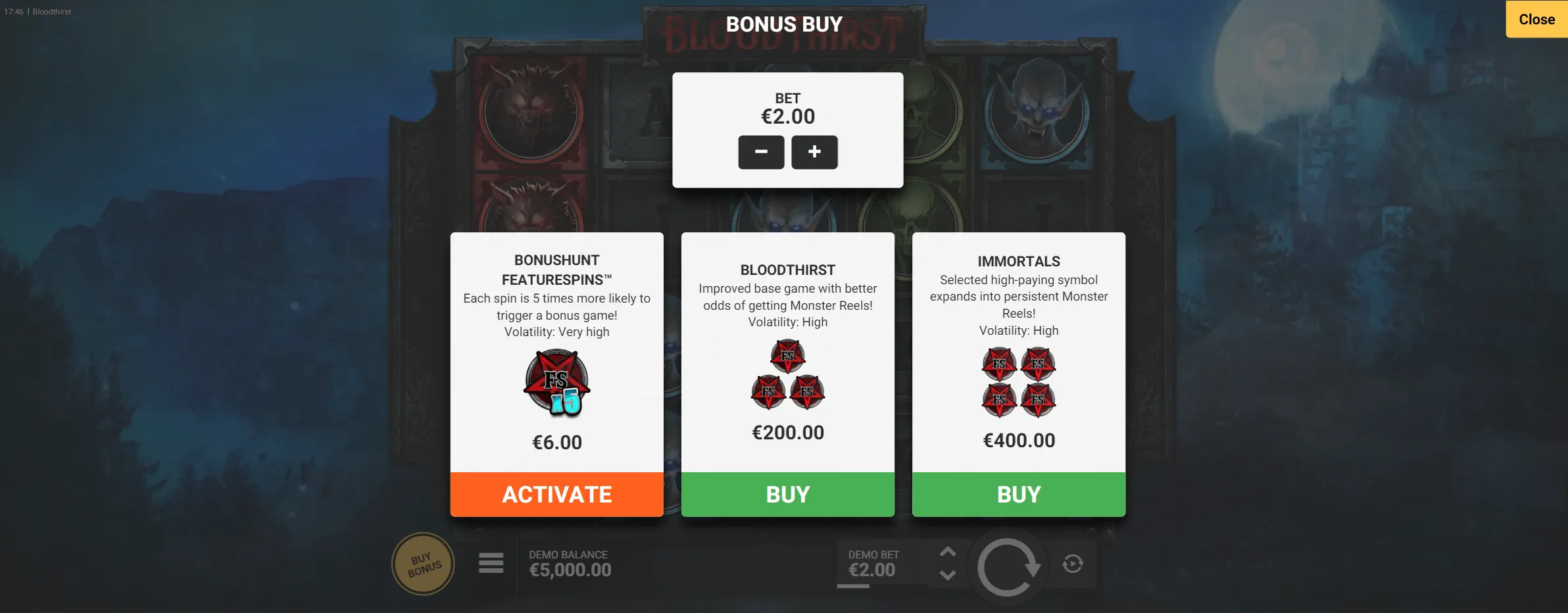
That makes the 100× Bloodthirst buy the weaker purchase, even though its best case is 100 times its cost and the Immortals buy tops out at 50. The larger multiple asks for four independent whole-grid spins inside ten. It is the most misleading number in the buy menu.
Immortals builds the board, against a ten-spin clock
In Immortals one selected monster is the only symbol allowed to expand, and every reel it fills stays activated and shows its Monster Reel again on each remaining spin. This is where the maths finally rewards structure. Four activated Demon reels pay 80× in reel prizes, and lines cannot add more than 200×, so that board is worth 280× a spin at the very most. The fifth reel turns it into a 2,500× Takeover, close to nine times that ceiling. A finished Demon board pays 12.5 times the 200× buy price on every spin it lasts, and four such spins reach the cap.
The clock is the catch. There are ten spins, the FS symbol cannot appear, and nothing extends the round, so a Demon board must be complete in time to pay four Takeovers before the tenth spin ends. The selected monster matters as much as the timing. A finished Ghoul board is worth 100× a spin, and all ten spins of it make 1,000×, a tenth of the cap. A Vampire board across all ten makes 2,500×. Without an upgrade, a Werewolf board needs a Takeover on every one of the ten spins to reach 10,000×. Only a Demon board has spins to spare.
That makes the Upgrade scatter the most valuable symbol in the game. Each one moves the main symbol and every activated reel up a rung at once, and the rungs multiply the Takeover by 2.5, then 4, then 2.5 again. A Ghoul board lifted all the way to Demon pays 25 times as much per spin. At 96.35%, the long-run cost of the 200× buy is 7.3× the bet per purchase, against 3.66× for the Bloodthirst buy, and that difference pays for the only mode whose route to the cap runs through a single board.
FeatureSpins sell speed, and the low builds sell less
BonusHunt FeatureSpins charge 3× the bet per spin for five times the chance of a bonus, so the stake spent per bonus trigger falls to three-fifths of the plain-spin figure. The mode returns 96.19%, the same as the standard build, so it changes the trigger rate and not the return. Both outright buys sit 0.15 and 0.16 points above that figure. None of this pricing is a trap.
The settings are where the price moves. At 96.19% the house edge is 3.81%. The 94.23% build takes 5.77%, half as much again, the 92.32% build takes 7.68%, double the standard, and the 88.36% lowest setting takes 11.64%, three times it. The rules screen shows which one is running, and the bottom setting turns a fairly priced game into a poor one.
Only the four-scatter round justifies the game
Bloodthirst suits someone who wants Immortals specifically and accepts that each round is settled by how early the reels fill and which monster is selected. Anyone looking for a base game that pays its way, or a lighter bonus with something to hold on to, finds a 200× line ceiling and a round that forgets every spin. One well-connected feature on a bare frame is what a 7.1 describes, and that is what this game is.