A sequel that stakes everything on a cat that has to earn its reel
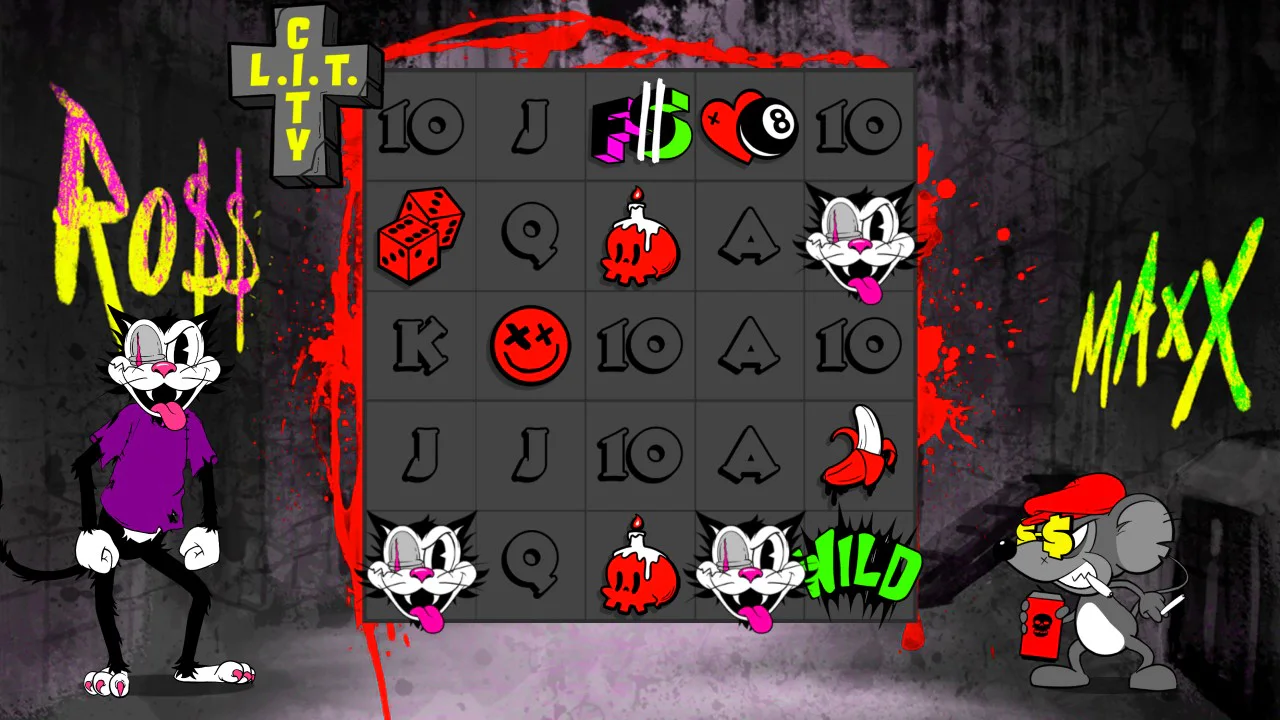
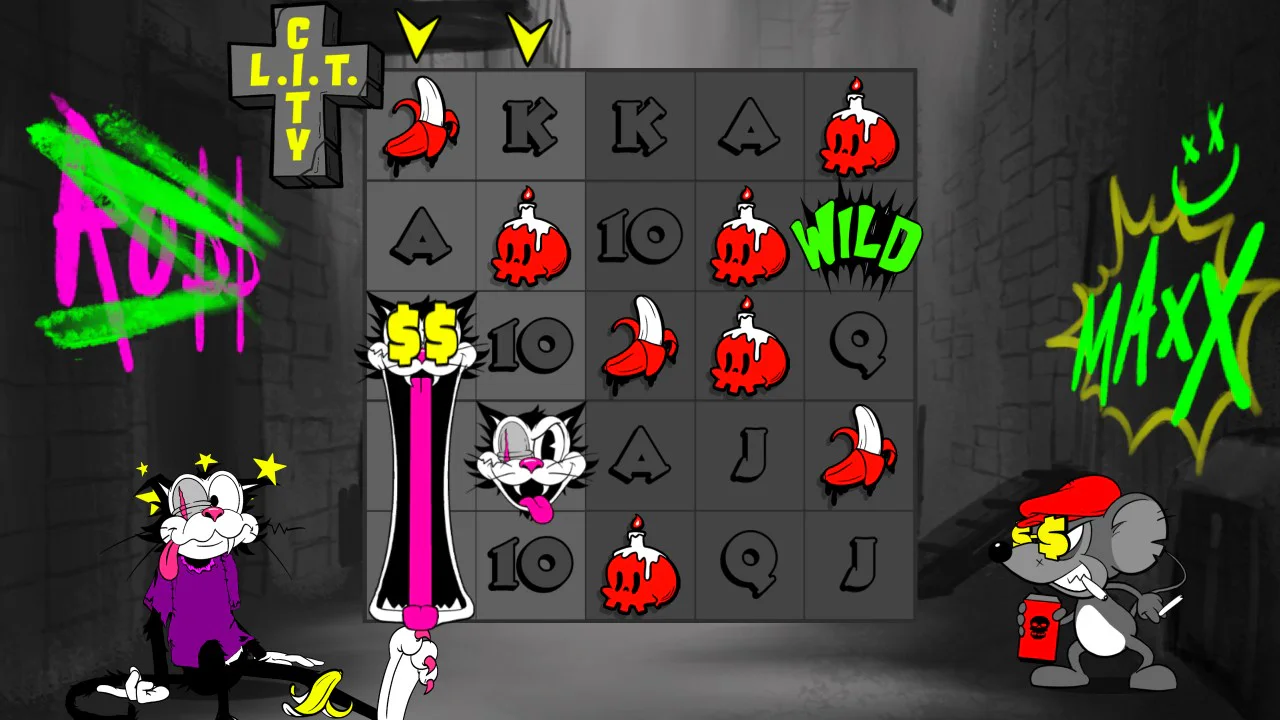
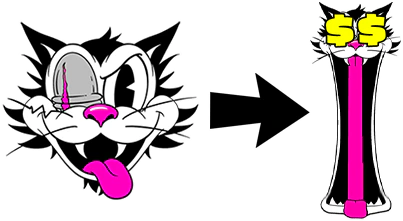
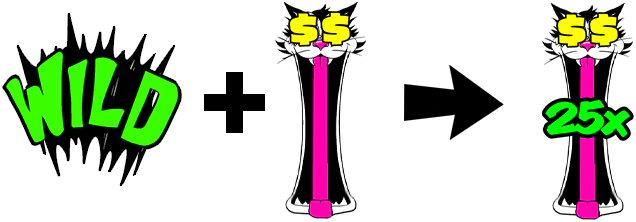
LIT City is Hacksaw Gaming's follow-up to RIP city, with the same Ro$$ and Maxx at its centre, and the characters are the least of what it asks me to judge. The game rests on one rule. An expanding wild is usually a reel that turns wild when it lands. This Wild Cat stretches to the bottom of its reel only when the taller shape would enter a win, and it takes a multiplier only when that stretch covers a WILD. Read through that rule, LIT City is a game that charges for memory. A cat is cheap to put on the grid and expensive to make useful, and Maxx is the one mode that keeps a reel's cat from one spin to the next. Everything else on the menu sells placement or opportunity, and the game's standing comes down to how far Maxx sits above the rungs beneath it.
The paytable is only there to be multiplied
Unmultiplied line wins are thin. The five low symbols pay 0.2× to 0.4× for three on a line, five of the ten regular symbols pay no more than 10× for five, the best regular symbol pays 20×, and five wilds pay 25×. If all 19 lines paid that 25× on the same spin, the spin would return 475×, under 4% of the 12,500× cap. Whatever a single spin pays above 475× has to come from a crossed-WILD multiplier, and the ladder for those runs from 2× to 200×.
The conditional rule decides which cats get a chance at that ladder. A cat that lands on the bottom row has nothing below it to cover, so it can never take a multiplier. A cat that lands on the top row and expands covers the whole reel, so all 19 lines cross it. Because a cat expands only into a win, every multiplier the game assigns has at least one paying line to act on, and the rule trims dead expansions without stranding a multiplier. The cost sits on the other side of the same rule. A 200× cat on a three-symbol line of 10s pays 40×, because the ladder multiplies whatever line it joins, and half of the regular symbols are low ones.
Adding the multipliers turns the cap into a count of cats
Multiplied cats on the same line add their values. Two 200× cats make 400×; multiplied together they would make 40,000×, more than three times the cap before any line value applies. A payline crosses each of the five reels once and only one cat can land per reel, so one line tops out at five cats and 1,000×. On a 25× line that would be 25,000×, which the game never pays, because the round ends at 12,500× instead.
The more useful arithmetic sits lower down. Two cats reach at most 400× on one line, and 400× of the 25× top line is 10,000×, short of the cap. For one line to pay 12,500× on its own it needs a third multiplied cat. The other route is breadth: a lone 200× cat covering a whole reel needs 62.5× of line value running through it, more than three five-symbol lines of the best regular symbol. Only the line route needs several cats at once, three of them multiplied. The breadth route needs one cat and a grid crowded with top-paying lines, and the purchase menu prices the cats that feed both.
Maxx is the only rung that buys state outright
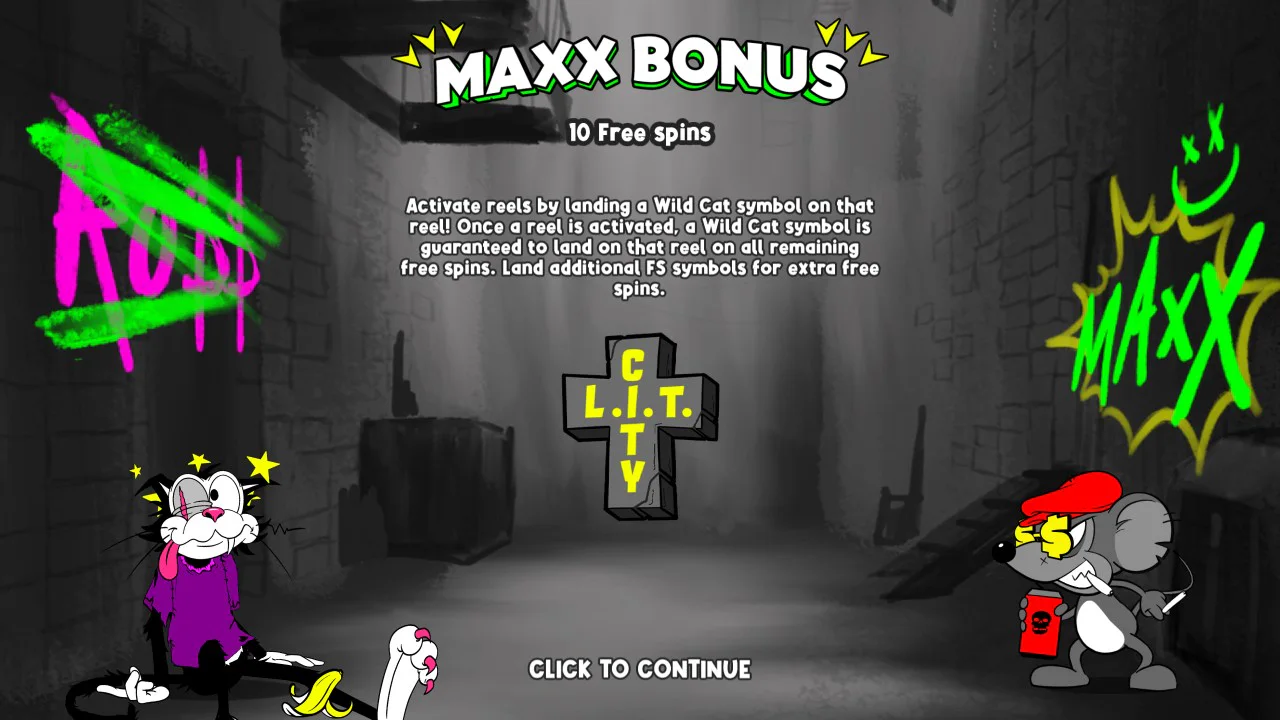
The Maxx buy costs 200× for ten starting spins, which is 20× a spin, the price of one Two Wild Cats spin. What differs is what a spin keeps. Once a Wild Cat lands on a reel during Maxx, that reel guarantees a cat on every remaining spin of the round. Two active reels match the cat count Two Wild Cats guarantees at the same per-spin price. Three active reels match the 50× Three Wild Cats spin at 40% of its cost. With all five active, each spin has a cat on every reel, the most the one-cat-per-reel limit permits. A four-spin retrigger brings the price down to about 14.3× a spin, while four Three Wild Cats spins cost the full 200× and remember nothing between them.
The return backs the structure. Maxx returns 97.53%, the highest figure in the game, so its long-run cost is 4.94× per buy against 5.14× for the same 200× spent on base spins at the 97.43% setting. The limits stay in force. An activated reel guarantees a cat, not an expansion and not a multiplier, and the 12,500× cap is 62.5 times the price. That is a modest ceiling for a 200× ticket, and I accept it because Maxx is the one round where the conditions for stacking cats improve as it runs.
Ro$$ is a 110× ticket to Maxx
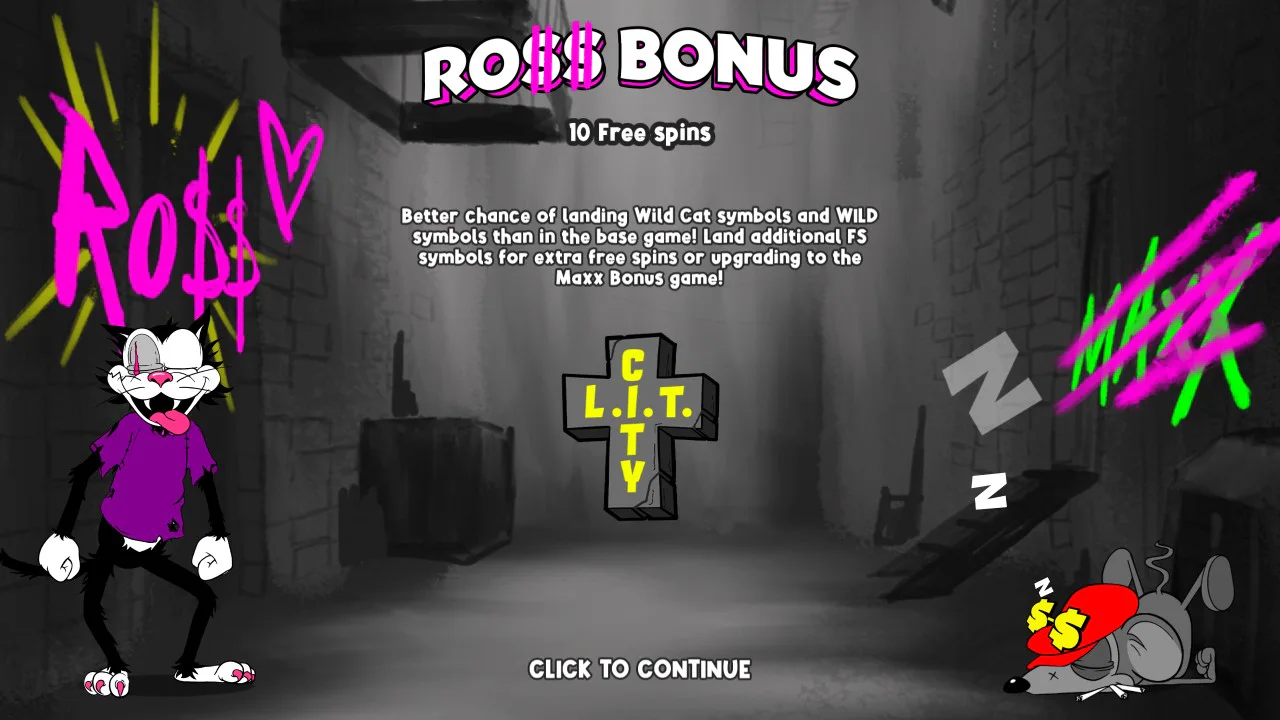
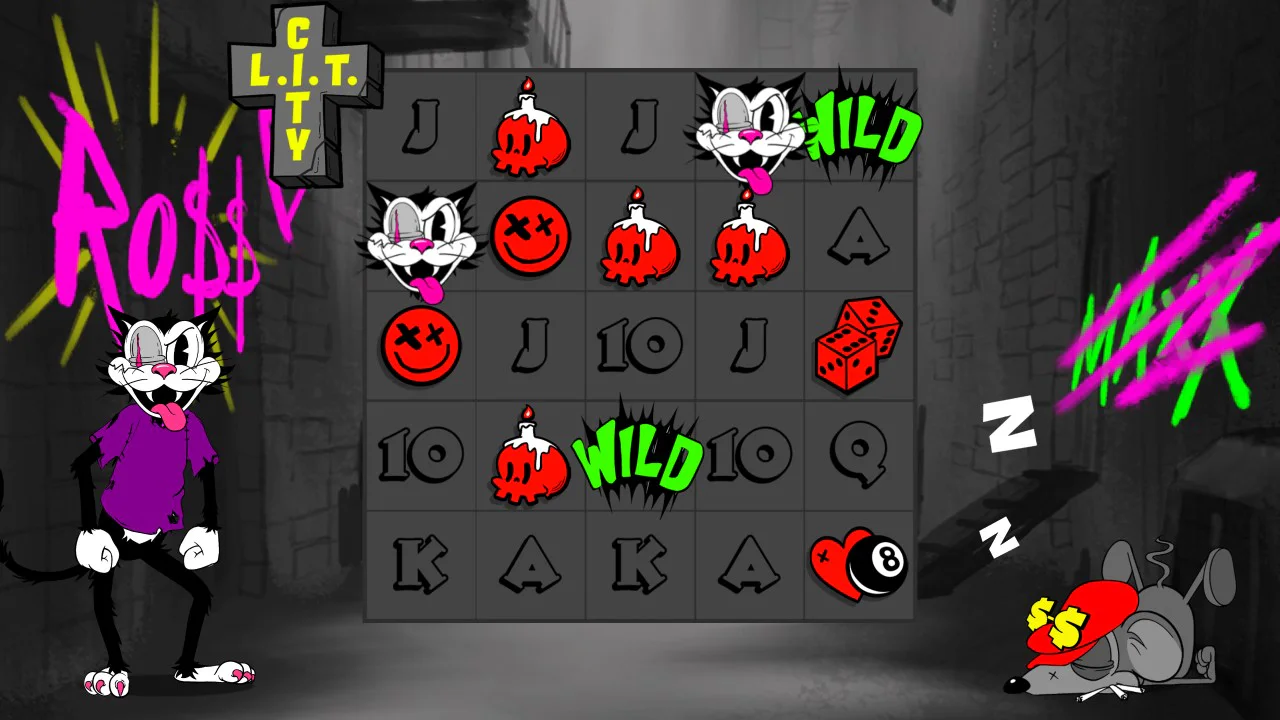
Ro$$ costs 110× for ten spins, 11× each, and puts more Wild Cats and WILDs on grids that start fresh every spin. No reel state survives from one spin to the next, so a Ro$$ round that never upgrades is a run of unrelated spins with better ingredients. The value sits in the upgrade. Four FS symbols during the round turn it into Maxx after the current spin and set the remaining count to at least ten, so an upgraded Ro$$ reaches at least as many Maxx spins as the 200× buy starts with, for 90× less. Its 97.50% return averages the rounds that upgrade with the rounds that do not, and its ceiling is about 114 times the price. I rate it the weakest bonus rung because its best outcome is turning into a different round.
Guaranteed cats are the wrong thing to pay extra for
Two Wild Cats at 20× and Three Wild Cats at 50× guarantee cats on the grid and nothing else. Each cat still expands only into a win and still needs a WILD beneath its landing row to take a multiplier. Their 97.49% returns are fair, so my objection is shape rather than price: these spins buy the first of a multiplier's three conditions and leave the other two to chance. Two Wild Cats is the more volatile of the pair despite costing less, with a ceiling of 625 times its price against 250 for Three Wild Cats.
Bonushunt is the rung I rate second. Each 3× spin makes the three- or four-FS trigger five times more likely, so the stake spent per expected bonus falls to three-fifths of the base game's, and the boost reaches the four-FS Maxx trigger as well as Ro$$. It returns 97.45%, above the base setting, for the smallest outlay on the menu.
This is a Maxx buyer's game, not a line player's
LIT City rewards the player willing to buy Maxx at 200×, accept a ceiling of 62.5 times that price, and let activated reels do the work. A player who wants the base game or a cheap feature spin to pay through lines should look elsewhere: without a crossed WILD a spin cannot pass 475×, and a guaranteed cat does not supply the WILD. One mode carries a menu that is otherwise fair in price and ordinary in structure, which puts the game in good territory and keeps it out of excellent.