A familiar Hacksaw frame with one new idea in it
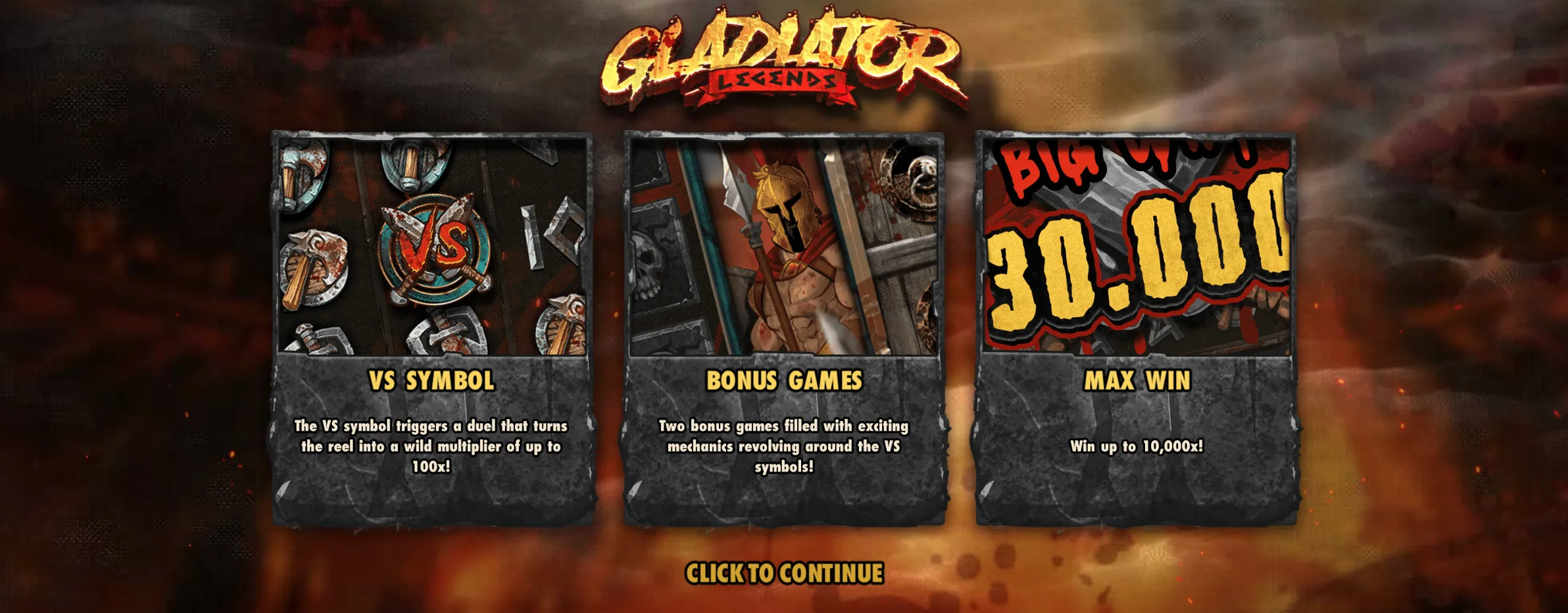
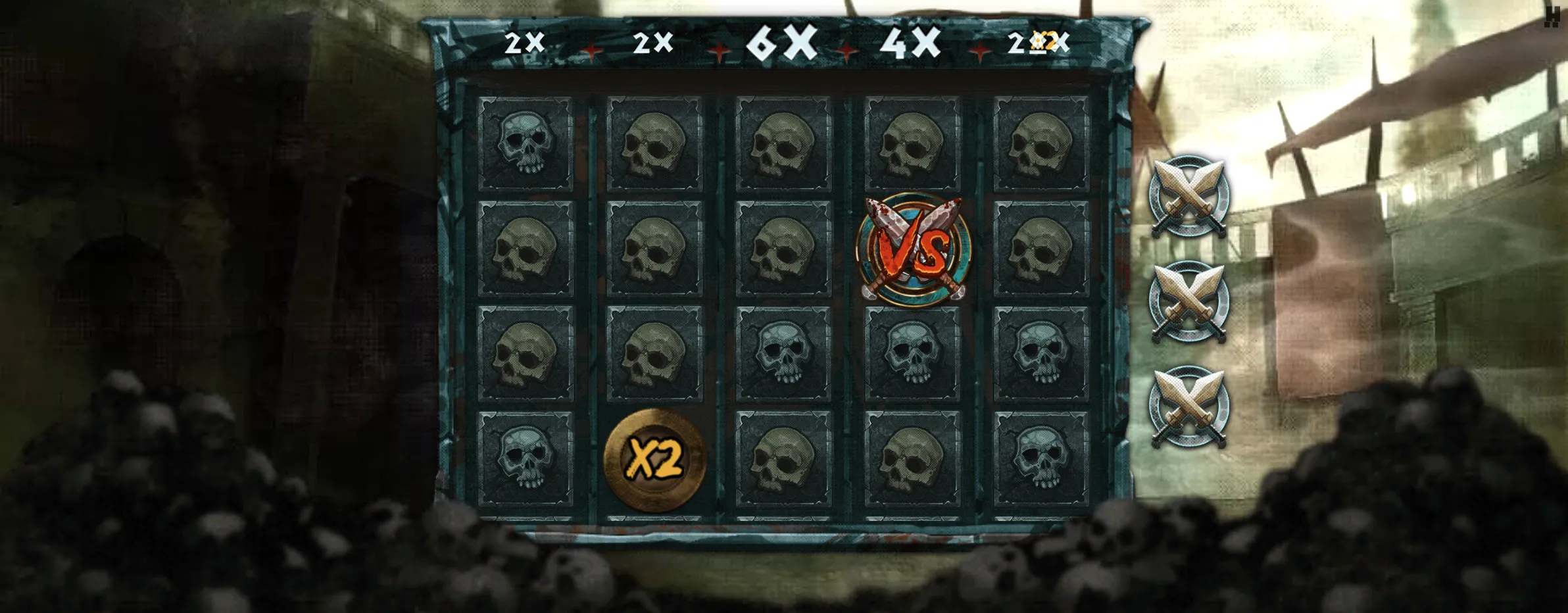
Gladiator Legends shares its frame with other Hacksaw games. The base game has the shape of Wanted Dead or a Wild and Stormforged: fixed paylines, a paytable that barely matters, and big wins from reels expanding into multiplier wilds. The bonus rounds have the shape of Chaos Crew 3: three spins that refill on every trigger symbol, no line wins, a payout that is the sum of per-reel multipliers, and an Epic variant that hits every reel at once. What this game brings to that frame is the duel. A VS symbol does not simply hand over a multiplier. Two gladiators contest the reel, and only the survivor's value counts, if the survivor has one.
I read that duel as the whole game, and everything priced around it as a different shape of the same fight, never a bigger prize. The two bonus rounds run the duel in opposite directions, one overwriting and one accumulating. The four purchases climb from 10× to 400× with returns within six hundredths of a point, and each dearer option has a smaller best case as a multiple of its price. I find it a coherent design built on a strong mechanic, with very little else holding the game up.
The base game adds where it could have multiplied
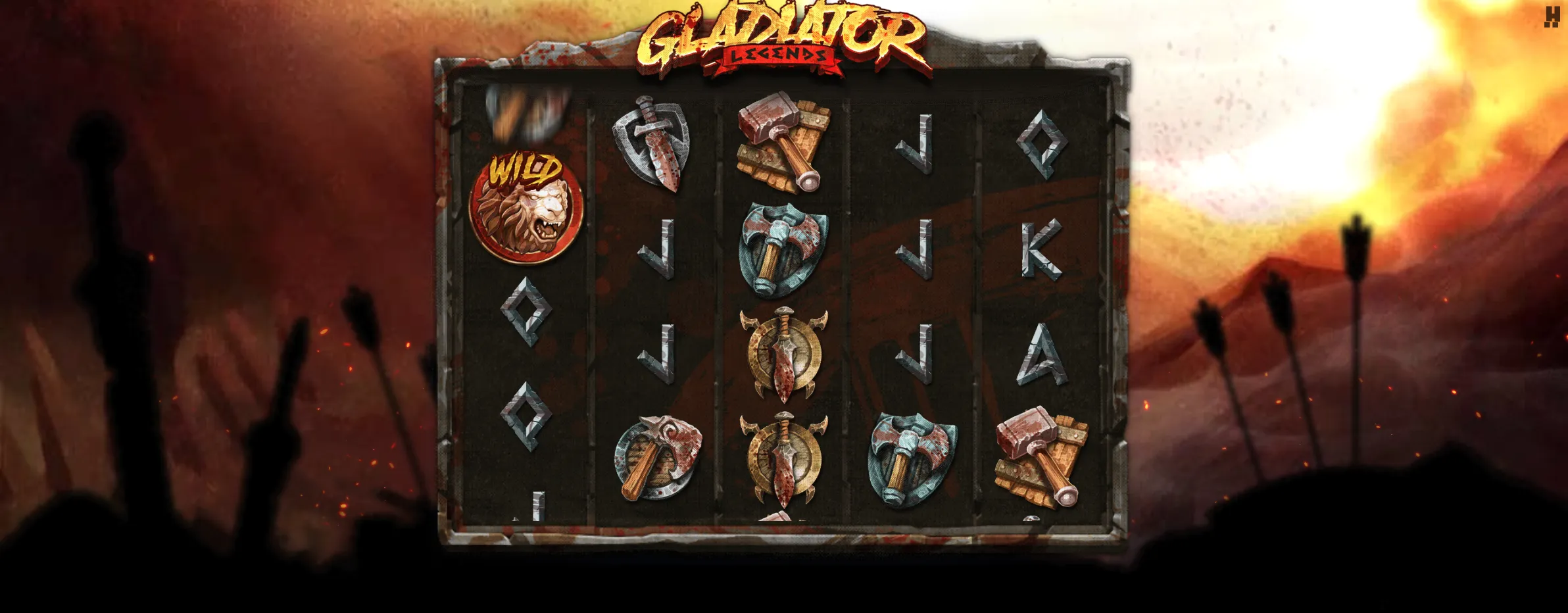
On its own, the paytable cannot get far. The best five of a kind is 30×, shared by the wild and the gold shield and sword, and only the highest win per line is paid, so ten lines of the top symbol make 300×. I make that three percent of the 10,000× cap. I count five of the ten regular symbols paying the stake or less for five of a kind. With a 26% hit rate, roughly three spins in four return nothing, and the lower half of the table cannot make the rest matter.
Everything between 300× and the cap is DuelReel multiplier, and the base game restrains it twice. A VS expands only when its reel would join a winning line, so plenty of landed VS symbols do nothing. Several DuelReels feeding one line are also added, not multiplied. Two 100× reels on the same line apply 200× to the win; multiplied, the same pair would apply 10,000× before the line win was even counted. I rate that single rule as the reason the ceiling stays out of everyday reach in the base game.
The exception is the full wild grid. One VS on each of the five reels turns the grid wild, ten lines of the wild's 30× make 300×, and a combined multiplier of 34× clears the cap where 33× stops at 9,900×. A single 50× survivor among the five is enough by itself. It needs five VS symbols in one spin, though, which makes it the base game's long shot rather than its engine.
Champions of the Arena punishes its own good news
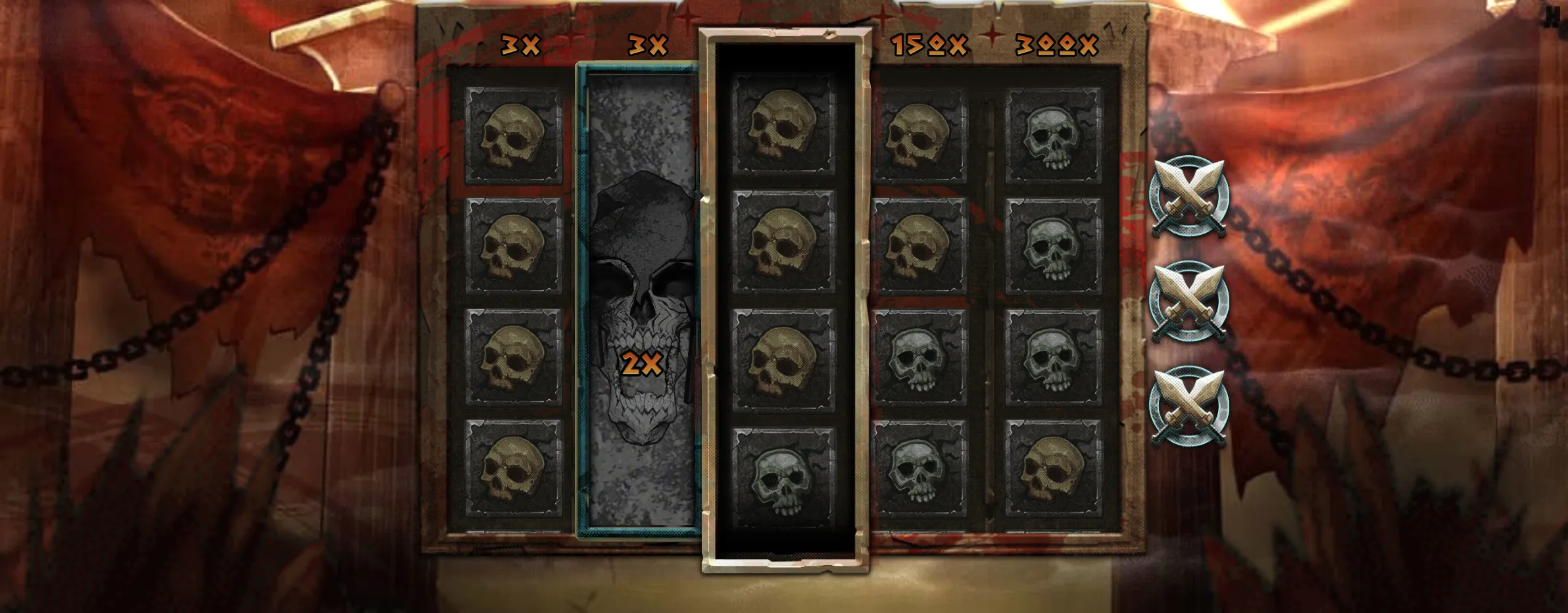
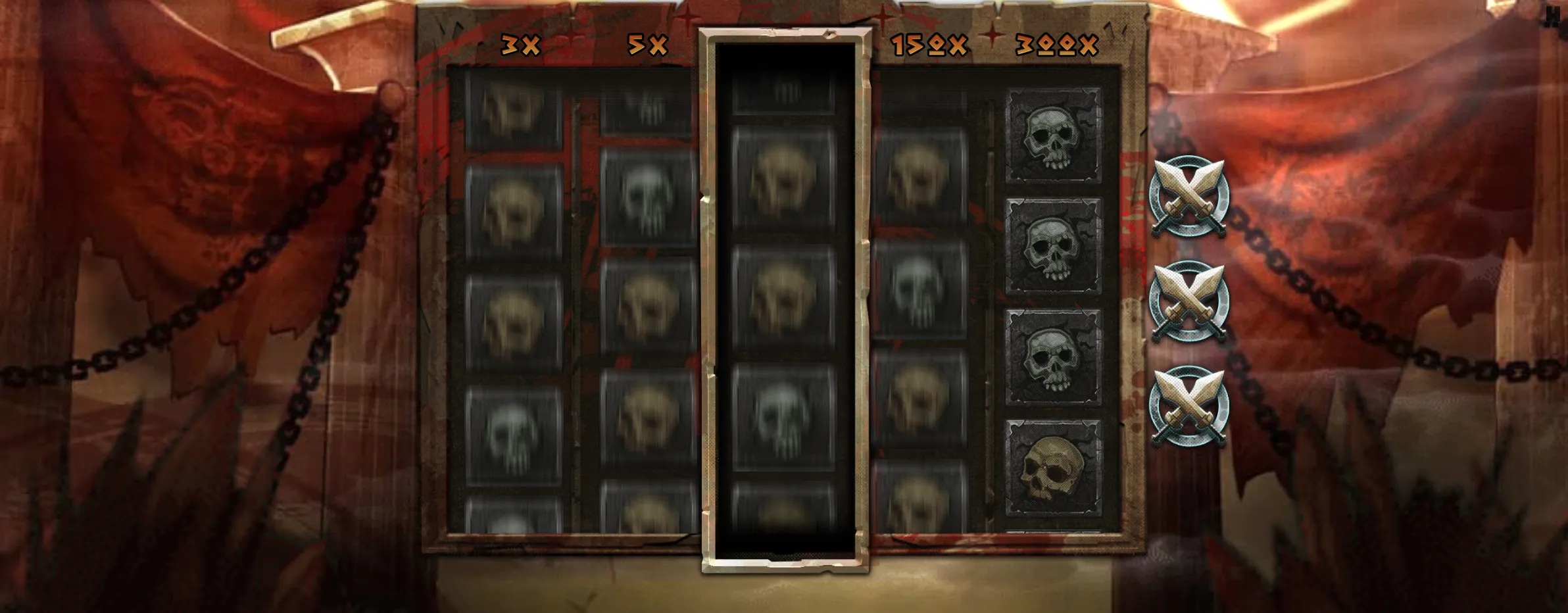
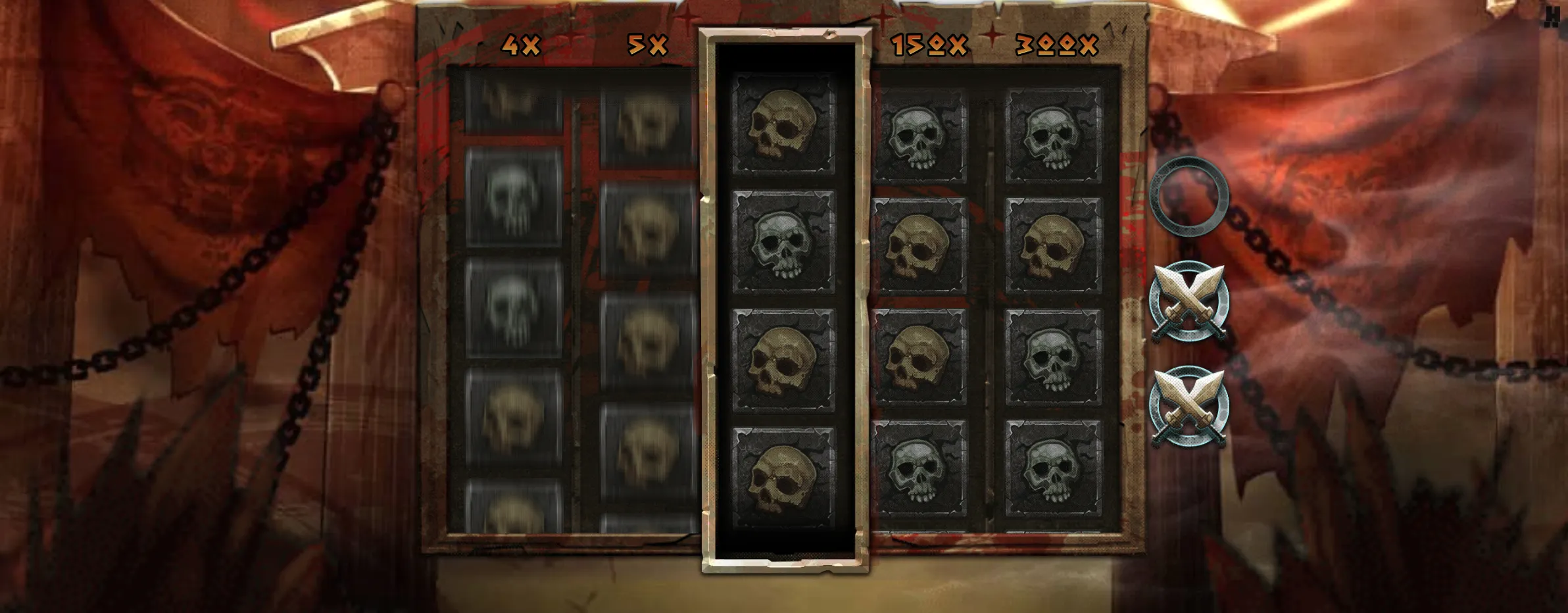
This is the round where the duel matters most, because every VS does two things at once. It resets the spin counter to three, which keeps the round alive, and it starts a new duel on its reel, where the current Reel Multiplier defends the top of the DuelReel against a challenger. The event that extends a strong round is the same event that can wreck it. A 500× reel can drop to 1×, and the longer a good round runs, the more often its best reel is put back up for grabs. Nothing is paid until three blank spins end the round, so the payout is whatever the five reels hold at that moment, not the best total they reached.
My arithmetic here is exact. DuelReel values stop at 1000×, so five reels without a Multiplier Coin top out at 5,000×, half the cap. Reaching 10,000× in this round takes a coin: a ×10 Normal Coin on a 1000× reel gets there in one step, and a ×10 Epic Coin does the same to a 1,000× total spread across all five reels. Coins resolve before VS symbols, so a VS elsewhere on the same spin can challenge a value an Epic Coin has just boosted.
Bought at 100×, the best case is 100 times the price. Getting the price back needs the five Reel Multipliers to average 20× when the round ends. That is a low bar on a board where values reach 1000×, and the overwrite rule is exactly what lets the round miss it anyway. A 96.43% return under a ceiling of 100 times the cost is the wider risk shape of the two bonus buys, and I rate it the purchase that most fully expresses what the game is about.
The Beast round sells safety at four times the price
In the Beast round, every duel adds to its reel and nothing is lost. The duel still decides how much is added, possibly nothing, but never takes anything away, so the contest that defines the game shrinks to a draw of a value. That safety is paid for three ways. Reel Multipliers sit above reels 1, 2, 4 and 5 only, DuelReel values stop at 500× rather than 1000×, and there are no coins. The only multiplicative step is the Beast Reel on reel 3, worth ×2 to ×20, and it stays locked until each of the other four reels has taken a VS.
That lock decides whether the price comes back. At 400×, the four reels need 400× between them to return the cost while reel 3 is still locked. A ×2 Beast Reel halves that to 200×, and a ×20 cuts it to 20×. Reaching the cap needs 500× across the four reels under a ×20 Beast Reel; without the unlock it needs 10,000×, which at 500× per duel means at least twenty top-value duels. The best case is 25 times the price.
Set against Champions, the Beast round costs four times as much, has a quarter of the ceiling per unit of cost, and returns 96.46% against 96.43%. The same return under a ceiling that low has to be built from mid-sized results rather than from the tail. I read it as a fair purchase for someone who wants the bonus without the overwrite, and as the weaker expression of the game, because it neutralises the one idea the game has.
Every dearer purchase buys a smaller best case
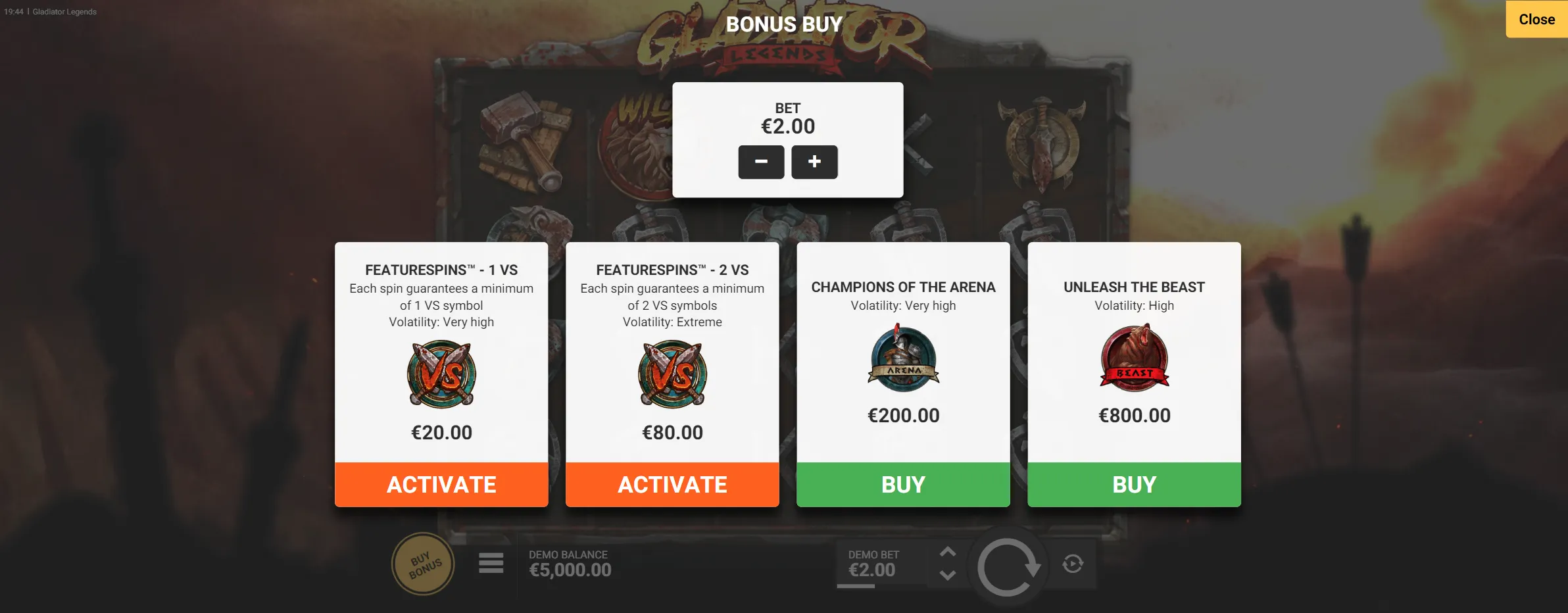
| Purchase | Cost | Best case as a multiple of cost | RTP |
|---|
| FeatureSpins 1 VS | 10× | 1,000 | 96.45% |
| FeatureSpins 2 VS | 40× | 250 | 96.40% |
| Champions of the Arena | 100× | 100 | 96.43% |
| Beast round | 400× | 25 | 96.46% |
I find no purchase taxed for skipping the base game: all four returns sit above the 96.31% standard build. The menu is two pairs with the same shape. FeatureSpins 2 VS costs four times FeatureSpins 1 VS for one more guaranteed VS, the Beast round costs four times Champions, and in both pairs the cap does not move. The extra stake buys consistency, never upside.
FeatureSpins needs a warning of its own. It is a per-spin mode, not a bonus round, and outside the bonus rounds a VS expands only when its reel would join a winning line, so what 10× buys is a VS on the reels rather than a DuelReel. The mode stays on until DISABLE is pressed, and at 96.45% a 10× FeatureSpin has an expected loss of 0.355× the bet, against 0.0369× for a plain spin at 96.31%.
The casino decides what the duel costs
Licensed casinos run the game at both 96.31% and 92.66%, and the 3.65 points between them are larger than they look. Per 100 staked, the expected loss is 3.69 on the standard build and 7.34 on the reduced one, almost exactly double. The bottom of the settings ladder, 88.19%, gives up 11.81, more than three times the standard edge. At five out of five volatility, the reduced build charges twice the price for the same swings, and I rate the game poor value at 92.66%, whatever the duel is worth.
I see the game suiting someone who wants one mechanic examined closely and picks a bonus by its risk shape: Champions for the long tail, the Beast round for a steadier result at four times the entry price. Anyone after a base game that pays through its symbols should look elsewhere, because a 300× paytable was never meant to be the point. One strong idea, a real contrast between two rounds, a bare frame and a return the casino chooses: that is the whole game, and the score weighs all four.