The net is the one new part, and it works on the misses
Keeping it Reel is a variation, not an invention. The fisherman Wild that collects every fish value on screen, and the ladder that adds spins and a higher multiplier with every fourth Wild, are the round it shares with Big Bass Bonanza and Big Bass Splash. What it adds is the landing net. My reading is that the net, like the three random events beside it, is built for the spins where fish and fishermen miss each other, while the top of the game still belongs to the ladder. It improves the salvage on a bad round and leaves the catch the size it was, and that is the whole case for a 6.2.
Sort the free spins by what lands. Fish with no fisherman can set off the hook reel pull, which drags a reel up to bring fishermen in, and any fish left uncollected go into the net. Fishermen with no fish can set off the dynamite or the boat net, and both put fish on screen for them to collect. On a spin where both land, the ordinary collect pays and none of the three events fires. So the extras fire or fill on misses and never on a spin where the collect already worked. That is coherent, and it is limited: every extra is a repair, and none of them adds a multiplier.
The base game shows money it never pays
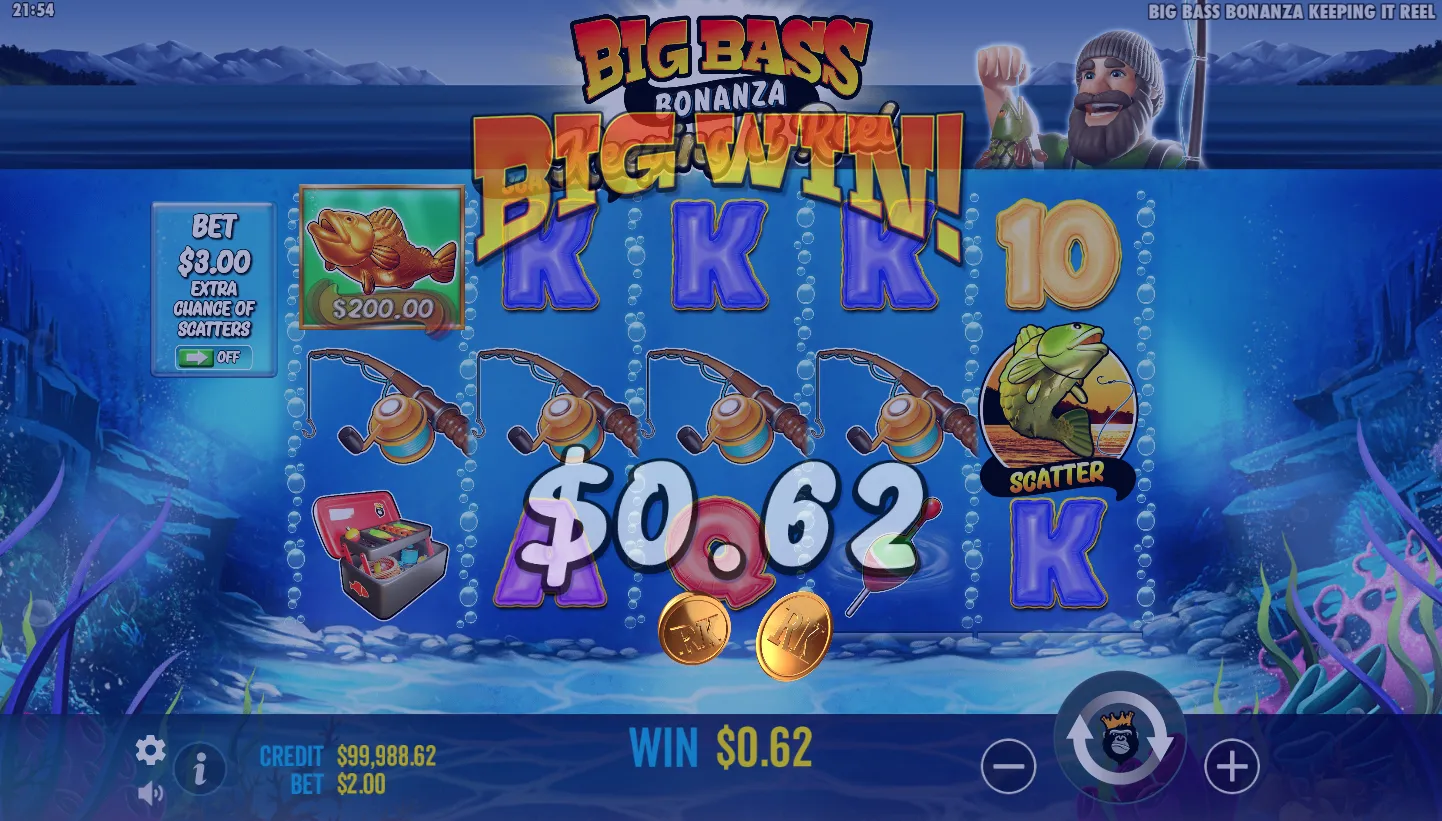
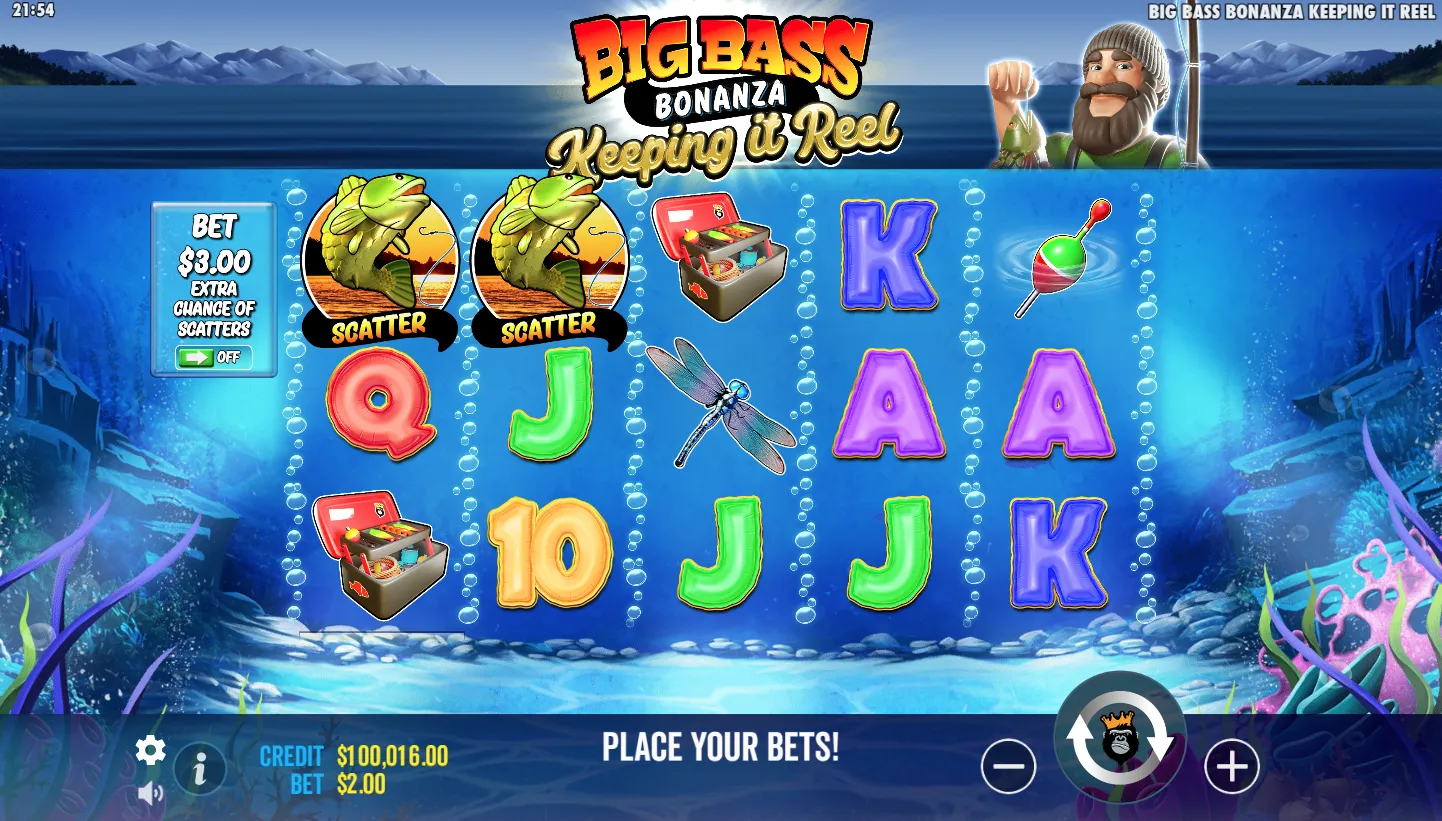
Outside Free Spins there is no Wild, no win multiplier and no collect. The biggest line is five Floats at 200x, so a screen of Floats across all ten lines would pay 2,000x. That is the base game's ceiling, a fifth of the cap, and every total above it needs Free Spins.
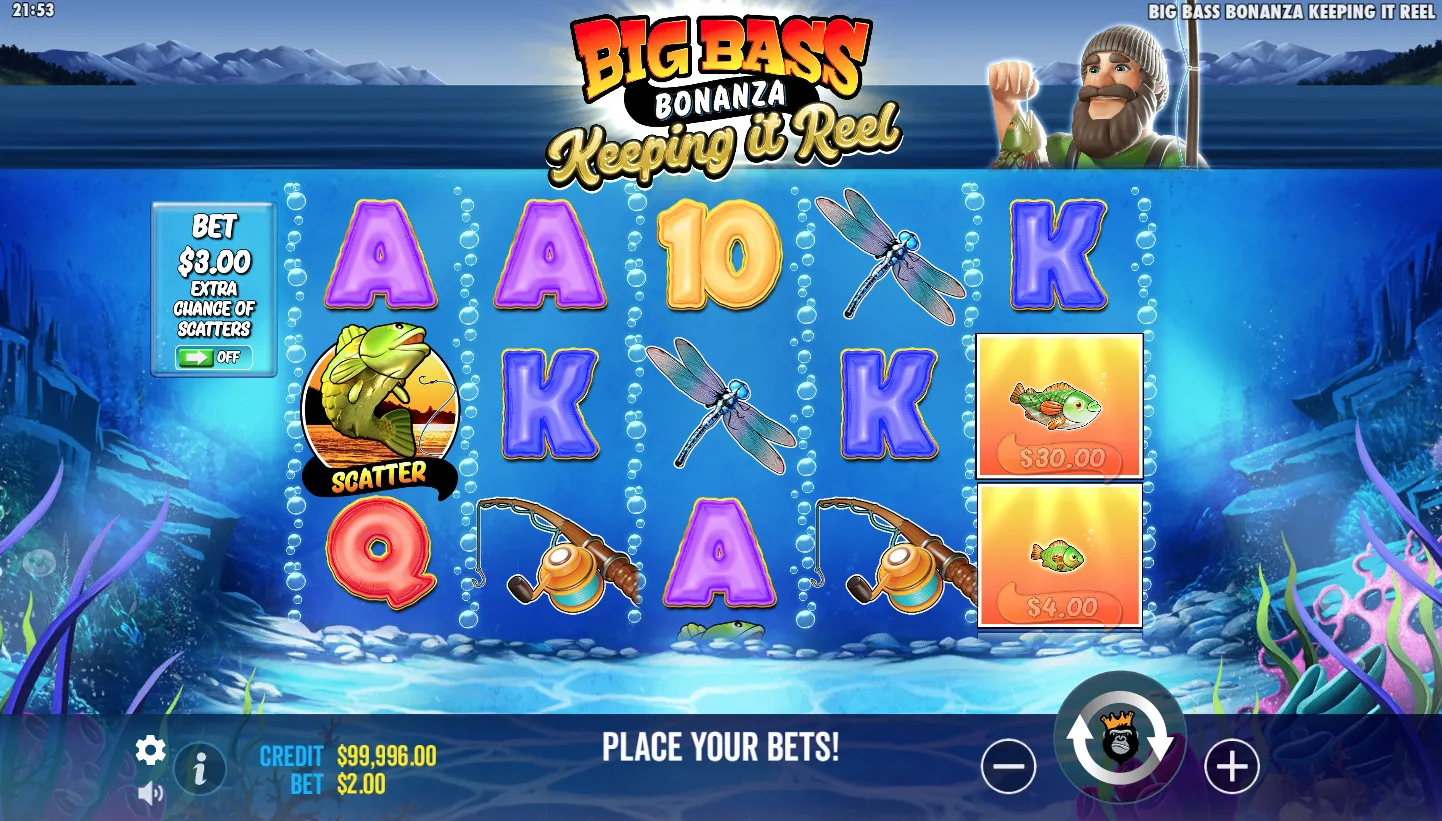
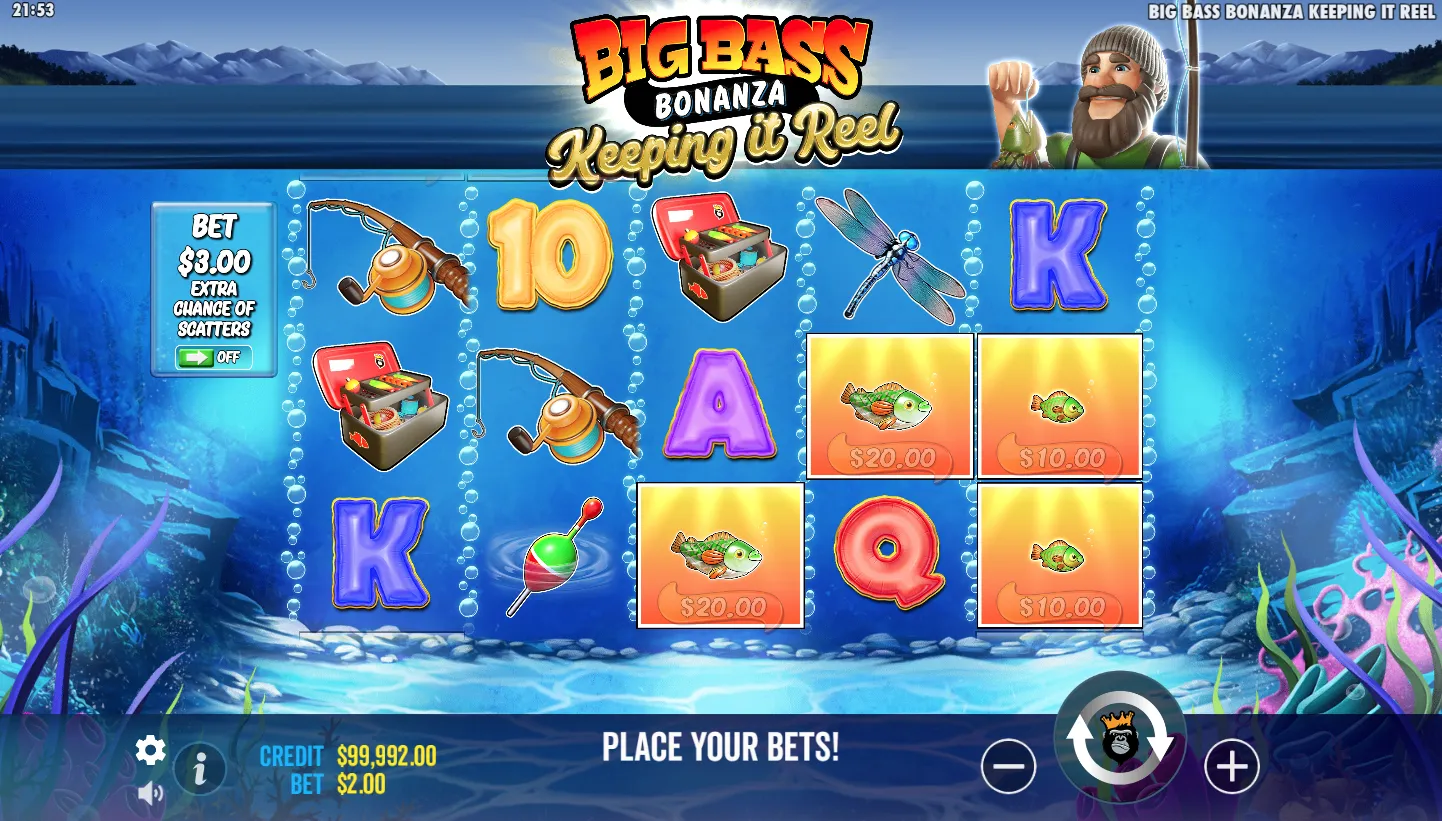
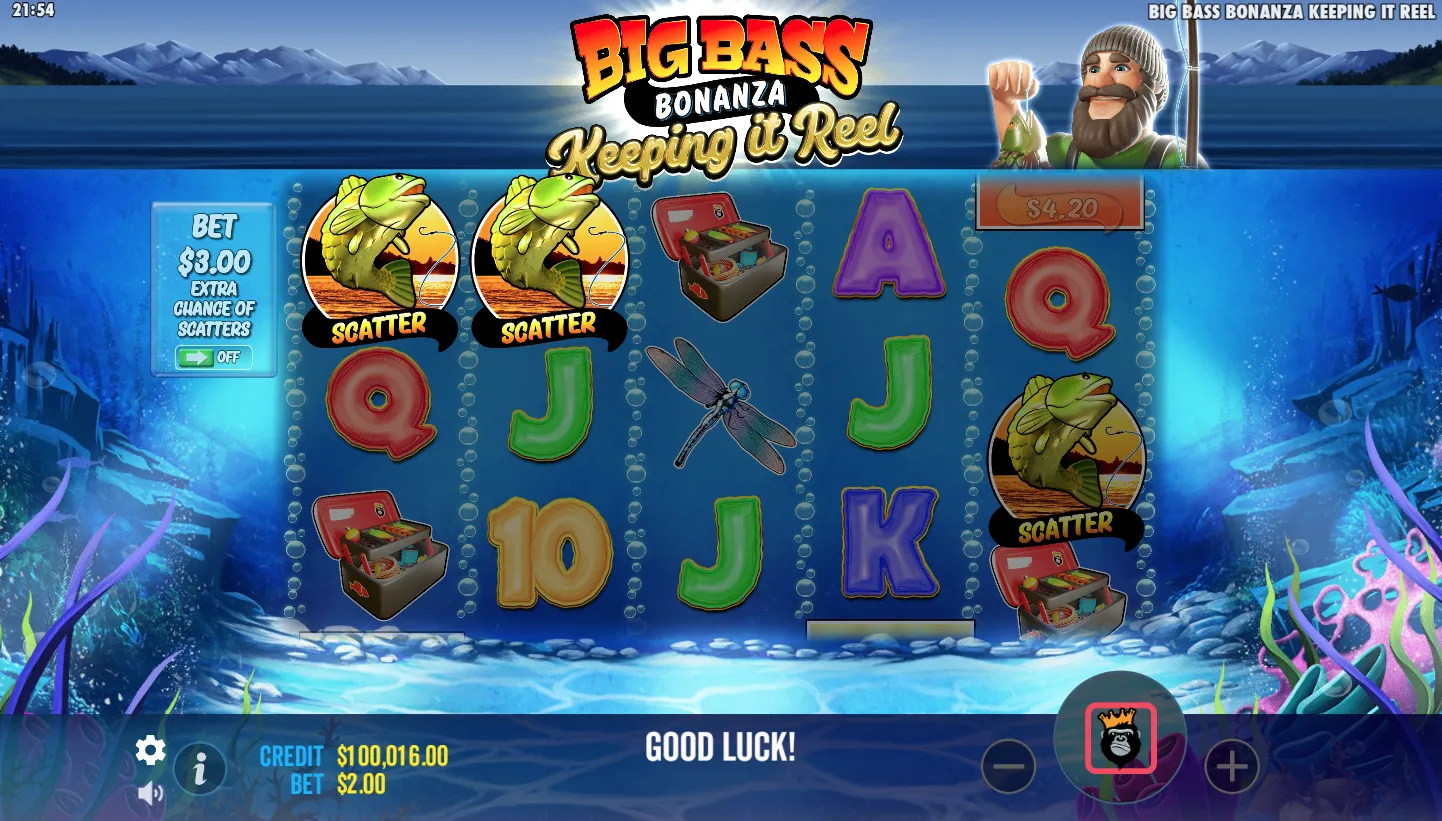
Below that ceiling the pays are thin. I count six of the ten symbols returning the stake or less for three of a kind, and five of them, the ten through the ace, return a fifth of it. The fish is the sharpest case: it lands wearing a cash value as high as 1000x, pays as a line symbol at 1x, 5x and 20x, and lets the value lapse when the spin ends. At an 11.4% hit rate roughly one base spin in nine wins anything, and with Free Spins arriving once in 117 spins on average, the average wait costs 117 bets and holds about thirteen winning spins. The scatter hook is the only other base event, and all it can do is start the round. I read this base game as a waiting room, which makes the buy price the most important number in the game.
The round belongs to the fourth rung
The collection multiplier runs 1x, 2x, 3x, 10x. The first steps double it and then add half; the last more than triples it. One fisherman collecting a 1000x fish takes 1,000x at level one, 2,000x at level two and 3,000x at level three. At level four the same fish is the whole 10,000x cap on its own, and the round ends there. Put three top fish beside one fisherman at level three and the collection comes to 9,000x, still less than a single top fish at level four. The shape of the ladder puts nearly all of the round's reach behind the twelfth Wild.
Unless the cap ends it early, a round runs from 10 spins to 50: 10, 15 or 20 to start and 10 more for each of the three level-ups. The ladder counts Wilds, not spins, so the opening batch matters mostly as time to find the first four, and the twenty spins from five scatters give twice the time that ten from three do. The 10x rate starts only with the spins added after the twelfth Wild and never drops back, so the richest multiplier always plays out at the end of the round.
The net has no part in the climb. It cannot lift a ceiling that one fish at level four already reaches, and every fish in it arrived on a spin with no Wild on screen, which is also a spin that did nothing for the ladder. A heavy net is a sign of a round stuck low on the trail.
The landing net leaks while it waits
One random fish escapes the net on every free spin. A net holding five fish that receives no more is empty five spins later, and since the escaping fish is picked at random, a 1000x fish can be the one that leaves. Only a Golden Wild pays the net out, so a round that ends without one pays nothing from it however full it got.
That gives every banked fish two clocks. An early deposit has more spins in which a Golden Wild can arrive and more spins in which it can escape; a late one faces fewer escapes and fewer chances to be cashed. Neither timing is good. The net turns a missed spin into a claim and then discounts that claim every spin until one particular symbol lands.
I rate it as a real idea with a mean edge. It gives the flat stretches of a round something to watch, and it does nothing for the part of the round that decides a high-volatility game, the climb to 10x.
The buy is priced fairly, and the ante beats the standard bet at the cap
Buy Free Spins costs 100x and returns 96.07% at the top setting, the same as the standard bet. An average bought round is worth 96.07x the bet, and the best case is the 10,000x cap, 100 times the price. The natural route costs 117 bets on average, less whatever the base game returns along the way, and it loses the same share of each stake as the buy. With nothing in the base game worth waiting through, the buy is the sensible way in for anyone whose budget can absorb a 100x price.
The ante raises the stake by half and caps wins at 6,666x the ante stake, which is 9,999x the standard bet, one bet below the standard cap in cash. With the ante on, the cap comes once in 1,221,598 spins instead of once in 2,143,163: about 1.75 times as often for 1.5 times the stake, so about 17% more chances at the cap for each unit staked, at the same 96.07% return. For a player who stays in the base game, that makes the ante a better-priced chase than the standard bet. It locks the buy, so the choice is one or the other.
At the lowest casino setting of 94.07%, the house edge rises from 3.93% to 5.93%, about half as much again as at the top. The rules screen shows the setting in use.
It suits a Big Bass regular who buys, and nobody who wants a base game
A player who already likes the collect and the four-Wild ladder gets that round intact, a second chance for fish that miss, and a buy at the full return. That is a reasonable offer. Anyone who wants the spins between bonuses to do something should look elsewhere: a 2,000x paytable ceiling, fish values that never pay there and a win on roughly one spin in nine make the base game the weakest part of the design. Anyone drawn to the net as a new source of big wins has misread it. It is the round's consolation, a Golden Wild decides whether it pays at all, and the upside still lives on the fourth rung. One clever idea pointed at the wrong end of the round, inside a fairly priced version of a familiar one, makes a competent game, and I put it at 6.2.