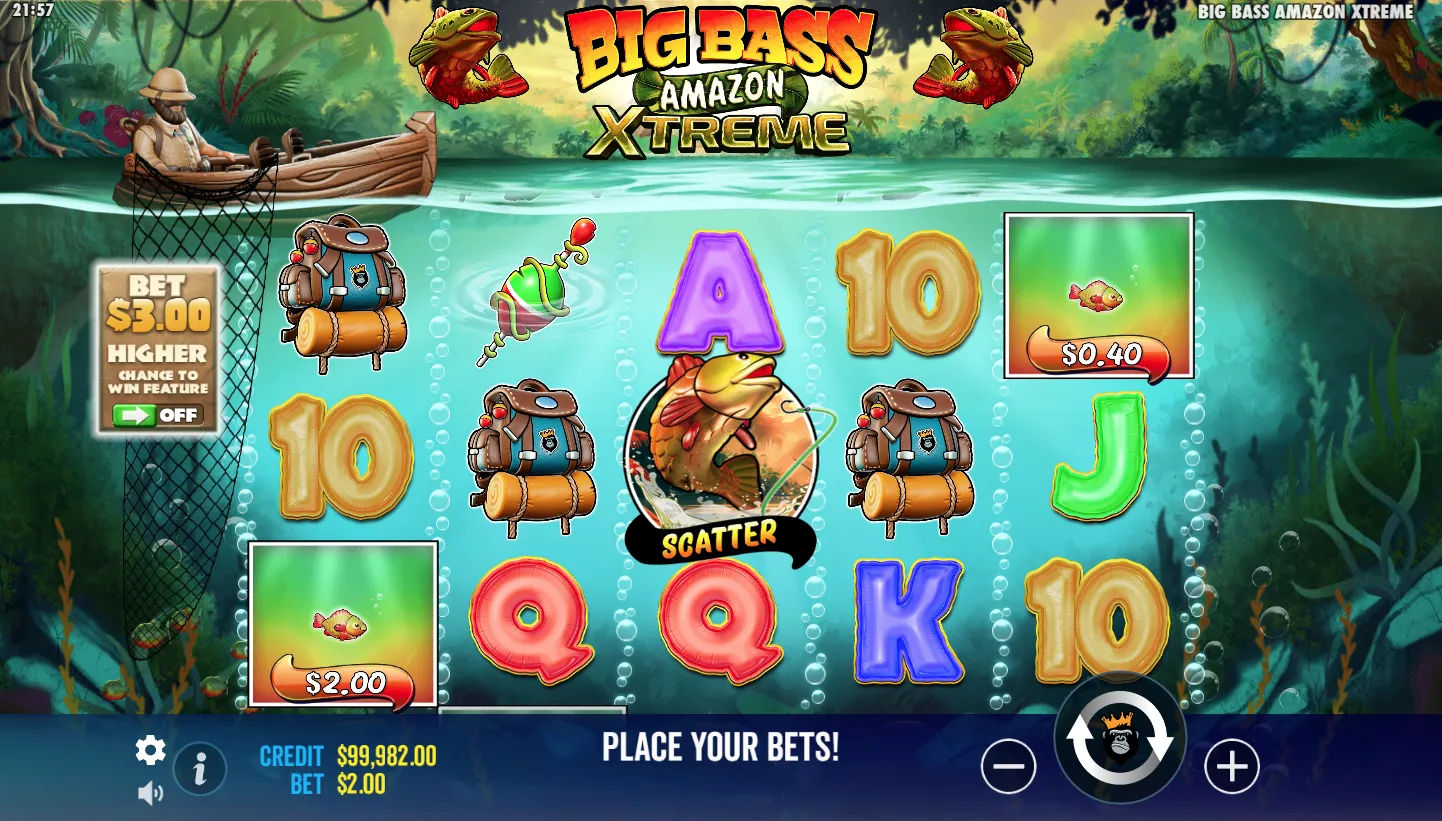
A familiar engine with its value parked at the far end
Big Bass Amazon Xtreme is a game about one threshold. In Free Spins the trail multiplies fish by 1x, 2x and 3x through the first eleven Fisherman Wilds, and it reaches 10x only at level 4, which takes twelve. From there it climbs in steps of ten to 50x. The pick before the round, the buy and the ante are all best judged by how much they help a round across that line, and I find they help less than the design promises. That is the gap between a competent variant and a strong one.
The engine is borrowed. Big Bass Bonanza, Big Bass Splash and Bigger Bass Bonanza run the same core: Fisherman Wilds collect the cash values on fish during Free Spins, and each fourth wild on the trail adds spins and lifts the multiplier. Reel Kingdom keeps that collect as it is. What surrounds it here is a pick that sets up each round, a base-game collect with its own multiplier, two random features that can turn two scatters into three, and a trail of eight levels whose large values sit at the far end. I read this as a refinement of the family mechanic, and the review turns on whether the refinement pays.
The first three trail levels barely multiply
The first three levels add one step each. The fourth adds seven, and each level after it adds ten. That shape sets what a fish is worth. One wild collecting a 1,000x fish pays 1,000x at level 1 and 3,000x at level 3, under a third of the 10,000x cap; once the trail reaches 10x, the same catch is the cap. Below the twelfth wild a round can still pay well when several wilds or several large fish share a spin, but one wild taking one fish cannot reach the ceiling there.
The fish values sharpen the point. I count twelve of the seventeen at 50x or less, and nothing between 50x and 200x, so a round at 3x mostly multiplies small change. Above level 4 the cap moves toward the fish instead. At 20x a 500x fish reaches it alone, at 40x a 250x fish does, and at 50x a 200x fish does, which makes five of the seventeen values cap-sized on their own. The 333x fish at 30x stops ten short, at 9,990x. A round that reaches the cap ends at once and forfeits its remaining spins, so the top levels shorten the path to 10,000x rather than add anything above it.
Getting to level 4 is a relay. Without pre-collected fishermen the round needs four wilds in its opening 10 to 16 spins to earn ten more, four more before those run out, and four more after that, so the twelfth wild has to land within 36 spins at most. Level 8 needs 28 wilds. The cap odds fit that picture. The chance of the cap in standard play is 1 in 14,321,518 spins, against one scatter trigger per 148.43 spins on average; even if every cap came from Free Spins, I make that fewer than one round in 96,000.
The pick decides the round before it starts
The pick is the idea that earns this game its place in the family. Objects open one at a time until the first boot, and what they reveal sets the opening: up to 6 extra spins, up to 3 Guaranteed Fish, up to 3 Already Collected Fishermen and up to 2 Remove Lowest Fish. Four scatters start the pick with one boot already revealed and five start it with two, which leaves fewer boots to find.
Of those modifiers the fishermen matter most, by a distance. Each takes one wild off the road to 10x, and all three cut it from 12 to 9, a quarter of the way. They also turn the round's first wild into a retrigger, because three fishermen already on the trail leave the fourth to whichever wild comes next. Guaranteed Fish rank second: with even one, every free spin shows at least one fish, so a wild always has something to take. Extra spins rank last, since six more spins at 1x change little by themselves.
The weakness is the same mechanism read the other way. A pick that ends early sends the round in on 10 spins or close to it, at 1x, with little or nothing added, and that round has to find all twelve wilds itself. Buying does not change this: a 100x purchase gets the same pick, and it can end just as early. The pick means bonuses start from different places, and some of those places are poor.
The base game can reach the cap and still returns nothing most of the time
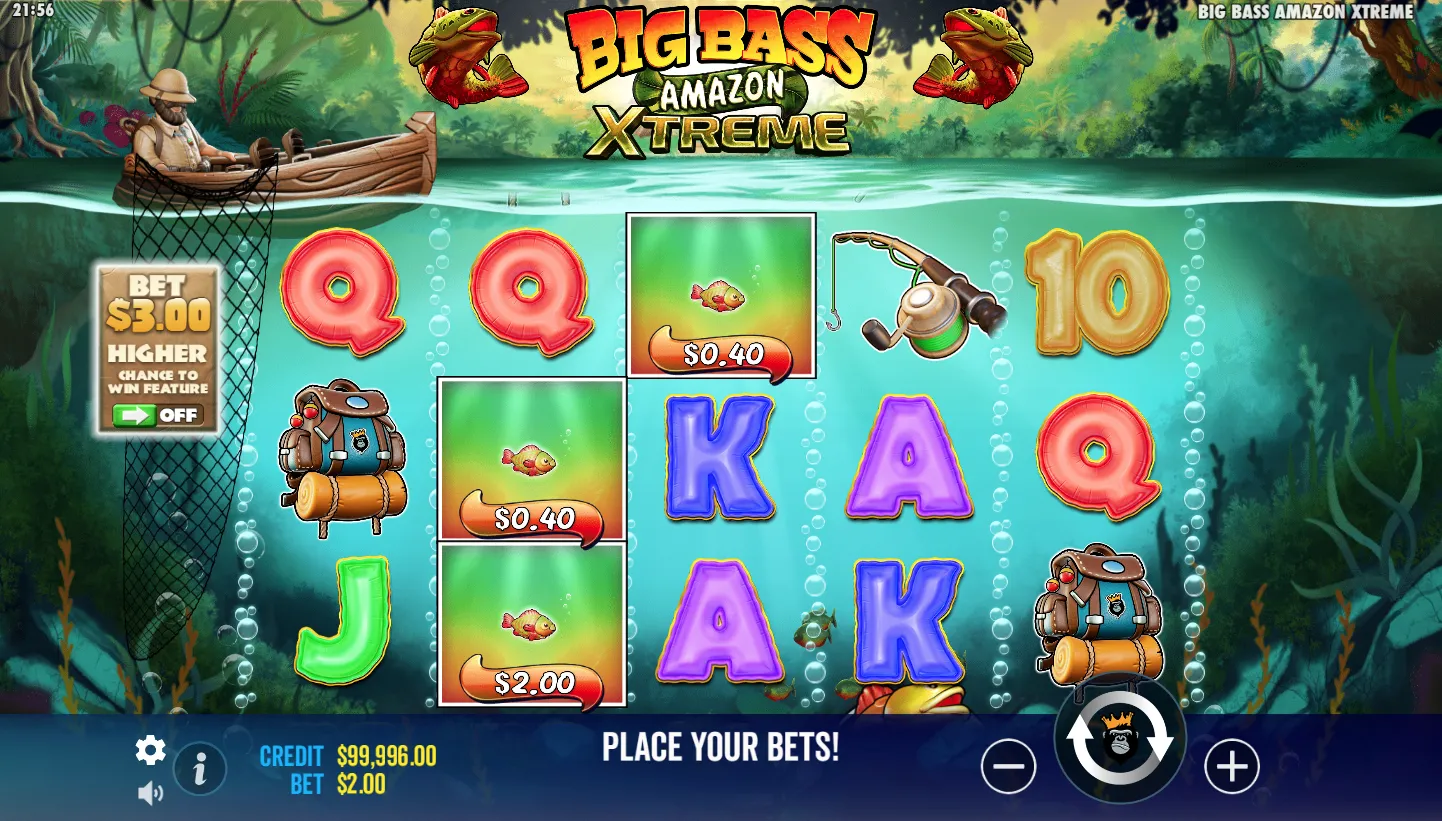
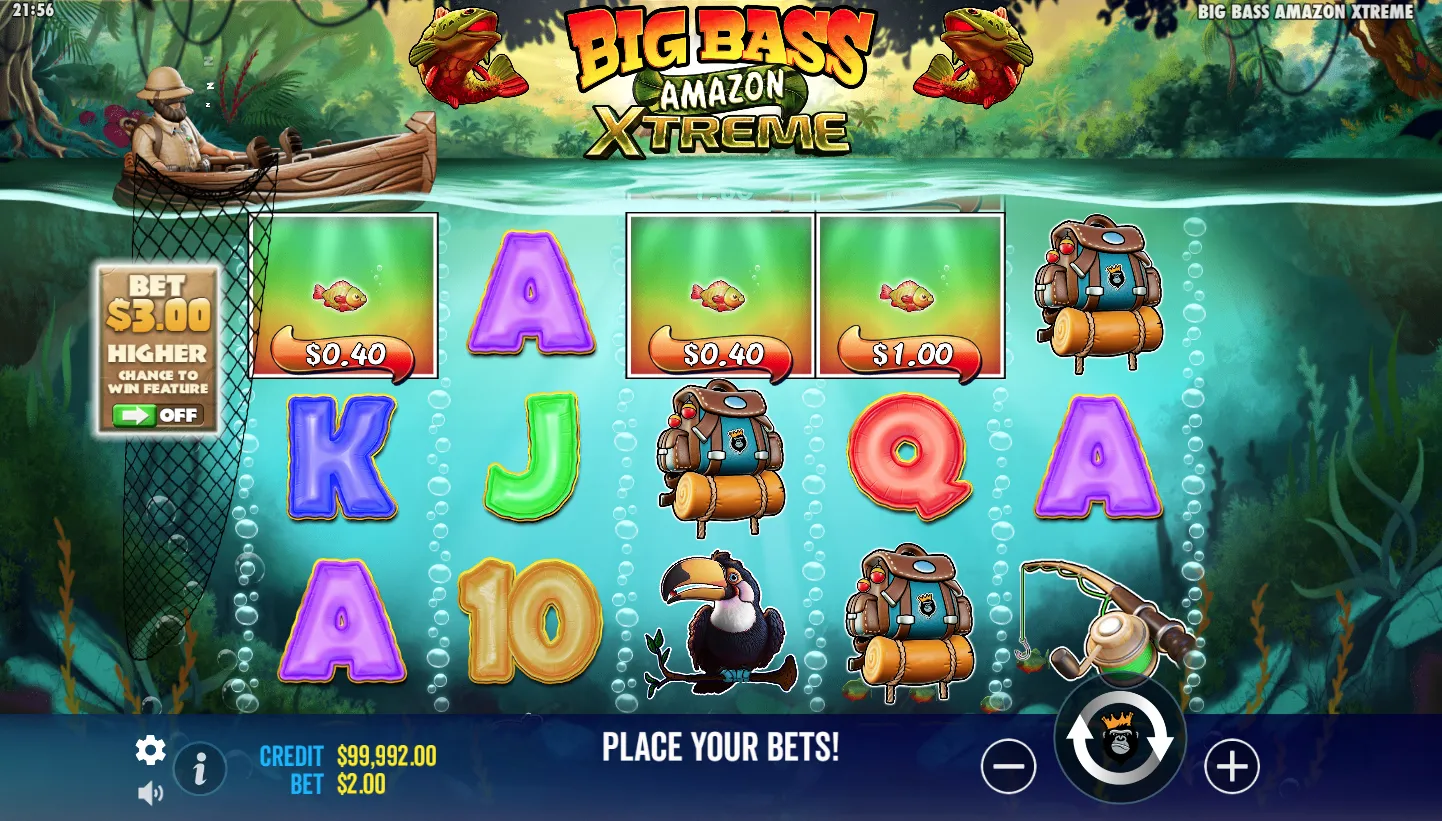
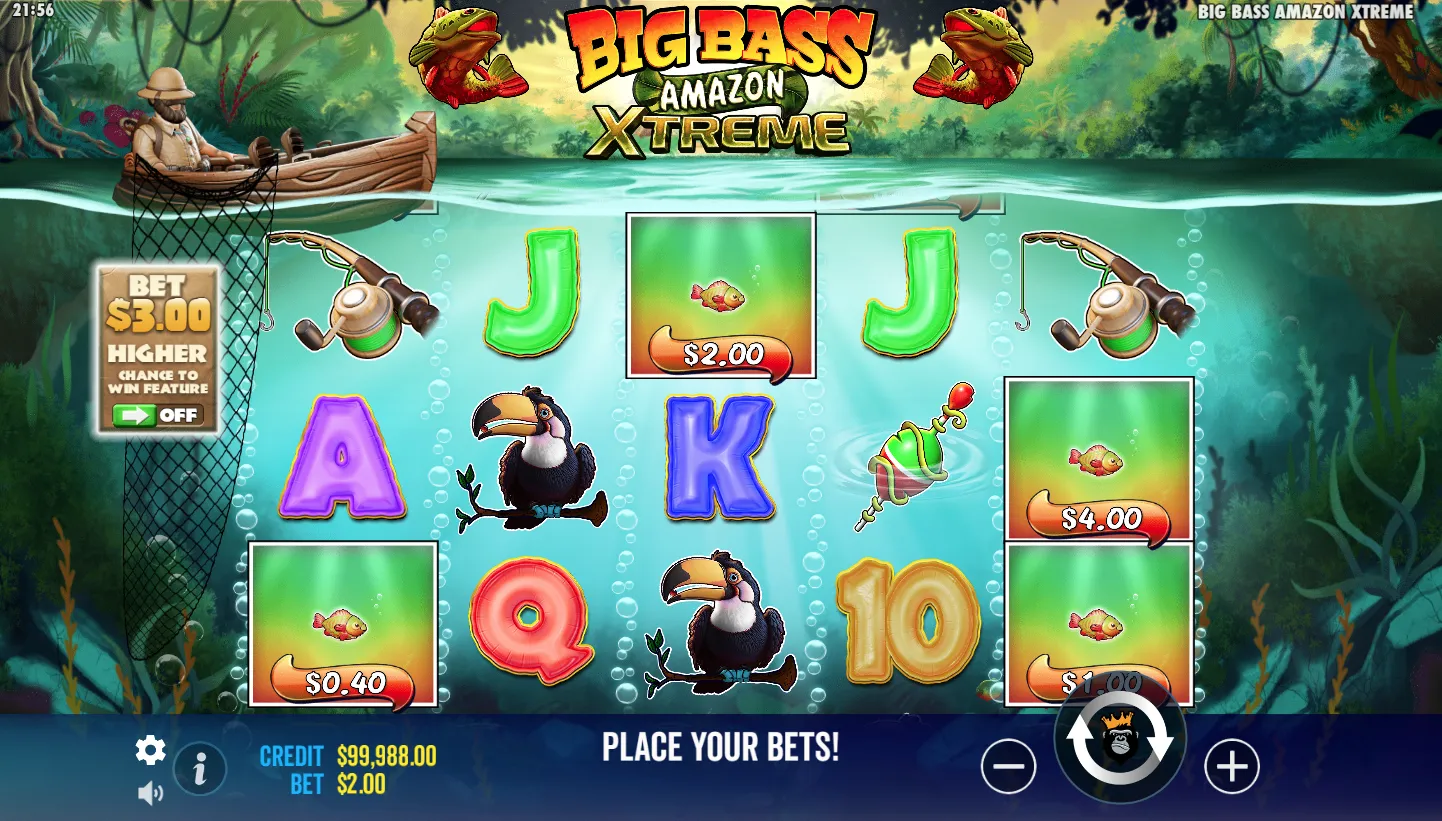
Only 11.76% of base spins return a win, about 1 in 8.5. Across the 148.43 spins an average bonus takes to arrive, I make that about 131 that return nothing. The paytable does little to soften this. Five Floats pay 200x, the largest line win, but five of the nine symbols pay 0.2x for three of a kind and top out at 10x or 5x for five. A screen of Floats on all ten lines would pay 2,000x, a fifth of the cap.
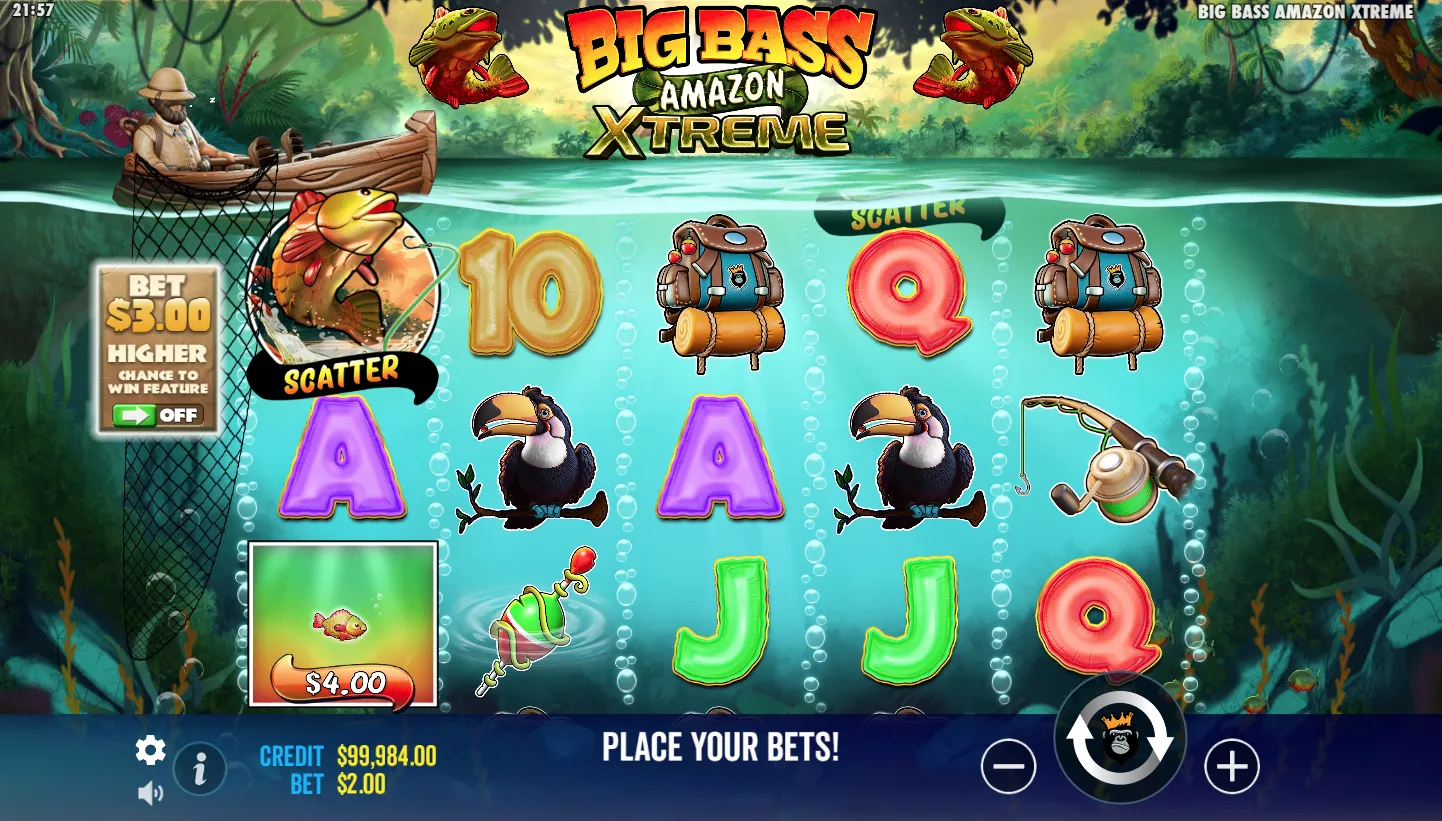
The random collect is what lifts the base game above its lines. It gathers every fish on screen and multiplies the total by up to 50x, and a single 200x fish under 50x is the cap. So the base game can end at 10,000x without Free Spins, but it needs the collect to do it, because the lines alone stop at 2,000x. That 50x also matches the top of the trail. The base collect can draw it at random on a spin with fish; Free Spins earns it with 28 wilds, or 25 when the pick pre-collected all three fishermen. In the base game a fish that lands without the collect pays nothing. The base game's other features are the drop respin, which respins the other reels for a third scatter, and the crocodile, which turns one symbol into a scatter.
The buy is honest, and the ante buys frequency rather than ceiling
The 100x buy returns 96.07%, the same as standard play, so it is neither a discount nor a premium: 100x spent on a buy costs an expected 3.93x, as 100 standard spins do. Its best case is the 10,000x cap, 100 times its price, and at the $250 top stake the purchase comes to $25,000. I call that fairly priced. What the price cannot buy is a good pick, so a fair purchase still opens on a draw.
The ante raises the bet from 10 coins to 15 for more scatters, at 96.06%. Its cap is 6,666x the raised bet, about 10,000x of the unraised stake, so the top prize in money stays put while each spin costs half as much again. By my arithmetic the expected cost per spin rises from 3.93% to 5.91% of the unraised stake, in exchange for more Free Spins at almost the same return. It also switches the buy off. For someone who wants rounds more often, that is a fair trade. It leaves the ceiling where it was. Casinos can also run the game at 95.08% or 94.05%, and the rules screen shows the setting in use.
Who should wait for the twelfth wild
The game suits a player who accepts high volatility and wants a bonus whose opening changes from round to round, with the patience for rounds that never reach 10x. Anyone who wants the base game to work between bonuses should look elsewhere, because about seven spins in eight return nothing and the best line pays 200x. Readers who know the family should come here for the pick and the ladder; the collect is the one they already know.
That balance sets the score. The pick is a real idea, the buy is fairly priced, and from level 4 up a single catch can reach the cap. Against that, the multiplier stays at 3x or less until the twelfth wild, and the base game offers little between bonuses beyond a random collect. A competent Big Bass variant, then, whose best rounds are rare.