One rule in this conversion improves the Big Bass collect
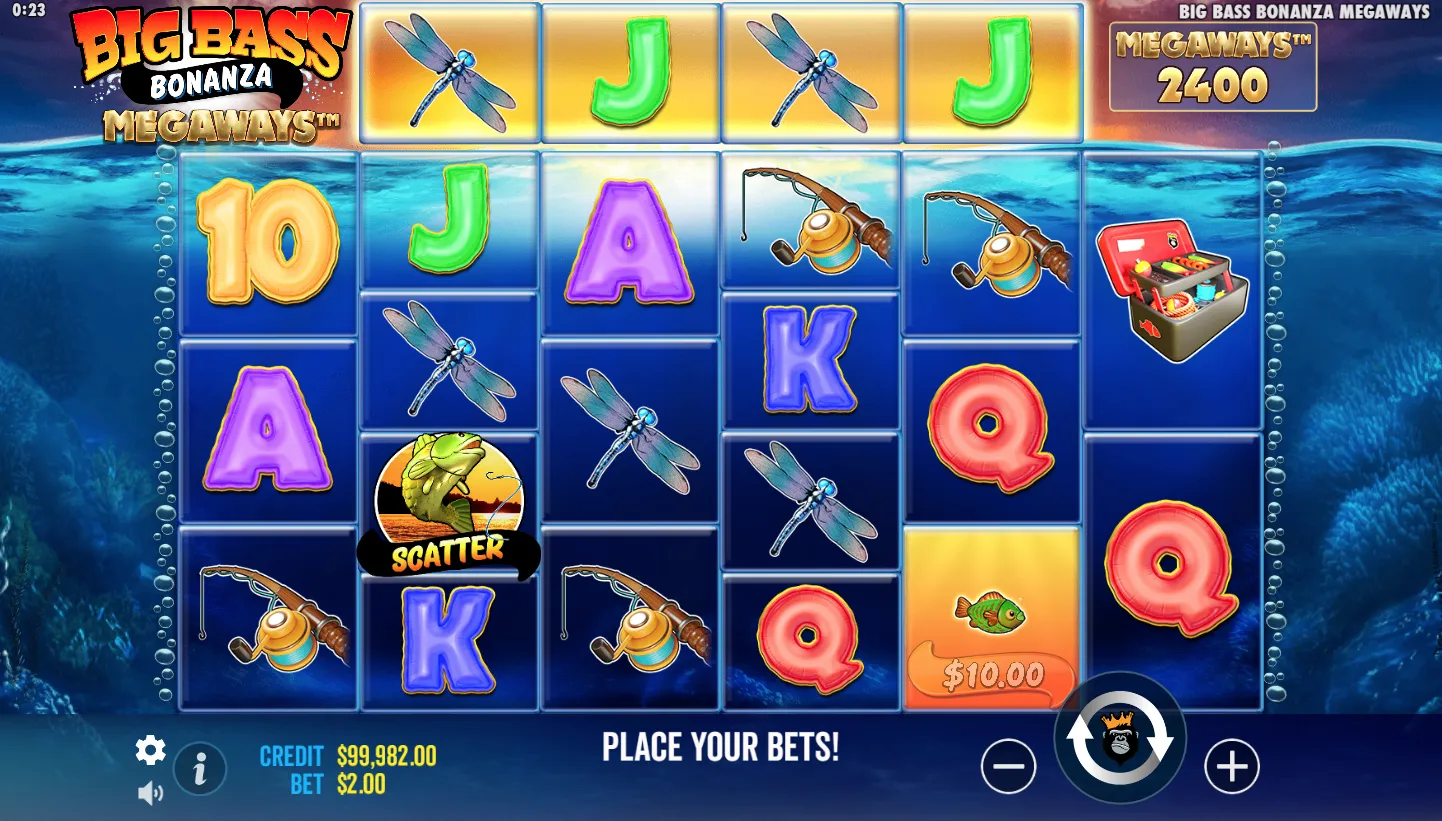
Big Bass Bonanza Megaways takes the free-spins round that defines its series, fishermen collecting cash values off fish, and sets it on a six-reel Megaways grid where every win tumbles. My reading is that the tumble gives that round one real improvement and the rest of the maths fences it in. Fish that sink instead of exploding let a single collection keep growing through a chain. A base game with one worthwhile symbol, a 10x stage confined to the last ten spins and a 4,000x cap equal to one fish's top value then decide how far it can grow. The round builds better than its frame lets it pay.
The collect itself comes from Big Bass Bonanza, the original in the series, and the trail where every fourth fisherman retriggers the round at a higher multiplier is the same device Bigger Bass Bonanza and Big Bass Splash use. Neither is new here. The rule that decides this version is the sinking fish, which only means something on a grid where symbols tumble. That makes it a refinement of an existing round rather than a new idea, and I judge it on whether the refinement survives the numbers around it.
Outside free spins, the float is the whole paytable
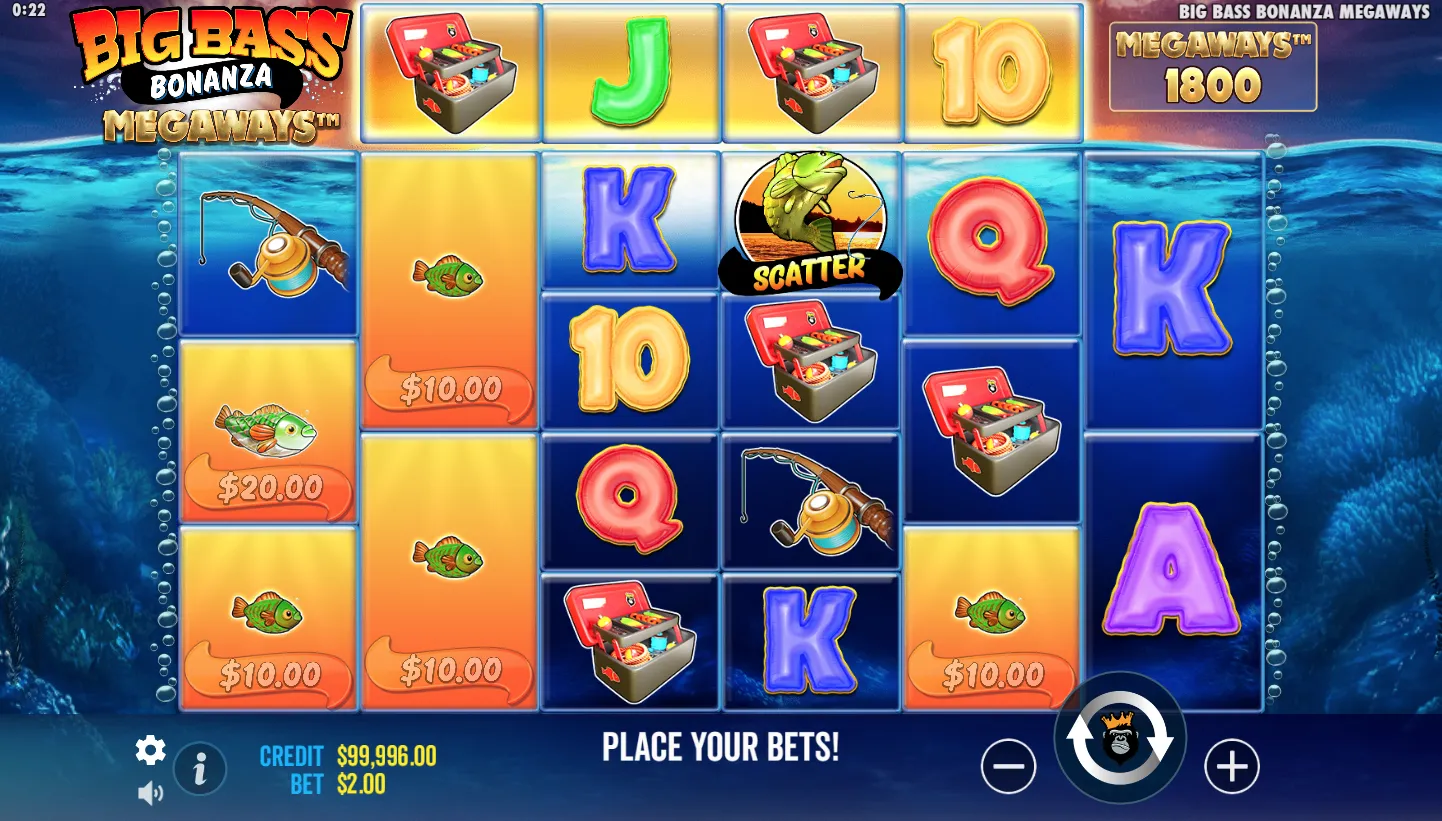
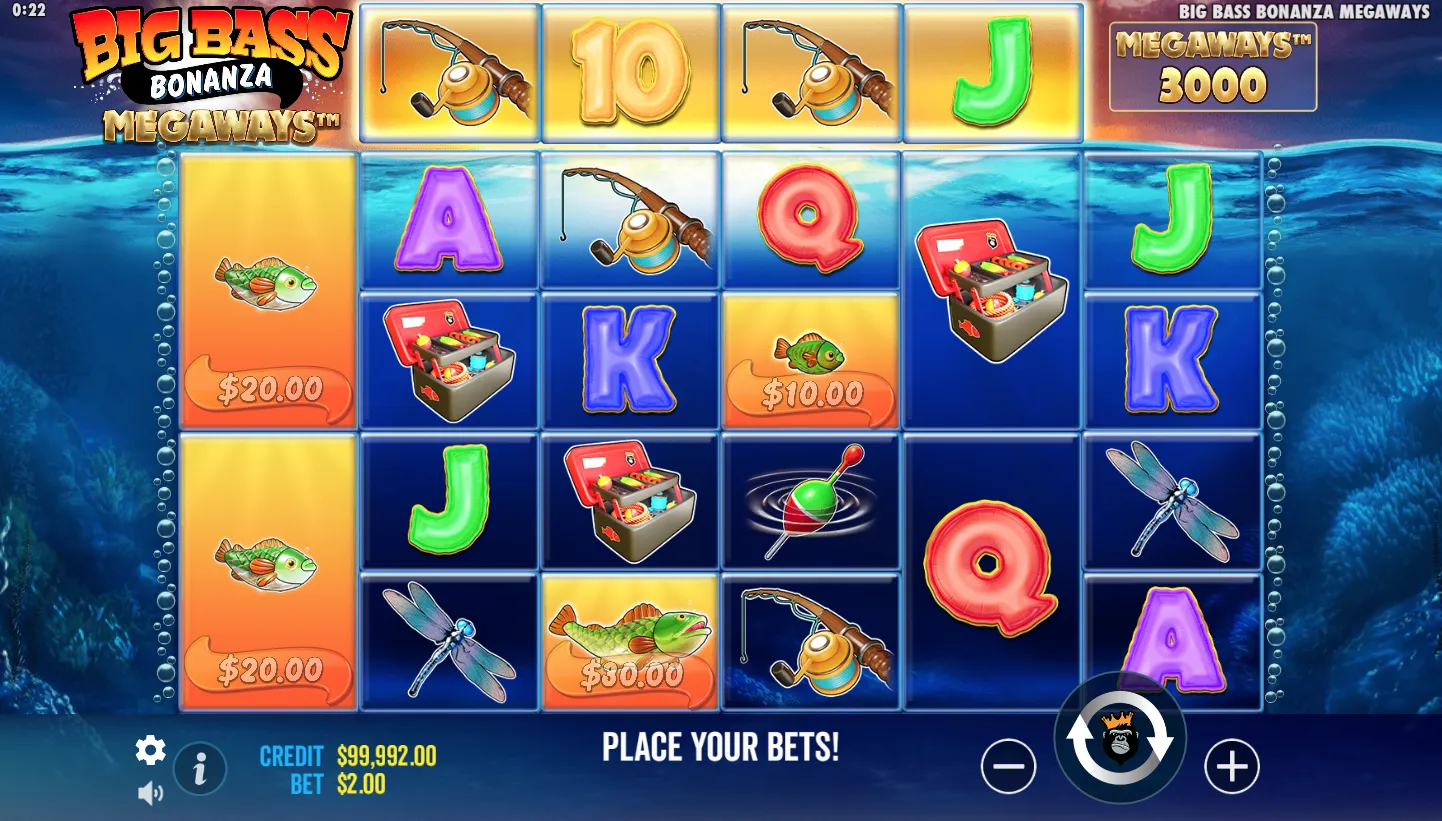
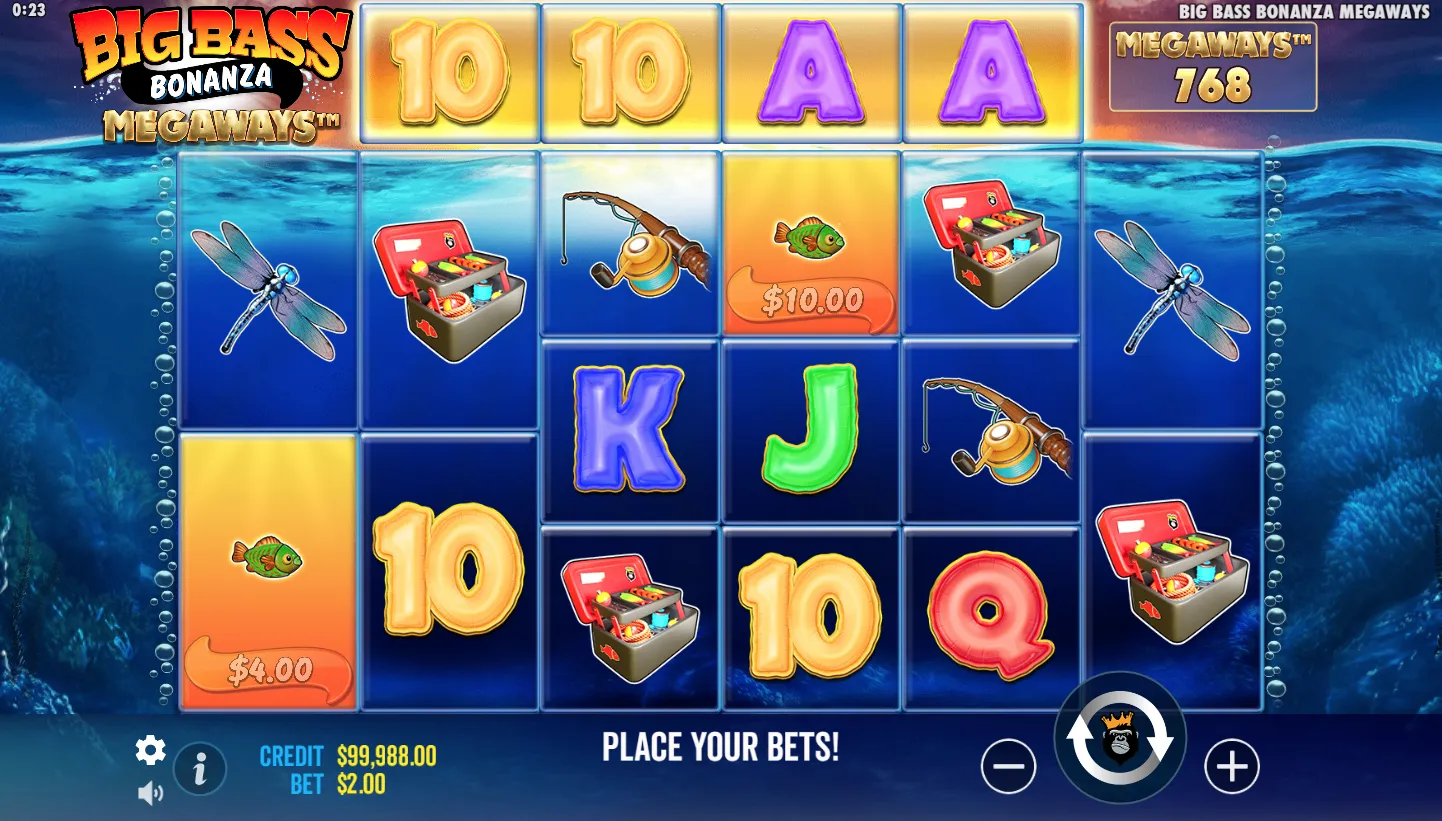
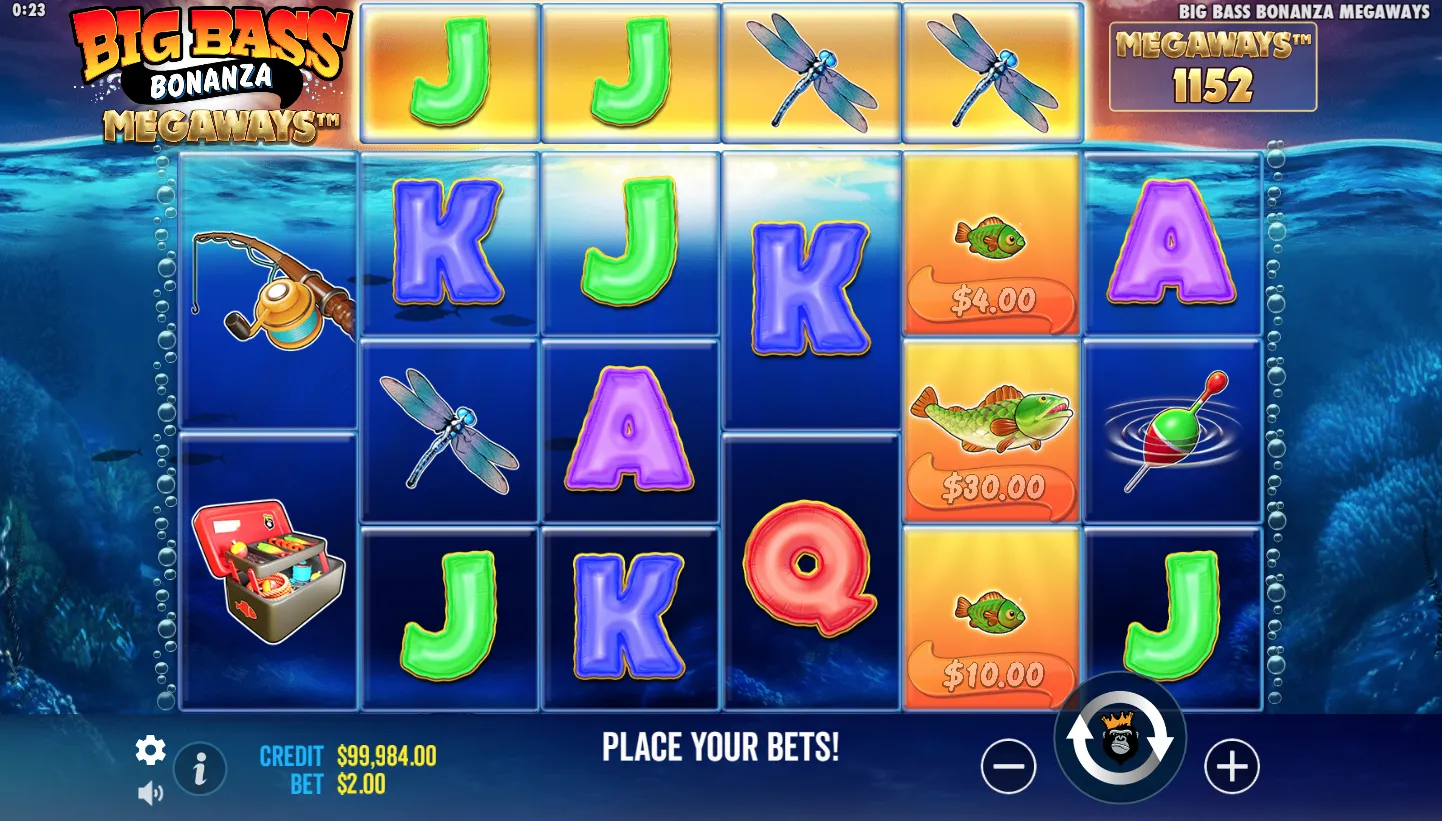
I count what six of a kind pays across the ten regular symbols, and the float stands alone at 50x. The fishing rod comes next at 7.5x, and the other nine symbols added together reach 18.7x, less than half of one six-float way. Five of a kind is thinner still: seven of the ten pay less than the stake, from the tackle box at 0.75x down to the 10 at 0.4x, and the K, Q, J and 10 pay the stake or less even across all six reels. The money fish sits in the high group, yet its ways pay matches the A at every length, 0.2x for three up to 1.75x for six. On base spins it is a low symbol with a price tag it cannot cash, because fish values pay only when a fisherman collects them and fishermen appear only in free spins.
The wild does less than its position suggests. It lands only on the top row above reels 2 to 5, so it can add ways in the middle of the grid but never stands in on reel 1, where every way starts, or on reel 6, where every six of a kind ends. A 50x float way needs natural floats at both ends.
I measure the paytable against the cap and find it a long way off. At 50x a way, one board needs 80 separate six-float ways to reach 4,000x from floats alone before tumbles add anything, and the rod would need more than 530. The base game exists to deliver three scatters, and with no bonus buy on the game, scatters are the only way into the round. Every free-spins round is paid for in base spins at these rates.
Sinking fish turn each collection into a multiplication
I read each collection as a product, the number of fishermen times the total fish value on screen, and the tumble gives both numbers time to grow. A winning tumble removes the winning symbols and drops new ones in, but in free spins the fish stay on the board and sink, and the collection waits until the chain has finished. A tumble that brings a second fisherman doubles the catch. Another fish arriving adds its value once for every fisherman already on the board. Two fishermen over four 20x fish collect 160x before any multiplier, and a third fisherman arriving in the same chain lifts that to 240x. Each step raises one product instead of opening a new one, and that compounding is the best thing in the game.
Dynamite and bazooka patch the obvious hole, a free spin where fishermen arrive with nothing to catch. Either can fire at random at the end of a free spin that shows one or two fishermen and no fish. Dynamite places fish for them to collect; bazooka changes every symbol except the fishermen and tumbles in new ones, which can include fish or more fishermen. Both are random, so neither guarantees anything, and a free spin with three or more fishermen and no fish falls outside their trigger. I count that as a gap in the design: the rescues cover the smaller empty spins and leave the one with the most collectors on it alone.
The 10x stage is a ten-spin epilogue
Every fourth fisherman collected adds 10 spins and moves the multiplier up one stage, x1 to x2 to x3 to x10, three times at most. The steps are uneven. The first two retriggers add two points of multiplier between them and the third adds seven, so nearly all of the ladder's value sits on its last rung.
That rung arrives late and stays briefly. The raised multiplier applies to the added spins, which play after the current ones run out, so x10 covers only the final 10 spins of any round that reaches it, and the starting spins play at x1 whatever happens during them. A three-scatter start with all three retriggers runs 40 spins, a quarter of them at x10. A six-scatter start runs 55, and fewer than one in five of those are at x10.
I work the trail out as a rate, because the rate matters more than the count. Before the twelfth fisherman, a round has at most its starting spins plus the 20 from two retriggers. From a three-scatter start, 12 fishermen must arrive inside 30 spins, 0.4 a spin, with the first four inside the opening 10. From six scatters the window is 45 spins, about 0.27 a spin, and the first four have 25. I value extra scatters more as time for the trail than as spins in their own right. Fishermen past the twelfth add nothing to the trail, so the x10 batch is the last thing any round can reach.
One fish can pay everything the round is allowed to pay
The fish ladder runs 2, 5, 10, 15, 20, 25 and 50x the bet, then jumps to 4,000x, and that top rung is the cap. A 4,000x fish collected at any stage, x1 included, ends the round at 4,000x. On the x10 stage the same fish would be worth 40,000x before the cap cut it back. The multiplier adds nothing to the top rung, and on the spin it lands, the top rung makes the rest of the round irrelevant.
Below it, the multiplier is what does the work. The 50x fish, the highest ordinary value, is one eightieth of the cap at x1 and one eighth of it at x10. Two fishermen over four 50x fish pay 400x on an x1 spin and 4,000x on an x10 spin, which closes the round. Without the top rung, an x10 spin needs a tenth of the catch an opening spin needs to reach the same total, and a round gets ten such spins at most.
This is where I find five-out-of-five volatility and the ceiling at odds. A game at the top of its own volatility scale, with base spins this thin, asks for patience that should be repaid at the top end. Here the top end is one fish's value, and reaching it ends the round on the spot and forfeits the spins left, including any x10 spins not yet played. The sinking fish make large collections easier to assemble. They cannot make any round pay more than 4,000x.
At 94.62% the frame stops being worth it
The default return is 96.70%, and UK casinos can run the game at 94.62%, 2.08 points lower. As a house edge that is 3.30% against 5.38%, so the expected house take is about 63% larger at the lower setting. A 96.72% build sits next to the default, and a casino's rules screen shows which setting is live. My 6.6 is a score for the default. On a game where the paytable barely pays and the round cannot pass 4,000x, a return that low removes the one number working in its favour, and at that setting I would look elsewhere.
I would point the game at someone who already likes the fisherman collect and wants a version where one spin's catch keeps growing through a tumble chain, and who accepts the base game as the entry fee with no buy to skip it. It does not suit anyone who takes on top volatility for the size of the ceiling. The ceiling is 4,000x, the multiplier that could reach it through ordinary fish runs for ten spins, and the one fish value that reaches it on its own is the top rung. A good round held inside a tight frame is a 6.6, and that is what I make this.