Every relative changed the same rule
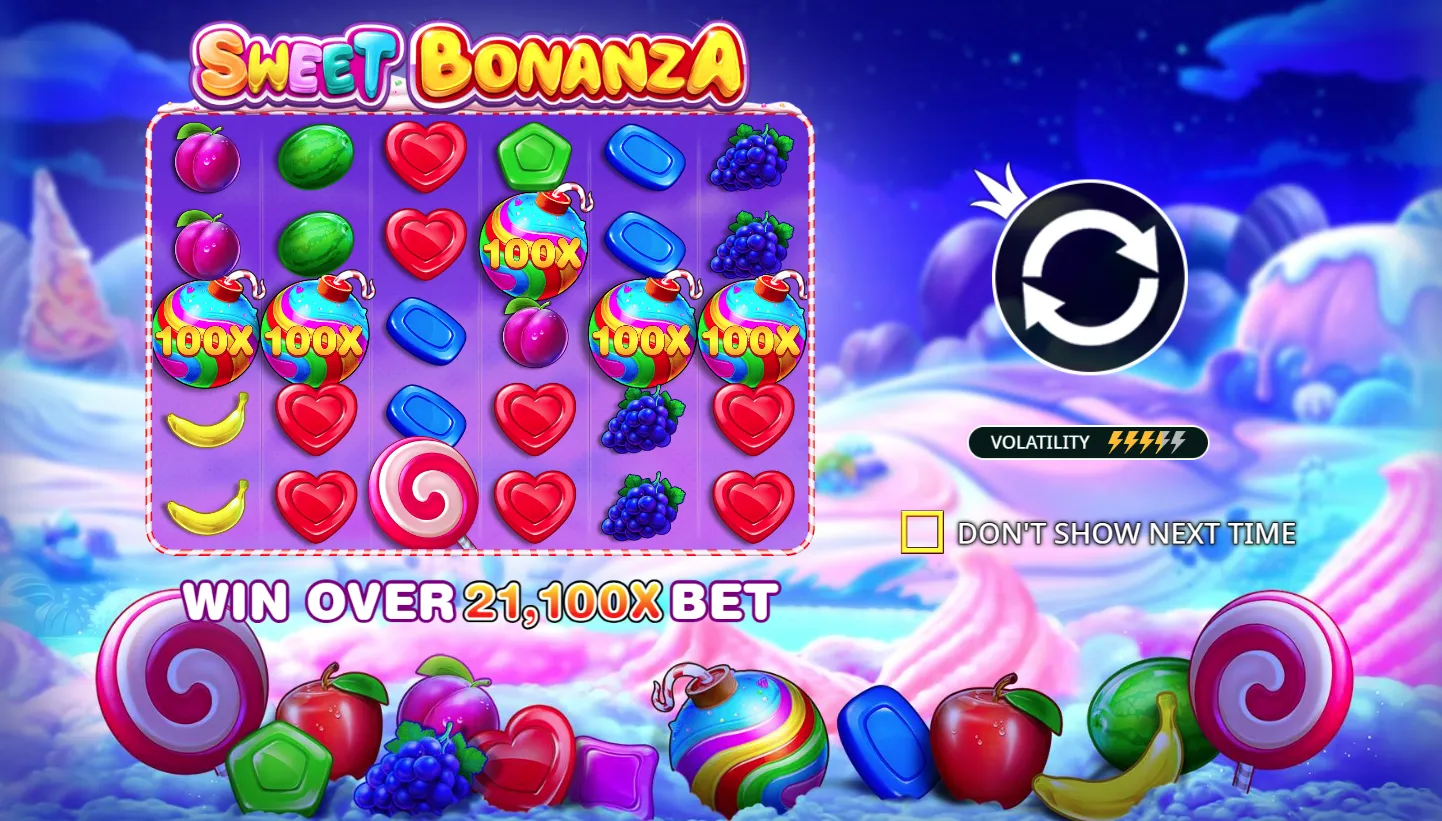
Sweet Bonanza puts all of its upside into the free spins and then settles that round one spin at a time. The base game has no multiplier, the bonus starts at 10 spins whatever triggers it, and the bombs that make the round worth having are added, applied and cleared at the end of every tumble sequence. I read that last rule as the whole review. The game has one sound feature, and the feature is built so that it cannot grow.
Its relatives make the point by what they changed. Gates of Olympus runs the same 6×5 pay-anywhere tumbles down to the pay ladder, the ante and the buy, but its multipliers also land in the base game and build a round-long total in free spins. Sweet Bonanza 2500 keeps the lollipops and the 10-spin bonus and adds a mode with a total multiplier for the round. Sweet Rush Bonanza moves its multipliers onto grid spots that double on repeat wins and stay between free spins. Three games on this engine, three ways of giving the multiplier a memory. This one is the engine without it, and I judge it as that plain version rather than against the refinements around it.
A base spin is a count and nothing more
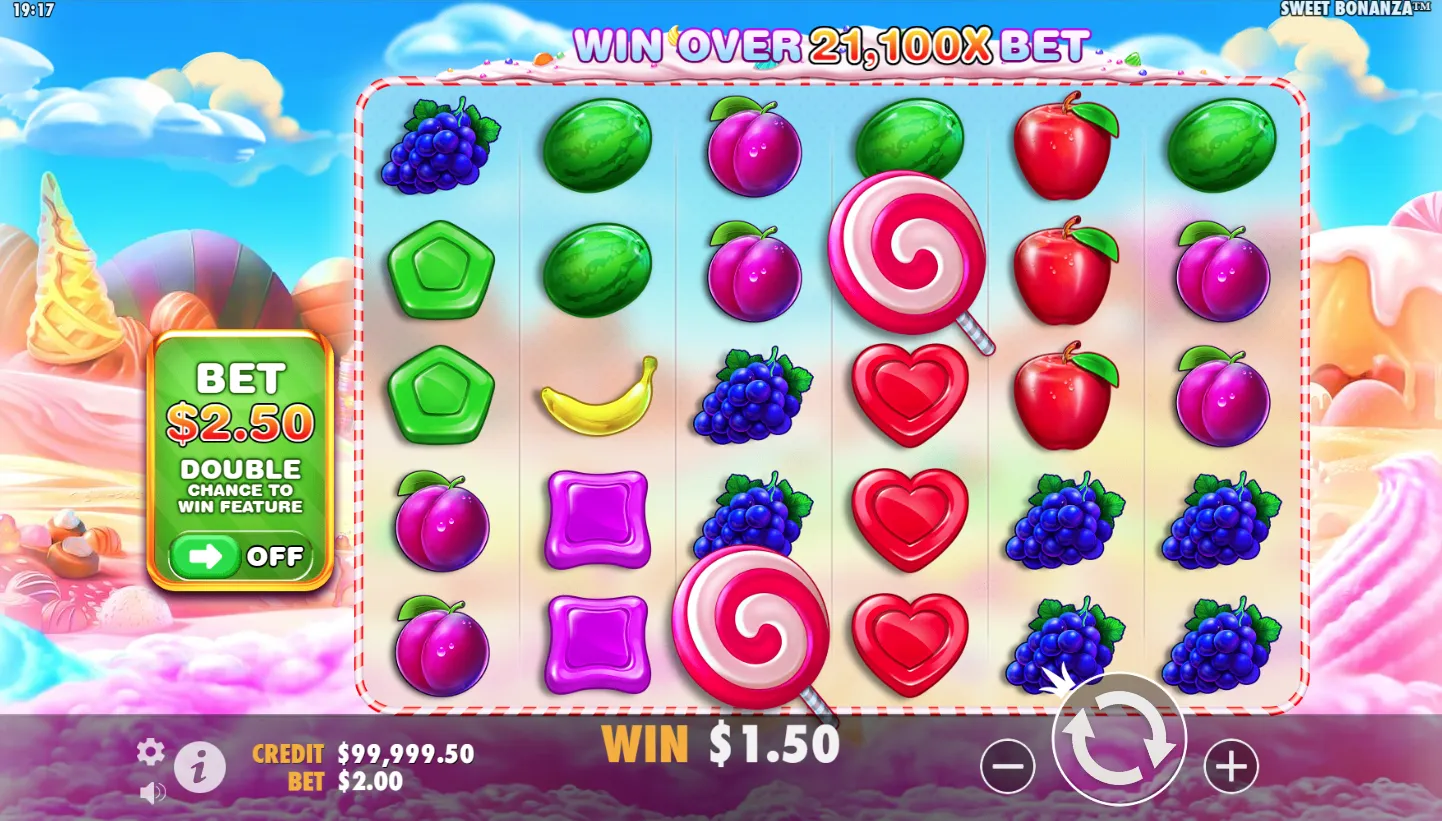
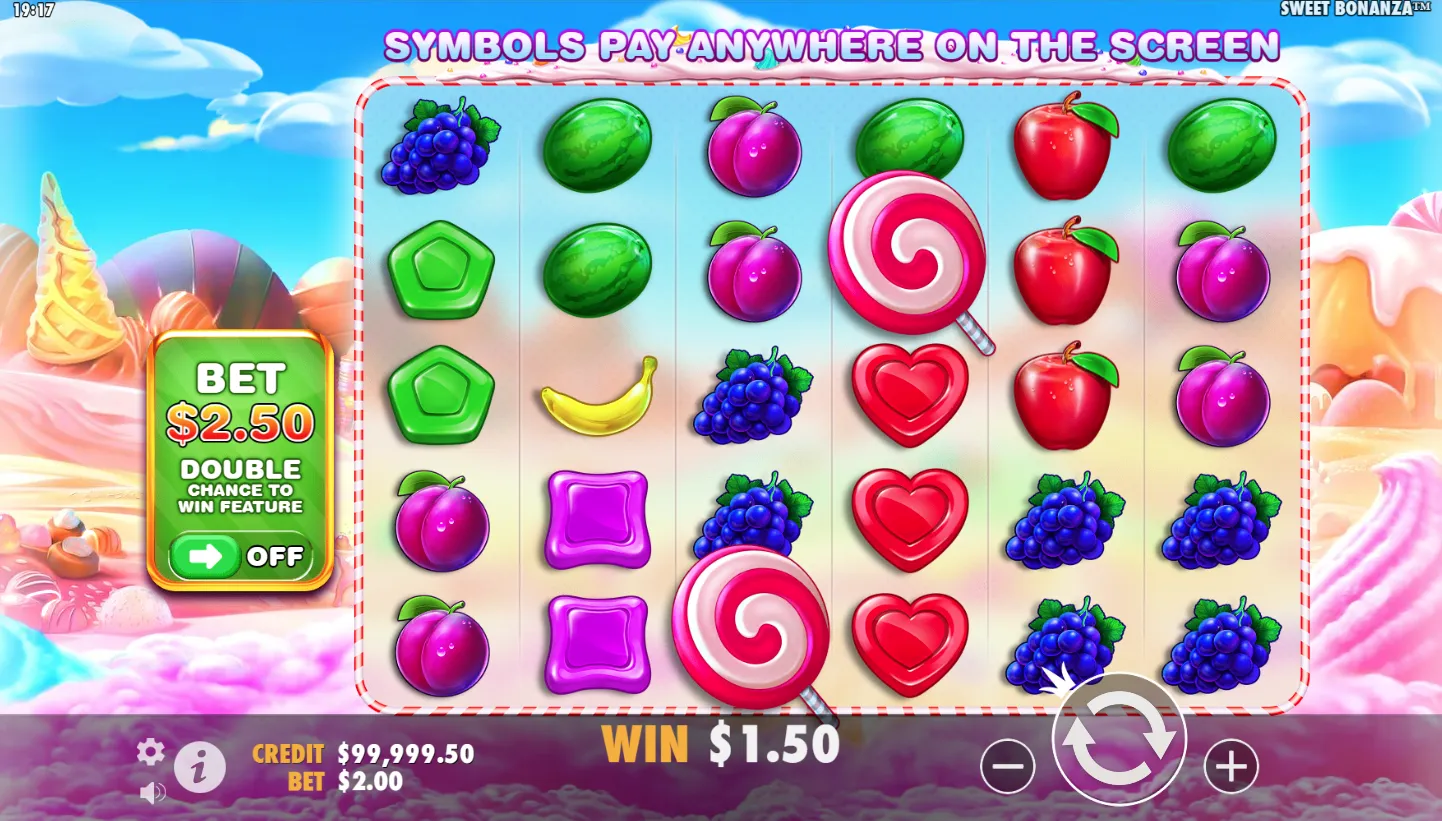
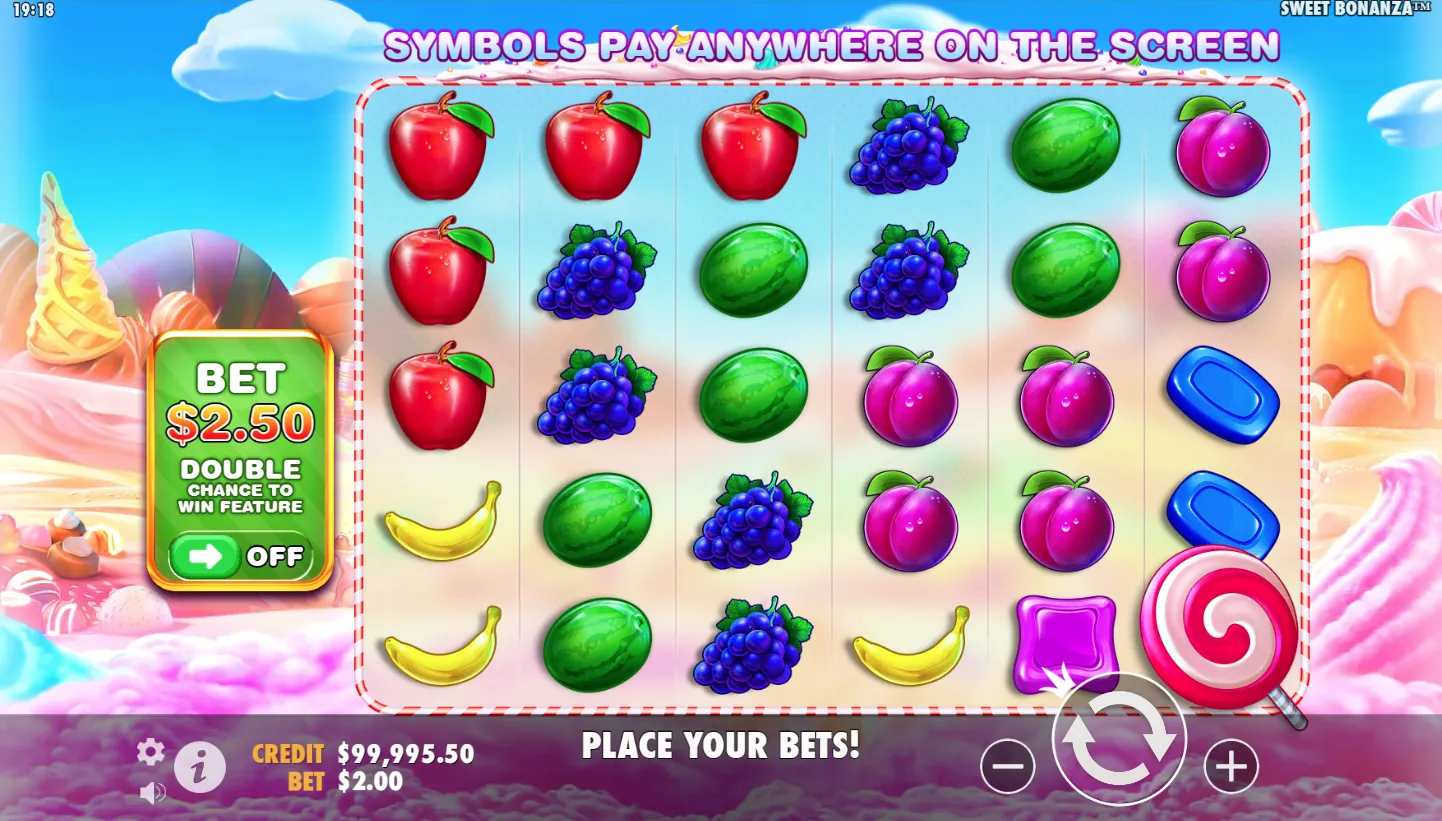
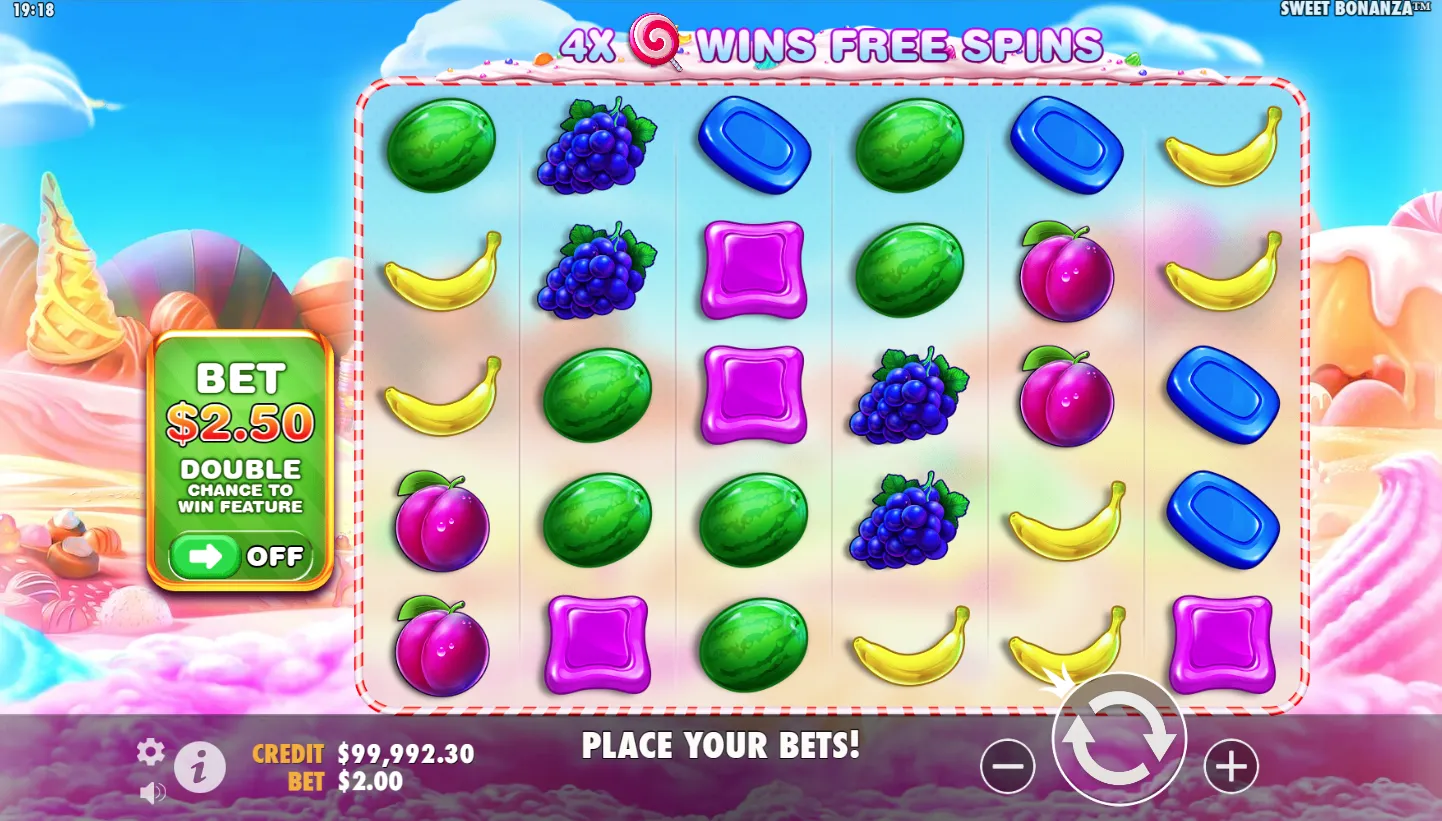
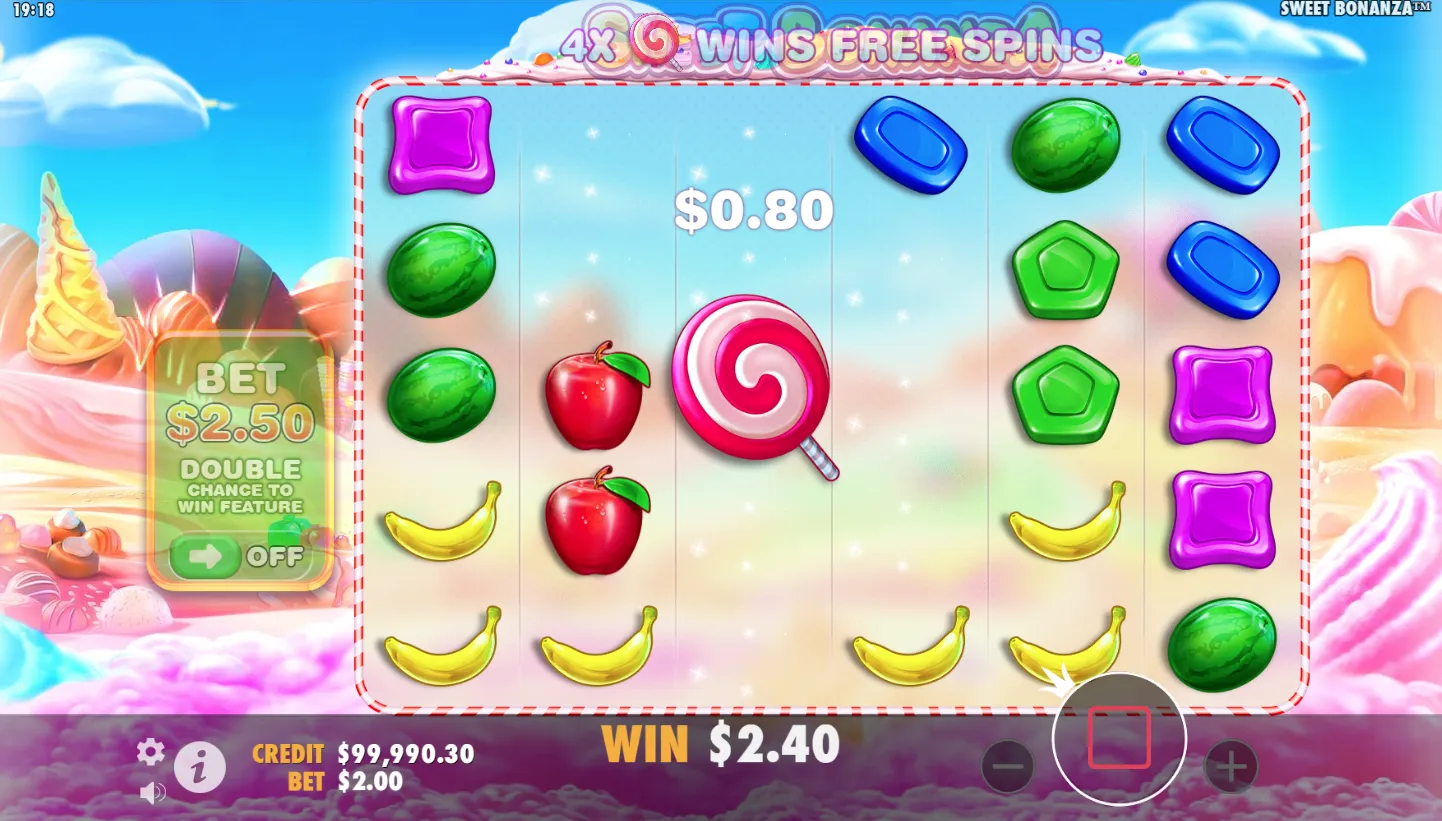
With no wild and no bomb, a base-game result is worth its symbol counts plus any scatter pay, so its ceiling can be counted by hand. Thirty positions hold at most two symbols in the top band of 12. The best pair is 12 red hearts at 50× and 12 purple squares at 25×, and six lollipops in the last six positions add 100×. That makes 175× the bet the richest single result the paytable allows. Against a 21,100× cap, a base-game chain would need the value of more than 120 of those screens. Tumbles have no limit, so the rules do not forbid it, but the arithmetic writes the ceiling for the bombs.
Ordinary screens are far poorer. At eight or nine of a kind, I count four of the five fruits paying less than the stake: plum 0.8×, watermelon 0.5×, grapes 0.4× and banana 0.25×, with the apple returning exactly 1×. The big step in the table is the one to 12, where apple, plum, watermelon, grapes and the purple square all pay ten times their eight-count value. A base spin is therefore a wait for a count of 12, a candy, or the scatters.
The scatters carry a flaw of their own. Four, five and six lollipops start the same 10 spins, and only the pay rises, from 3× to 5× to 100×. Six scatters pay exactly what the buy costs and then hand over the same round that four scatters earn alongside 3×. A rarer trigger improves the pay and never the feature.
A bomb is worth only the win beneath it
The free-spins reels carry bombs from 2× to 100×. Their values are added rather than multiplied, the sum multiplies that sequence's win, and then it is gone. Nothing carries to the next spin, and that one rule sets both the round's floor and its ceiling.
The floor first. The largest bomb on the weakest win, eight or nine bananas at 0.25×, returns 25×, a quarter of the buy price. The same bomb over a sequence that forms no win returns nothing, and no running total keeps it for later. At the other end, 12 red hearts under the smallest 2× bomb return 100×, a whole bought round's price in one sequence. The candies, not the bombs, decide whether a bomb matters.
Then the ceiling. A 50× heart count reaches 21,100× only under bombs adding to at least 422×, more than four 100× bombs on one screen. Spread across the round instead, the ten starting spins would have to average 2,110× each, the equivalent of a 21.1× win under a 100× bomb on every one of them. The round's total is a plain sum of separate products, so a strong early spin does nothing for a later one. In Gates of Olympus a total that builds across the round lets late wins multiply by what landed earlier; here every spin starts from zero.
Retriggers do not change that. Three scatters add five spins, half the starting allowance, and each added spin is settled on its own like the ten before it. A longer round means more separate draws, not momentum.
The buy is fair at two settings, and the ante never is
Buy Free Spins costs 100× the bet for 10 spins, or 10× the stake per spin, and its best case is the cap, 211 times its own price. At the 96.49%-to-96.60% setting it returns 96.60% against 96.51% for base play, so a bought round costs 3.4 stakes in expectation. At the 96.48%-to-96.51% setting it returns 96.51% against 96.49%. In both, the buy is the best-returning mode the game has. At the 95.45%-to-95.50% setting the order flips: the buy returns 95.45%, below base play at 95.50% and the ante at 95.49%, and its expected cost rises to 4.55 stakes, about a third more per round than at the top setting. The price stays 100× throughout, so only the RTP lines on the rules screen separate a fair buy from the worst mode in the game.
Ante Bet raises the stake from 20 coins to 25 and leaves the coin pays alone, so every pay is worth 0.8 of its multiple against what was staked. In exchange the natural trigger chance doubles, which per coin staked is 1.6 times the standard rate. The return still falls at every setting, by 0.02 points at the top and 0.01 at the other two, and that small gap hides the cost. At the top setting a base spin gives up 3.49% of 20 coins, about 0.70 coins, while an ante spin gives up 3.51% of 25, about 0.88. The house takes about a quarter more per spin on the way to the same round, and the buy is switched off while the ante is on. It is a poor trade.
It belongs to buyers who read the rules screen
The player this game serves wants the bomb round and little else, buys it where one of the two higher settings is running, and accepts that each of the ten spins stands alone. Anyone who wants the base game to carry its own weight should look elsewhere, because with no multiplier and most fruit paying under the stake at eight, it is the part of the game to get through. Players who want a round that builds belong in Gates of Olympus or Sweet Rush Bonanza, where the multipliers survive from one free spin to the next.
That leaves one well-built feature, a buy priced fairly at two settings out of three, an ante not worth taking and a frame with almost nothing in it. Good, and close to the bottom of good.