A refit of Sugar Rush whose only asset is memory
Sugar Rush 1000 is a game about memory. Its paytable pays almost nothing to a grid that forgets, its base game forgets at the end of every cascade, and its free spins round is worth having precisely because it does not. My argument is that the remembered multiplier spot is the only thing on this grid that makes money, and that the 25,000x cap, not the x1,024 top rung, decides how far that memory can go. A real idea held to a 7.1 follows from both halves: the idea works, the game spends most of its spins waiting for it, and the cap cuts off the rounds where it works best.
None of that idea is new. The original Sugar Rush built the same 7x7 cluster grid with spots that double on repeat explosions, Sugar Rush Xmas put a seasonal coat on the same doubling spots, and Fruit Party runs its own 7x7 cluster tumble with multipliers attached to winning combinations. This is a sequel working an inherited engine, so I judge it as a refit, on the numbers it sets around that engine: the ladder, the cap and the two buy prices.
The paytable is built to hand back the stake
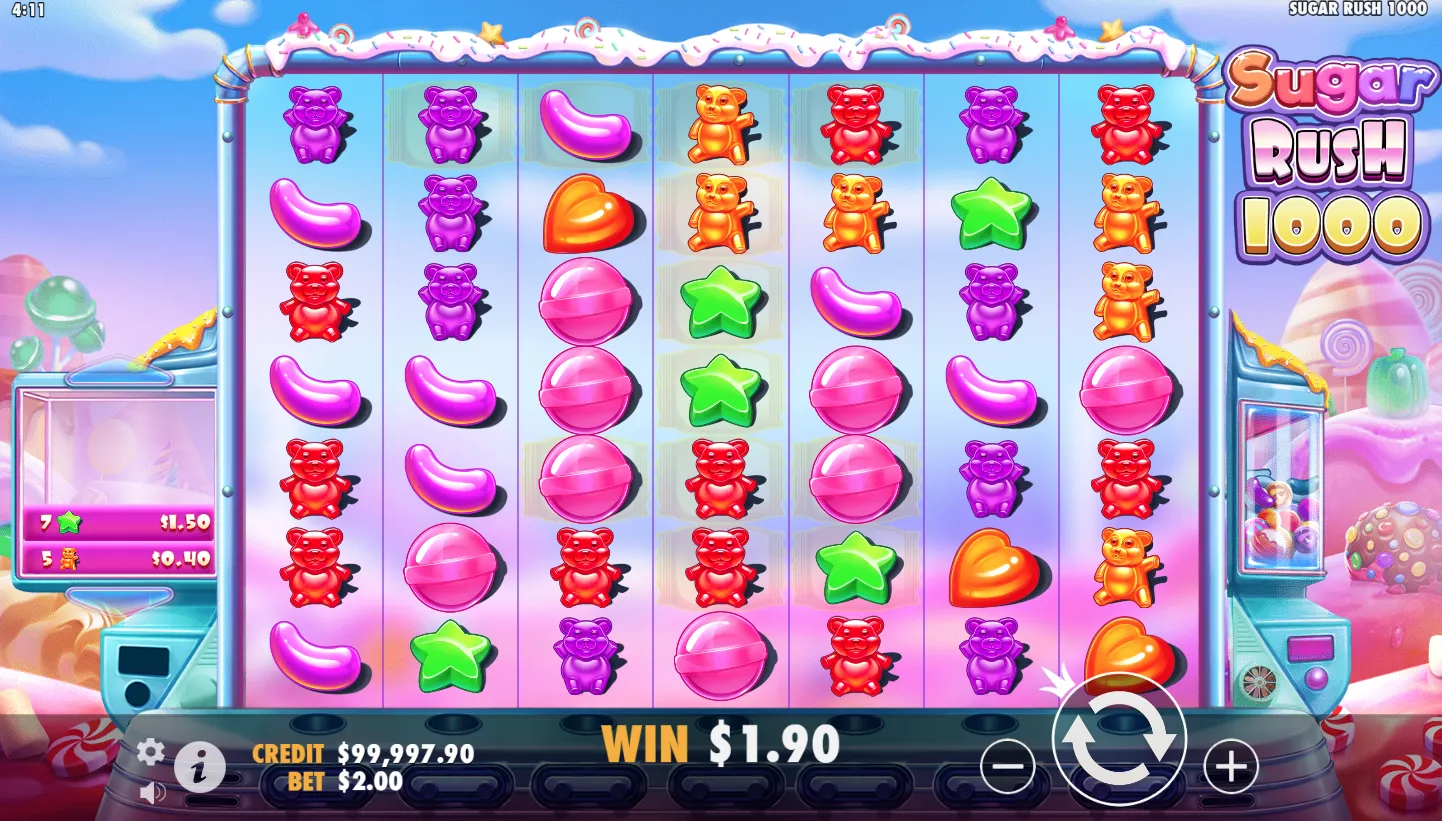
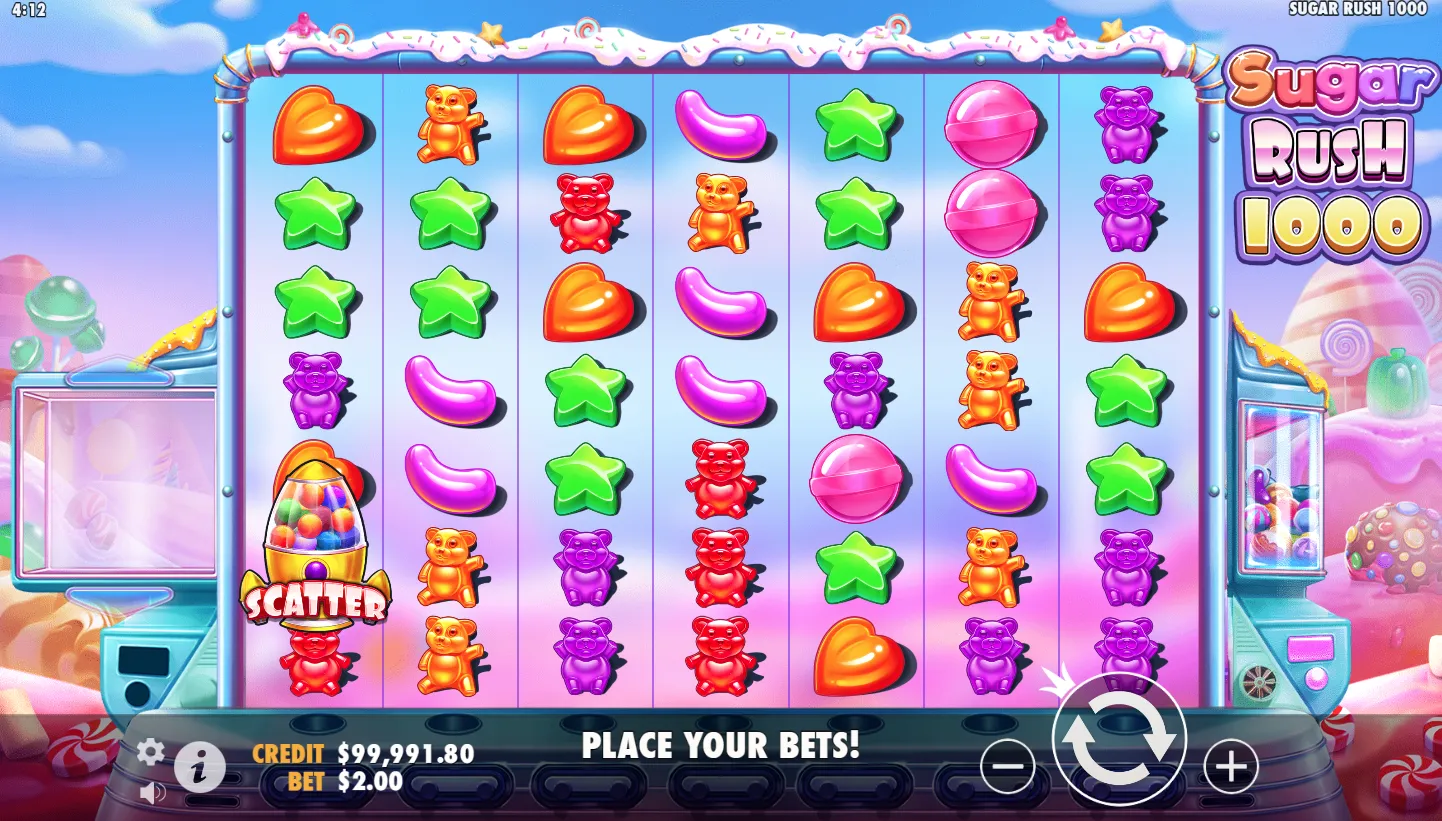
Seven symbols pay and there is no wild. A five-block, the smallest win the grid allows, returns the stake for pink lollipops and less than the stake for the other six, down to 0.2x for orange gummy bears. The top tier is flat from fifteen symbols upward, so a lollipop block of 15 and one filling all 49 cells both pay 150x. Almost all of the lollipop's range sits in its last five sizes: 5x at ten symbols, 150x at fifteen, thirty times more for five extra cells.
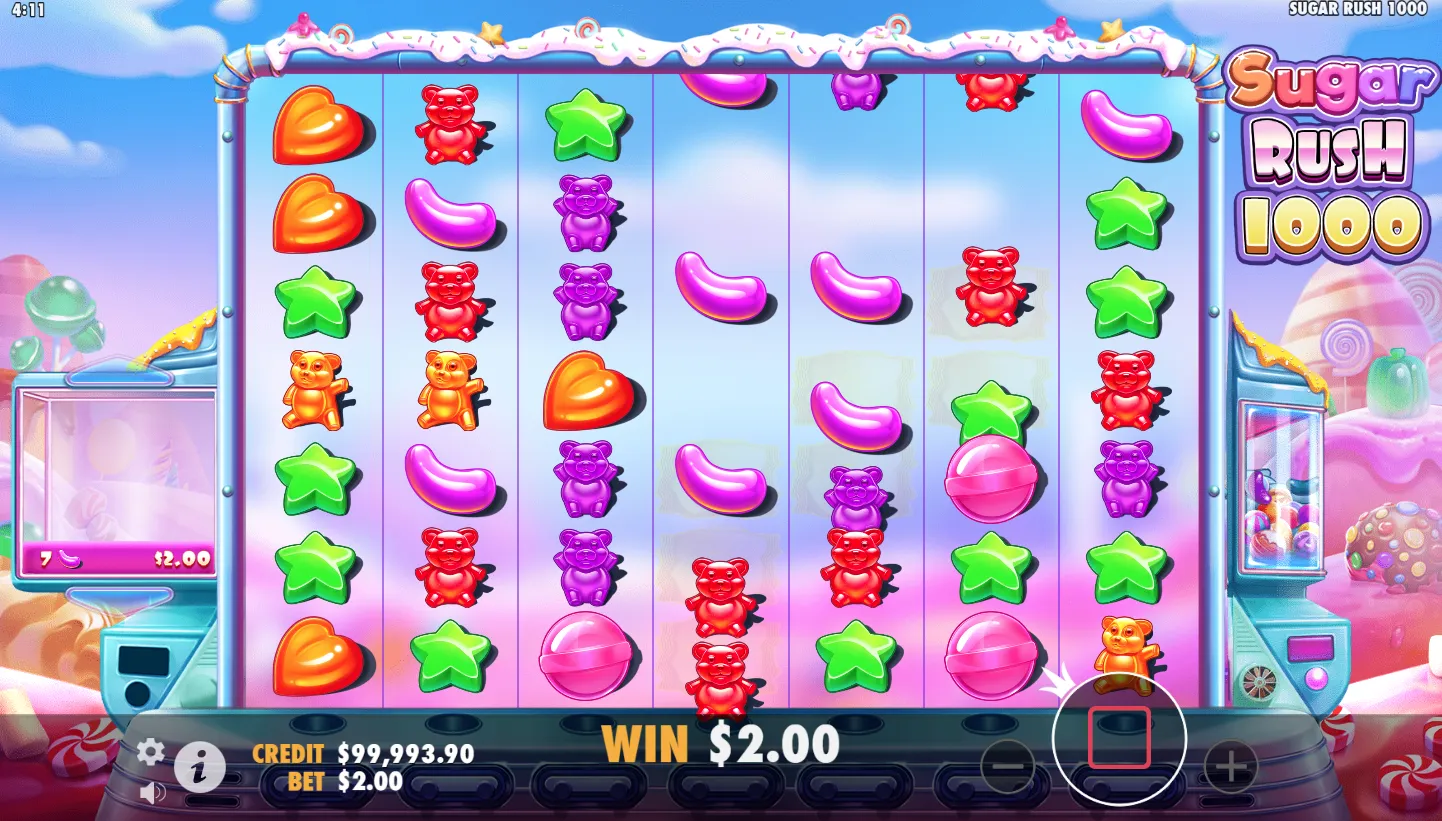
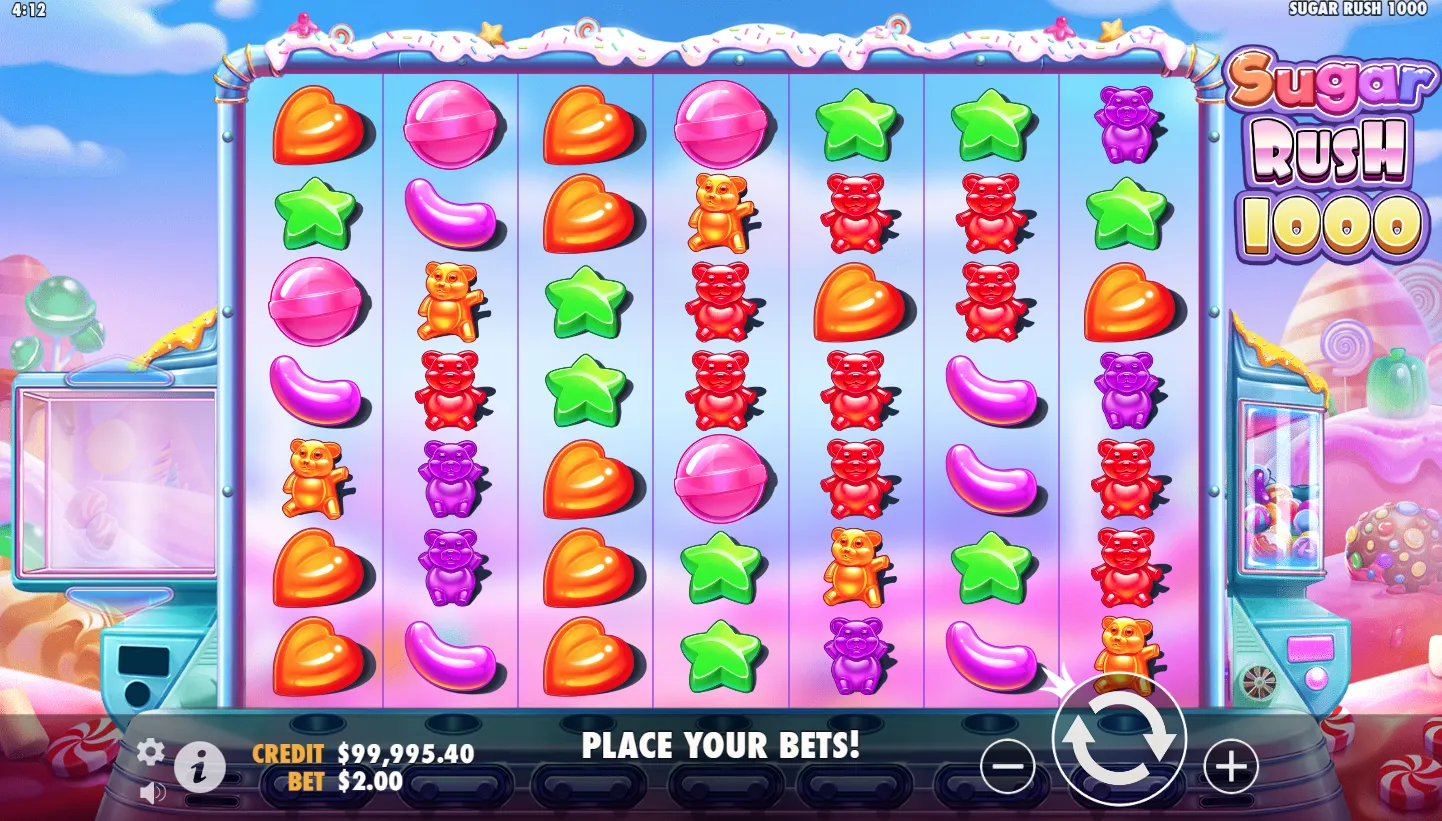
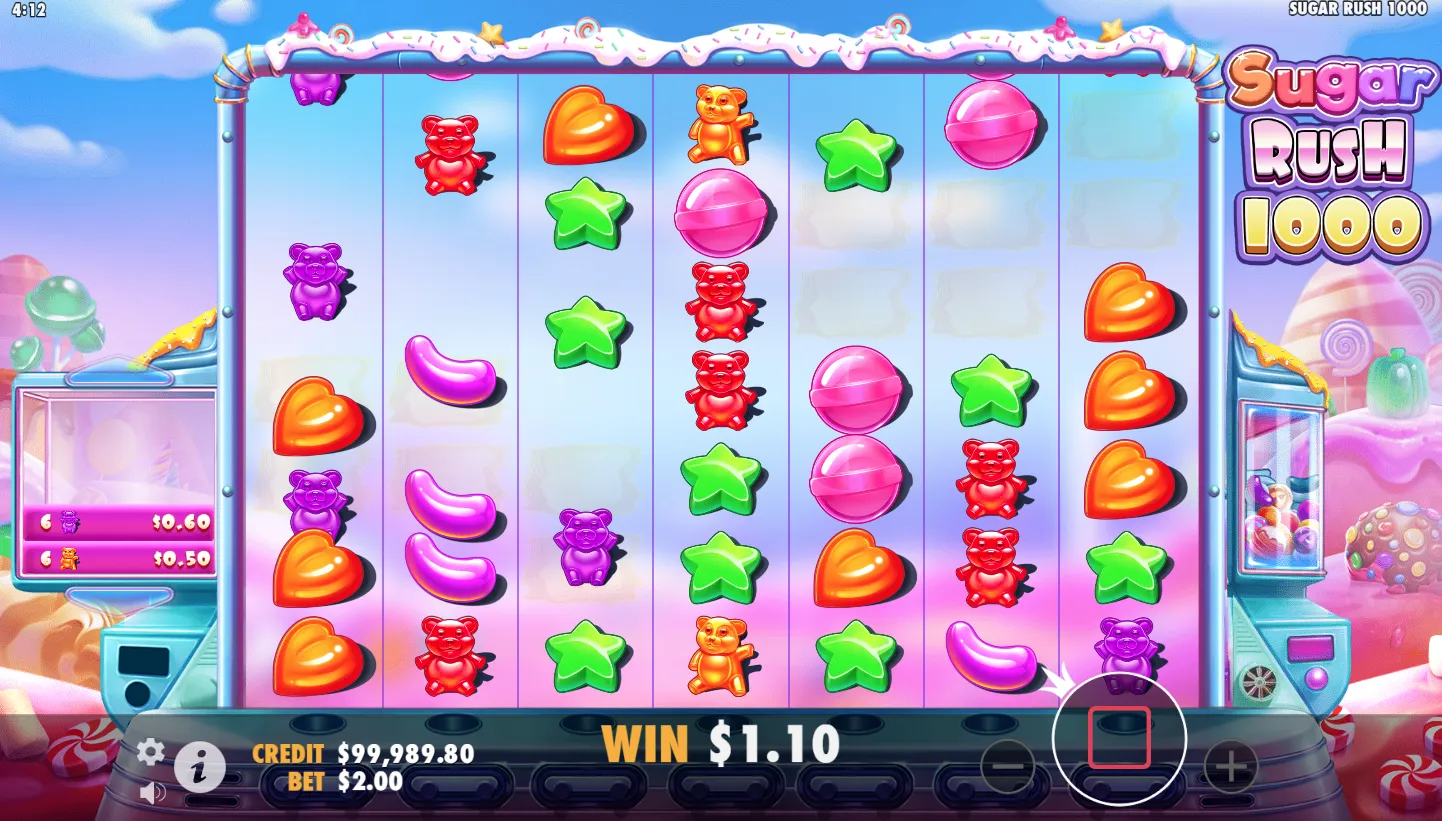
Against the 25,000x cap, that best single block reaches 0.6% of the ceiling. The other 99.4% can only come from spots, and that is what makes the base game thin rather than merely quiet. A base-game spot clears when its tumble sequence ends. I count two explosions on the same position within one cascade to earn x2 and eleven to earn x1,024, so a base spin builds value only while it keeps tumbling onto the same cells, and the board is wiped the moment it stops. Between free spins rounds this is a grid of sub-stake blocks waiting for three scatters.
The cap binds on x168, long before x1,024
Free spins keep every marked spot and its multiplier for the whole round, and that single rule turns the maths around. Once spots persist, the ladder is taller than the game will pay. A block's multiplier is the sum of the spots beneath it, and one x1,024 spot under a 15-lollipop block would make 153,600x, more than six times the cap. That block needs only x167: x128, x32 and x8 beneath it add to x168 and end the round at 25,000x. A 14-block at 70x needs x358, which x256 plus x128 covers. A 13-block at 35x needs x715, covered by x512 plus x256. A 12-block at 15x needs x1,667, more than any single spot can give.
The top rungs, then, serve the small blocks, and small blocks cannot reach the cap on their own. Five lollipops over five x1,024 spots, the most a five-block can sit on, pay 5,120x. Large blocks reach the ceiling on middling totals, and a round also gets there by adding wins across blocks and spins. For a fifteen-block of the top symbol, every doubling past x256 on a spot it covers buys something the cap will not let it keep.
The additive rule is the second brake. Five x8 spots under a five-block give x40; multiplied, the same five would give x32,768 and cap a single lollipop block. Adding keeps routine boards linear, and it is why breadth matters more than one huge cell: fifteen x64 spots give any 15-block that lands across them x960, while a lone x1,024 cell pays only the block that happens to include it.
The cap's probability puts the headline number in proportion. At 1 in 12,800,000 spins, a 25,000x payout is worth 25,000 divided by 12,800,000, or 0.195% of everything staked: about a fifth of one point of a 96.53% return. The other 96.3 points come from outcomes below the cap. And the round that reaches it ends at once and forfeits its remaining spins, so the cap removes spins from exactly the board with the most memory built into it.
Both buys are fair, and the Super buy trades ceiling for a head start
On return, neither buy charges a premium. Buy Free Spins costs 100x at 96.52%, an average shortfall of 3.48x per purchase and a hundredth of a point below the base game. Buy Super Free Spins costs 500x at 96.44%, a shortfall of 17.8x, which I make 5.1 times the cheaper buy's at five times its price.
What the price can become is where they part. The 25,000x cap is 250 times the cost of Buy Free Spins and only 50 times the cost of the Super buy. The extra 400x buys a x2 start on all 49 positions: two explosions of head start on every cell, 98 in all, and a path to x1,024 in nine explosions instead of eleven. That head start pays from the first block. On an untouched Super grid, a 15-lollipop block sums fifteen x2 spots to x30 and returns 4,500x, nine times the Super price, before a single spot has been earned. With the same return and a ceiling one fifth as high against its cost, the Super buy has to pay back its money in results nearer its price. It is the flatter product, not the bigger one.
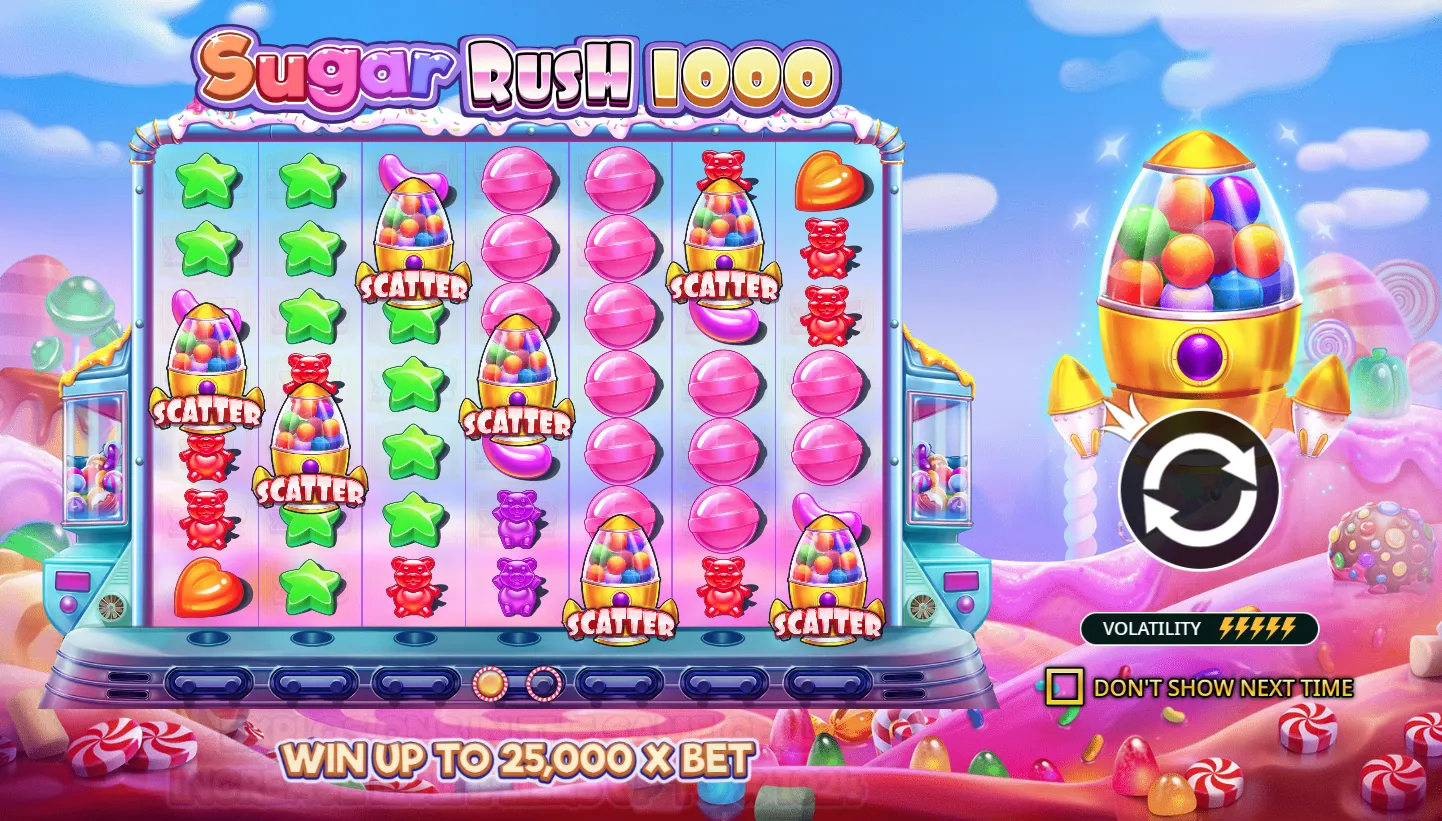
Round length matters as much as the start, because memory is only worth the spins it lasts. Both buys land three to seven scatters at random, so a purchase opens 10 to 30 spins before any retrigger. Buy Free Spins works out between 3.3x and 10x per spin, the Super buy between 16.7x and 50x. A 10-spin Super round gives its 98 explosions of head start very little time to compound.
A strong round behind a base game that forgets earns 7.1
The sticky doubling spot carries this game, and nothing else on the grid pays its way. The buys are priced honestly, which matters in a game whose base spins exist mainly to reach the round. Against that, the base game wipes its spots after every cascade, additive spots flatten the best boards into linear sums, and the cap ends the strongest rounds early. One real strength held back by a thin frame is a 7, and fair buy pricing is the tenth above it.
This suits a player who wants the free spins round and treats the base game as the queue for it. The Super buy suits one who prefers its x2 start and results closer to price over the 250-times-cost ceiling of the cheaper buy, and even at the 0.20 minimum bet a Super buy is a 100 USD decision. Anyone who wants a base game with its own shape, or multipliers that compound inside a block, should look elsewhere: this grid rewards remembered cells, and only in the round.