Cluster wins and tumbles
Base + bonus#01A winning cluster forms on the 7x7 grid.
Winning symbols are removed and new fruit symbols tumble into the empty positions, allowing another cluster to form within the same paid spin.
Slot by Pragmatic Play
high
Volatility
Cluster Pays
Cluster Pays
7 × 7
Game grid
Fruit Party works as a multiplier engine rather than a conventional free-spins slot. Multipliers inside one winning block multiply together up to 256x, so several ordinary fruit symbols can turn a single cluster into a much larger result. Free spins keep the same board and raise the chance and size of those multipliers, with 4x values reaching the cap in four steps where the base game needs eight. One strong mechanic inside a thin frame makes this a good slot that stops short of excellent.
Fruit Party turns a 7x7 board into one continuing chain reaction. Wins arrive as clusters rather than paylines, disappear, and make room for another tumble. The bonus keeps that same board in view. It raises the chance and the size of the symbol multipliers. The important part is therefore not finding a new mode. It is understanding how one winning block can compound.
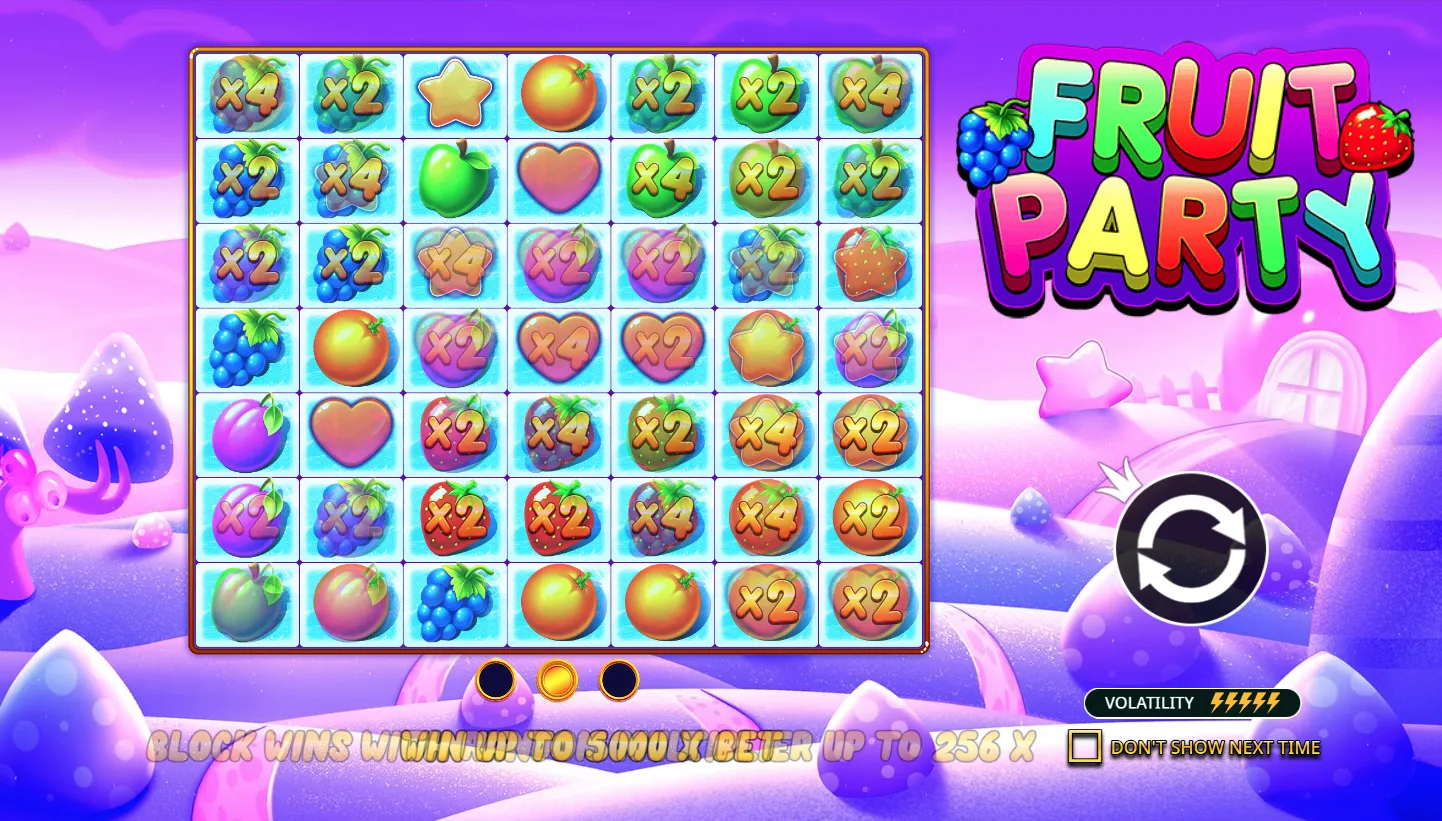
A winning cluster forms on the 7x7 grid.
Winning symbols are removed and new fruit symbols tumble into the empty positions, allowing another cluster to form within the same paid spin.
Symbols inside a winning cluster are randomly assigned multipliers.
Multiplier values inside the same winning block multiply together and raise that block's payout.
Land three or more Scatter symbols.
Land three to seven Scatter symbols during the feature to receive 10 to 14 additional free spins.
The same cluster-and-tumble grid remains in play, but winning symbols have a higher chance to carry 2x or 4x multipliers.
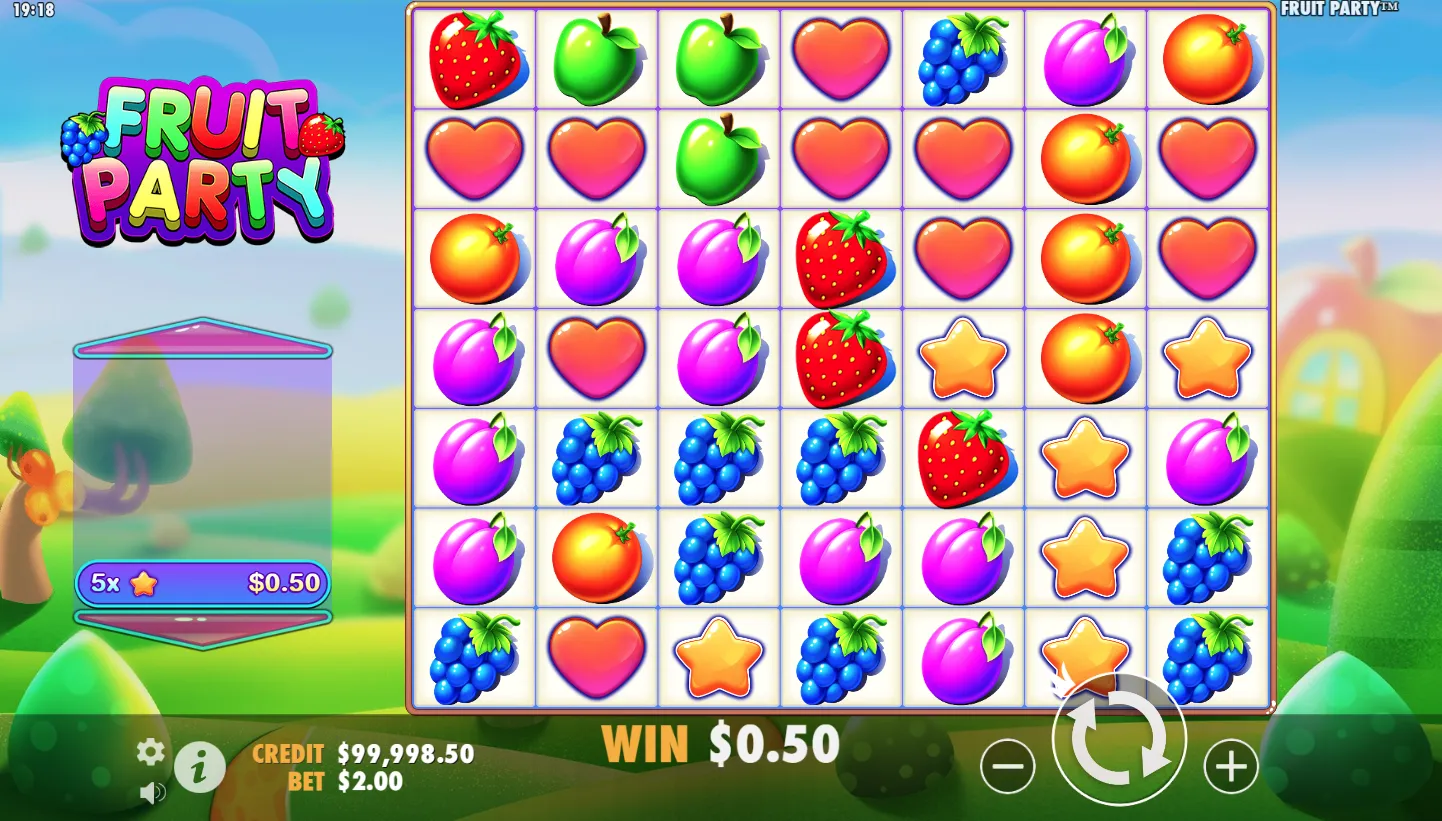
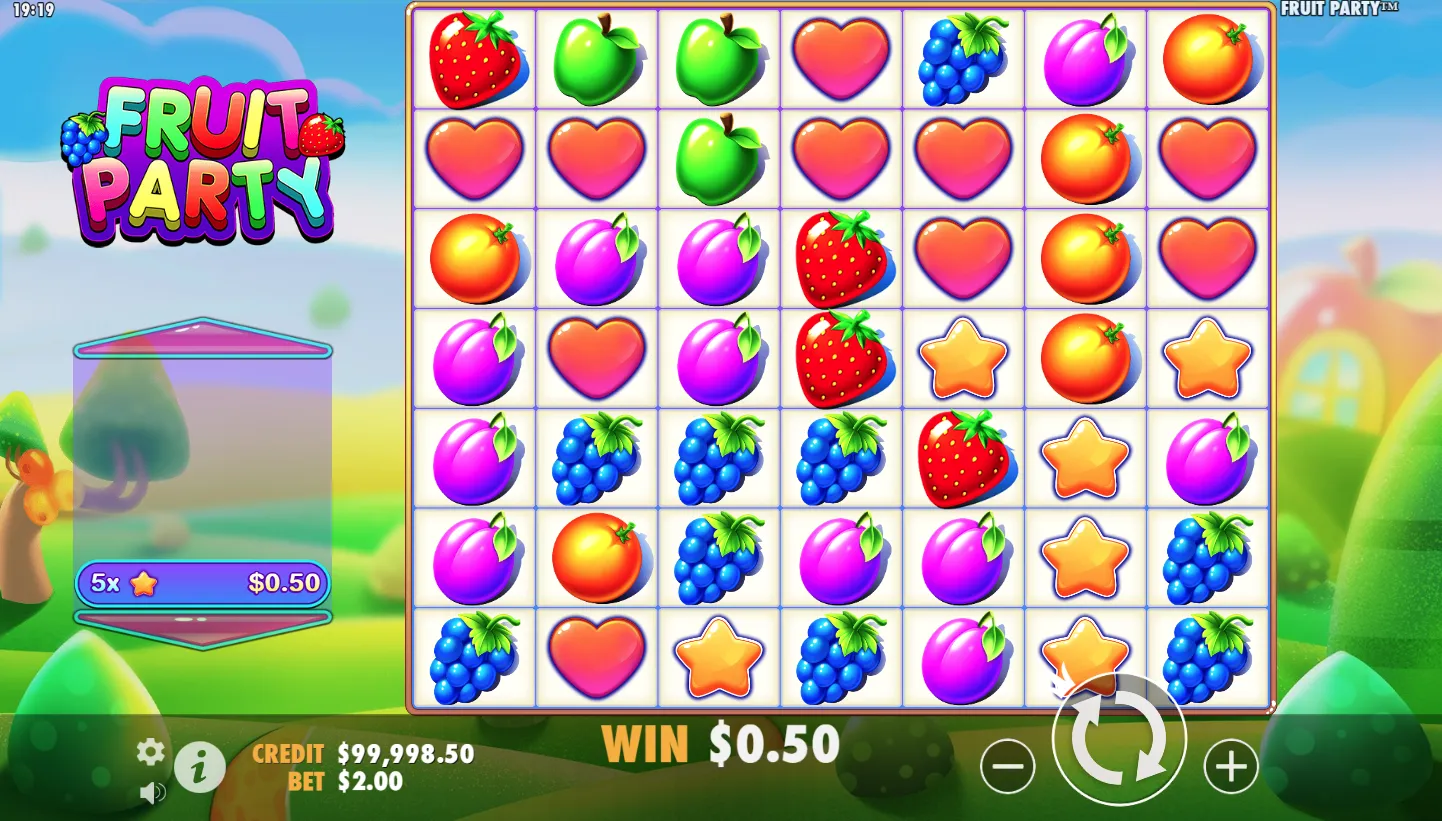
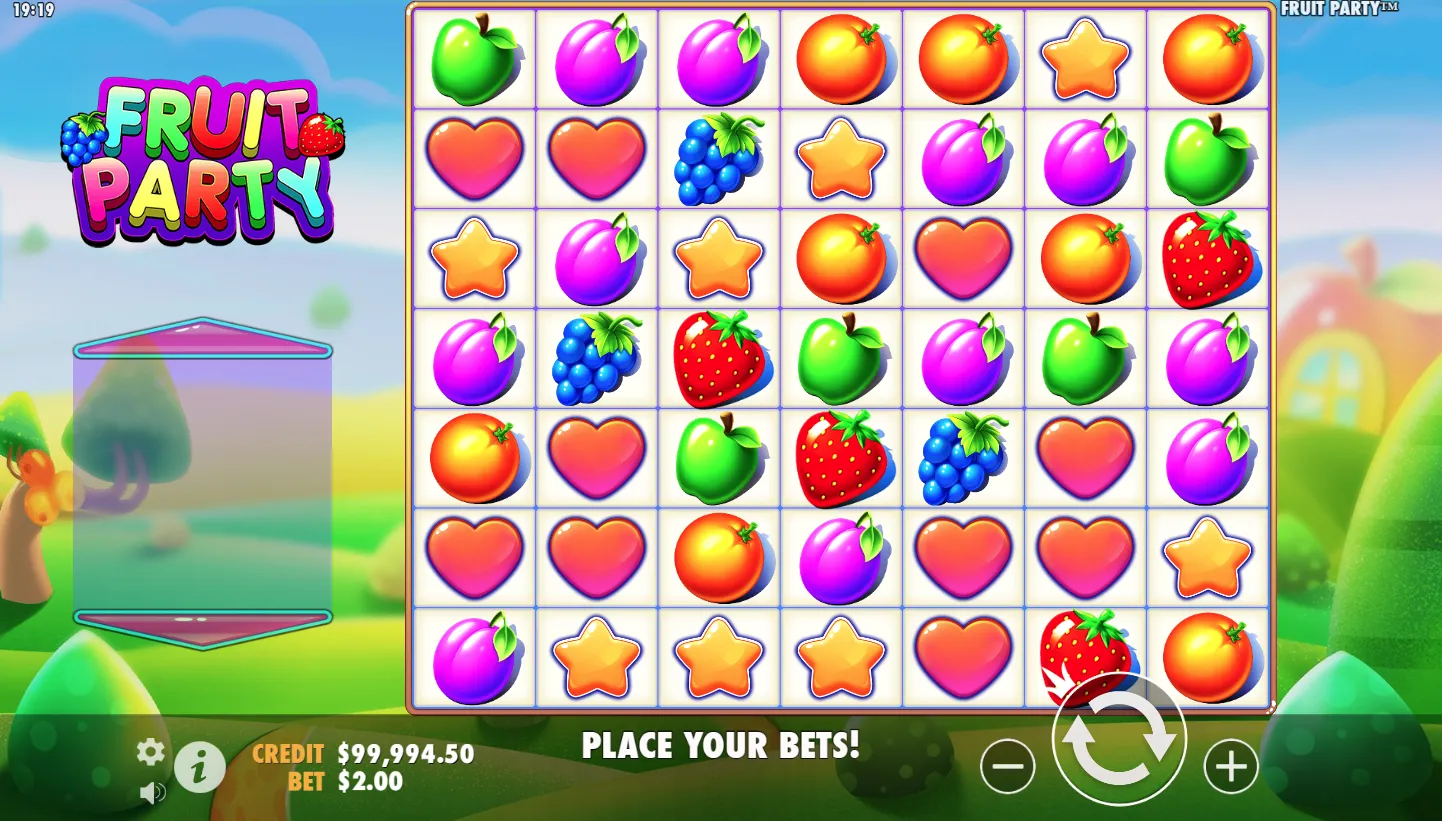
In-game screenshots
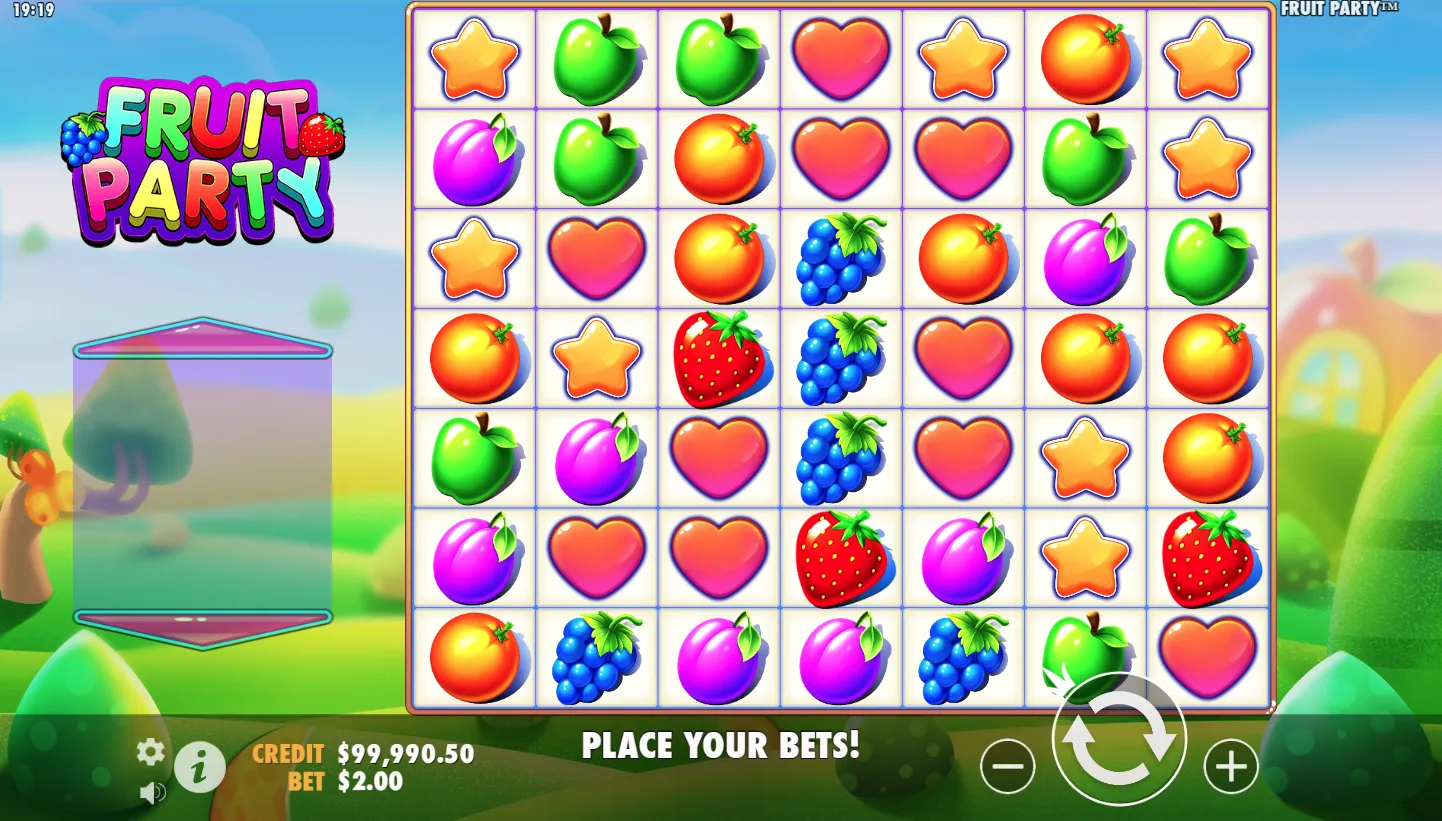
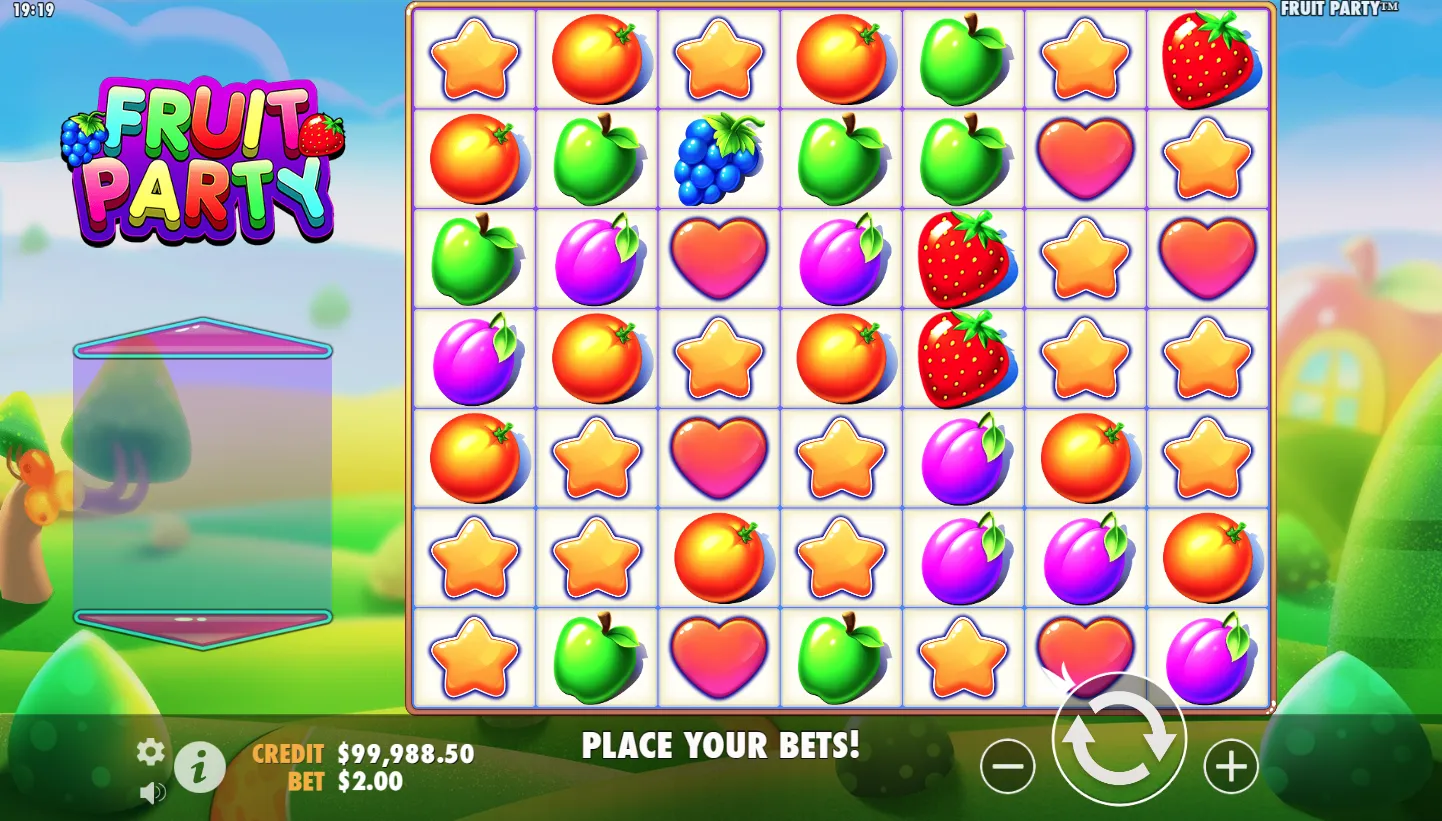
Signed reviews from our team
Sarah Chen
Streaming Specialist at 0xPlaySlots
I read Fruit Party as one rule with a board built around it. Symbols inside a winning cluster can carry multipliers, and those multipliers multiply together rather than add, up to 256x for the block. Everything worth saying about the game follows from the arithmetic of that product, and the most useful conclusion is a quiet one: free spins do not raise the ceiling of a single winning block by any amount. The cap is 256x in both phases. What the bonus changes is how many marked symbols it takes to get there, eight in the base game and four in free spins. That is a sharp idea, cleanly built, inside a frame with very little else in it, and it is why this page carries a good score and not an excellent one.
The 7x7 cluster board with tumbling wins is the frame here, not the identity. Winning symbols vanish, new fruit drops into the gaps, and another cluster can form inside the same paid spin. That machinery exists to hand the multiplier rule more blocks to work on. Fruit Party 2 is the direct sequel, which makes this the first game in Pragmatic Play's Fruit Party series and the right place to judge the original idea on its own terms.
The idea is the product. Add three 2x multipliers together and a cluster pays 6x; multiply them and it pays 8x. At five marks the gap is 32x against 10x. At eight it is 256x against 16x, and the block has reached its cap. An additive rule would need 128 marked symbols to reach 256x on a board of 49 positions, so on this grid the cap exists as a real destination only because the values multiply. That single design decision is what separates Fruit Party from a plain cluster-and-tumble slot.
256 is 2 multiplied by itself eight times. That lets me count any block's multipliers in steps: every 2x is one step, every 4x is two, and a block stops paying more at eight steps. In the base game every multiplier is 2x, so the cap needs eight marked symbols in one winning block. Seven stop at 128x, exactly half the cap. Six give 64x, a quarter of it.
The requirement behind that number is steep. A base-game block reaches 256x only if it contains at least eight symbols and eight of them carry a multiplier. The rung is fixed at 2x, so the ladder can only be climbed one doubling at a time, and nothing in the base game offers a bigger step. I count this as the game's main weakness. A product rule is at its best with large values, and the base game never hands it one.
The cap also belongs to the block, not to the spin. Tumbles let a second cluster form in the same paid spin, and each block carries its own product under its own 256x limit. That makes 256x the most the multipliers can do to one cluster's pay, not a ceiling on what a whole spin returns.
Three or more Scatters open 10 free spins on the same board. Winning symbols get a higher chance of carrying a multiplier, and that multiplier can now be 4x. The round changes nothing else.
A 4x is two steps, so four of them reach the cap. Mixes follow the same count: three 4x with two 2x make 256x, and so do two 4x with four 2x. The clearest measure of what the bonus is worth is one block with four marked symbols. In the base game that block pays 16x its value. In free spins, with all four marks at 4x, it pays 256x, sixteen times as much for the same cluster shape. Two marks show the pattern at a smaller size: 4x in the base game against 16x in the bonus.
The ceiling does not move, though. A block that already carries eight steps gains nothing from the round, and a fifth 4x on a block with four is wasted: the product would be four times the cap, and the block pays the cap. Free spins lift the blocks holding a handful of marks and leave the top exactly where the base game put it. This is why the bonus plays like a richer base game rather than a new mode, and it is the thinness of the frame showing up in the arithmetic.
Retriggers extend the round rather than changing it. Three Scatters inside the feature add 10 spins and seven add 14, so every retrigger adds at least as many spins as the round opened with. More spins mean more blocks for the same rule to work on, and nothing more.
High volatility has a specific shape here. The spins that matter need several multipliers inside the same winning block, and a lone 2x only doubles a cluster. A cluster with no marks pays its plain value, and no second system waits behind it: the tumble, the product rule and one free-spins round that reuses both are the whole design. Long quiet stretches are the direct cost of concentrating all of the value in stacked marks.
My recommendation goes to someone who wants a slot they can reason about on screen. The count is simple enough to follow as the grid resolves: doublings inside a block, eight of them, then nothing more. Anyone who wants the bonus to feel like a different game should look elsewhere, because this round is the base game with larger and more frequent multipliers under the same 256x ceiling. The rule itself is excellent. A base game limited to 2x and a bonus that shortens the ladder without lifting it hold the whole design at good.
Verdict
Fruit Party is a multiplier engine rather than a conventional free-spins slot, and its product rule reaches 256x in eight 2x steps or four 4x steps. A bonus that shortens that ladder without raising it sits in a thin frame and keeps the game good rather than excellent.
Game Details