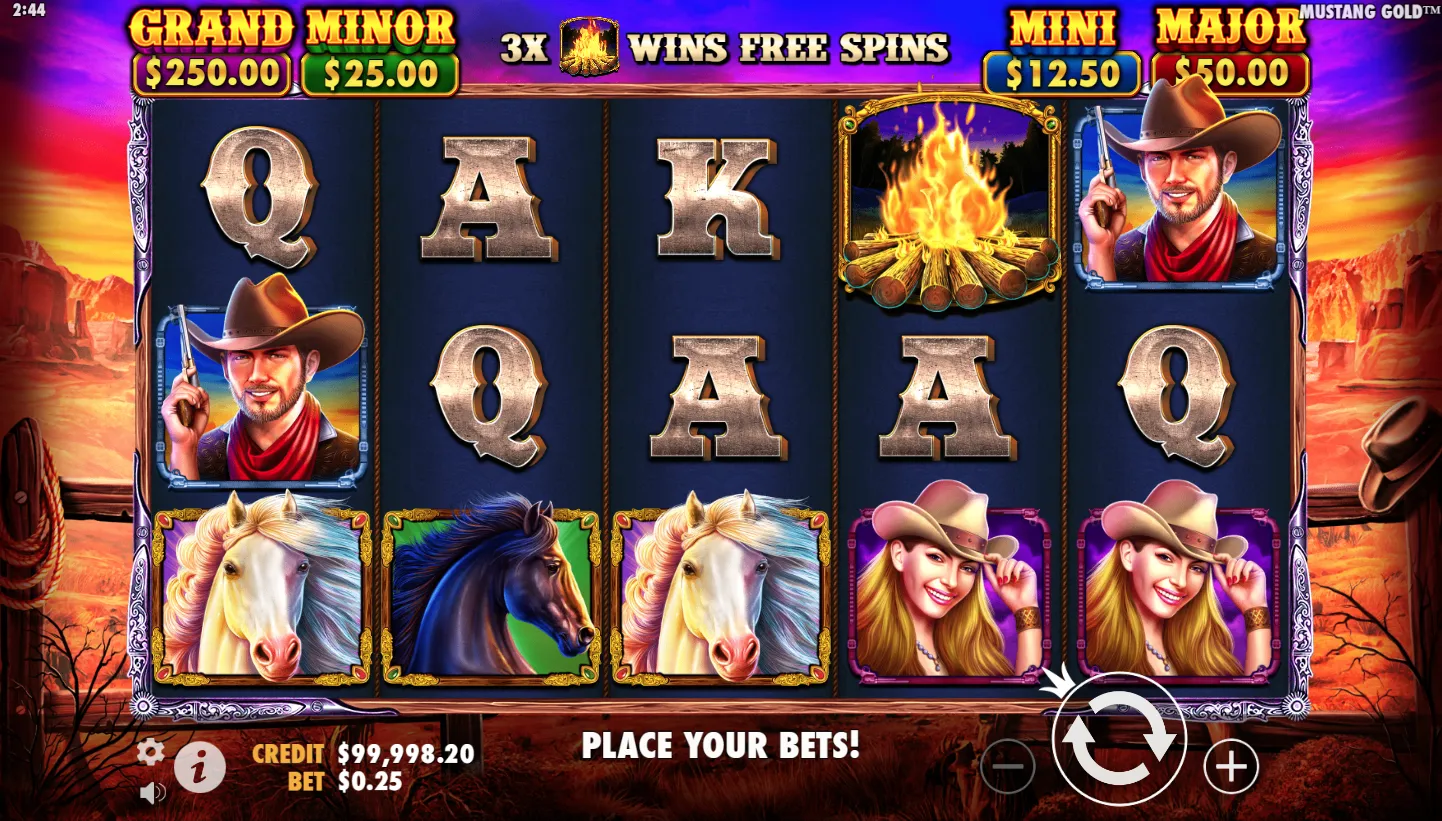
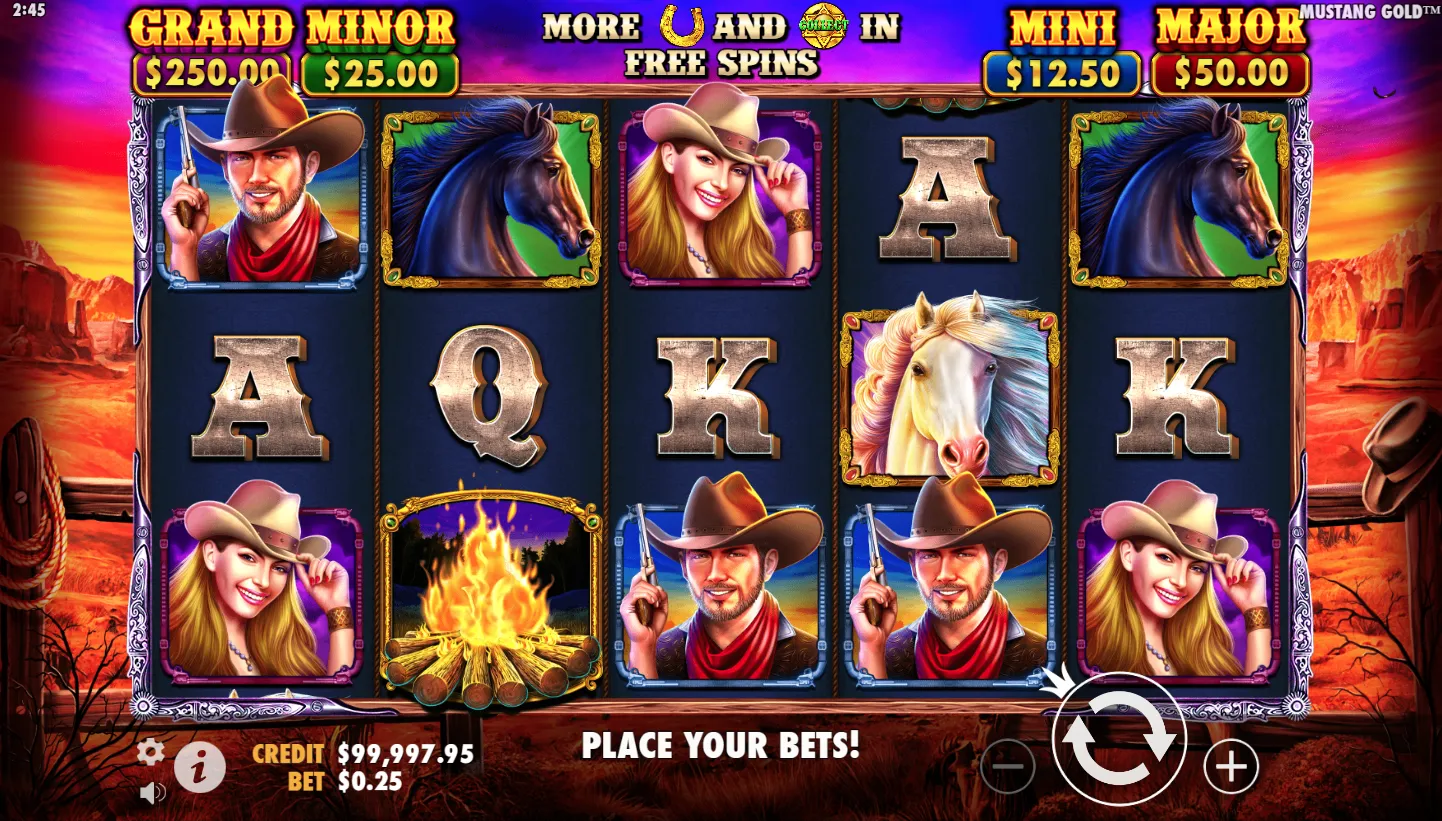
The fifth reel decides this game
Mustang Gold is a collect game sitting inside a thin line slot, and the arithmetic of it comes down to one reel. A horseshoe on the first four reels is worth nothing until a sheriff badge lands on the fifth in the same spin, and that pairing, with the JACKPOT tags it can open, is where the game's upside lives. The 25 lines cannot pay for the game, the stacked wild works only for the lines, and the free spins change how often a badge meets a horseshoe rather than what the meeting is worth. That is a sound idea in a bare frame, and it is why I rate the game competent rather than memorable.
The parts are familiar. Wolf Gold and Chilli Heat both pair cash-value symbols with fixed jackpots on 25 lines, and Chilli Heat does it on the same 5x3 grid. Big Bass Bonanza pays its cash-value fish only when a fisherman collector lands, which is the rule the horseshoes and the badge follow here. Mustang Gold puts the two together: the collector pays cash values and JACKPOT tags on the same spin. Each of its central pieces turns up in one of those games, so I judge it on how well the pieces fit rather than on novelty.
The line game cannot pay its way
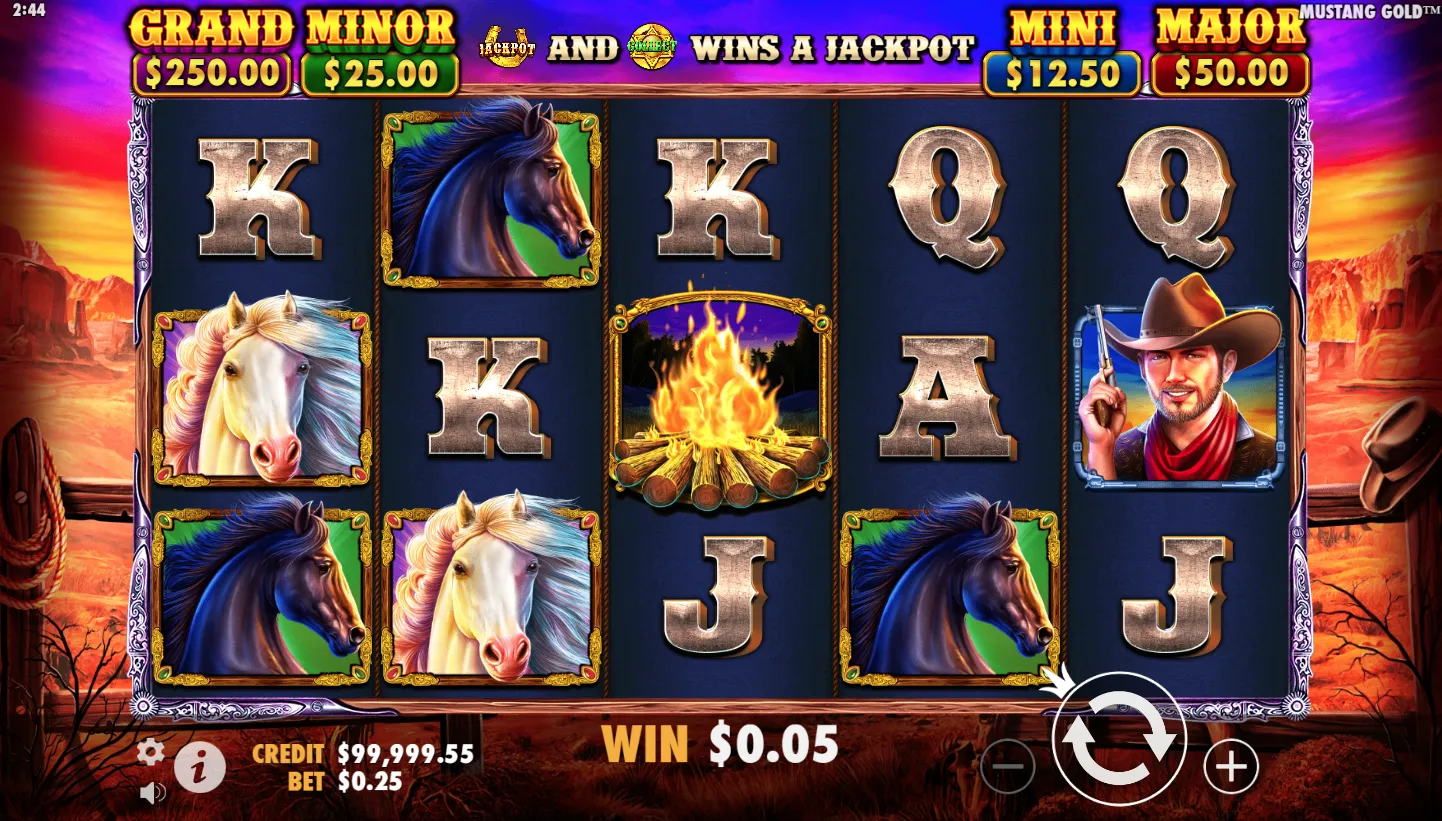
Eight regular symbols share just two three-of-a-kind values, 0.4x total bet for the four high symbols and 0.2x for the card ranks. Ace, King, Queen and Jack pay identical amounts at every length. The four high symbols pay four different amounts only at five of a kind, where the white horse reaches 20x. Below that the table barely distinguishes one symbol from another.
The ceiling is easy to bound. Five white horses on all 25 lines is 25 times 20x, or 500x total bet, and it needs a screen made of white horses and wilds. That is one twenty-fourth of the 12,000x cap, so the lines on their own cannot come within 5% of the maximum win on any screen. Set against the horseshoes, the table looks worse still: the smallest cash value, 1x, pays two and a half times a high three-of-a-kind and five times a card-rank one once a badge collects it.
The stacked wild belongs to this weak half. It lands on reels 2 to 5, has no pay of its own and substitutes for every symbol except the Scatter, the horseshoe and the badge. A reel covered in wilds can lift line wins and does nothing for a collect. The only symbol that substitutes for others is spent on the part of the game that matters least.
A JACKPOT tag outranks any single cash value
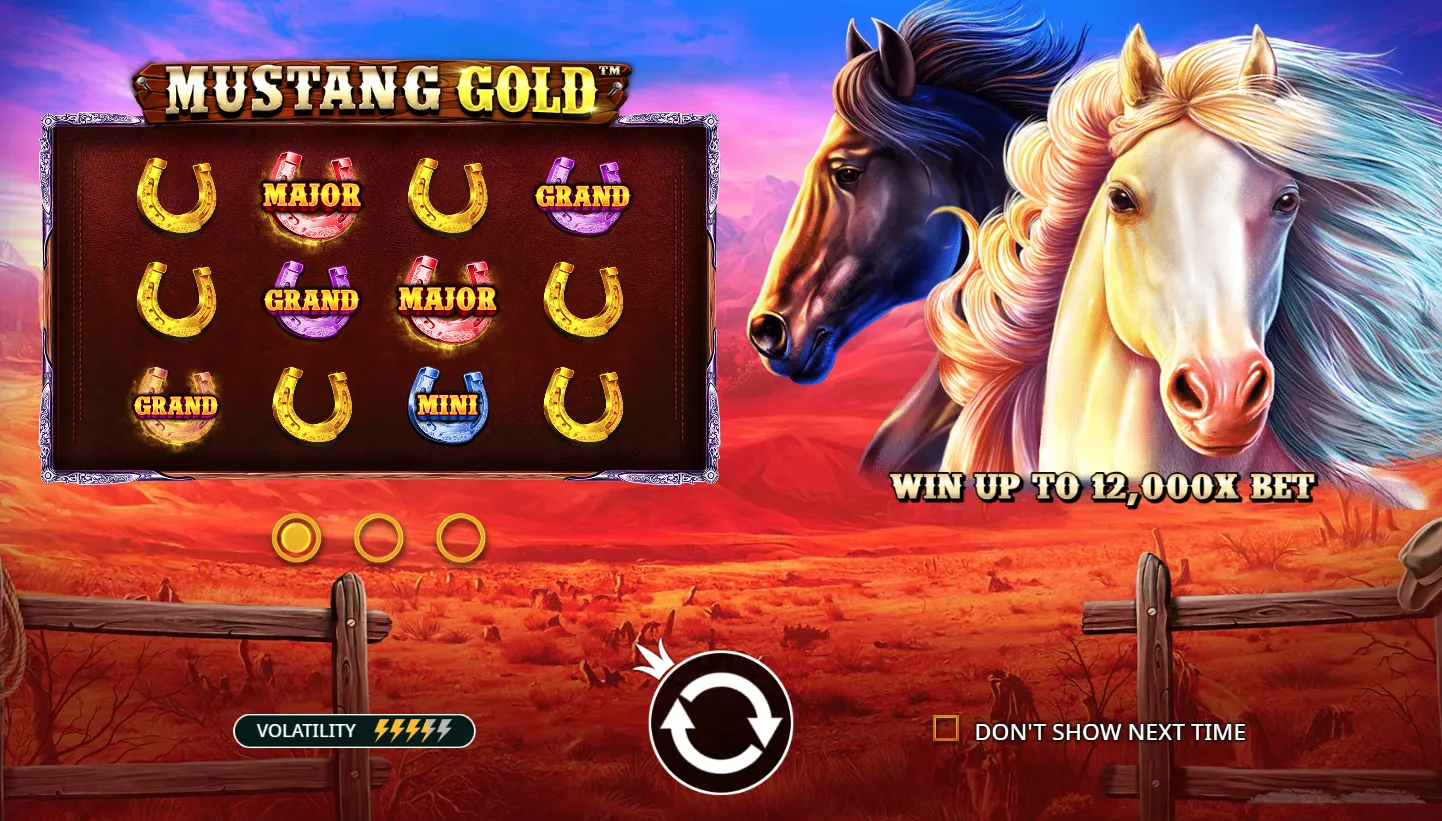
Horseshoes land on reels 1 to 4, twelve cells in all, with cash values running from 1x to 35x total bet. Three of the thirteen values, 25x, 30x and 35x, beat five white horses on a line, so a single good horseshoe with a badge beside it outpays the best line hit. Scale it up and the cash route stays modest: twelve 35x horseshoes collected together pay 420x, less than the 500x line ceiling. Adding both ceilings gives 920x, which is still short of one Grand, and no screen can hold both ceilings at once because they compete for the same cells.
The JACKPOT tag is a different kind of symbol. A collected tag opens a pick of twelve hidden horseshoes that runs until three jackpot symbols match, so it always ends in a fixed prize: Mini 50x, Minor 100x, Major 200x or Grand 1,000x total bet. The 50x floor sits above the 35x top cash value, which makes a JACKPOT tag the most valuable thing a horseshoe can show. The ladder doubles, doubles again, then jumps fivefold from Major to Grand, so the Grand is 20 times the Mini and 50 times a line of five white horses.
The cap follows from the same grid. Twelve horseshoe cells, each holding a JACKPOT tag and each tag opening a Grand, comes to 12 times 1,000x, exactly the 12,000x maximum win. Without tags, a screen stays under 1,000x, so no single spin gets within a tenth of the cap by lines and cash alone. A free-spins round adds its screens together, but on any one screen the top of the range runs through the pick.
Free spins buy frequency, not size
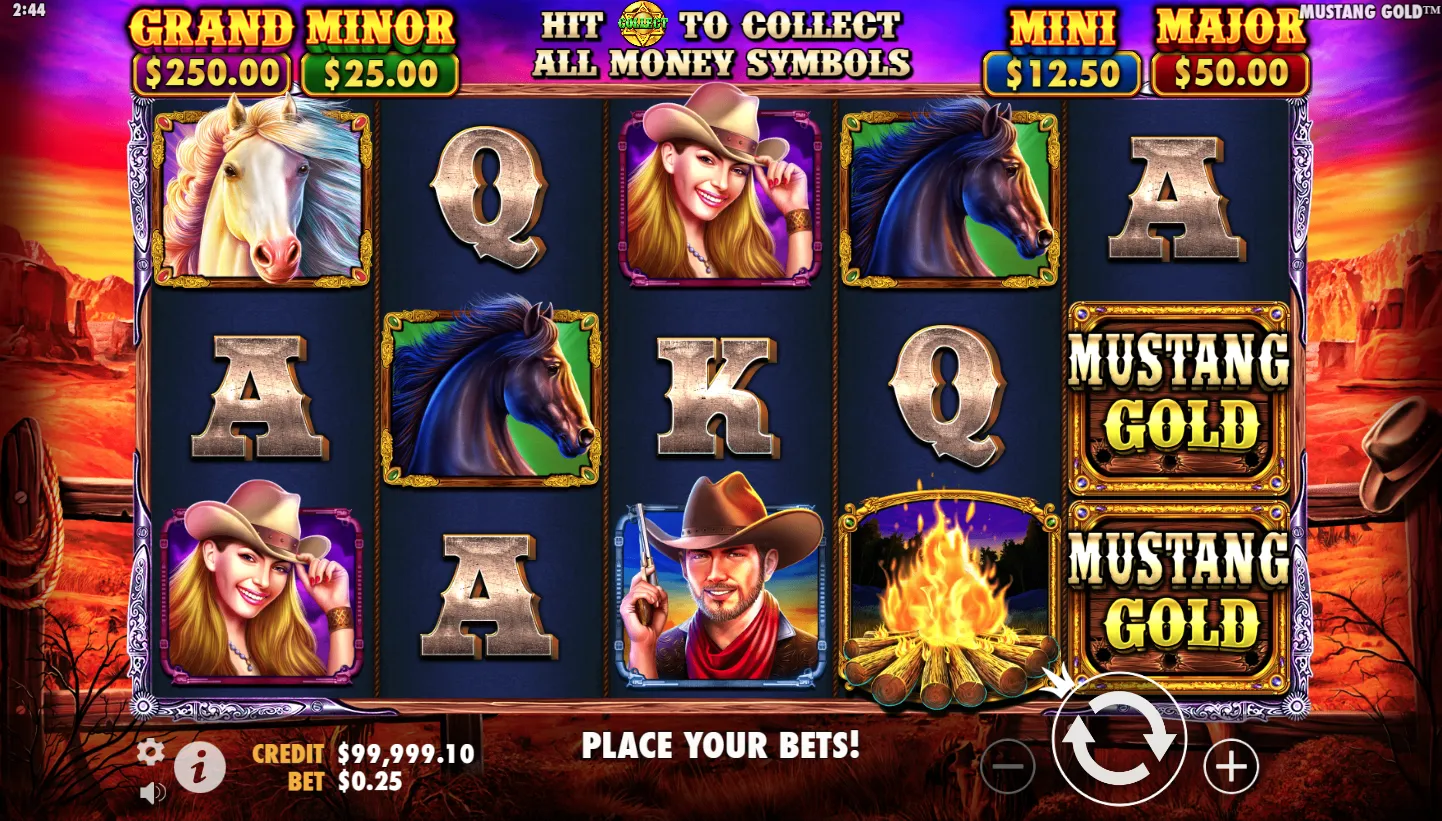
In the base game, three Campfire Scatters on reels 2, 3 and 4 pay 1x total bet and start 8 free spins. The round swaps in reels with more horseshoes and more badges, so collects come more often. The cash ladder and the jackpot ladder keep their values, no multiplier applies, and nothing persists from one free spin to the next. No free spin can pay more than the same screen would pay in the base game. The round raises how often the badge meets a horseshoe and leaves the size of each meeting where it was.
Retriggers follow the same logic. Three more Scatters add 8 spins with no limit, and because nothing grows, a retrigger adds length and nothing else. A 16-spin round is two 8-spin rounds laid end to end, not one round that builds. Its worth is the sum of its collects and line wins, spin by spin, with no feature that multiplies either. That is transparent, and it is thin: an 8-spin start with no multiplier gives the round little room to become more than a denser stretch of base game.
Worth it at 96.53%, not at 92.09%
At the standard setting of 96.53%, the house keeps 3.47% of stakes over the long run. Casinos can also run the game at 95.54%, a 4.46% edge, or at 92.09%, a 7.91% edge that is more than twice the standard one. The rules screen shows the setting in use, and at the low setting I would look elsewhere.
At the standard return, the game suits a player who wants medium volatility and a screen that resolves at a glance: horseshoes on reels 1 to 4, a badge on reel 5 or not. The jackpot pick cannot end empty, which gives every collected JACKPOT tag real weight. A player who wants free spins that build toward something, through multipliers or values that stay on the reels, gets none of that here, and the line game is too flat to fall back on.
The collect is a sound central idea, and the pick that always pays makes it better. Everything around it, the flat paytable, a wild that serves only the lines and a free-spins round with no multiplier, is thin. That makes Mustang Gold competent rather than memorable, and the score says exactly that.