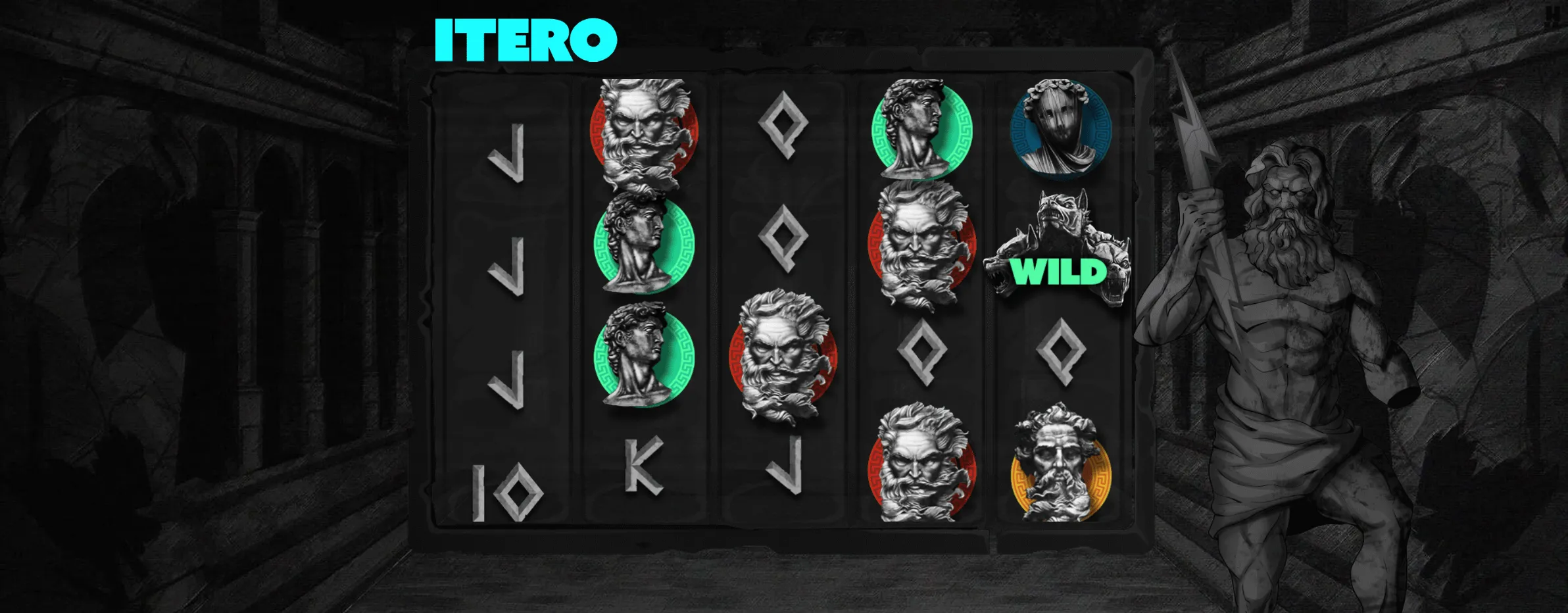
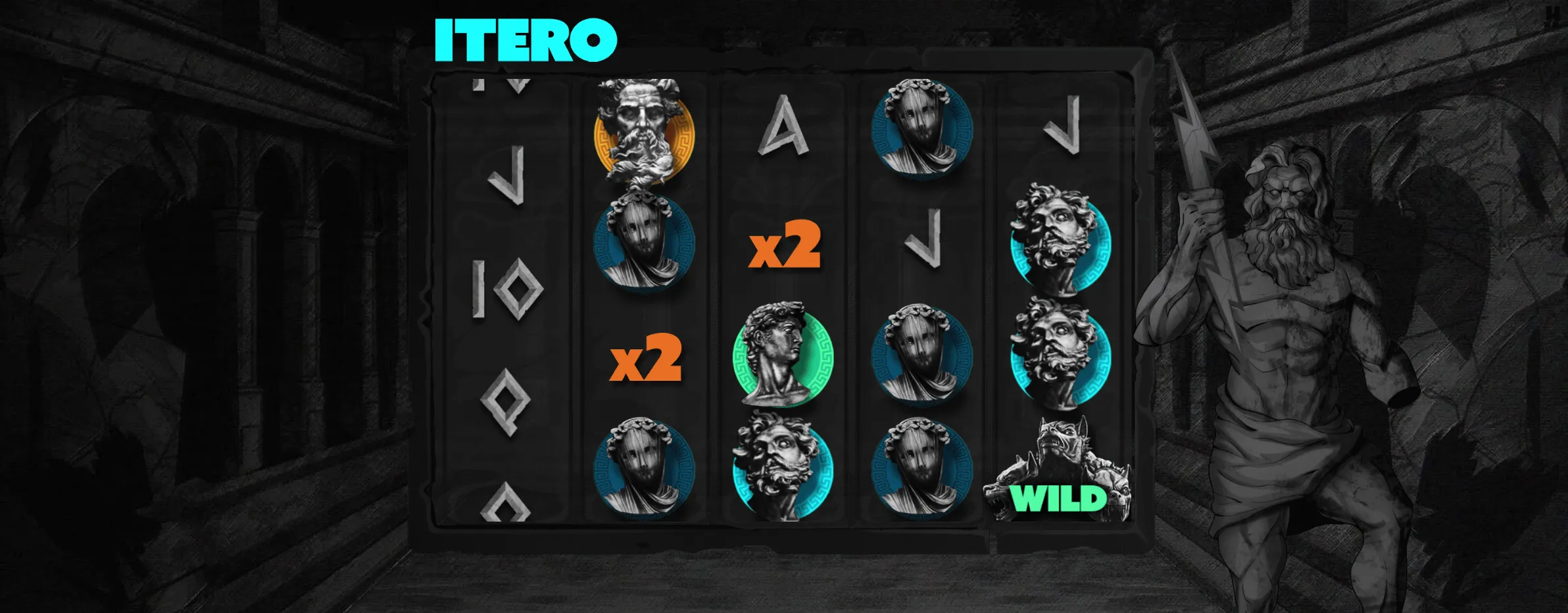
Itero is a multiplier engine with a paytable built to feed it
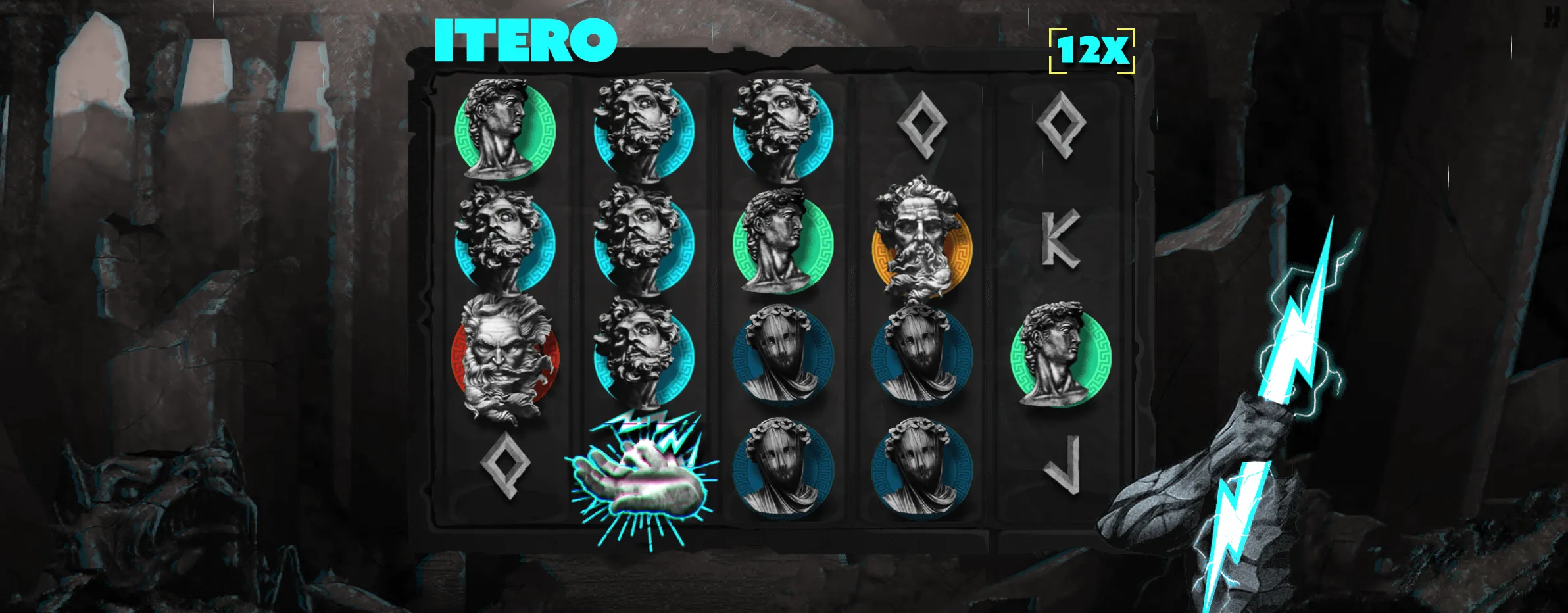
Itero is one mechanic attached to a paytable that was never meant to stand on its own. Multiplier symbols do nothing to a win outside EchoSpins, and EchoSpins open when a Hand of Jupiter and a winning line land on the same spin. When they do, the same win is paid again and again under a multiplier that grows with every repeat. When they do not, Itero is a thin line game under a 10,000x cap its lines cannot approach. My reading of the maths is that the engine is strong and the gate in front of it is narrow, and 6.8 is the distance between the two.
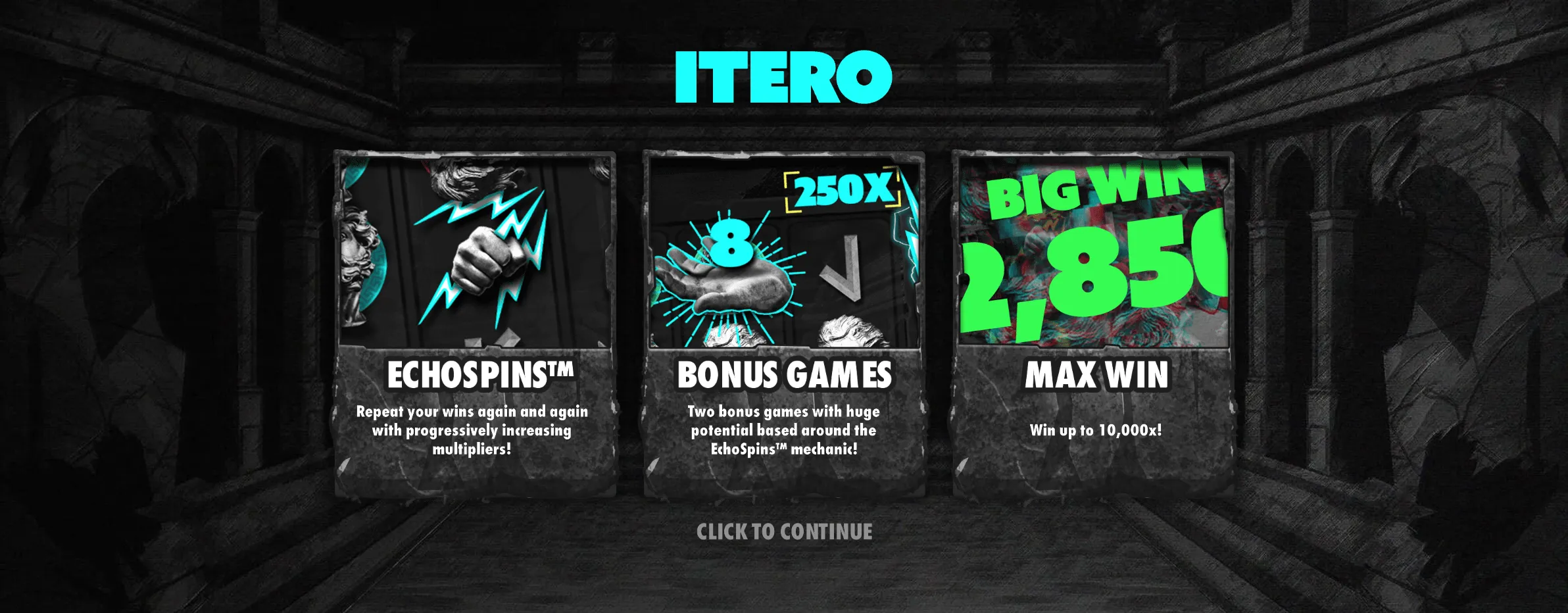
The games it sits beside are Gates of Olympus and Starlight Princess, where multiplier symbols sum into a total that pays out when a win lands and the total keeps growing through free spins. Itero keeps the first rule and changes where the growth comes from. In the base game and in Wrath of Jupiter, the total grows by repetition: each EchoSpin copies the multipliers of the spin before and stacks them onto the total again, so the same symbols count once on the first echo, twice on the second and eight times on the eighth. Gift from the Gods is the nearer cousin of those two games, a bank that fills as multipliers land, except that Itero spends the bank on the next echo phase and then empties it. I count Itero as a real variation on the summed-multiplier format rather than a reskin of it, and that variation is what the score rests on.
The lines stop at 200x without an echo
The richest line pays 10x the bet, for five red busts or five wilds. With 20 lines and the highest win paid on each, a spin that is not an EchoSpin cannot pay more than 200x, one fiftieth of the cap. A 10-spin bonus round with no echo phase cannot pass 2,000x, in either round and whether it was bought or not. The cap is out of reach in every phase unless EchoSpins connects.
The smaller pays make the point sharper. I count nine of the ten regular symbols paying less than the bet for three of a kind, and five of them paying the bet or less for four. Those lines make sense as raw material for an echo and as little else. The 29.38% hit frequency supplies the second half of the problem: more than seven spins in ten produce no win, and a Hand of Jupiter that lands on one of them awards nothing. The feature that carries the game needs two events on one spin, and the winning line is missing from most of them.
Eight echoes are worth 36 of one
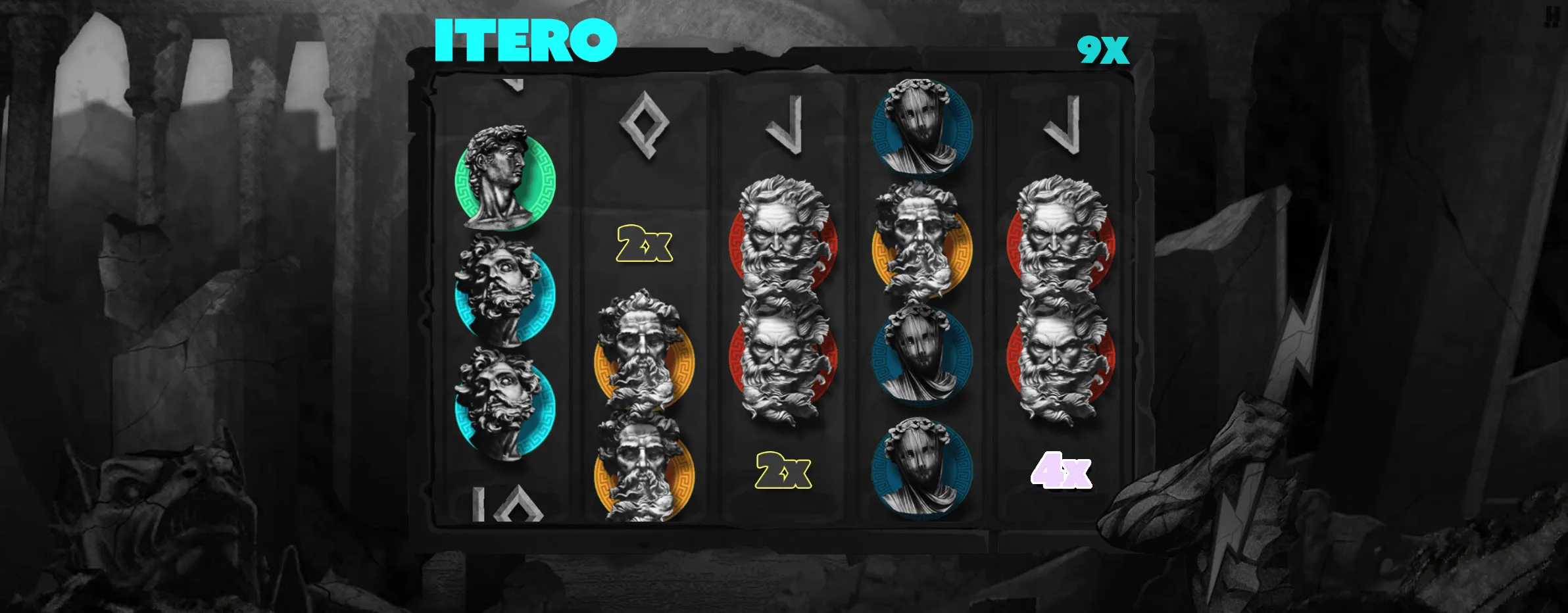
Each EchoSpin repeats the wins and multipliers of the spin before and stacks the copied multipliers onto the total again. Additive 2x and 5x make 7x on the first echo and 14x on the second, so the eighth echo carries 56x. Across a full run of eight, the multipliers applied to the copied wins add up to 7 + 14 + 21 + 28 + 35 + 42 + 49 + 56 = 252, which is 36 times what a single echo carries. A Hand that reveals between 1 and 8 EchoSpins is therefore not offering a spread of one to eight. On the copied wins, the spread is one to 36.
That spread is the volatility of the game, and the paytable shows how much it matters. A three-A line at 0.2x, copied through eight echoes under 2x and 5x, pays 50.4x on its copies. One 10x line under the same two symbols pays 2,520x, about a quarter of the cap. For that single 10x line to reach 10,000x on additive symbols alone, the spin being copied needs a multiplier sum of 28, nearly three times the largest additive symbol. At exactly 28 the seventh echo leaves the round on 7,850x, the eighth would carry it past the cap, and the round ends at 10,000x with anything still left forfeited. Additive symbols raise the total by the same step on every echo, so the multiplicative x2 and x3 are the symbols that steepen the climb.
Gift from the Gods trades the compounding for a bank
Gift from the Gods changes the engine rather than boosting it. Every multiplier that lands goes into a bank, and when a Hand lands with a win, the bank applies unchanged to every echo in that phase and then resets. The two rounds compare directly. At one echo, a bank and an equal Wrath of Jupiter sum are worth the same. At two echoes the bank needs 1.5 times the sum to match the restacking total, and at eight it needs 4.5 times.
So Gift from the Gods does best when a short echo phase arrives after a long build, and worst when a long phase arrives early. The early case is its real weakness: a Hand in the first few spins spends a thin bank, empties it, and leaves whatever remains of 10 spins that cannot be extended to fill it again. I still rate the round as the most distinctive part of Itero, because banking multipliers across spins with no echo gives those spins a use they lack in the base game and in Wrath of Jupiter.
The buys are fairly priced, and the cheaper one keeps the engine
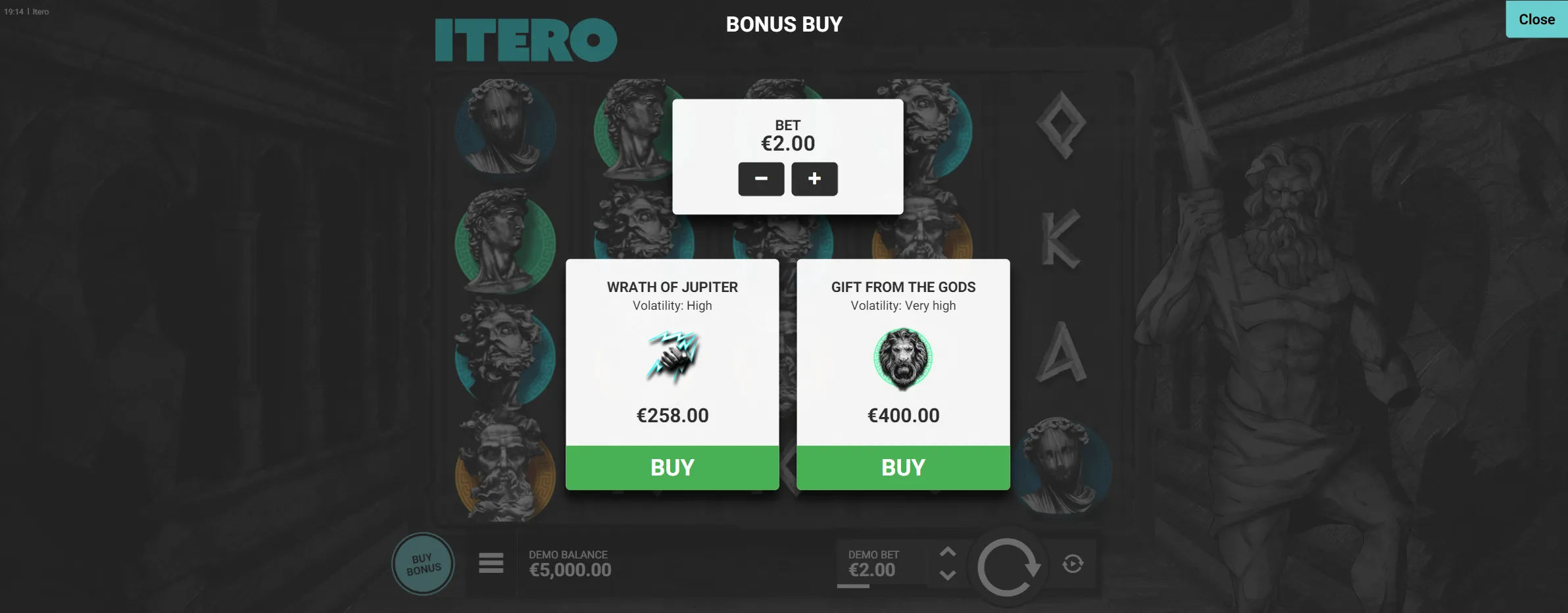
The Wrath of Jupiter buy costs 129x the bet and runs at 96.2%; the Gift from the Gods buy costs 200x and runs at 96.25%. Both sit fractionally above the 96.18% base game, so at these settings buying costs nothing extra in return. The long-run price of each is 3.8% and 3.75% of its cost, roughly 4.9x and 7.5x the bet.
The ceilings are where they separate. Both rounds are capped at 10,000x, which is about 77.5 times the Wrath of Jupiter price and 50 times the Gift from the Gods price. Paying 55% more for Gift from the Gods buys 0.05 points of return, the same cap and a round that swaps restacking for a bank. Wrath of Jupiter keeps the compounding and makes Hands, longer echo runs and higher multipliers more likely, which tilts the one-to-36 spread toward its top end. I take Wrath of Jupiter as the better purchase and Gift from the Gods as the more interesting one.
The base game is the toll for the ladder
Itero suits a player who wants a multiplier system that can be worked out on paper and who treats the base game as the toll paid for a Hand landing on a win. Anyone who wants line wins to carry the game should look elsewhere: an unmultiplied spin tops out at 200x, and three of a kind pays under the bet on nine of the ten regular symbols. The lowest return setting is a firmer reason to walk away. At 88.33% the game keeps 11.67% of stakes over the long run, just over three times the 3.82% it keeps at 96.18%, and a base game this thin leaves no room for that. The rules screen shows the setting in use.
The 6.8 follows from that split. EchoSpins gives a 20-line game real compounding, and Gift from the Gods turns it into a build-and-spend round that plays like nothing else in the game. Small line pays, a trigger that needs two events at once and two 10-spin rounds that cannot be extended hold that idea in the band where good mechanics are undermined by the maths.