The best rule in Hand of Anubis never reaches a bonus round
Hand of Anubis works inside a format with close relatives. Gronk's Gems, Hacksaw's other cluster grid, runs multiplier symbols through a tumble chain. Blobsters Clusterbuster escalates its multiplier state across a round's tumbles, and Sugar Rush Super Scatter attaches its multipliers to grid positions. In all three the chain matters more than any single cluster. What this game adds is a second counter on a different axis and a rule for when the two meet. The red Soul Orb gains 1× for every symbol in every cluster win of the round, the blue Soul Orb gains 1× for every winning cluster, and when both connect to the same cluster their values multiply rather than add.
That rule is the best idea here, and I read the whole game as standing on it alone. Both orbs are confined to the base game. Underworld swaps them for reel counters that are summed, Judgment removes the clusters they would attach to, and the two purchases on the menu are two ways of paying to skip the one rule that sets the game apart.
The paytable is built as a refund table
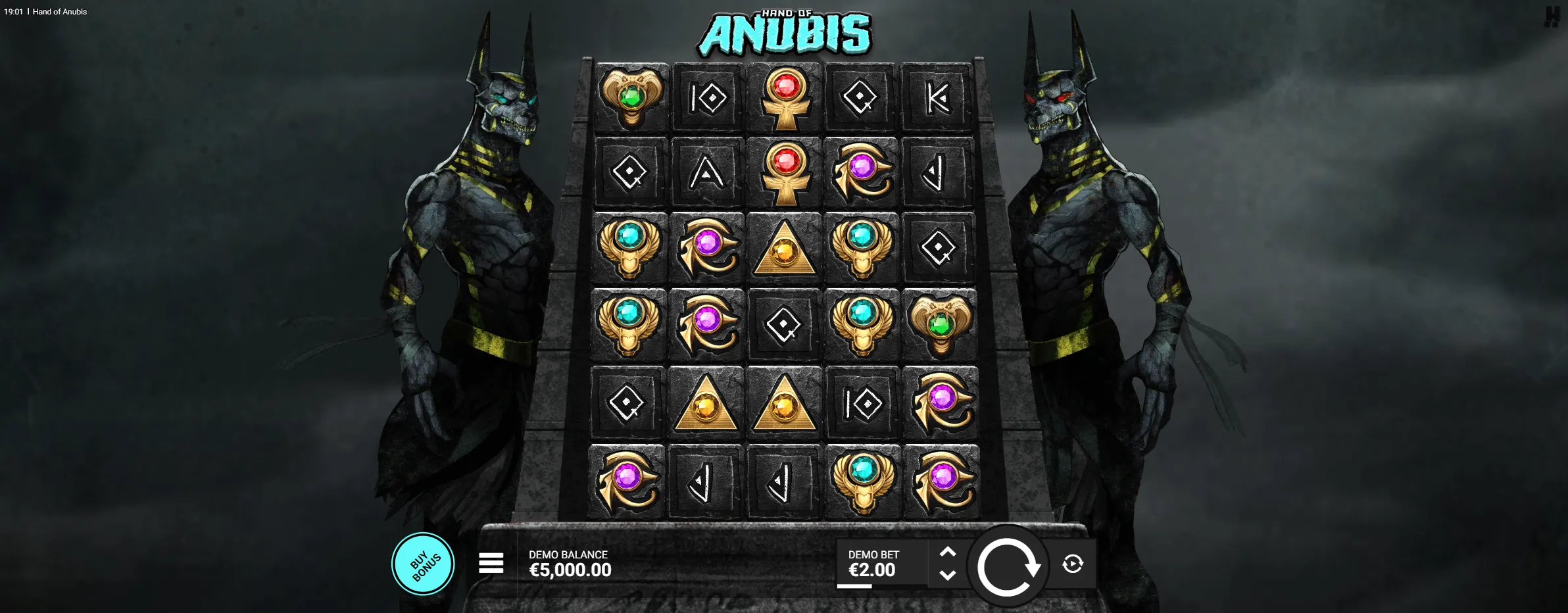
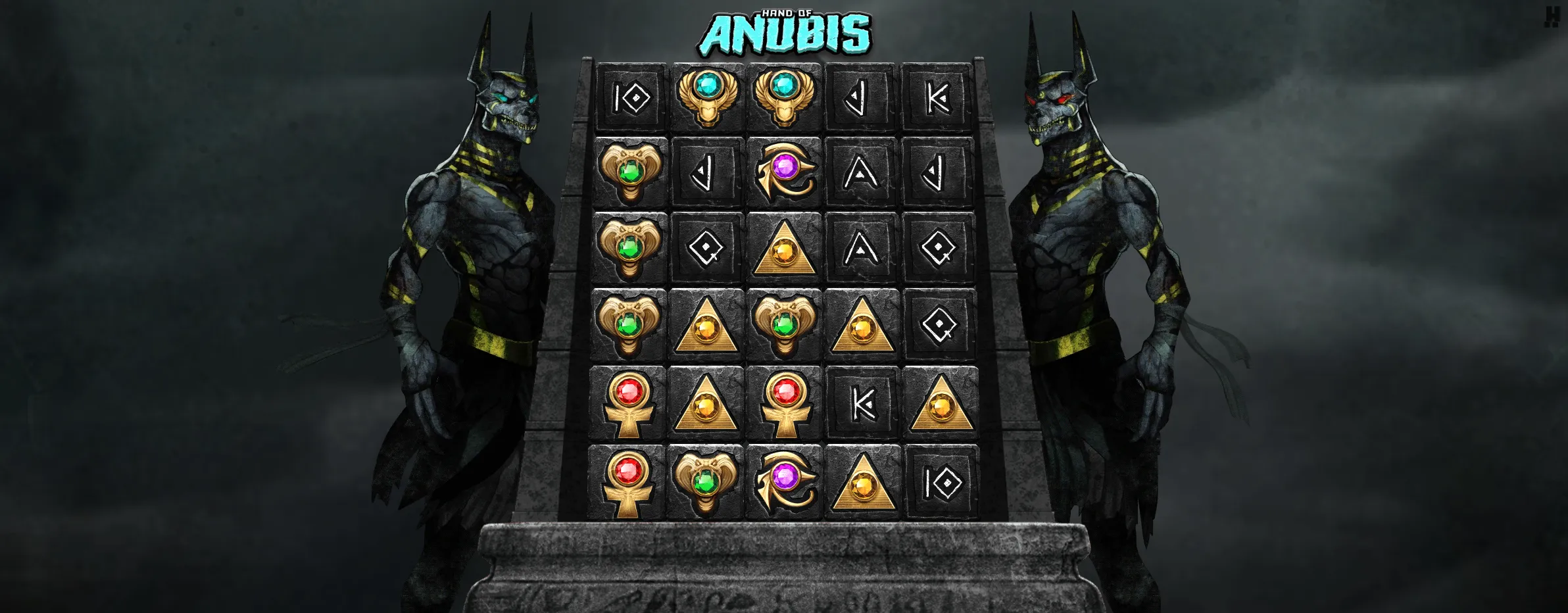
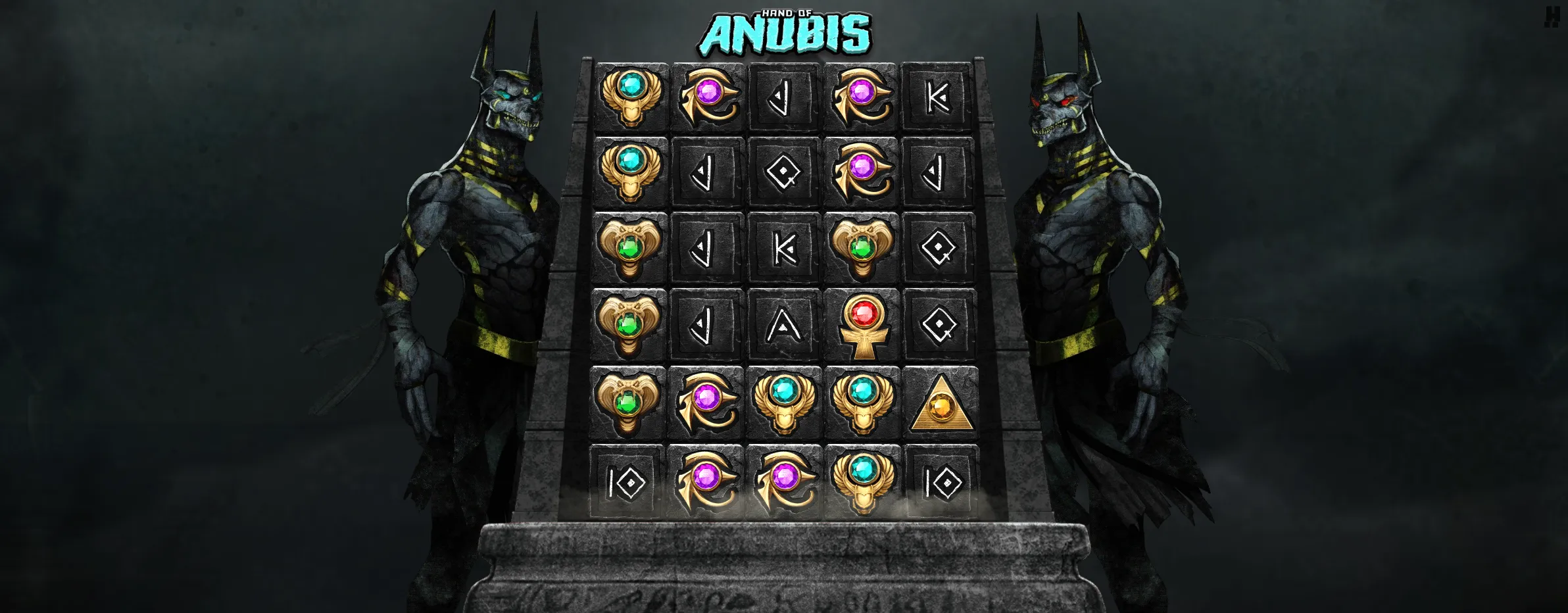
I count no five-symbol cluster that pays more than the stake: the golden ankh returns exactly 1×, the snake and pyramid 0.5×, the eye and scarab 0.3×, and the five card ranks 0.1×. A card-rank cluster still returns half the stake at eight symbols and needs nine to pay 2×. The value sits on a cliff between nine and ten, where the ankh jumps from 5× to 20× and the eye and scarab from 3× to 15×. With hit frequency at 36.92%, 63.08% of rounds return nothing, and the rest start from a table where small clusters hand back part of the stake.
The top band is where the orb design shows its hand. Eleven ankhs pay 60× and so does an ankh cluster filling most of the 30 cells, because the 11+ band stops counting at eleven. The red orb does not stop, and every symbol past eleven adds another 1× to it. The blue orb is paid by the number of separate wins instead, so the two counters favour opposite board shapes and the round that matters feeds both.
Six small clusters can set up the cap
The best single cluster is 60×, which is 0.6% of the 10,000× cap. Closing that gap with one multiplier takes 167×, since 60 × 166 comes to 9,960 and falls short. On the next symbols down I make the requirement 250× for an eleven-plus snake or pyramid, 500× for the eye or scarab and 667× for a card rank, so the ankh is by a distance the shortest road to the ceiling.
What makes 167× reachable is the product. Suppose both orbs are on the grid while six five-symbol clusters clear. The red orb has gained 30× and the blue orb 6×. Added, that is 36×, and on an eleven-ankh cluster it pays 2,160×. Multiplied, it is 180×, and the same cluster is worth 10,800× before the cap trims it to 10,000×. Only the operation between two counters changed. A modest chain of sub-stake wins becomes the maximum outcome if it ends in the right cluster with both orbs touching it, and I rate that as a genuinely good piece of design.
The rarity lives in the conditions, not the counts. Each orb lands at random or not at all, both have to connect to the same cluster, and the smaller or cheaper that cluster, the larger the product it needs. At max-win odds of 1 in 2,184,837 in Germany, the cap is worth under half a percentage point of return, so nearly all of the return is paid below the ceiling.
Underworld adds where the base game multiplies
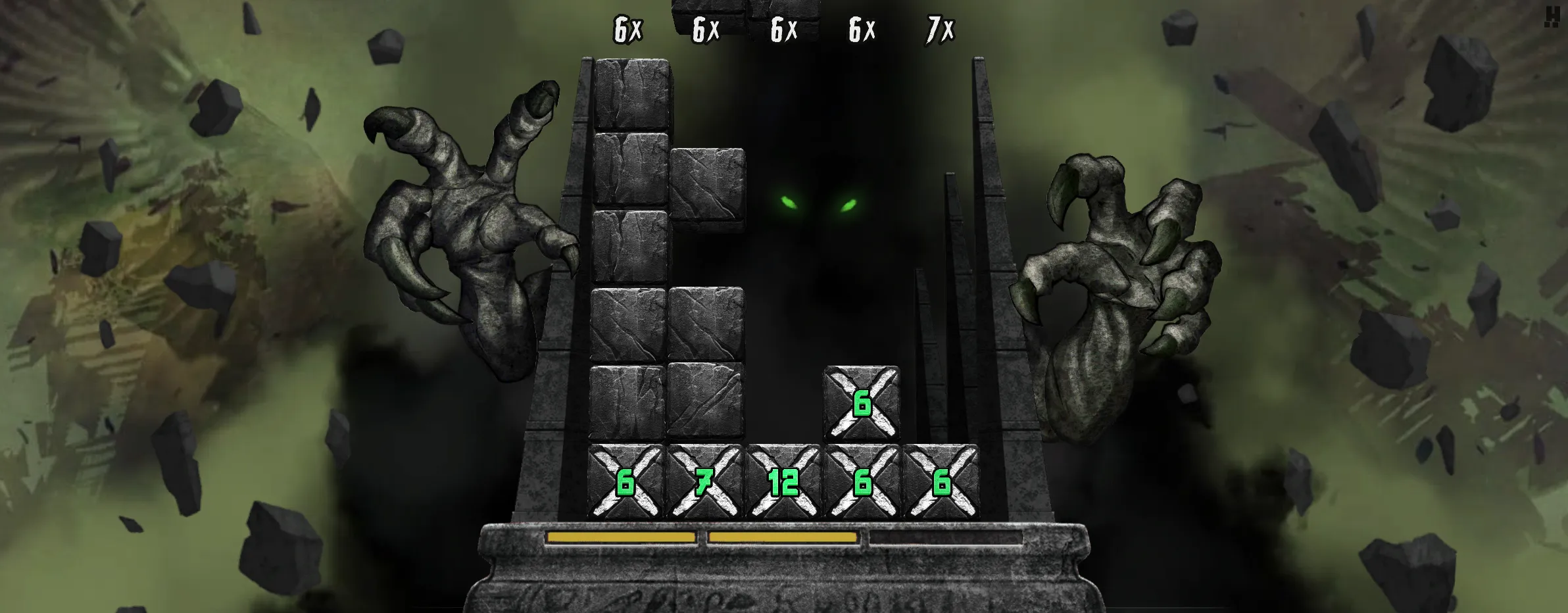
Underworld keeps the cluster engine and drops both orbs. In their place sit five reel counters, each gaining 1× per winning symbol on its reel, and a green Soul Orb that activates a counter and adds 3 spins. Activated counters are summed into one global multiplier, which is the orb idea with its best part taken out. Two active reels at 12× and 14× apply 26× to the next cluster. As base-game orbs, the same two values would multiply to 168×, past the 167× an eleven-ankh cluster needs for the cap.
Multiplication survives in one place. A modifier symbol multiplies a single reel's counter by ×2, ×3, ×4, ×5 or ×10, so a counter at 12× becomes 120× on a ×10. Each counter tops out at 9,999, and five at that ceiling would sum to 49,995, nearly five times the cap, so the counters are never what limits a round.
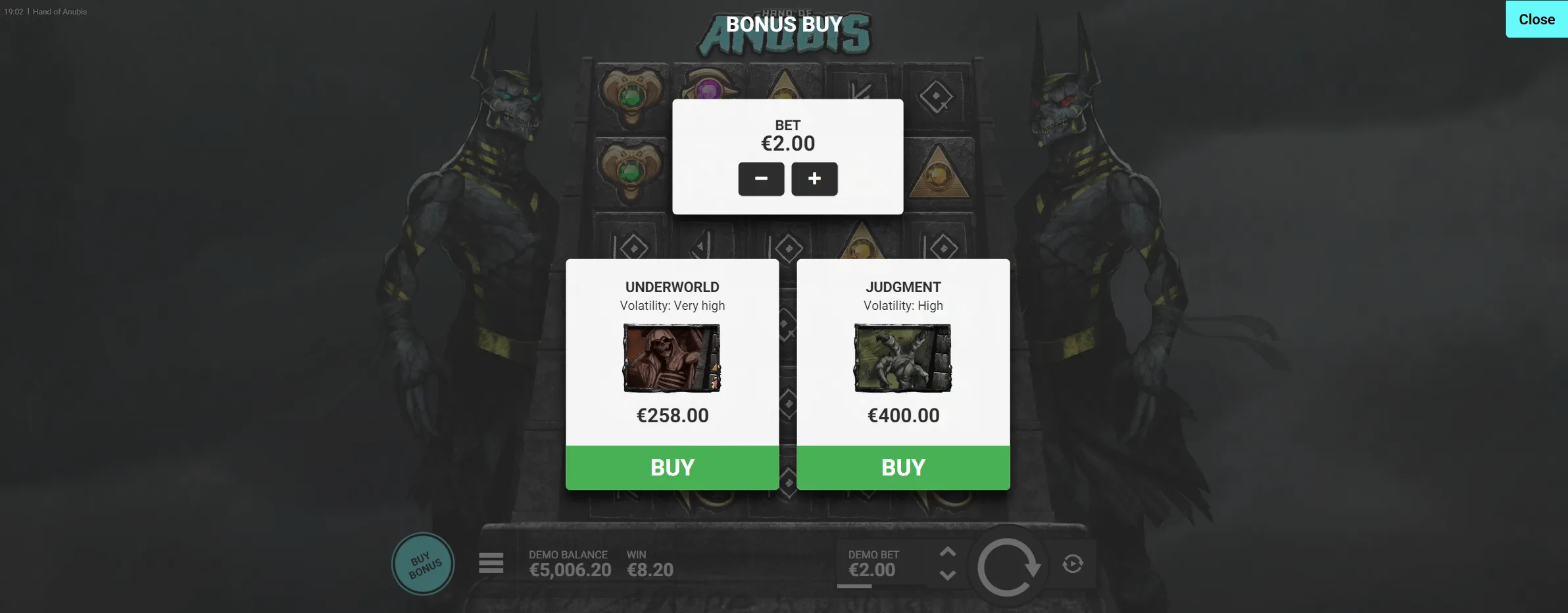
The gate is the flaw I cannot get past. A counter multiplies nothing until a green orb lands on its reel, and activations are the only source of extra spins. Ten starting spins plus 3 for each of the five reels comes to exactly 25, the round's spin ceiling, so the clock is sized to one activation per reel. A round with no activation is ten spins of plain table, where a single cluster tops out at 60×, under half the 129× the buy asks for this round.
Judgment is well built and has nothing to do with the orbs
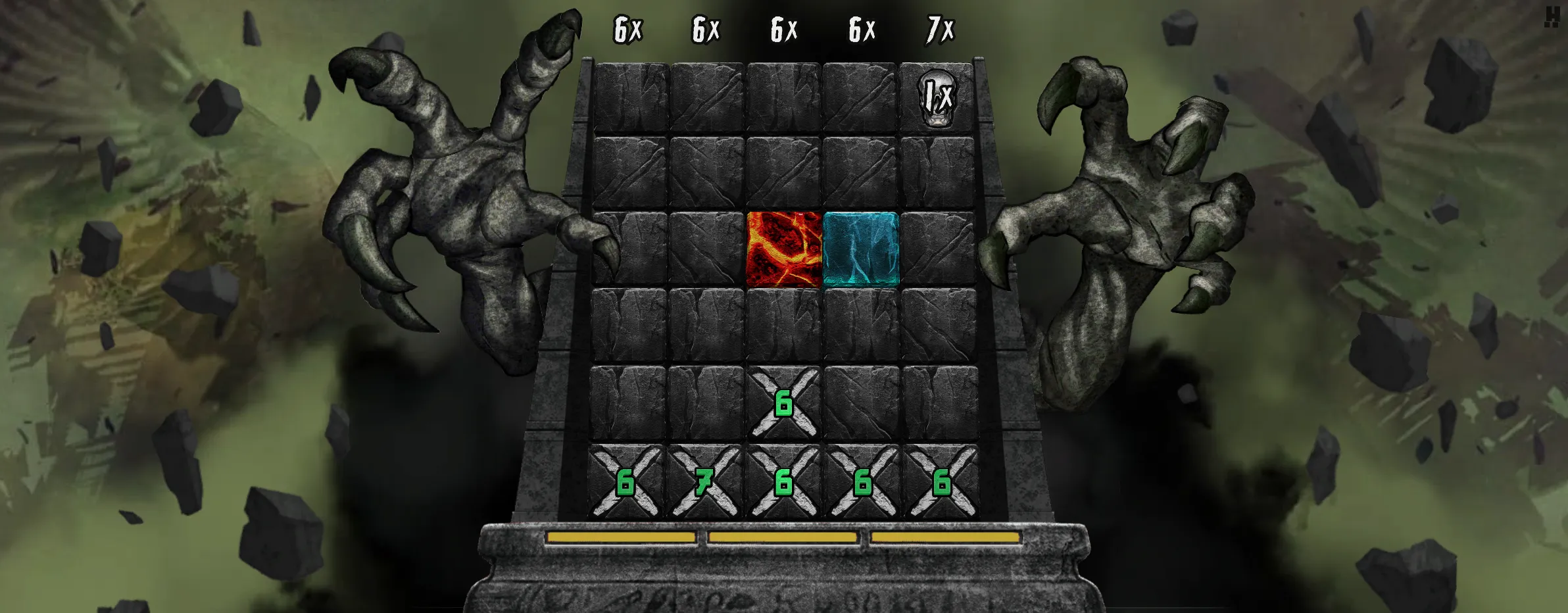
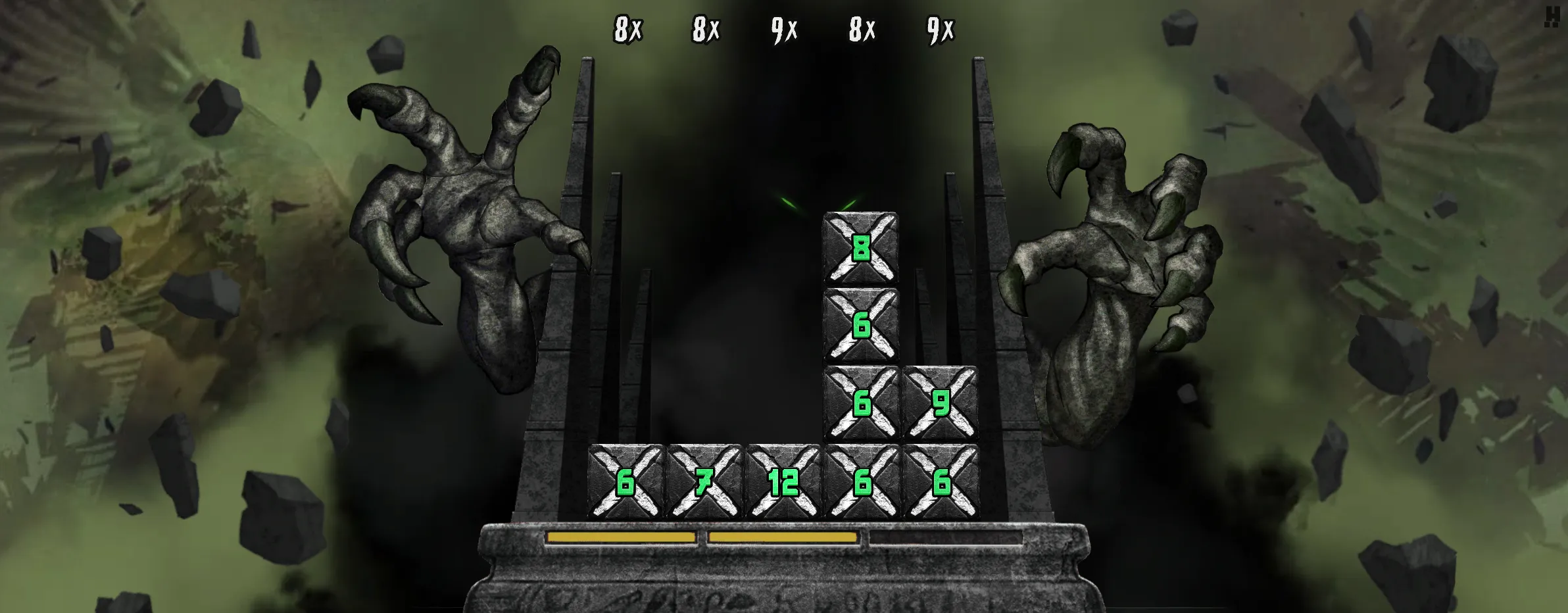
Judgment removes every paying symbol, so no cluster forms and nothing like an orb could apply. What remains is a block-stacking round that opens with 3 spins, resets to 3 whenever a Multiplier Block, modifier block or Crusher Block lands, and settles once at the end as the sum of all Multiplier Blocks times the bet. On its own terms it rewards sequencing. Ice blocks convert into Multiplier Blocks stamped with their reel's current multiplier, so the order of modifiers decides what later blocks are worth. Take any starting value, add 100 with a Skull and then multiply by 10 with an Anubis Skull, and the reel sits at ten times its start plus 1,000×. Reverse the two and it sits at ten times its start plus 100×. That gap of 900× applies to every block the reel stamps afterwards, and the Epic versions apply the same swing to all five reels at once.
The Crusher Block is what lets a round outgrow a full board. Without it the grid has room for 30 Multiplier Blocks, and a board of 30 would need to average more than 333× per block to reach the cap. None of this is weak. My objection is to where it sits: nothing in Judgment touches a cluster or an orb, it could be lifted into another game without changing a rule, and it is the more expensive of the two buys.
The dearer buy has less of the game in it
I find the prices honest per unit staked. Underworld costs 129× at a 96.29% return, which averages 124.21× back for an average cost of 4.79×. Judgment costs 200× at 96.18%, averaging 192.36× back for 7.64×. Both sit within a tenth of a point of the 96.24% base game, and neither is a tax.
The menu is the problem. Judgment's 55% higher price reflects a larger average round, since the two rates sit almost level. What it buys is a high-volatility round with no cluster wins, while the cheaper Underworld entry is very high volatility. A buyer who reads price as risk reads this menu backwards. Measured as best case against its own price, Underworld can return 77.5 times its cost and Judgment 50 times, where a base-game stake has the full 10,000 times. And neither purchase contains the red or the blue orb, so both spend a multiple of the stake to leave the game's defining rule behind.
The build matters more than the buy
The gap between the two buys is about a tenth of a point. The gap between the 96.24% build and the 88.41% one is 7.83 points: the expected cost on the lowest build is 11.59 of every 100 staked against 3.76 on the top one, about three times as much. The rules screen shows which one is running, and below the top build the orb rule is not enough to cover the cost.
I see this as a base-game slot for a player who accepts a refund table as the price of two wilds that can meet on a big ankh cluster. Anyone who wants to buy straight into the best part of a game should look elsewhere, because both purchases leave the orbs behind, and so should anyone who wants progress that survives between rounds, since both orbs reset when the next round starts. One very good rule inside a thin frame makes a good game rather than an excellent one, and the frame is what holds it there.