The lock is borrowed and the multiplication is not
Stick 'Em takes a familiar land-and-lock chase and pays it on a ways count, and that one decision explains both why the game is worth reading and why it sits at 6.2. A ways count grows slowly while the grid is thin and steeply once it is nearly full, so Sticky Win Spin keeps more than three quarters of its 2,048x ceiling in the last five of its 20 cells. It guards those cells with a fuse of one re-spin, and the frame around it is too flat to pay for the wait.
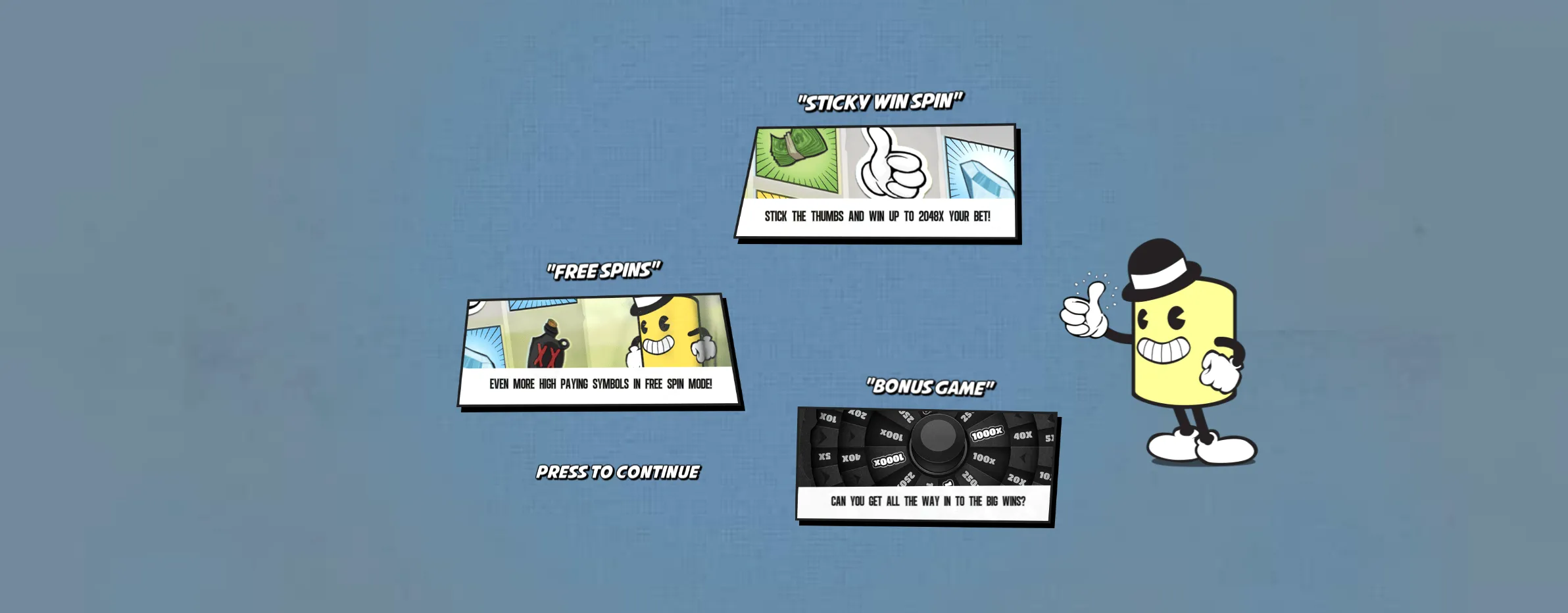
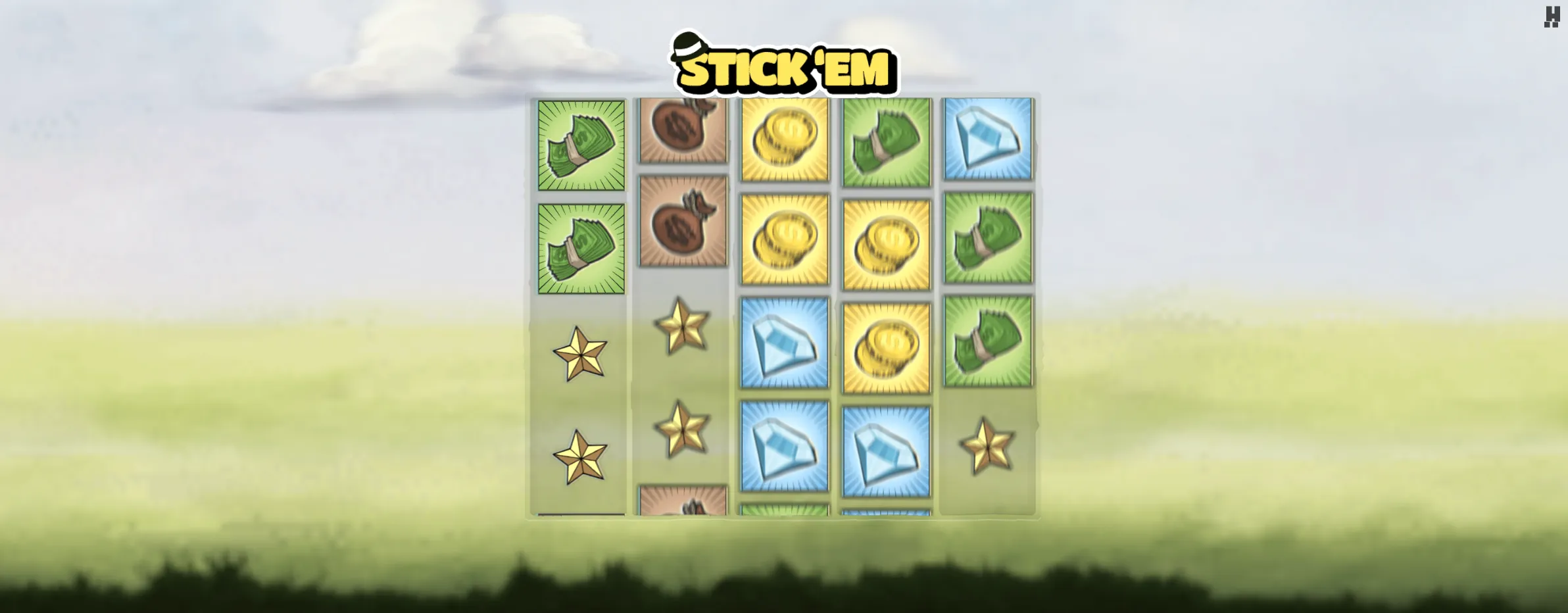
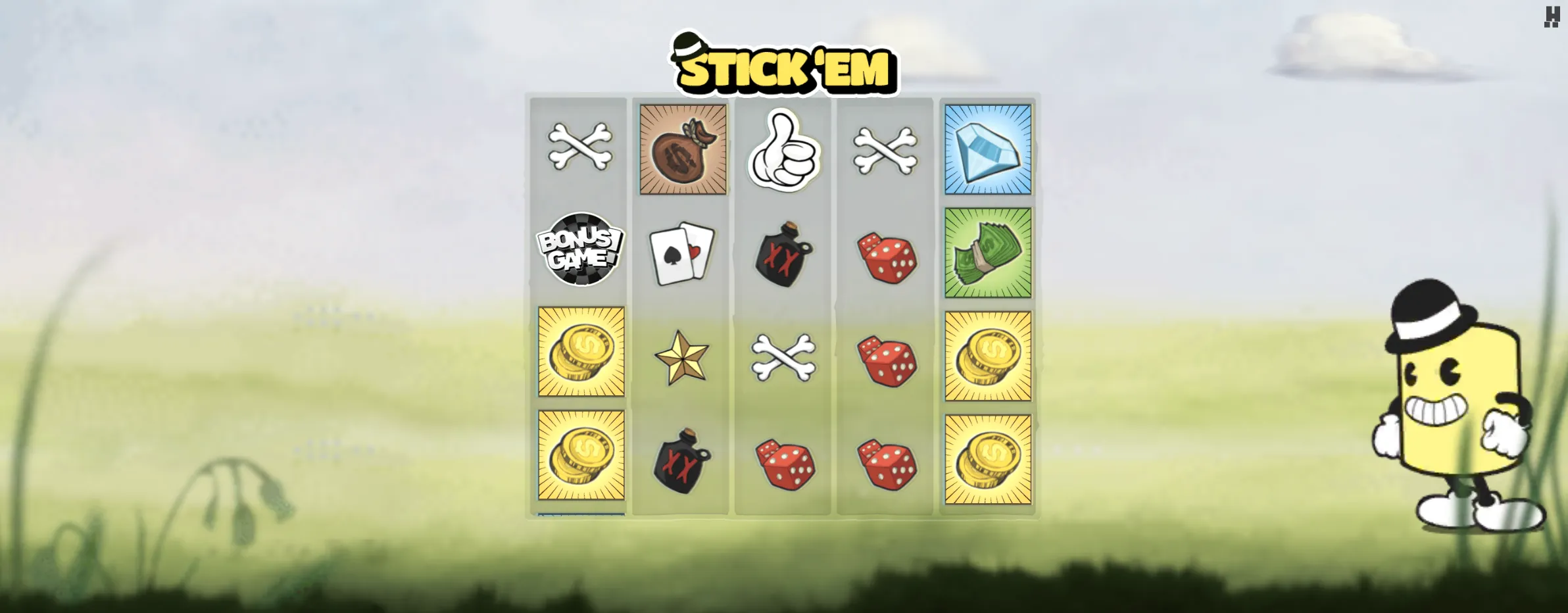
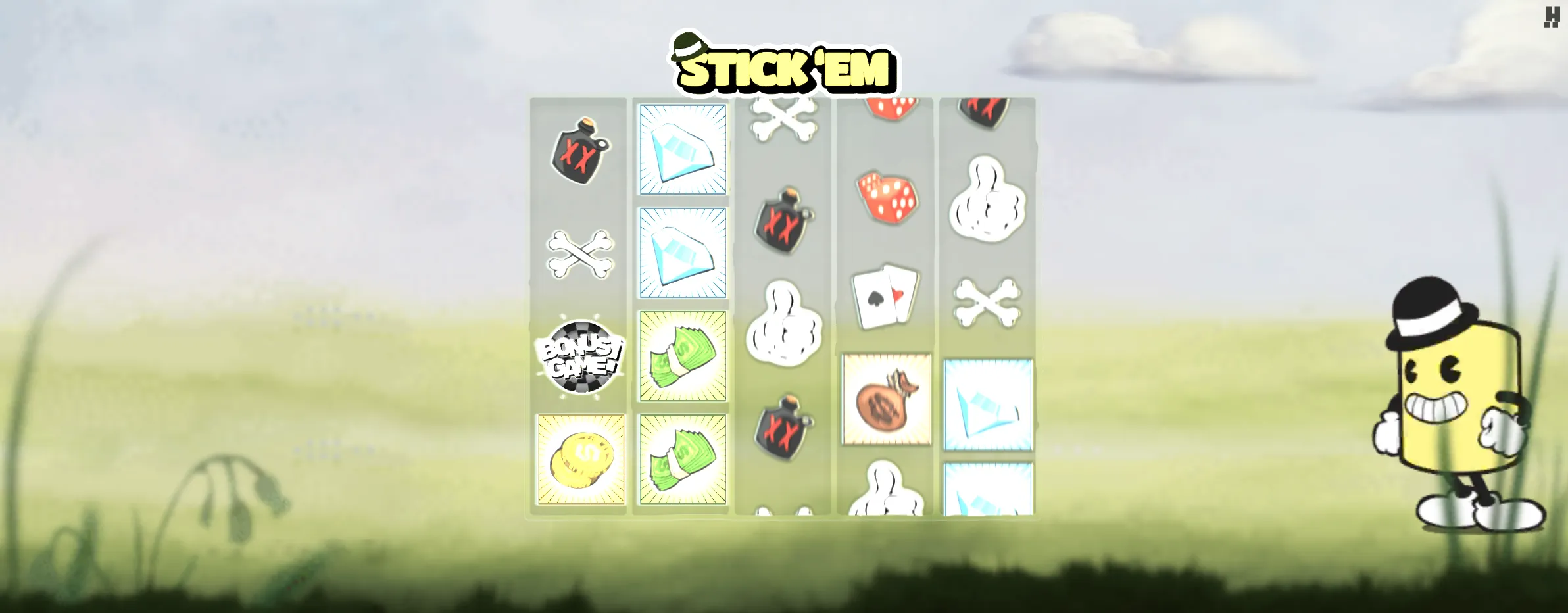
The borrowing is plain. Wolf Gold's Money Respin locks each new money symbol and extends the respins, and the round in Hot To Burn Hold And Spin locks every new money symbol and keeps re-spinning while new ones land. Sticky Win Spin is the same loop. Three or more thumbs up symbols in a win lock in place, the reels re-spin once, and each re-spin that adds a thumb locks it and grants one more. What this early Hacksaw release changes is the payout. The feature pays one total for the thumbs on the reels, and it counts that total in ways at the thumb's 2x rate for five of a kind. A second thumb on a reel doubles the ways through that reel, and a third raises them by half again. That is a refinement of an existing format rather than a new one, and a good refinement, because it makes a late thumb worth far more than an early one.
Fifteen thumbs buy less than a quarter of the cap
Here is the count I make for boards with a thumb on every reel, spread as evenly across the reels as four rows allow. An even spread is the best case for any number of thumbs, so each row is a ceiling for that count rather than a typical total.
| Thumbs on the grid | Ways | Feature total |
|---|
| 5 | 1 | 2x |
| 10 | 32 | 64x |
| 15 | 243 | 486x |
| 18 | 576 | 1,152x |
| 19 | 768 | 1,536x |
| 20 | 1,024 | 2,048x |
Half the grid in thumbs is worth 64x at best, about 3% of the ceiling. Three quarters of it is worth 486x at best, under a quarter. The last five cells add at least 1,562x, which is 76% of the maximum, and the twentieth thumb alone is worth 512x, exactly a quarter of the cap. The 2,048x figure is not an arbitrary limit laid over the maths. It is 1,024 ways at 2x, the full board and nothing past it, so the cap trims nothing from the feature.
Order matters as much as count. Ways run from the left and a win needs three reels, so a trigger always seeds reels 1 to 3. A thumb that lands on reel 5 while reel 4 is empty still locks and still buys a re-spin, but on a ways count it adds nothing until reel 4 holds a thumb. A board that stops short of reel 5 is paid at a shorter run than the five-of-a-kind rate this table uses.
One blank re-spin is a short fuse for a back-loaded prize
Sticky Win Spin starts with one re-spin and earns one more for each re-spin that adds a thumb. The first blank ends it, however full the board has become. Set that rule beside the table and the design's tension is clear. The part of the curve that holds the money needs a new thumb on re-spin after re-spin, and each lock removes one of the empty cells a new thumb could land in. At 15 thumbs the target is five cells wide. At 19 it is one cell, and that cell is worth 512x.
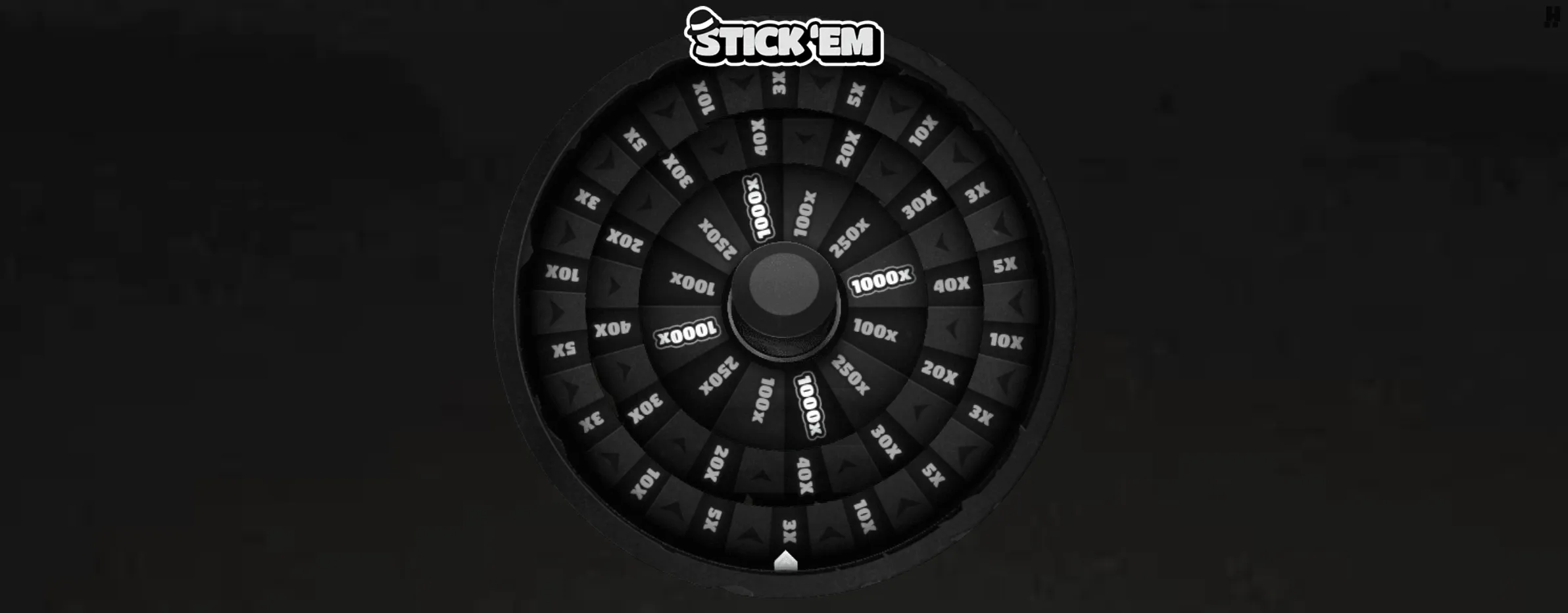
The wheel makes the same point from the other side. Its top prize of 1,000x sits between my 17-thumb figure of 864x and the 18-thumb figure of 1,152x, so on these figures a sticky board has to fill 18 of 20 cells before it beats the wheel's best result. While the feature runs, free spins and the wheel cannot trigger, so a long chase stands alone rather than stacking onto another round.
I do not count the fuse against the idea. A multiplying count is what makes the thumbs worth following, and the fuse is what gives the chase its stakes. I count it against the ceiling. When the top figure needs the last cell and the last cell is a quarter of the prize, 2,048x is a low reward for a board that complete.
The paytable exists to fill the gap between thumbs
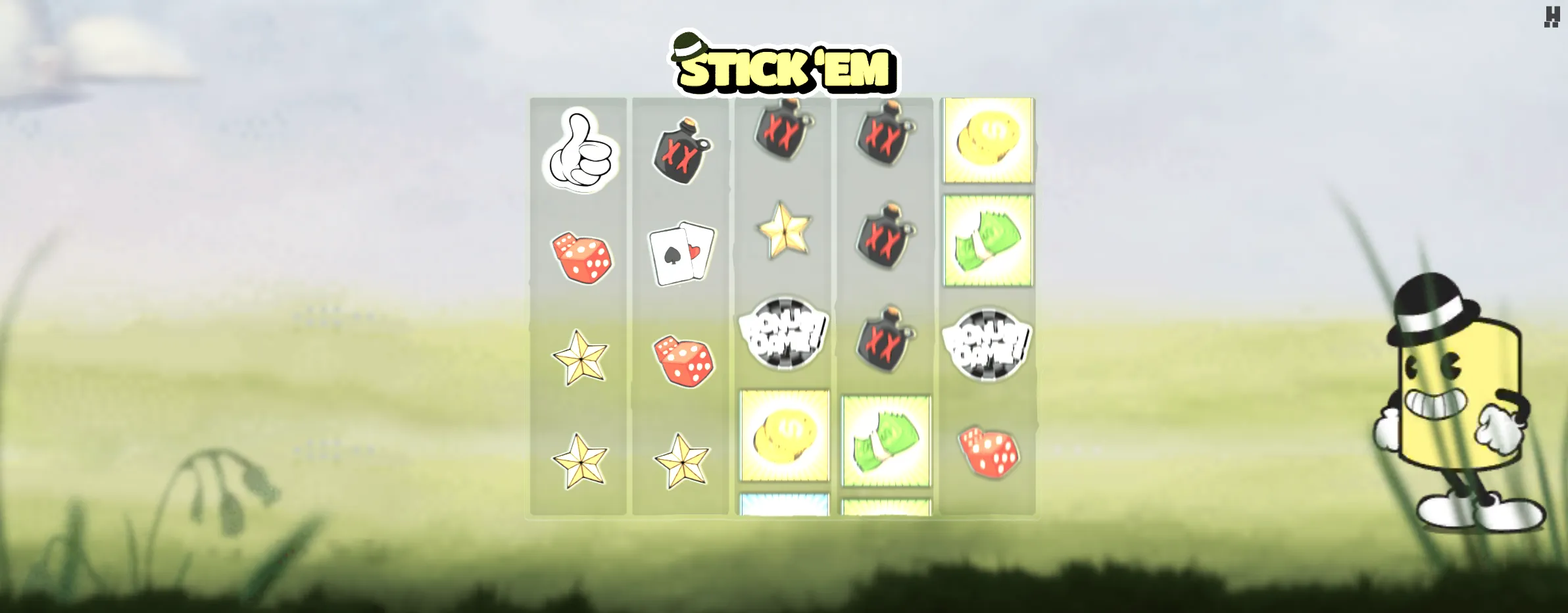
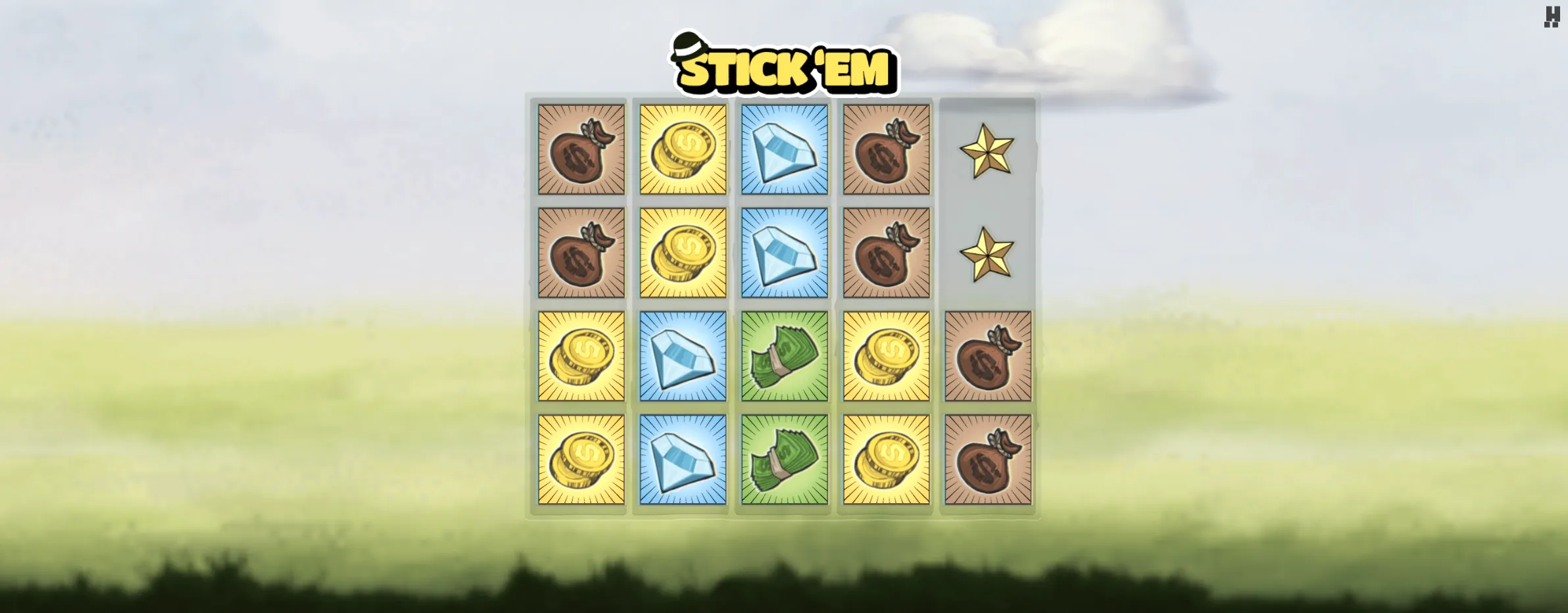
Away from Sticky Win Spin the game is thin. There is no wild. The best regular pay is 3x for five bags on one way, three of the four high symbols pay 1.5x, and the low end runs down to 0.3x for five stars. The thumb itself pays 2x, less than the bag, so its value is the lock rather than the line. With a 23.45% hit rate, about three spins in four return nothing.
Even as pure arithmetic the regular symbols struggle against the cap. A grid filled with coins, diamonds or dollars comes to 1,536x. A bag win needs 19 of the 20 cells to pass 2,048x, where 768 ways at 3x computes to 2,304x and stops at the cap.
Free spins do not change that shape. Three, four or five scatters award 5, 10 or 15 spins with extra high symbols, and the scatter never lands inside the round, so 15 spins is the longest free spins round the game can give. More high symbols means more ways built on 1.5x and 3x pays, which is a modest improvement to a modest paytable.
The wheel is a separate draw. It needs a bonus scatter on each of reels 1, 3 and 5 in one base-game spin, pays up to 1,000x the triggering bet across three levels of 12, 24 and 36 segments, and then hands play back. That top prize is just under half the cap, which makes it a fair second shot at a large number, but it does nothing for the ordinary spins around it.
The thumbs earn the 6.2 on their own
I rate the idea above the game. Pricing a lock-and-respin chase in ways gives the feature a real curve, and that curve is the reason to consider Stick 'Em at all. The problem is where the curve puts its value: at least 1,562x of the 2,048x sits beyond the fifteenth thumb, on a feature that ends at the first blank re-spin, inside a game whose regular symbols top out at 3x for a single way of five and whose free spins cannot grow. At 96.1% and medium volatility that is a competent game with one good equation in it and a low roof over it.
It suits a player who likes a hold-and-spin chase where each added symbol visibly changes the total, and who is content with 2,048x as the top. A player after a deep base game, a free spins round that retriggers or a five-figure ceiling should look elsewhere, because Stick 'Em offers none of the three.