The better game is the one between bonuses
Stack Em is built upside down. Its best idea, the counters under the reels, lives in the base game, where it makes every chain readable while it runs and is enough on its own to reach the 10,000x cap. The free spins, which a 1-in-264.8 trigger turns into the part of the game everyone waits for, switch those counters off and replace them with a total that pays only when a cluster touches one symbol. I read the base game as the better of the two halves, and the distance between them is why a carefully made slot earns a middling score.
The loop is a familiar one. Keep ‘Em Cool runs the same Hacksaw cycle of five-plus clusters, cascading refills and a multiplier that accumulates across the sequence instead of paying flat. Gronk’s Gems and Sugar Rush Super Scatter both keep a multiplier alive across a whole free-spins round, which moves the win potential into the bonus. Against the first design, Stack Em's version is better. Against the second, it is worse. Pinning the accumulator to columns is a genuine improvement, because the multiplier now belongs to a place on the grid rather than to the sequence in general. Putting the round-long total behind an X symbol takes the persistent-multiplier design and sets a gate in front of the payout.
Where a cluster lands matters more than what it is made of
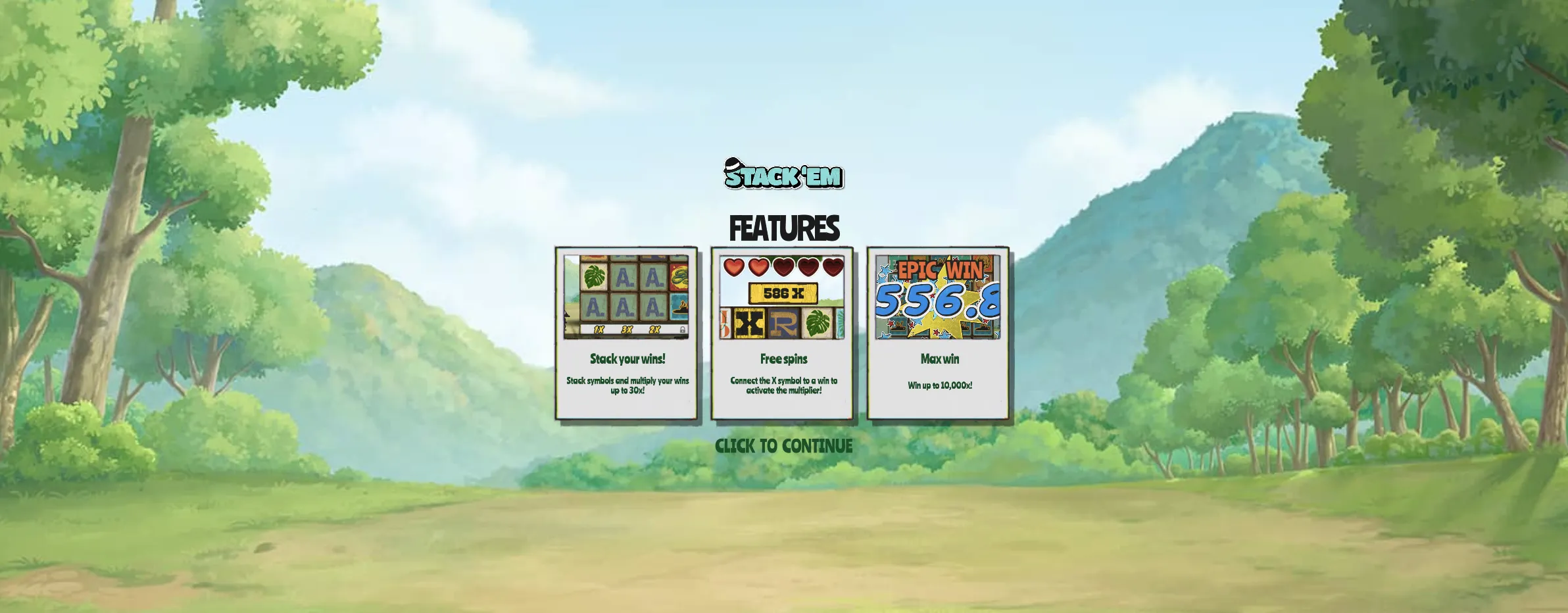
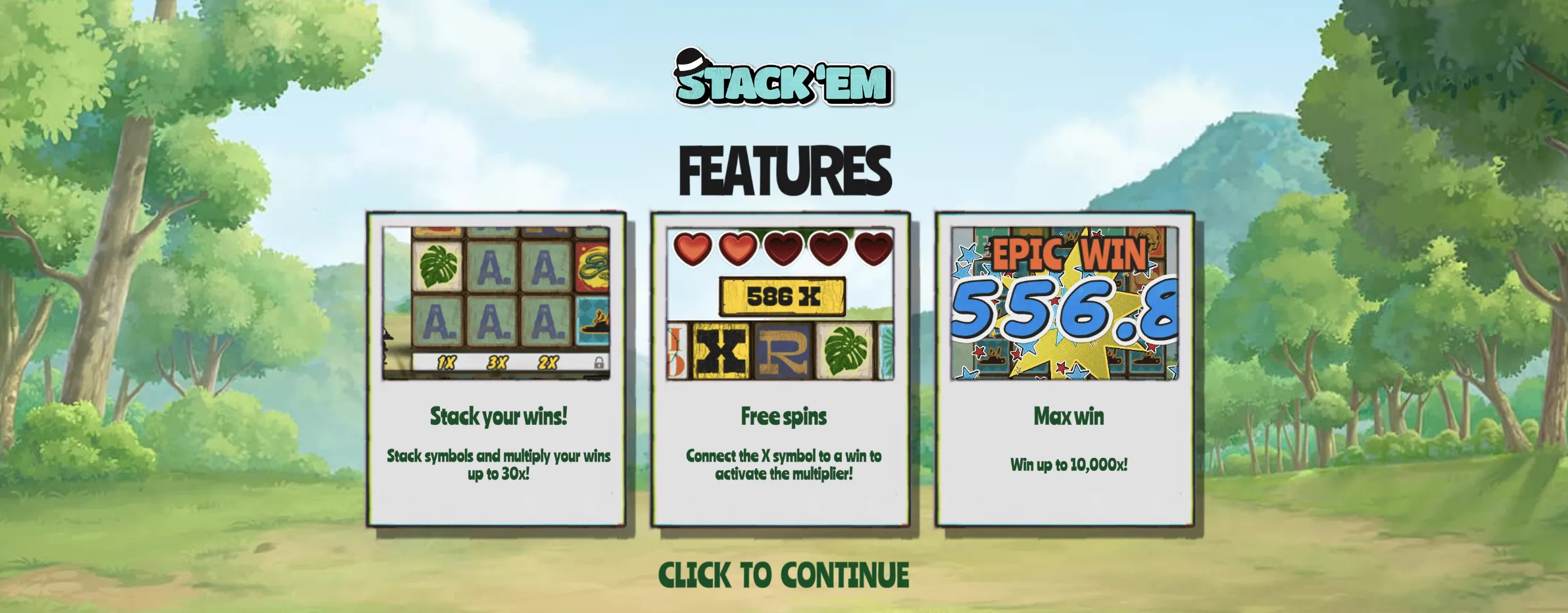
Every paytable figure is a cluster's value before the numbers under the reels are applied, so the printed ladder is only half of a price. The symbol half is narrow. At any one cluster size the best symbol never pays more than ten times the worst: Thumbs Up takes 10x for 13 to 14 symbols where a letter takes 1x, and at 25 or more the gap is 200x against 25x, eight times. The positional half is wide. A cluster is multiplied by the sum of the counters under only the reels it covers, one reel tops out at x6, and five full reels make x30.
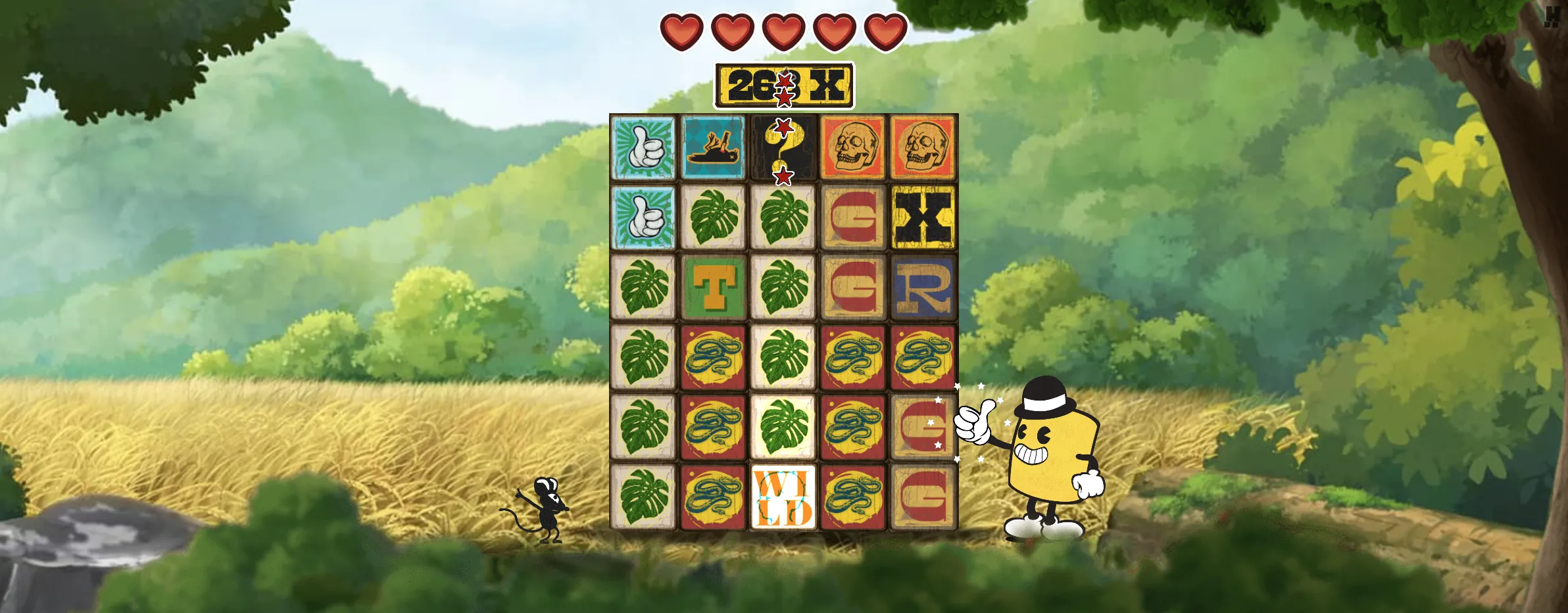
I count that as the whole design in a single comparison. A better symbol is worth up to ten times more, while the counters beneath a cluster can multiply the same cluster by up to thirty. Winners stay on screen and drop to the bottom of their columns, so the counters grow exactly where the last win stood, and a new cluster that forms over them is paid for the history underneath it. A win that forms away from those columns collects none of it. The multiplier and the win share a location, the grid shows both, and that is why this base game reads better than most cluster cascades.
The cost of the idea is how rarely it gets to work. Wins land on 10.4% of spins, about one in 9.6, and free spins average one entry in 264.8. Over an average stretch between bonuses that is about 27.5 paying spins against about 237 that pay nothing, so the best thing in the game sits idle nine spins in ten.
No single base-game cluster reaches 10,000x, so the chain has to
The largest single pay the base game allows is a Thumbs Up cluster of 25 or more at the x30 ceiling, and 200 times 30 is 6,000x. That is 4,000x short of the cap, so every base-game route to 10,000x is a sum of at least two pays inside one chain. The route that works is a Thumbs Up cluster that keeps growing through successive drops and is re-multiplied after each increase. Two top-band pays in a row, one at x25 and one at x30, come to 5,000x plus 6,000x, or 11,000x, which clears the cap.
The lower tiers show why the base-game cap leans on one symbol. A picture symbol maxes out at 100 times 30, or 3,000x a pay, so a picture chain on its own needs four maximum pays to pass 10,000x. A letter maxes out at 25 times 30, or 750x, and a letter chain on its own needs fourteen. The base game has a real road to the top, and it is a narrow one: Thumbs Up in its top band over heavy counters, repeated inside the same chain.
I give the game real credit for that, because a cap reachable outside the bonus gives the base game a reason to exist beyond feeding scatters. The catch is that the top of the base game is a single-symbol event sitting behind a 10.4% hit rate.
The free-spins total is worthless until an X meets a big cluster
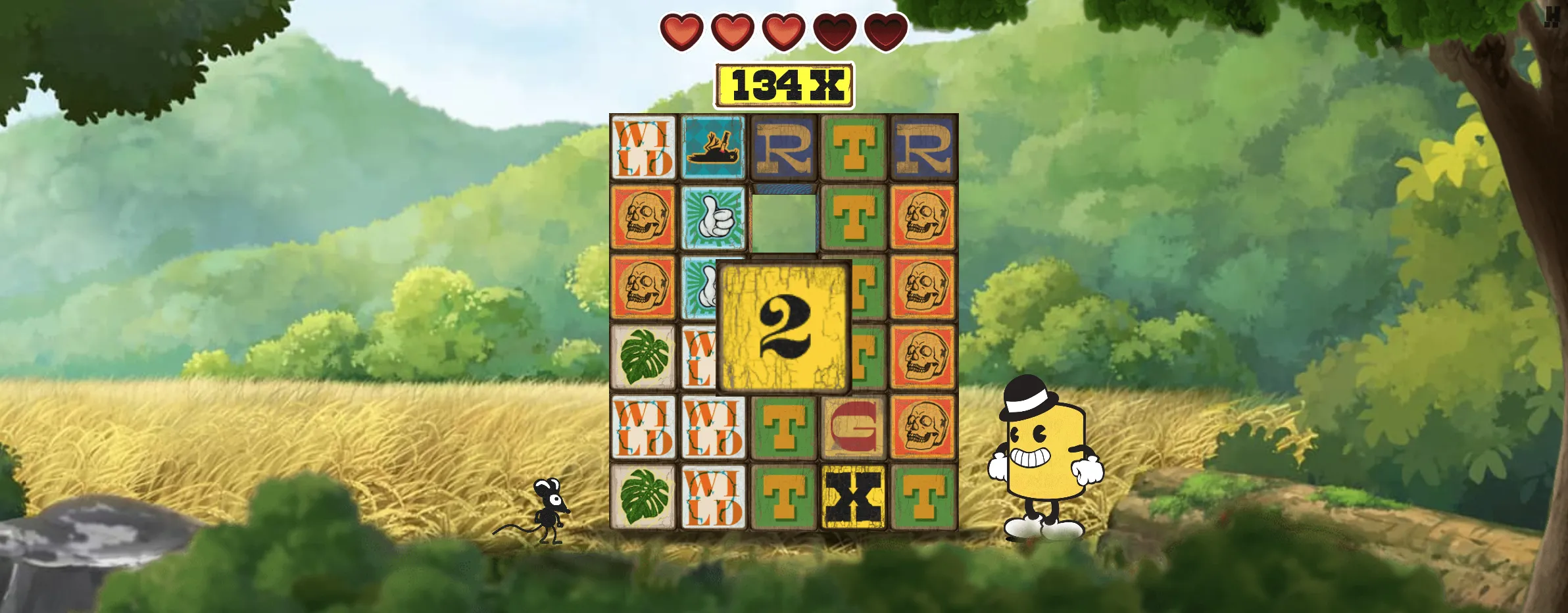
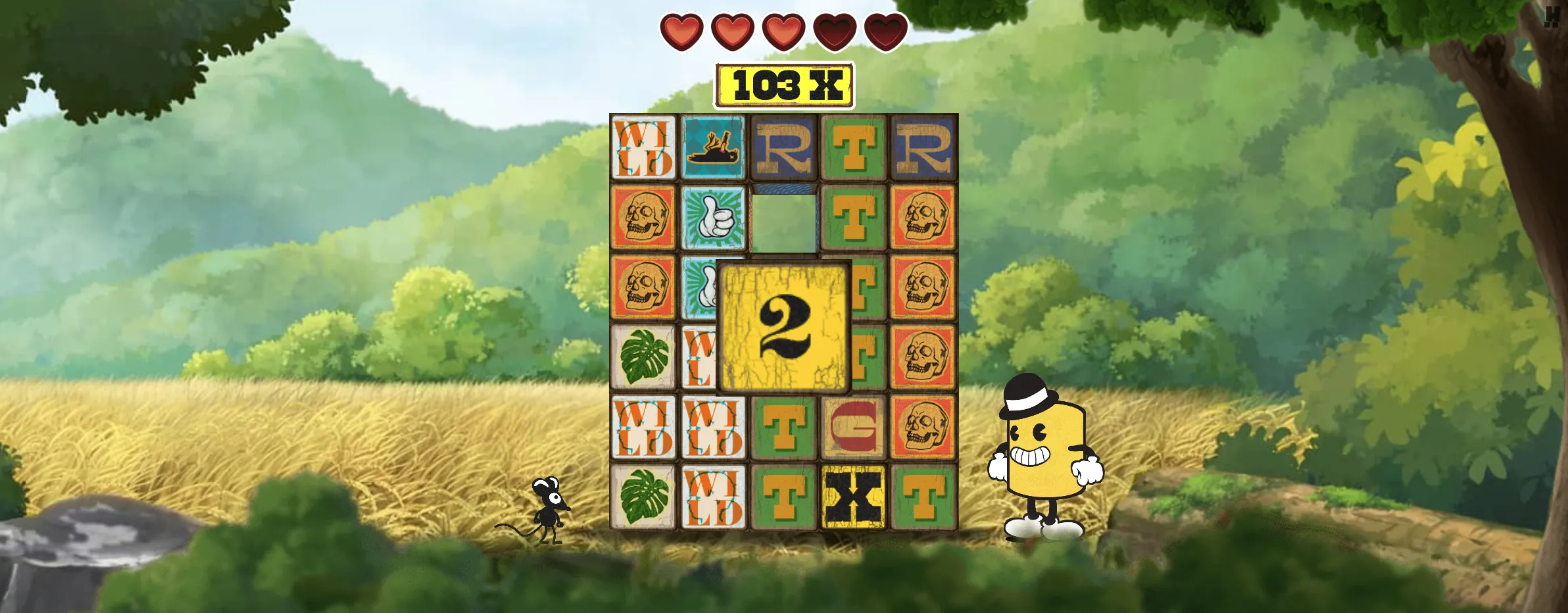
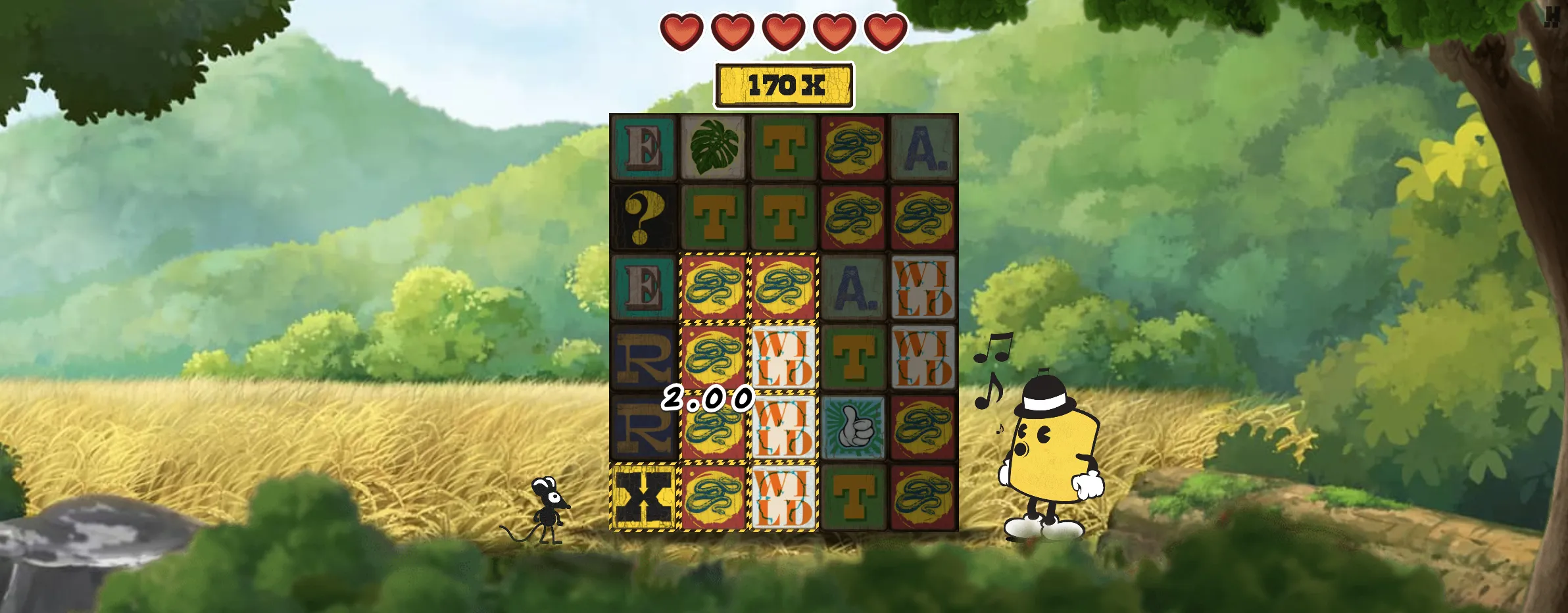
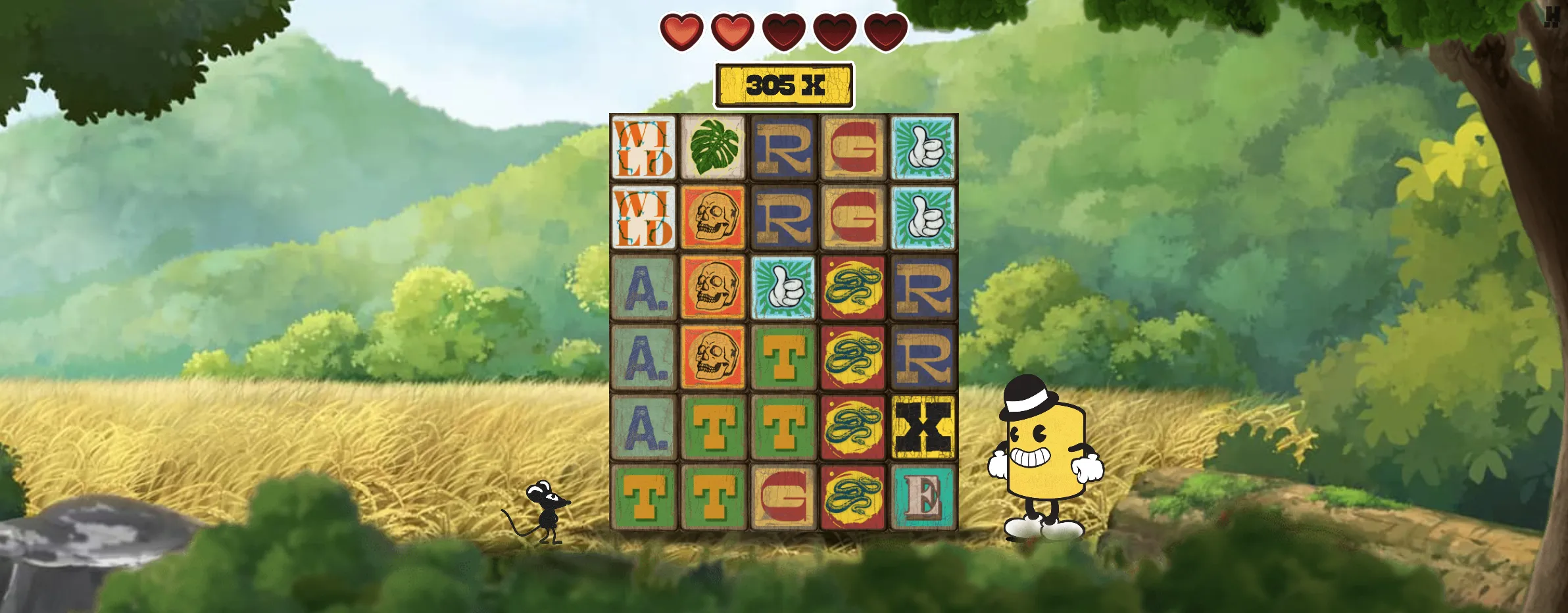
Free spins open with five hearts, spend one per spin and end when none remain. The grid is wiped between spins and the reel counters are out of play, so the idea that made the base game legible is simply gone. Instead, every winning cluster adds its exact symbol count to one total above the grid, and that total never falls. It pays only through the X symbol. A cluster that connects with an X is multiplied by the total, and every other cluster collects nothing from it.
The arithmetic makes the gate harsher than it first looks. A Thumbs Up cluster of 25 or more touching an X needs a total of just 50 to reach the cap, since 200 times 50 is 10,000x, and the cap can land here too and end the round. A five-symbol letter cluster touching the same X at a total of 100 pays 10x. The X has to find a large cluster as well as a large total. A three-figure total that meets a small cluster produces a small win, and one that meets no cluster produces nothing.
Building the total is slow without help. Small clusters add five or six apiece, so adding 50 from clusters alone takes ten five-symbol wins or nine six-symbol wins, in a round that starts with five spins. The mystery symbol is the real engine: one +50 does the whole job in a single reveal, and a x5 does it from a total of 10. That same symbol is also what extends the round, returning two to five hearts, and each reveal gives one reward of three kinds. A reveal that lengthens the round is a reveal that did not grow the total, which is a poor trade to build into a five-heart round.
Sugar Rush Super Scatter keeps its multiplier state alive for the whole round in the same persistent design. Stack Em keeps the persistence and adds the adjacency check, so its bonus turns on where one symbol lands against one cluster rather than on the size of the total. I judge that the weaker of the two designs, and it is the half of Stack Em that sits behind an average of 264.8 base spins.
Buying the round buys the wrong half
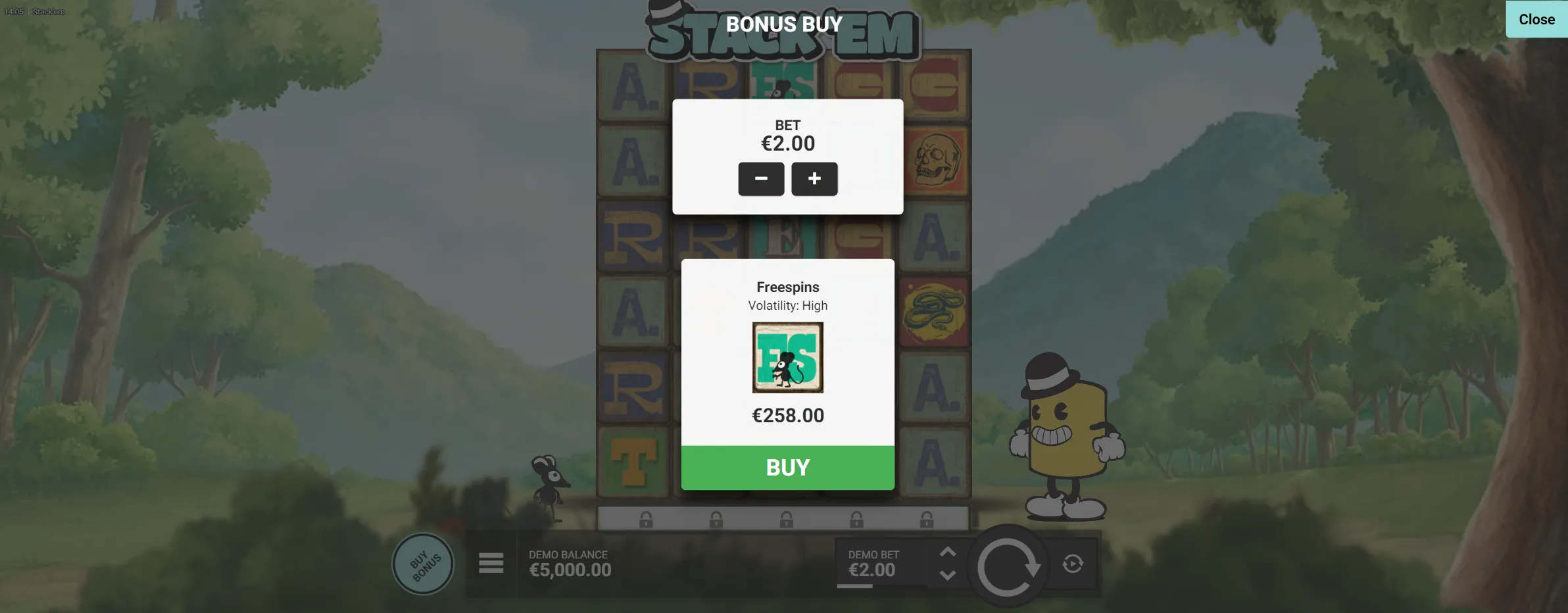
The Buy Bonus button goes straight into the same five-heart round. It skips the base game, which is the part of Stack Em I would keep: the counters, the positional multiplier and a road to 10,000x that owes nothing to an X. A purchase buys the gate without the idea.
This suits someone who wants a base game with its own ceiling and a multiplier that can be read off the grid, and who accepts that nine spins in ten return nothing. A player who comes to cluster slots for a bonus multiplier that grows and then pays belongs with the persistent-multiplier designs that have no X to satisfy. The return is 96.20% at one setting, and the game comes in several settings, so the rules screen is worth opening before the first spin.