The Dog House's build-up, moved from cells to symbols
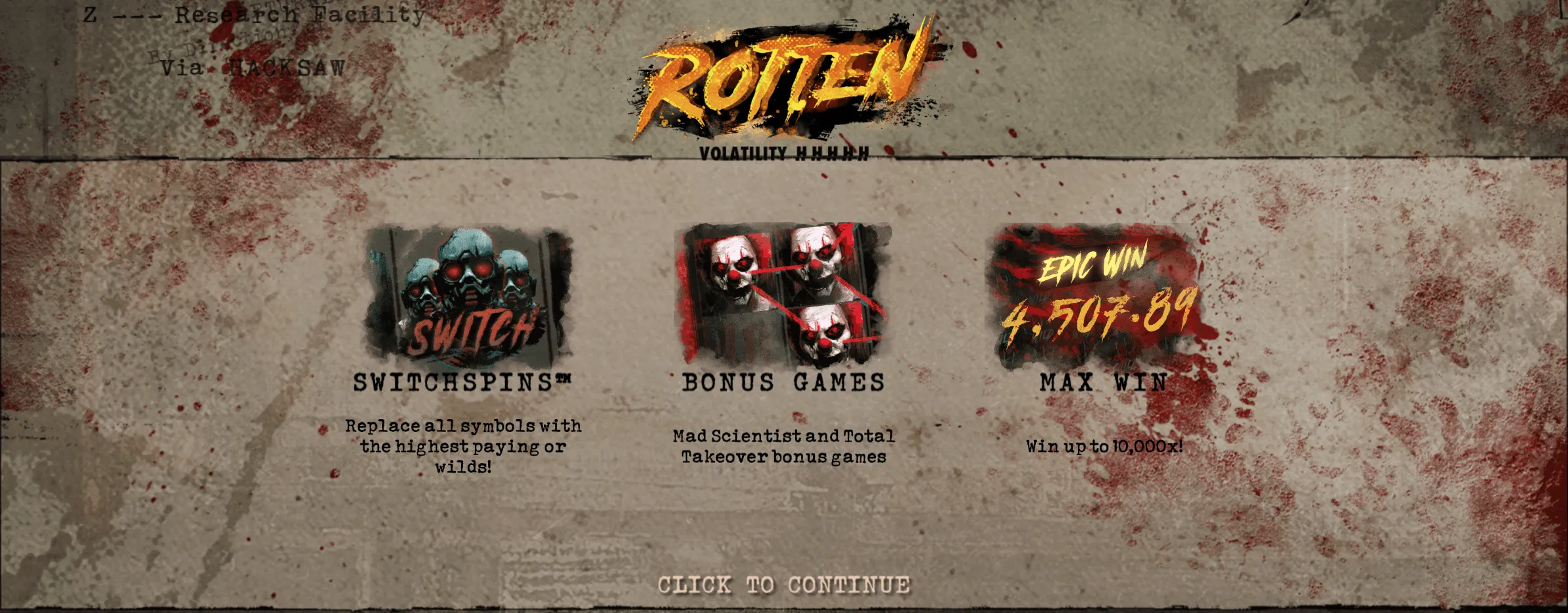
Rotten sells one mechanic in four places and lets it remember in only one of them. SwitchSpins, the respins that turn a selection of symbols into the top symbol or into Wilds, run in the base game, in Mad Scientist, on every Switch FeatureSpin and in Total Takeover. In the first three the selection resets when a set of respins ends. Total Takeover keeps it. My reading of the maths is that the game's value, its score and the sensible route through its buy menu all follow from that one difference: where the selection forgets, this is a thin line-pay slot, and where it remembers, it is a good one.
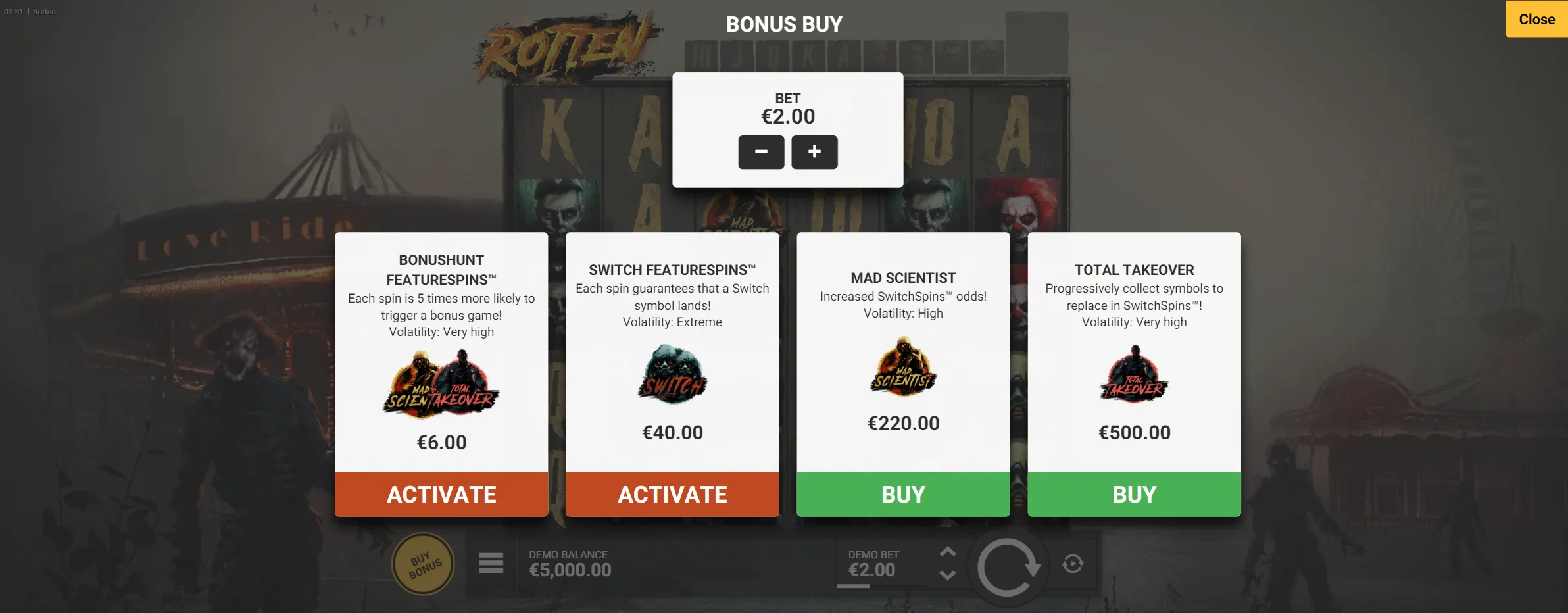
The frame is familiar. Like Wanted Dead Or A Wild, this is a Hacksaw fixed-payline game whose buy menu sells separate bonus rounds at different prices, here Mad Scientist at 110x and Total Takeover at 250x, alongside two kinds of feature spin. The build-up comes from The Dog House, whose free spins hold every landed Wild for the rest of the round. Rotten moves that persistence from cells to symbols. A held Wild helps the lines that run through its cell, while a symbol saved in Total Takeover's selection converts wherever it lands in each later set of SwitchSpins. I count that as a real refinement rather than a reskin, because the end point differs: a sticky-Wild round fills cell by cell, and this one fills symbol by symbol toward a grid that converts all at once.
Outside Total Takeover, every set starts from scratch
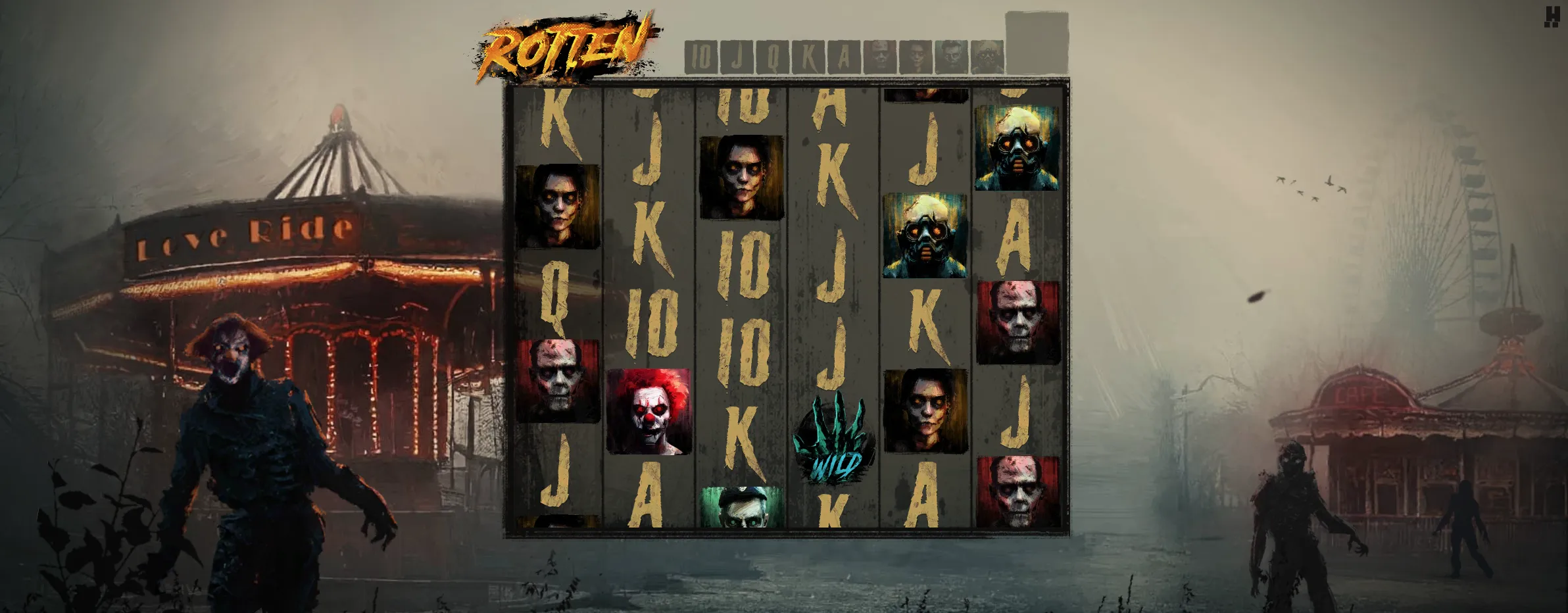
Start with the reels on their own. At a 33.56% hit rate, about two rounds in three pay nothing. Three of a kind returns the bet or less on seven of the ten regular symbols, and the five low symbols pay 0.1x to 0.3x for three. The best single line in the game, six Wilds, pays 50x, one two-hundredth of the cap.
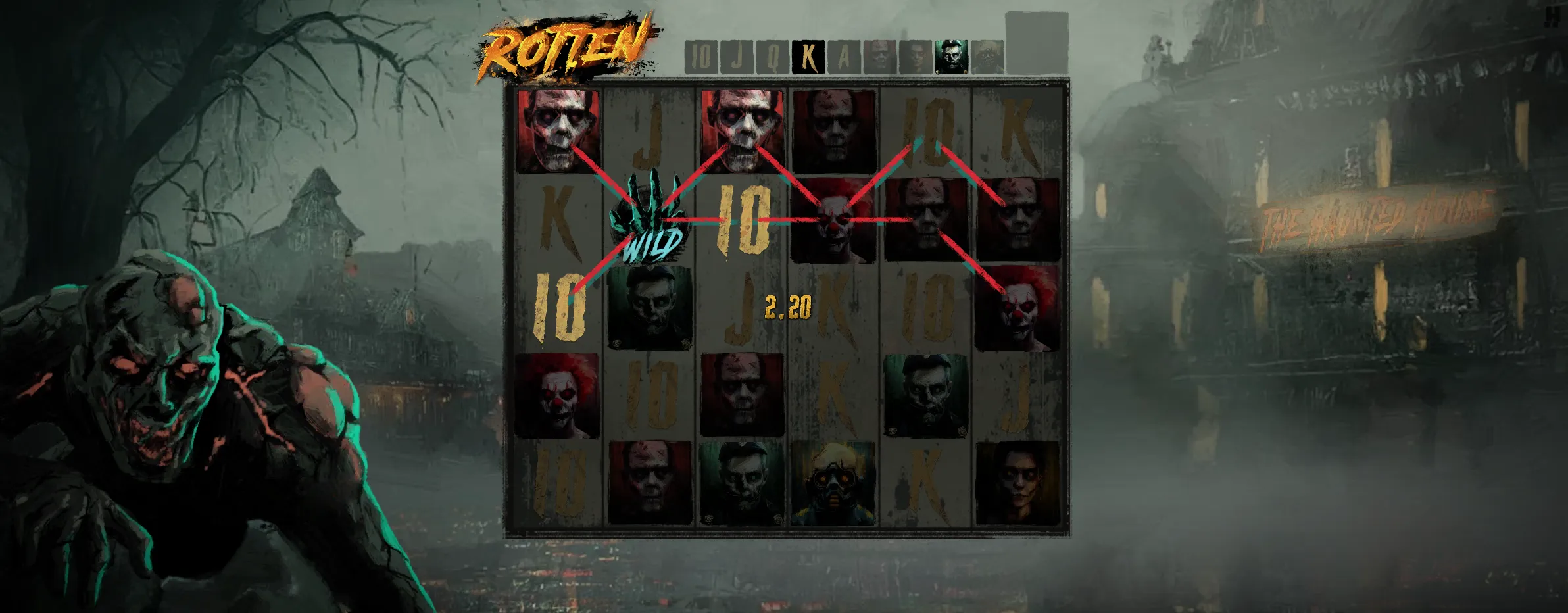
Conversion is where the leverage sits. Turning three tens on a line into three of the top symbol lifts that line from 0.1x to 5x, fifty times as much, and six tens go from 2.5x to 40x. Across 35 lines one fully converted screen pays 1,400x in the top symbol or 1,750x in Wilds, and that is the ceiling of any single spin or respin. In the base game a selection can widen only while its own set lasts. A new Switch during the set adds symbols and respins, but when the set ends the selection is gone and the next Switch builds again from nothing.
Mad Scientist is a busier base game with a door in it
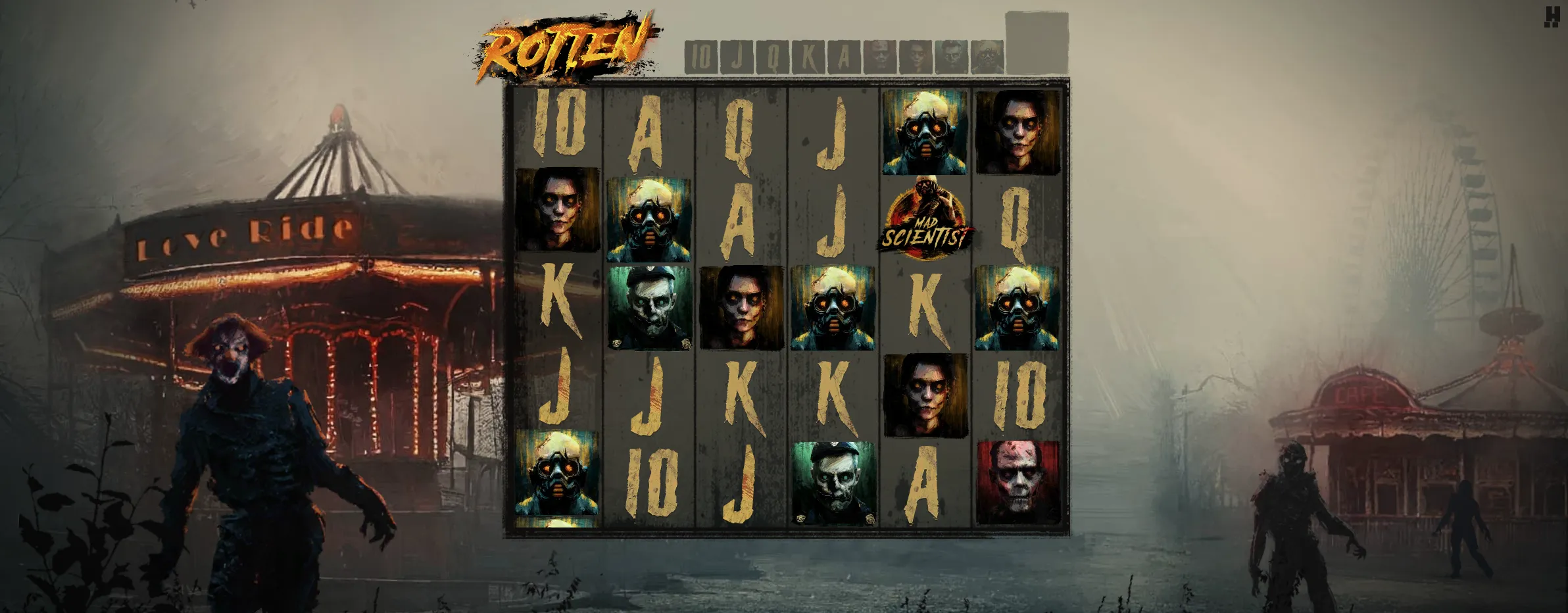
Mad Scientist does not change that arithmetic. It adds 10 free spins and a higher Switch rate, then resets the selection after every set exactly as the base game does. I read it as a base game with more Switches, whose real value is the chance that three Total Takeover scatters upgrade it. That upgrade is generous when it lands. It takes effect at the end of the current spin and resets the remaining spins to 10, so an upgraded round runs between 11 and 20 free spins before any retrigger, unless the cap ends it first. The Mad Scientist spins already played come on top of a full Total Takeover rather than out of it.
The saved selection is the entire case for this game
In Total Takeover the symbols selected for replacement stay selected between sets, so each new Switch widens the selection instead of restarting it. A free spin without a Switch costs a spin but not the progress, and the higher Switch rate means the next set starts sooner than it would in the base game. Once every symbol has been collected, the whole screen fills with the top symbol or Wilds, and the per-respin ceiling becomes the per-respin payout.
This is the one round where progress passes from one set to the next, and it changes what the cap means. Full screens alone reach 10,000x on the sixth screen of Wilds: five pay 8,750x, and the sixth would pass the cap, so the round ends there at 10,000x. With the top symbol it takes eight, because seven pay 9,800x.
The cap is still remote. At the 96.27% setting it comes about once in 11,000,000 rounds, so it accounts for roughly 0.09 of a percentage point of the return: 10,000 divided by 11,000,000. Full screens are rarer than the build-up makes them sound, too. At the same setting a bought Total Takeover returns 96.26% of its 250x price, about 241x per round on average. Every full screen pays at least 1,400x, so even if nothing else in those rounds paid, fewer than one bought round in five could contain one. More than four in five end without a single full grid. The strong round is strong at its peak and modest in most runs of it.
The 250x buy is the honest item on the menu
Buying costs almost nothing in return. Base spins return 96.27%, three of the buys 96.26% and Switch FeatureSpins 96.16%. On a 250x Total Takeover buy, the difference from staking the same 250x on base spins is 0.025x the bet on average, which is noise. The menu is a choice about which round to own rather than about price, and the round worth owning is the one that saves its selection.
Measured as a best case against its own cost, the Total Takeover buy can return 40 times its price at the cap, and one full screen of Wilds is worth seven times its price. The Mad Scientist buy looks better on paper, with the cap at about 91 times its 110x price, but it buys the resetting round. At 44% of the Total Takeover price it mostly buys a chance at the upgrade. Its volatility is high, a step below the base game's very high, which fits a round that is mostly a busier base game until the upgrade lands.
Switch FeatureSpins are the weakest item. Each costs 20x for a guaranteed Switch, the selection resets after every set, and nothing passes from one paid spin to the next. At 96.16% this option sits below base play and gives up the most return on the menu, at extreme volatility, for the version of the mechanic that forgets.
BonusHunt FeatureSpins are the opposite case. At 3x a spin they make a bonus game five times as likely, about two thirds more bonus chances per unit staked, for a return a hundredth of a point below base play. For anyone spinning rather than buying, I consider them the better way to spin, because they shift weight away from the base game, the weakest part of the design, and toward the rounds.
Built for one round, and priced to reach it
Rotten suits a player who treats the base game as a waiting room and the buy menu as the front door: 250x straight into Total Takeover, or BonusHunt spins that reach the bonus rounds more often per unit staked. It does not suit a player who wants a base game with its own interest, since between Switches this one offers modest line pays and about two blank rounds in three. A low setting changes the case entirely. At 88.03% a spin loses 11.97% of its stake on average, more than three times the 3.73% at 96.27%, and the rules screen shows the setting in use.
That adds up to a good game with one real strength rather than an excellent one. The saved selection is a sharper version of a familiar build-up, and the buys price it fairly, which lifts the game clear of merely competent. The base game and Mad Scientist forget what they collect at the end of every set, and that thin frame is why it goes no higher.