Every multiplier on this board is paid for in lives
Magic Money Maze is a survival game with a slot bolted to the front, and its score comes down to how poorly the slot serves the survival game. Both of the board's amplifiers, the x10 for a fourth corner portrait and the centre square's ladder, pay only a round that lasts. A round lasts as long as its lives, and the game hands those out through the one number nobody controls: whether the trigger lands three, four or five bonus symbols, for one, two or four lives. The round itself is well built. The ten wild-less lines in front of it and the 120x buy beside it both ignore what makes it good, and that gap is why it lands at 6.2 rather than in the sevens.
The relatives make the design choice clear. Snakes and Ladders Megadice runs a dice board inside the same ten-line frame, and there a snake takes away what the roll just gained. King Kong Cash walks a token along a trail until a hazard ends the bonus outright. Magic Money Maze sits between the two and changes the price of a hazard: a snake or a scorpion takes one life, while money already collected stays in the round total until the round pays. That is its one real idea, and a good one, because it turns a hazard from a loss into a clock. Big Bass Bonanza, the third relation, is a ten-line 5x3 game whose money symbols carry cash into a collection feature. No such link exists here. The money symbol is a line symbol whose value is drawn again every spin, the board places its own awards before the round starts, and nothing the reels show carries into the round except the count of bonus symbols.
The fourth portrait is worth more than the other three combined
The corner portraits pay nothing for one, x2 for two, x3 for three and x10 for four. Going from three to four adds seven of the ten points of multiplier, so the ladder is built almost entirely around finishing the set. A single 1,000x money award with four portraits reaches the 10,000x cap on its own; the same award with three portraits contributes 3,000x.
Geometry decides how hard the set is. A 7x7 board has 24 squares on its outer edge, and the four corners sit six squares apart, exactly the largest roll of one die, so the token can step over any corner it approaches. Between each pair of corners lie five squares with an arrow in the middle, and landing on that arrow throws the token inward, off the edge. A die averages 3.5 squares a roll, so a clean lap of the edge takes just under seven rolls, and even a clean lap does not guarantee a single portrait, let alone four.
This is where the lives come in. A three-symbol trigger opens with one life, so the first snake or scorpion ends the round unless a heart has landed first. Hearts add at most three lives, which caps the lives a round can ever have at four for a three-symbol start, five for four symbols and seven for five. The starting gap is one life against four; the ceiling gap is only four against seven. What separates them is the cushion before the first heart, and a one-life round has none. It is the round least able to buy the rolls a four-portrait set needs, and it is the one the smallest trigger hands out.
The centre ladder climbs while the board empties
The centre square is the other amplifier and the more awkward one. Its multiplier climbs x2, x3, x4 and x5 over the first four visits, then x10 for every visit after, but it lifts only the money awards still sitting on the board, never the total already banked. Every visit then throws the token to a random square on the outer edge.
Those two rules pull against each other. The rung is lowest when the board is fullest, and it reaches x10 only on a fifth visit, by which point the round has had plenty of rolls to collect what the upgrade would have lifted. A late x10 on a thinned board is close to wasted. The ladder rewards the same thing the portraits reward, a long round, and then taxes that length by shrinking what it multiplies. I count nine fixed squares, the four corners, the four arrows and the centre, against 40 squares whose awards, snakes, scorpions and hearts are scattered at random, so the worth of any centre visit rests on where the awards fell and how many the token has already taken.
The tension is still good design. It gives a long round a second target once the corners are in hand, and it stops the board from becoming a pure corner hunt.
The reels exist to land bonus symbols and do little else
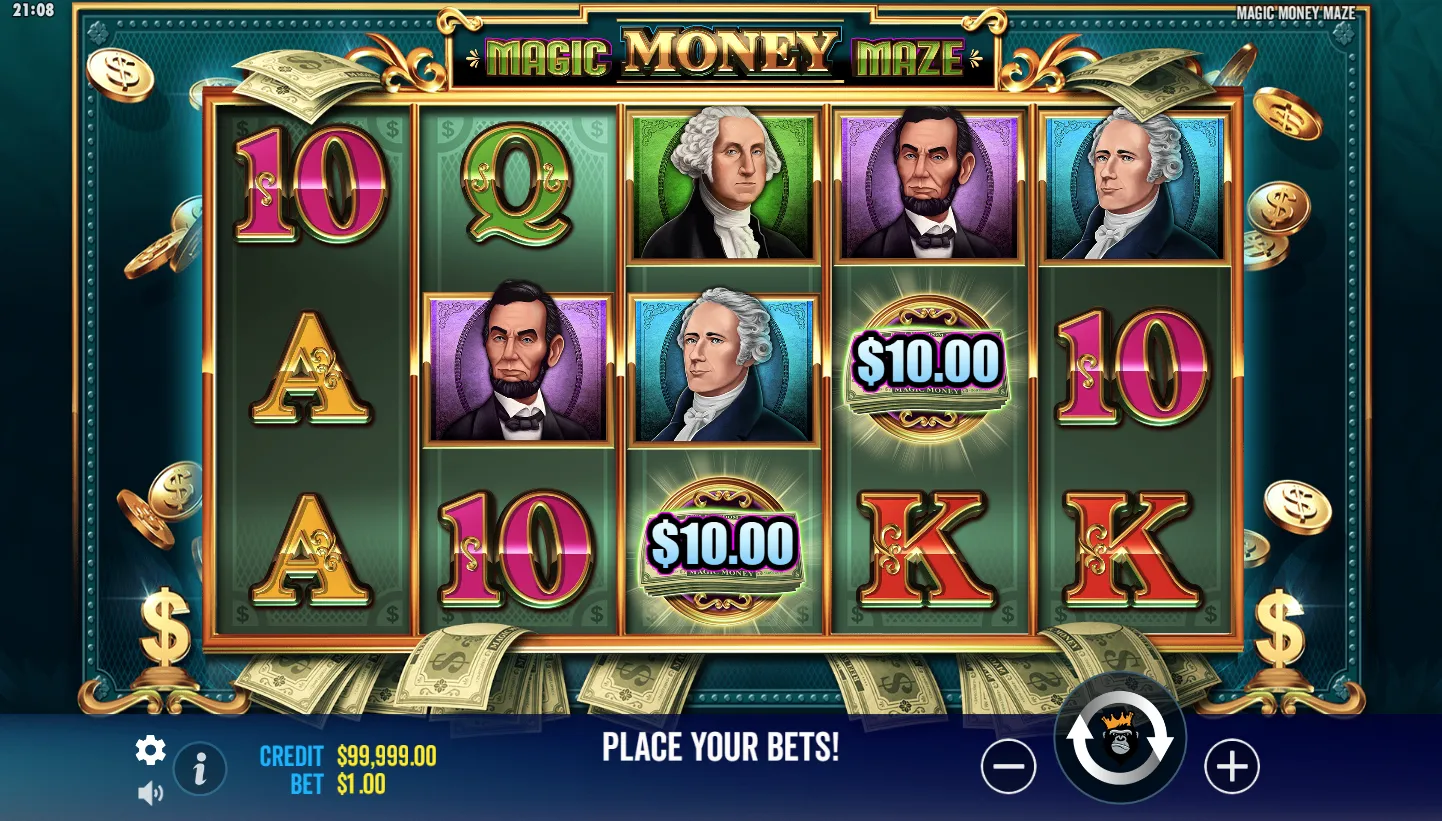
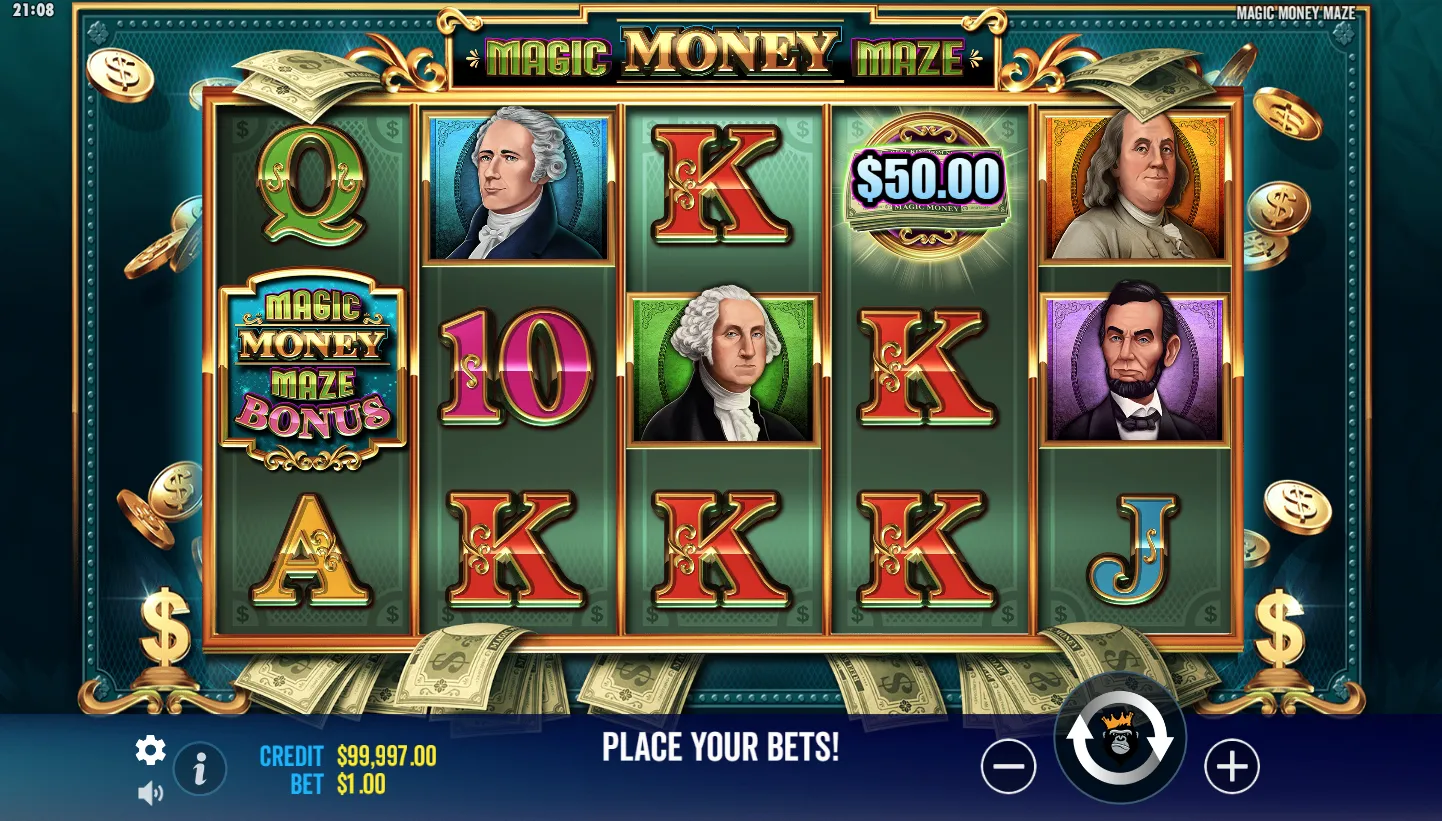
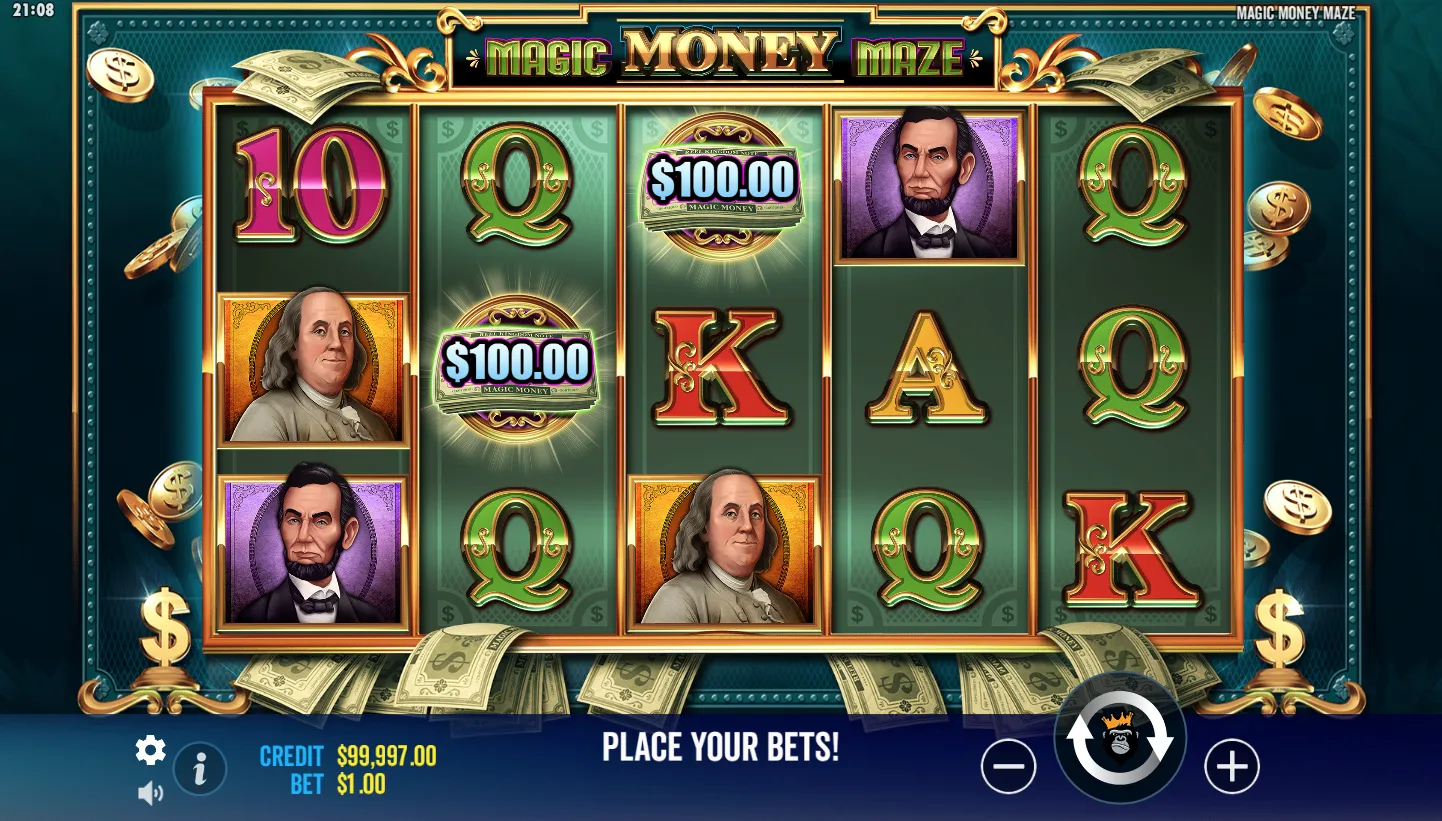
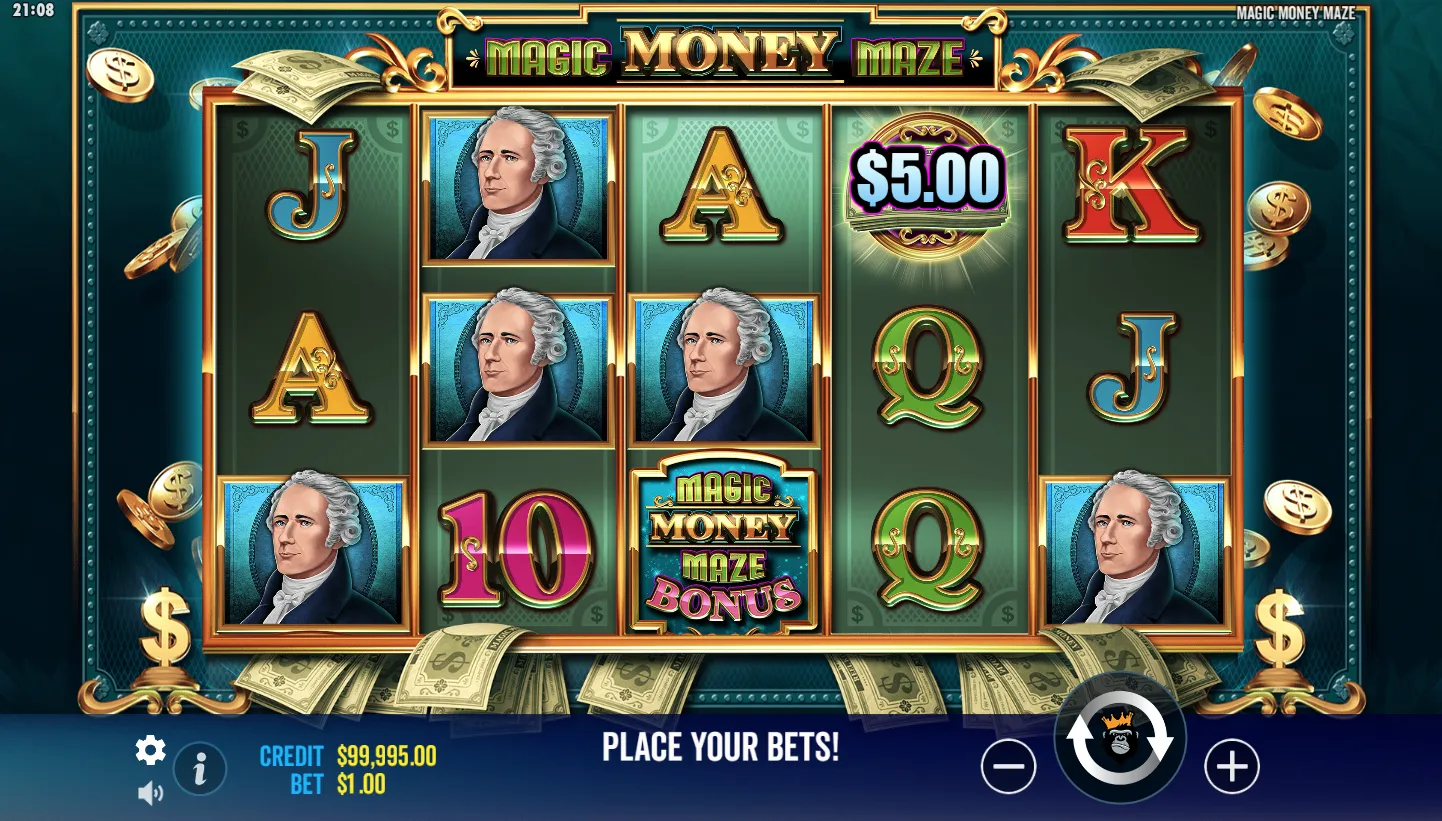
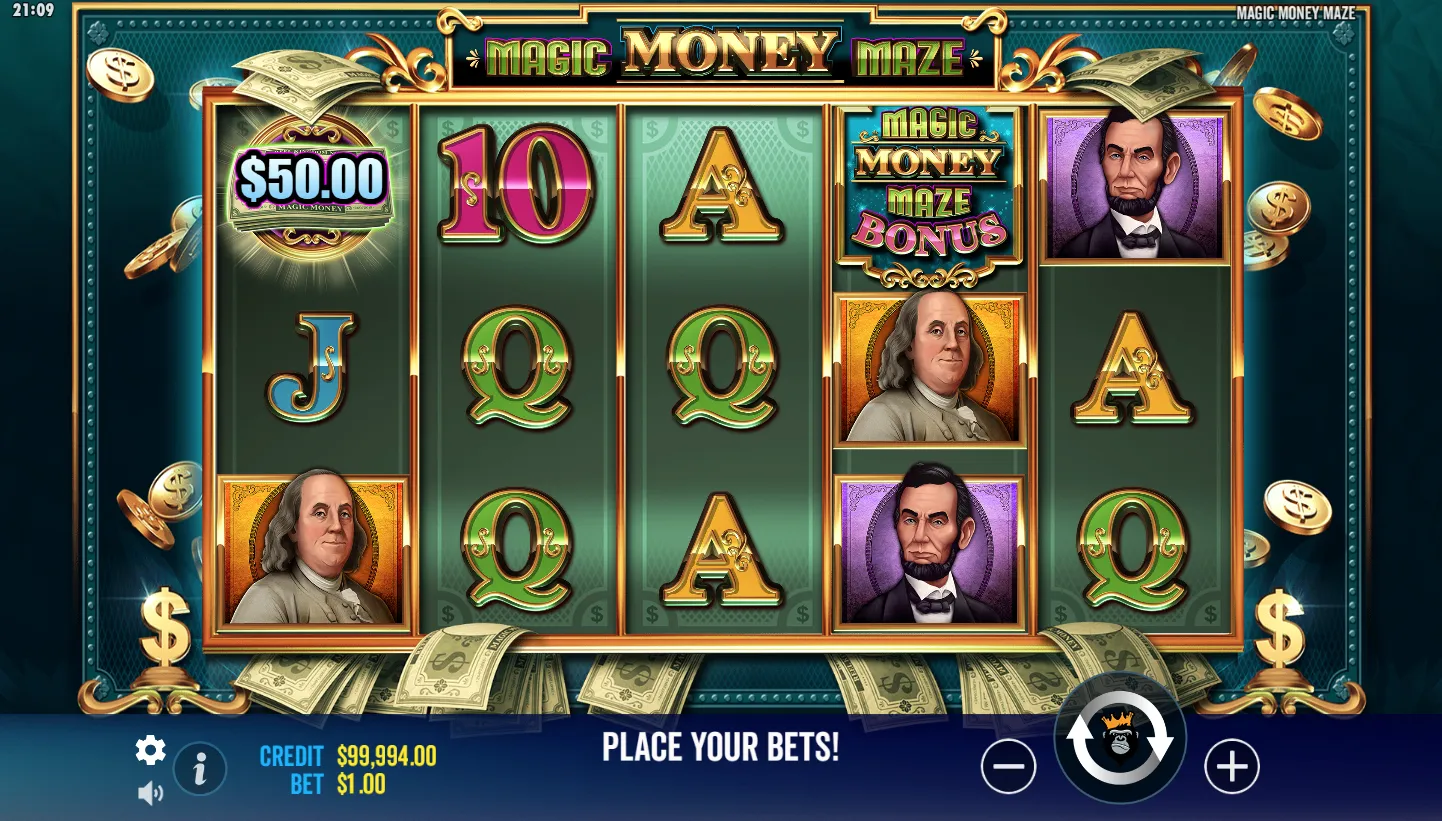
No wild appears on any of the forty reel strips, and the base game has no modifier. Lincoln tops the paytable at 200x for five, which is 2% of the cap. The fixed paytable cannot pass 2,000x even with all ten lines showing five Lincolns, which would need one symbol on all 15 positions, and that is a fifth of the cap. Three-of-a-kind pays are thinner still: I count five of the nine regular symbols paying the total bet or less for three, with the Queen, Jack and Ten at 0.5x.
The money symbol is where the reels could have been interesting and are not. Three pay a flat 3x and four a flat 15x whatever values are printed on them, so those numbers are decoration until five share a line and pay their sum. The bonus symbol pays nothing on its own. A base-game spin has one real job, landing bonus symbols, and since three of them buy a single life, it needs four or five.
The cap maths makes the same point from the other end. A 10,000x win at a chance of one in 1,937,046 is worth about 0.52 percentage points of return, so roughly 96.1 of the 96.61% comes from wins below the cap. A casino running the 95.51% setting removes 1.10 points, more than twice everything the cap contributes, so the return setting matters more to the average player than the max win does.
The 120x buy sells a random number of lives at one price
Buying the bonus costs 120x and returns the same 96.61% as ordinary play, so at that setting a buy costs about 4.07x the total bet on average, and its best case, the 10,000x cap, is about 83 times its own price. On those two numbers alone it is not a bad buy. The problem is what the 120x purchases. The triggering spin still lands three, four or five bonus symbols at random, so one fixed price covers a one-life round that a single snake ends and a four-life round with room to chase the portraits. With the whole purchase averaging 115.93x back, the four-life draws return more than that and the one-life draws less, and most bought rounds open on one or two lives. Nothing on the menu lets a buyer pay for the start that makes the round work.
The board is the only case for this game
It suits a player who wants a bonus round with a structure worth following and accepts a wild-less base game and rounds that end with little collected. That player gets the one thing Magic Money Maze does that its relatives do not: a hazard that costs time instead of money. Anyone who wants the reels to work between triggers should look elsewhere, because 200x on one line is the most a fixed symbol ever pays. The buy is the wrong tool for skipping to a well-stocked round, since its life count is still drawn at random from one, two or four, at 120x a draw.
I put it at 6.2 on that balance. The lives system is a real refinement of the dice board, and the portraits and the centre ladder are tuned against it with care. Everything outside the board is thin, and the one tool that could have let a player pay for a better start charges a flat price for a random one. Good ideas undermined by the frame and the maths around them belong in the low sixes, and that is where this one sits.