The Fist is the right idea inside the wrong numbers
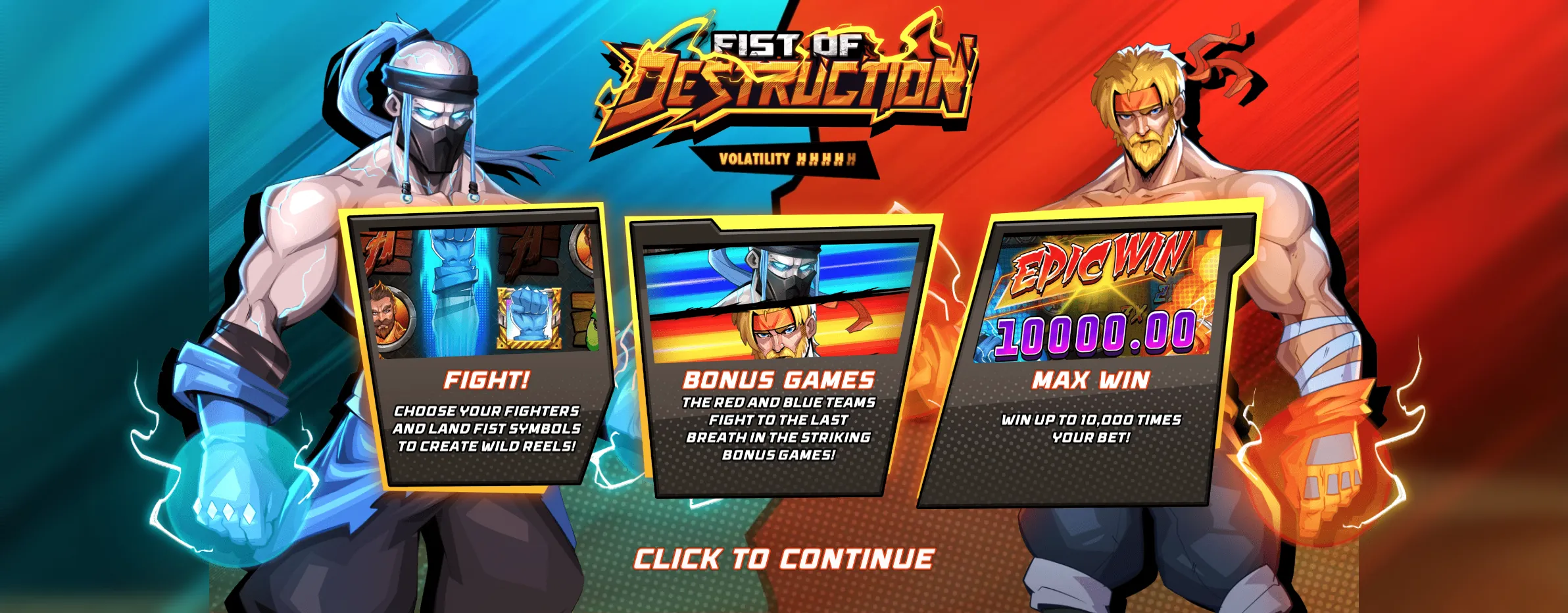
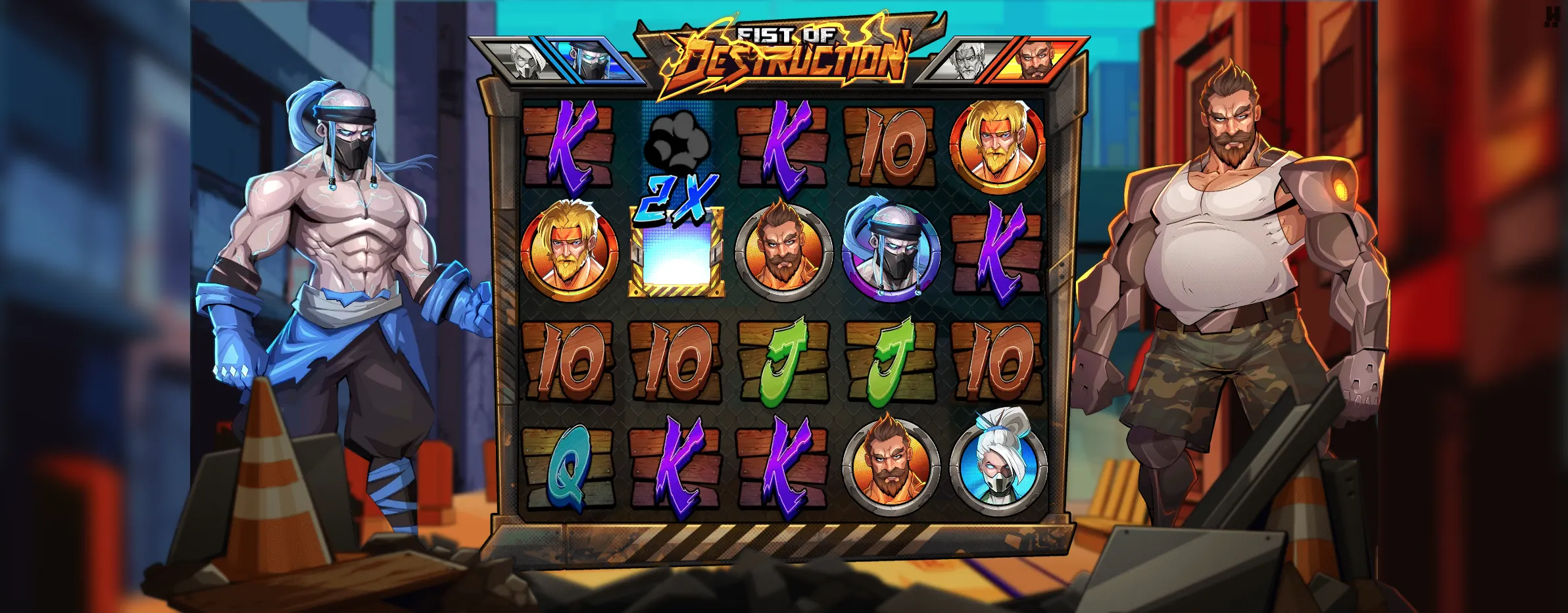
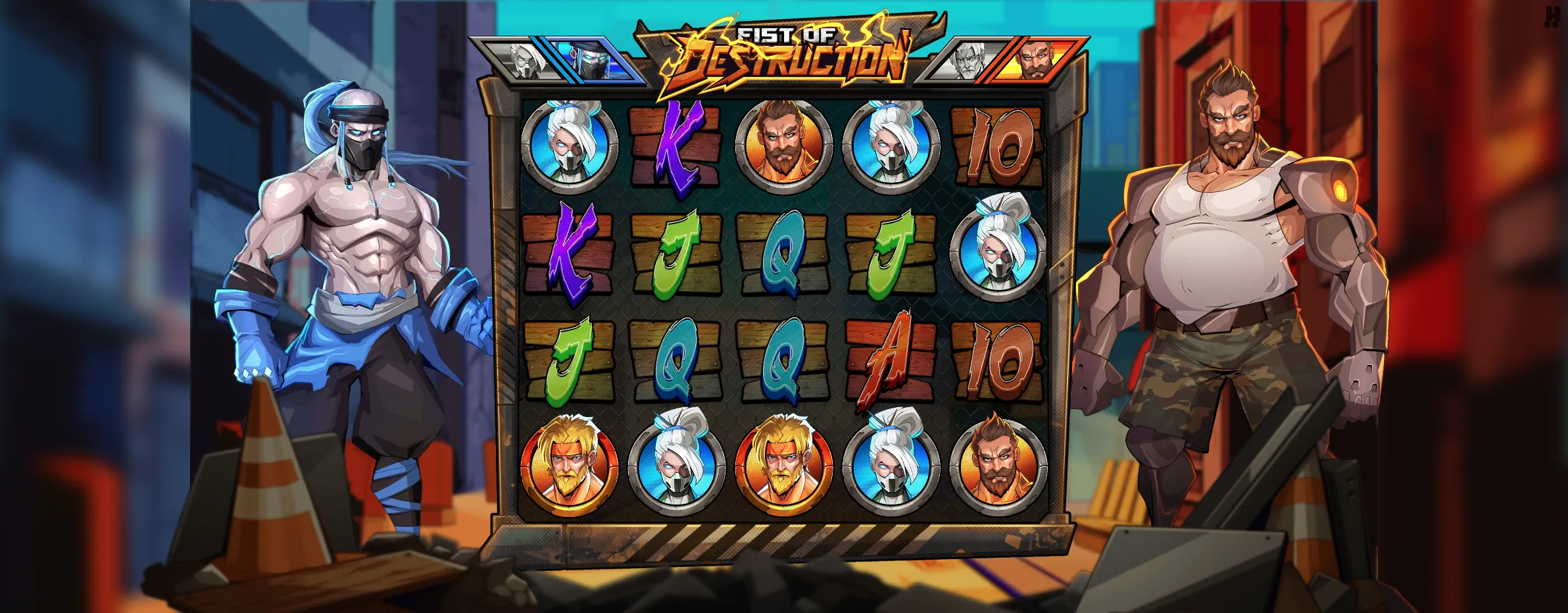
Fist of Destruction belongs to the same family as Wanted Dead Or A Wild: a small fixed-line grid where the big wins come from symbols that expand into Wild Reels with multipliers, the logic that also decides the big wins of Wild West Gold on its 5x4 board. Its own turn on that shape is a multiplier the reel has to earn. A Fist gains value only from the opposite-colour Fighters and Wilds it passes through on its way to the top of the reel, so its landing row and the colours above it decide what it is worth. That is a good idea, and it is why the game gets as far as 6.5. The numbers around the Fist waste it, and I can show where. The paytable gives each punch almost nothing to multiply, the multipliers add instead of compounding, and the 10,000x cap takes back everything a full board earns past a combined 72x. The big rungs of the multiplier ladder do their best work on thin boards, while the full board the game builds toward is clipped long before they matter.
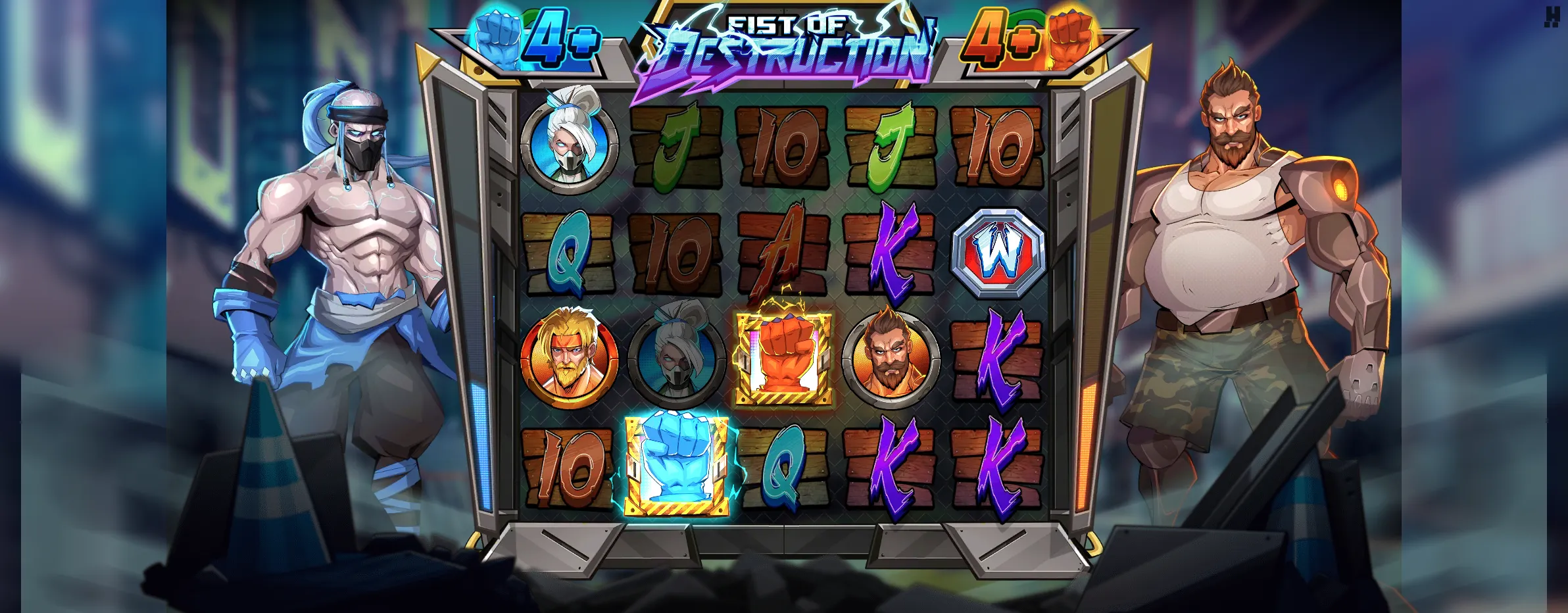
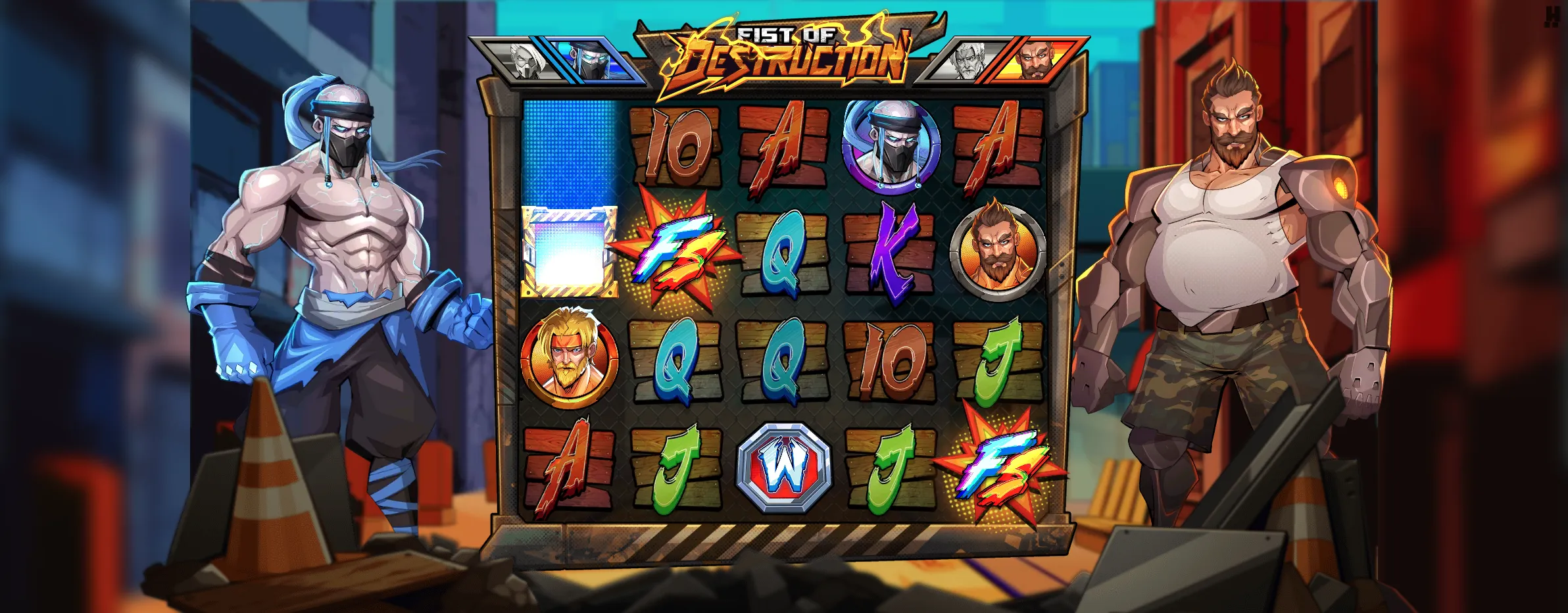
Where a Fist lands matters as much as whether it lands. It expands from its landing cell to the top of its reel, so a bottom-row Fist sweeps the three cells above it and can collect up to three punches, while a top-row Fist covers only its own cell and passes through nothing. That makes a top-row Fist a single Wild cell with no multiplier of its own. The reel matters too: wins run from the leftmost reel, so a Fist on the fifth reel fires only for five-symbol lines. And a Fist that would not complete a win stays inactive, so the whole mechanic depends on the rest of the board lining up behind it.
A spin without a multiplier cannot pass 140x
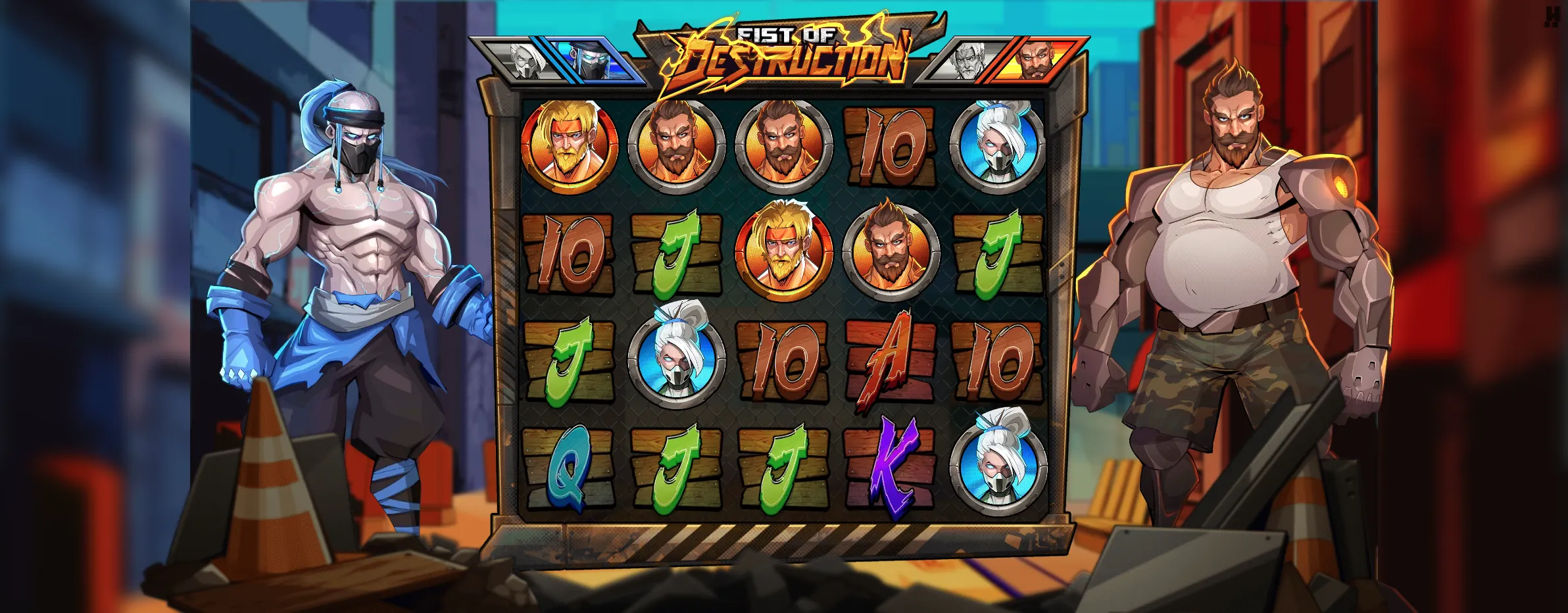
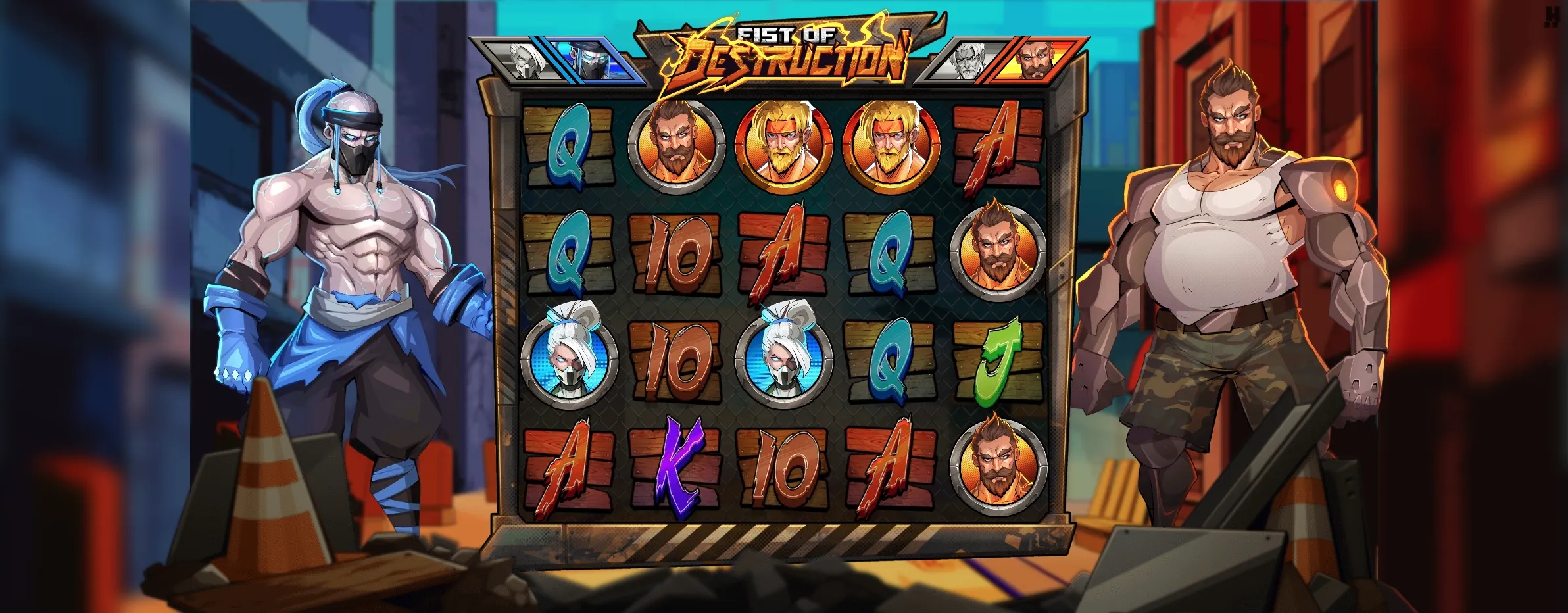
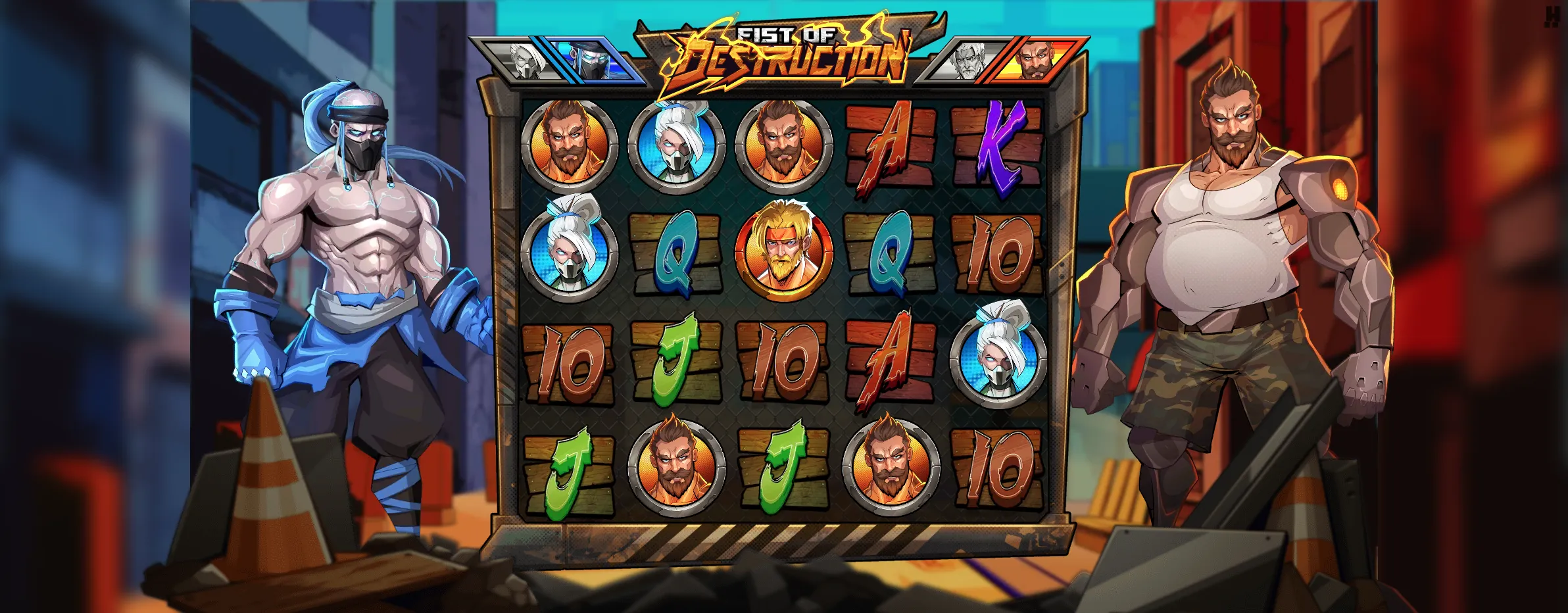
Five royals pay 2x. The two lower Fighters pay 5x for five, and the two top Fighters and the Wild pay 10x for five. Only the highest win on each line counts, so I put the ceiling of a spin with no Fist multiplier at 14 lines times 10x, or 140x, and reaching even that needs a 10x five-of-a-kind on every line. That ceiling is 1.4% of the cap. Everything between 140x and 10,000x is multiplier. 34% of spins win something, and the floor of that something is three royals at a tenth of the stake.
The multipliers do less with those lines than the ladder suggests, because they add. The ladder runs from 2x to 10x in single steps and then jumps through 15x, 20x, 25x, 50x, 100x and 200x. A 2x punch on three royals pays 0.2x. The top rung on the same line pays 20x. Two Fist reels at 10x each give a shared line 20x, not 100x, and three 5x punches on one reel make 15x, not 125x. Any single punch from the bottom nine rungs turns a three-royal line into 1x at most. The large figures come from pairing a big rung with a premium line: 200x on five top Fighters is 2,000x.
A full board hits the cap at 72x
Five bottom-row Fists turn all 20 cells Wild, so each of the 14 lines is five Wilds at 10x and the board pays 140x times the combined multiplier. At 71x that is 9,940x. At 72x it is 10,080x, which the cap cuts to 10,000x. The floor is already high: one 2x punch on each of the five reels adds to 10x and pays 1,400x. With at least one punch per reel, the whole payable range of a full board fits inside 62 points of combined multiplier.
Past that point the ladder is decoration. A combined 100x would compute to 14,000x and a combined 200x to 28,000x, and both pay 10,000x, the second discarding nearly two-thirds of what it earned. Five bottom-row Fists can collect up to 15 punches, so the ladder allows a combined figure as high as 3,000x, and on this board nothing above 72x is paid. The 50x, 100x and 200x rungs keep their full value on thinner boards instead: five 10x lines through a single 200x reel reach the cap exactly. The rungs that look like the game's headline are worth the most on the boards it is not built around.
Because the cap counts the whole round, a bonus that reaches it early ends at once and forfeits whatever free spins it had left.
The team race gives the bonus its shape, slowly
On the regular free spins, each punch earns the Fist's team a Victory Point, and three points win that team an Epic Drop respin with guaranteed Fists of its colour and raise it one Victory Level. I count the climb this way. The Throwdown starts both teams at 3+, so a team's first drop guarantees at least 3 Fists, its second at least 4, and only its third guarantees all five. That is nine punches from one colour before its five-Fist guarantee. The Ultimate Throwdown starts at 4+, so the five-Fist guarantee arrives on the second drop, after six. Fists that land in a respin do not count toward the Victory Level, so the climb happens on the 10 starting free spins and whatever FS symbols add: 2 spins for two, 4 for three.
This race is the best thing in the game. Each punch on a regular free spin moves a visible count toward a bigger respin, which gives the round an arc the base game lacks. The Choose Your Fighter picker is cosmetic, so choosing a team changes nothing. The cost of the arc is that it stacks conditions: a Fist has to land low enough to pass through something, that something has to be the other colour or a Wild, and the reel has to complete a win. A round in which neither team reaches three punches earns no Epic Drop at all. Five guaranteed Fists are not the 140x board either, since that board needs all five on the bottom row and every Fist still has to complete a win to fire.
Every buy returns the same, and the Ultimate buys the least
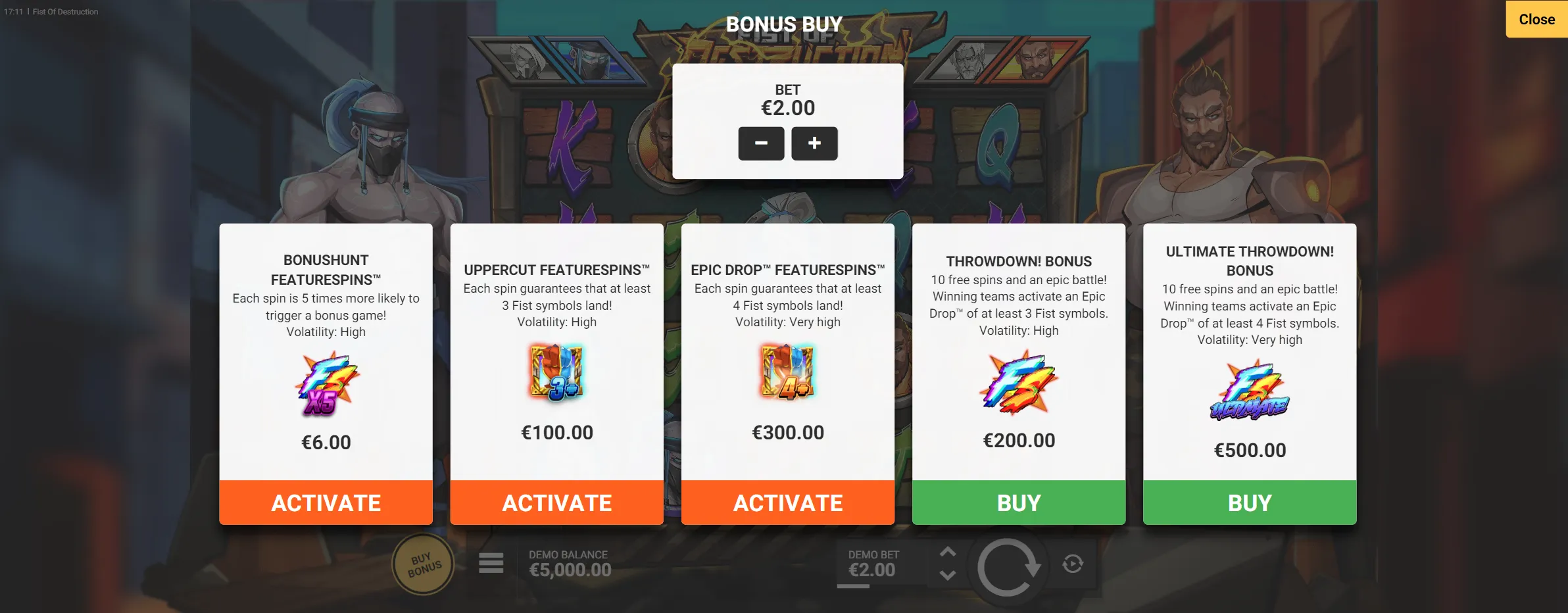
The five purchases return between 96.25% and 96.35%, a spread of 0.10 points, and none sits more than 0.05 points below the 96.30% top setting. None of them is a return penalty, so I rank them by the best case each can pay against its own price, under the same 10,000x cap:
- BonusHunt FeatureSpins cost 3x a spin for five times the bonus chance, and the cap is about 3,333 times that price.
- Uppercut FeatureSpins cost 50x for at least 3 Fists, a best case of 200 times the price.
- The Throwdown buy costs 100x, a best case of 100 times.
- Epic Drop FeatureSpins cost 150x for at least 4 Fists on one spin, a best case of about 67 times.
- The Ultimate Throwdown buy costs 250x, a best case of 40 times.
The Ultimate is the weakest price on the menu. Its extra 150x over the Throwdown buys each team a three-punch head start and 0.10 points of return, and it cuts the best case from 100 to 40 times the price. The Throwdown is the better of the two bonus buys. Uppercut guarantees Fists, not Wild Reels: a Fist that completes no win stays inactive and a top-row one covers a single cell, so 50x can land three Fists that add nothing. Epic Drop FeatureSpins charge one and a half Throwdowns for a single spin under the same cap. BonusHunt is the one purchase whose best case runs into the thousands of times its cost, because it raises the stake least.
The bigger choice is not on the menu. Casinos can run the game at 88.27%, and the house edge then rises from 3.70% to 11.73%, more than three times as much. The spread across the buy menu is 0.10 points; the spread across settings is 8.03. The rules screen shows the setting in use, and it matters more than any button on the buy menu.
The right player watches the board, not the ceiling
This game suits someone who enjoys reading each board: which row the Fist landed on, which colours stand above it, how close each team is to its next drop. It rewards that attention with a mechanic whose cause and effect sit in plain view on the grid. It does not suit anyone who wants multipliers that compound, a base game that pays on its own, or a ceiling that leaves a full board room to grow. The Fist and the race are real ideas, and the paytable and the cap spend them badly. That is good design held back by its maths, and 6.5 is where I put it.