The 7.5x top pay is a rate, not a prize
Every value in the Buffalo King paytable is paid per way, which makes the 7.5x for six buffalo a rate rather than a prize. I read the game as a counting exercise: how many ways a board makes, and what each of them is multiplied by. The base game grows its count with stacked buffalo and plain wilds, and its perfect board, all 4,096 ways paying six buffalo, comes to 30,720x, under a third of the 93,750x cap. The free spins grow the count with wilds that multiply, and there one wild can outweigh a full reel of buffalo. The gap between those two engines is the shape of the whole game: one strong feature in a thin frame, which is what a 7.2 should describe.
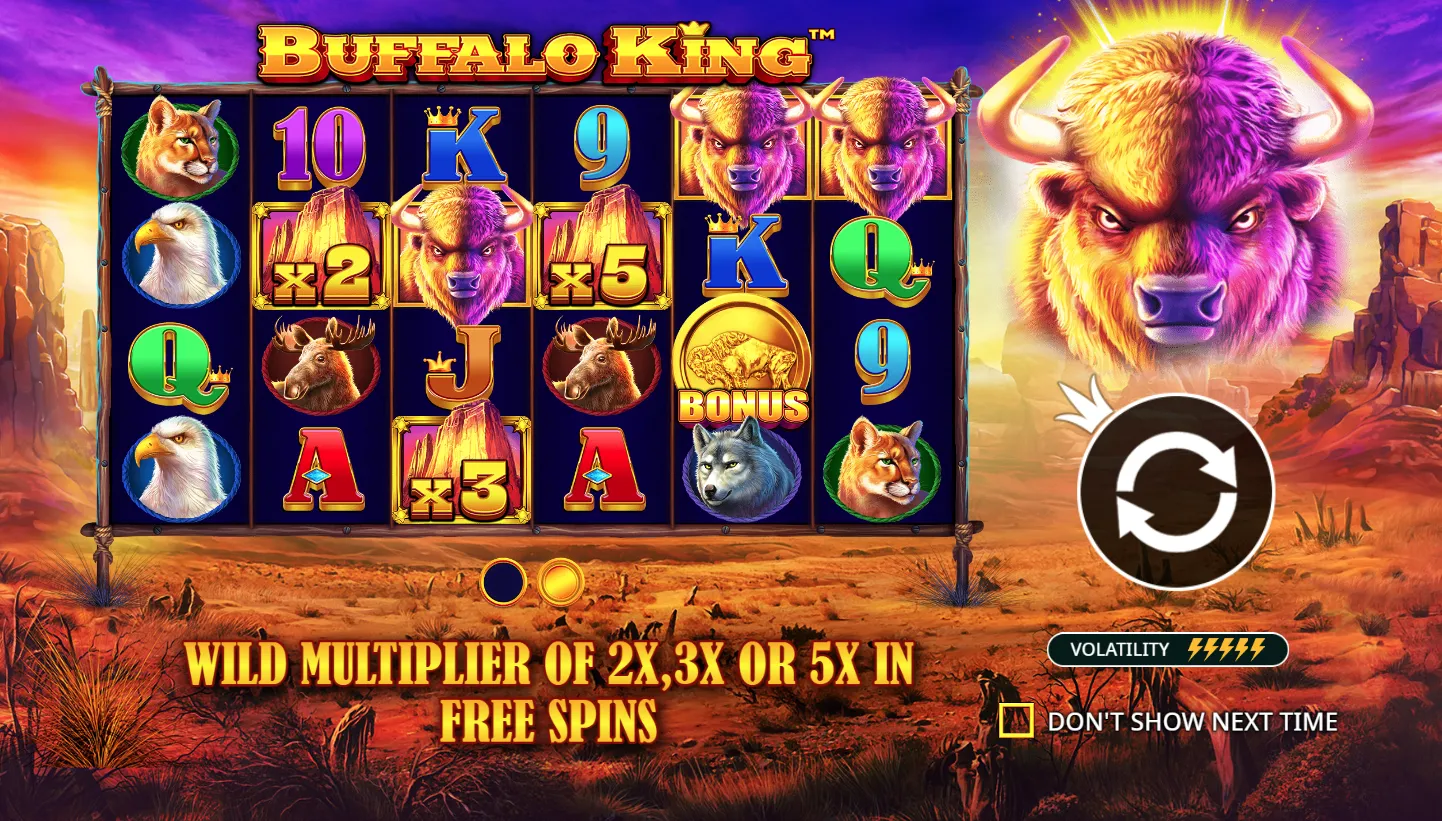
Two relatives help place it. Wild West Gold also gives its free spins wilds random multipliers up to 5x, and Buffalo King Megaways shares the six reels, the left-to-right ways and the scatter-led free spins. What this game rests on is a fixed grid: four rows on every reel, 4,096 ways on every spin, and so a hard limit of four on what reel 1 can add to any count. Beside Wild West Gold, the question is what a ways grid does to a multiplied wild. It multiplies every winning way that runs through its cell, and a way through several wilds multiplies again. That combination, not the paytable, is where this game's ceiling comes from.
A flat paytable leaves the base game waiting on stacks
The table is flatter than its top line suggests. Six buffalo pay 7.5x a way and six eagles or cougars pay 6.25x, so the top symbol earns only 20% more than the next pair at full length, and five buffalo pay exactly what six eagles do. Lower down, I count six of the eleven paying symbols returning less than the stake for three of a kind, four of them just 0.25x. The buffalo's real advantage is not in the table at all. It is the stack: a reel filled with buffalo puts all four of its rows into buffalo ways and multiplies them by four.
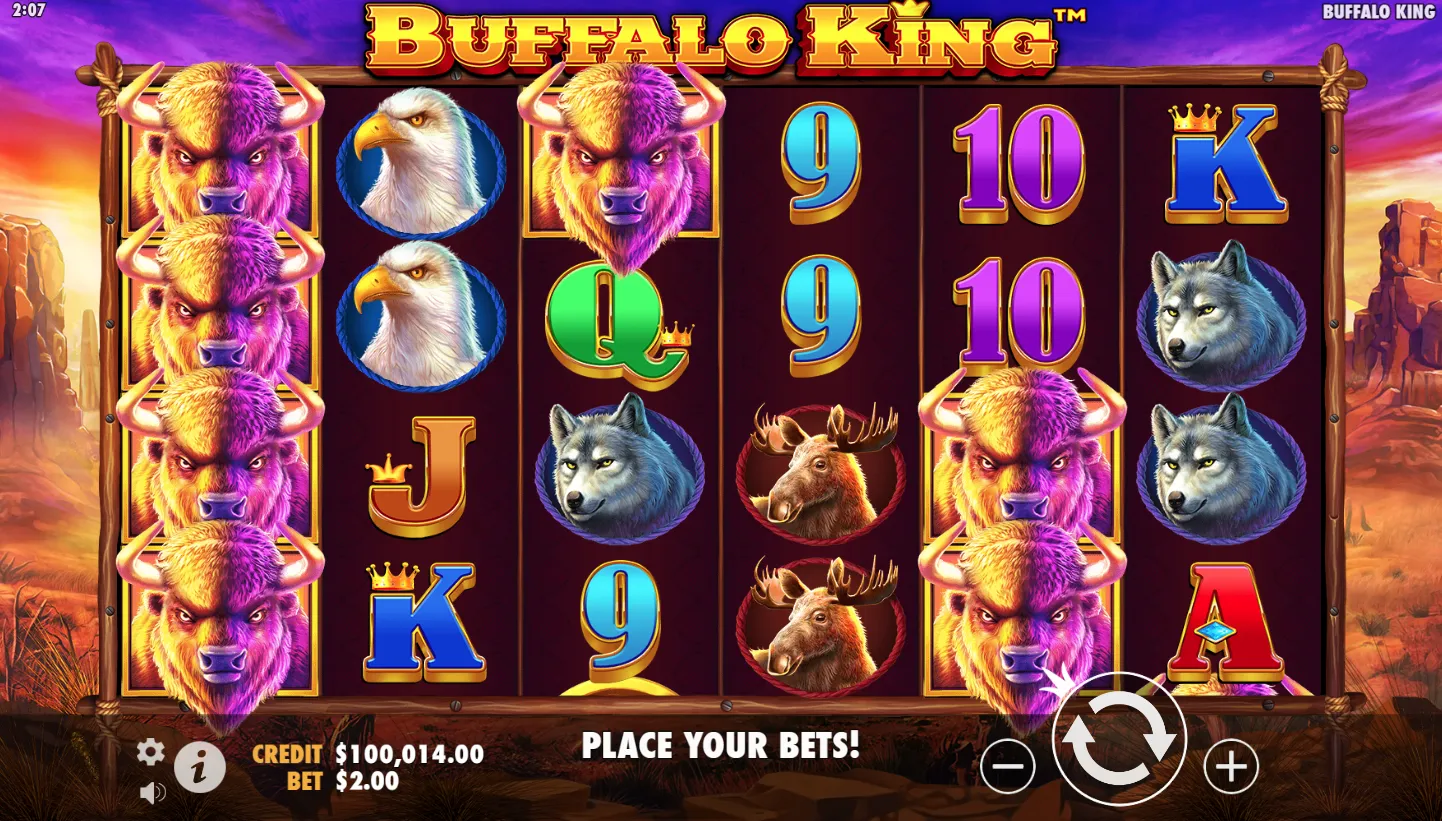
Counting that ladder with full reels from the left, and nothing matching after them, shows how steep it is. Three full reels make 64 ways at 2x, or 128x. Four make 256 ways at 5x, or 1,280x. Five make 1,024 ways at 6.25x, or 6,400x. All six make 4,096 ways at 7.5x, or 30,720x. No base-game spin pays more than that, because no base-game way pays more than 7.5x and there are 4,096 of them.
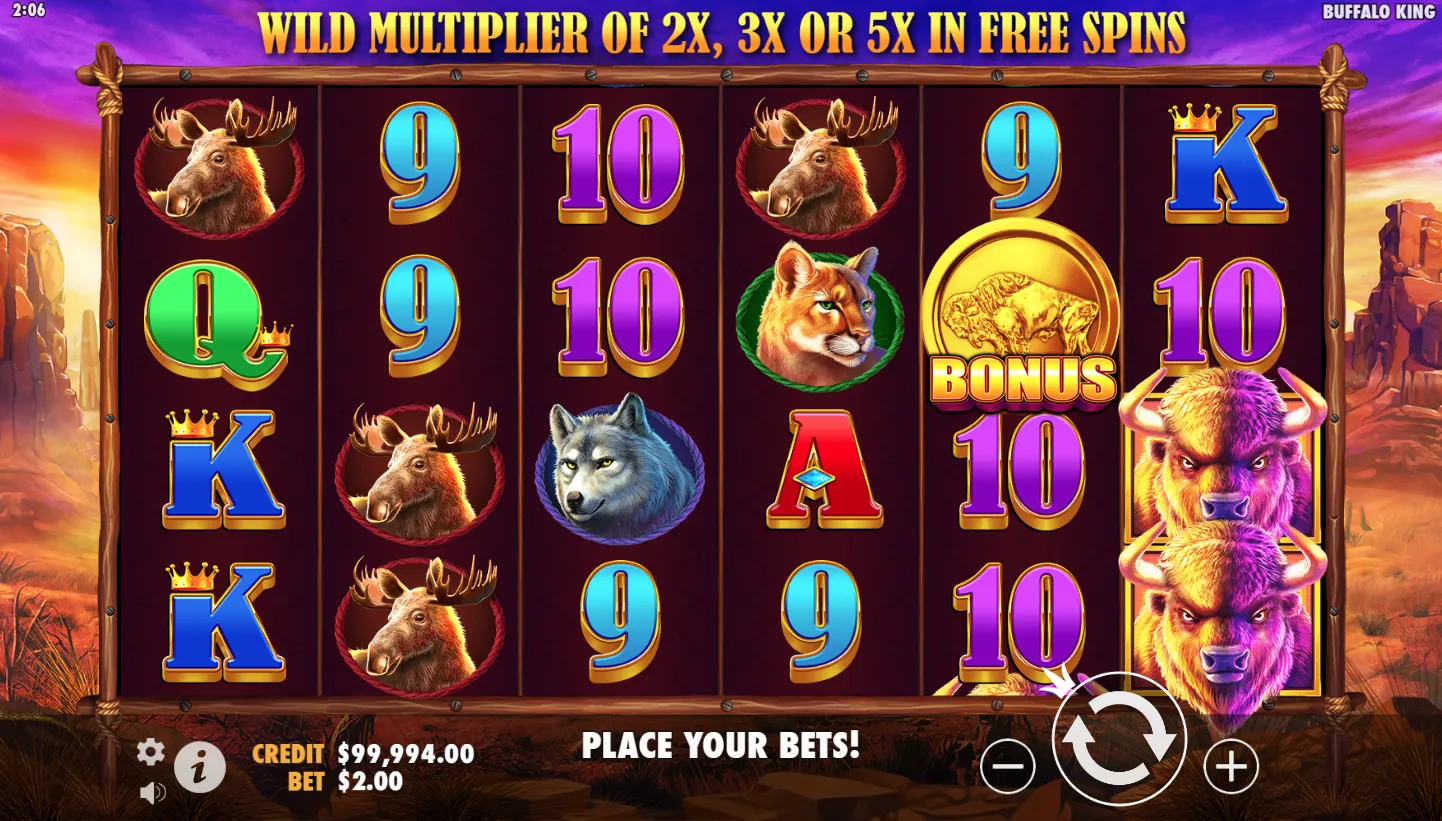
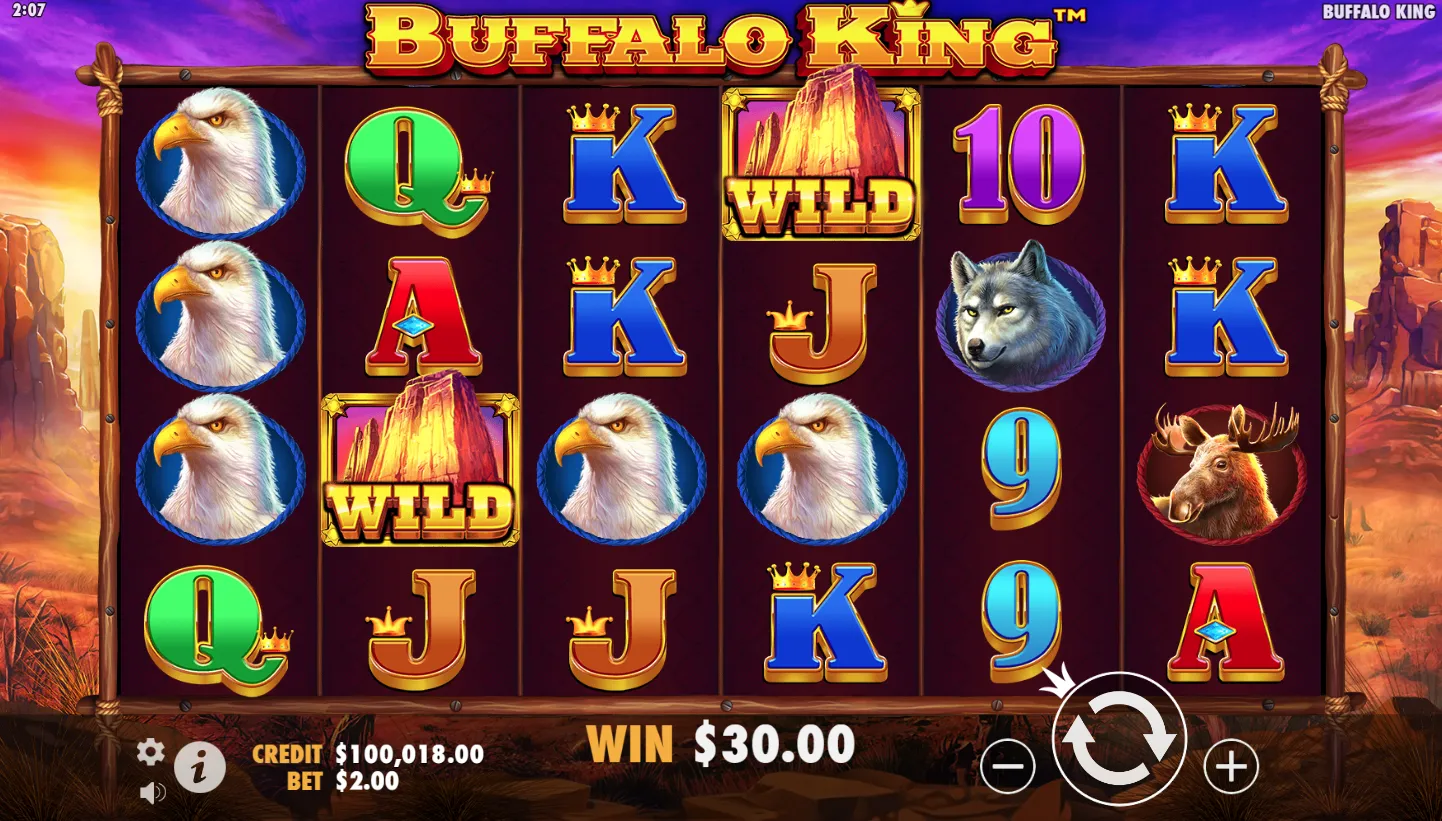
Away from the stacks the numbers shrink fast. Base-game wilds land on reels 2 to 6 and have no multiplier, so a wild adds one row to its reel's count and nothing else. Reel 1 takes no wild in either phase, which makes it the gate for every win: each way has to start on a paying symbol there. A buffalo on each of the six reels with nothing stacked is one way worth 7.5x, and the best three-of-a-kind in the table pays 2x. That is a thin frame. Its value sits in one symbol stacking across consecutive reels from reel 1, and a spin that misses it is paid from a table where most symbols return less than the stake for three of a kind.
In free spins, one 5x wild outweighs a full buffalo stack
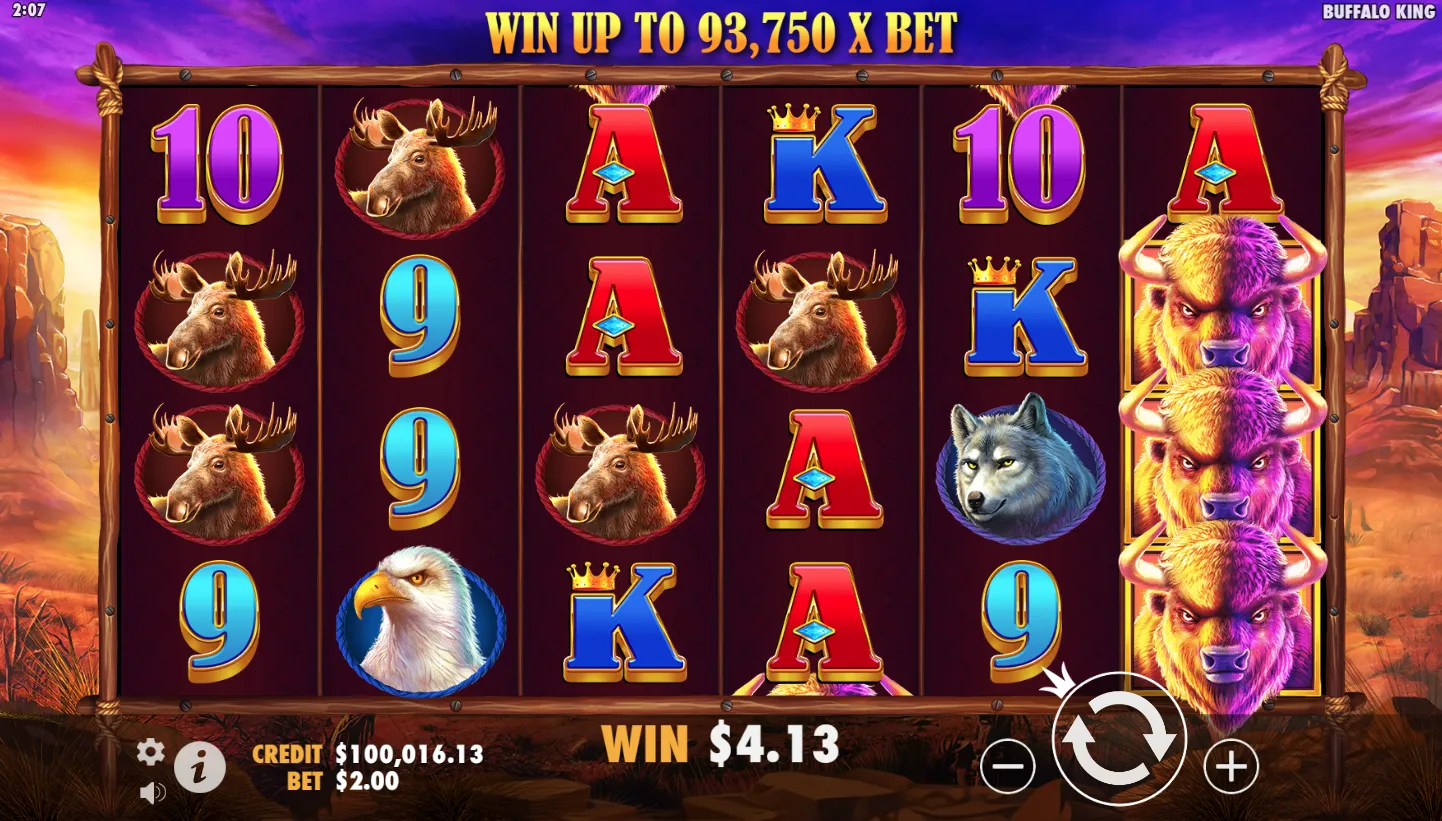
The round changes the counting rule. Each wild that lands draws a 2x, 3x or 5x multiplier, and a way through several wilds pays their product. Summed across the board, a reel's contribution to the buffalo count stops being the number of buffalo on it: a buffalo still counts one, and a wild counts its multiplier. A 2x wild is worth two rows of buffalo, a 3x wild three, and a 5x wild on one row is worth more than a full four-high stack before it adds anything to the other symbols' ways. Per cell, the wild is the stronger engine by a factor of two to five, and the free spins are built on it.
The cap shows how fast that compounds. By my arithmetic, two very different boards land exactly on 93,750x. The first is the extreme case: four six-buffalo ways, each through five 5x wilds, pay 7.5 × 3,125 = 23,437.5x apiece and 93,750x together. The second needs only the weakest multiplier. Take the base game's perfect 30,720x board and swap one buffalo on each of reels 2 to 6 for a 2x wild. Each of those reels now counts five instead of four, the board is worth 4 × 5 × 5 × 5 × 5 × 5 × 7.5, and the answer is 93,750x again.
That second board matters more for judging the round. The cap is not reserved for five 5x wilds on one way: five 2x wilds on an otherwise buffalo board reach it, and any bigger board is cut back to it. From there the cap, not the paytable, sets the ceiling, and reaching it ends the round on the spot with any remaining spins forfeited. The cap is just over three times the base game's best board, and a multiplied wild is the only thing that lets a single spin pay more than 30,720x.
Nothing carries over, so spin count is the round's real multiplier
Every free spins wild draws its multiplier for one spin, and nothing passes to the next. That rules out a round that builds toward a finish, and it makes the value of a round plain arithmetic: the cap aside, it is its number of spins times what an average free spin pays. Each extra spin is one more fresh draw.
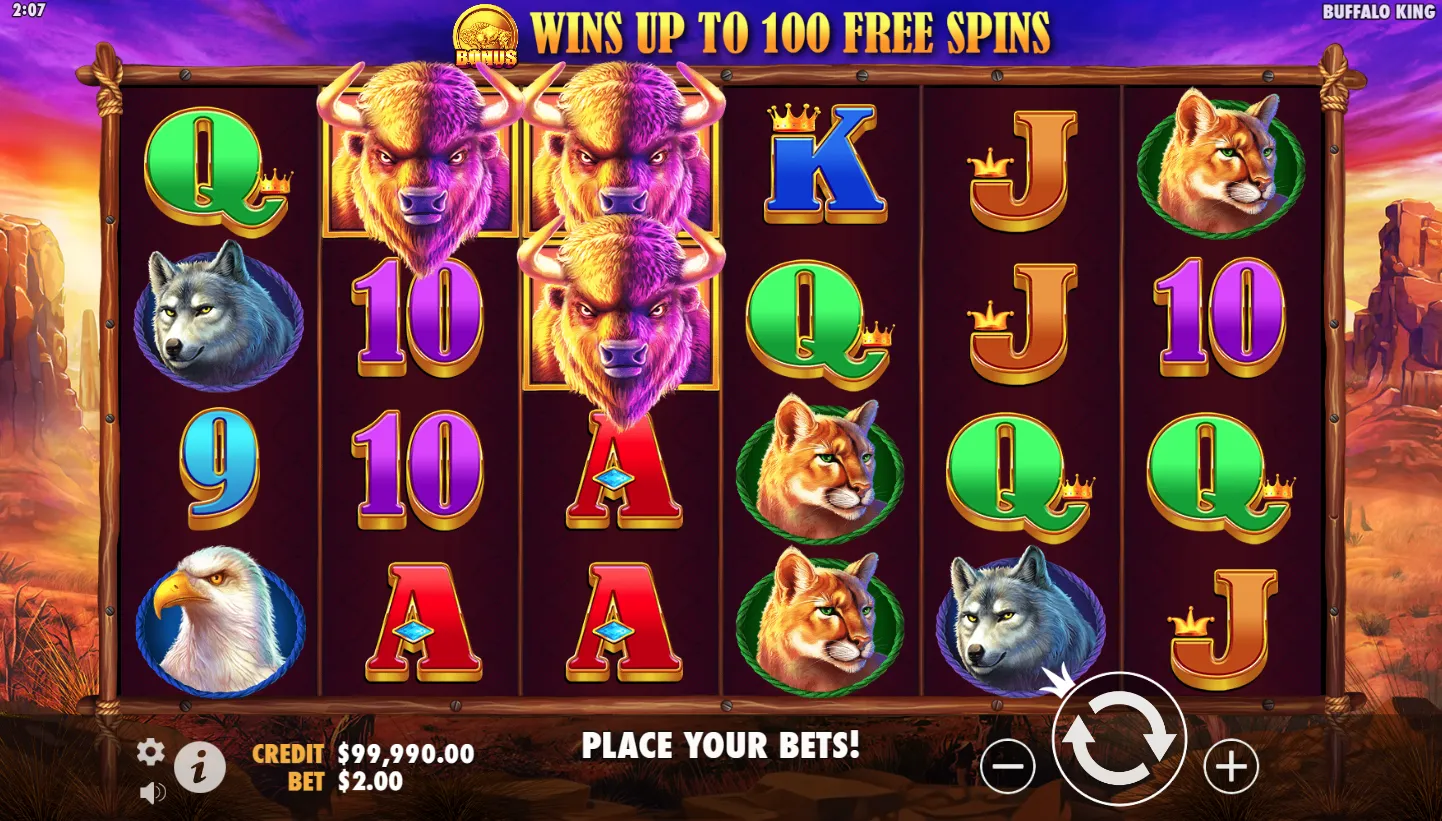
Length is therefore the lever, and the ladder is steep. Three BONUS symbols give 8 spins, four give 15, five give 25 and six give 100, so the top rung holds 12.5 times as many draws as the bottom one. During the round two BONUS symbols add 5 spins, one fewer than the base-game trigger needs, and three to six add 8, 15, 25 and 100. I count that lower retrigger bar as the other half of what makes the round good: an eight-spin opening has an easier route to becoming a longer round, and length is what its value scales with.
The 75x buy is where this bites. The price is fixed, the starting award is random, and it can be the eight-spin minimum. Before retriggers, an eight-spin round has to average 9.375x a spin to return 75x, while a 15-spin round needs 5x a spin, so one price buys break-even bars nearly a factor of two apart, with no say over which. In single-way terms, 75x is ten six-buffalo ways at the base rate, or exactly one six-buffalo way through a 2x and a 5x wild. The best case, capped at 93,750x, is 1,250 times the cost. That ceiling makes 75x defensible. The random award makes it a blunt purchase: it skips the base game but buys a draw on length rather than length itself.
The round is the reason to play, and the base game is its cost
The stake runs from 0.4 to 60, and the buy can cost more than the maximum bet: at the top stake it is 4,500. At that level the return setting deserves as much attention as the buy. At 96.06% the house edge is 3.94%, an expected cost of about 2.36 on each spin at 60. At the lowest setting of 92.08% it is 7.92%, about 4.75 a spin, so the edge roughly doubles. Casinos can also run 95.53% or 94.55%, and the rules screen shows the setting in use.
Buffalo King suits a player who wants the free spins to be the whole event, accepts a base game whose value depends on stacks, and is content with multipliers that reset every spin rather than build. A player who wants the base game to pay its way between rounds, or a round that grows as it runs, is better served elsewhere, because base-game wilds never multiply and nothing in the round passes from one spin to the next. Multiplying wilds and a two-symbol retrigger earn the score. A flat paytable, plain base-game wilds and a buy that cannot choose its award hold it at 7.2.