What pays in this game is what stays on the grid
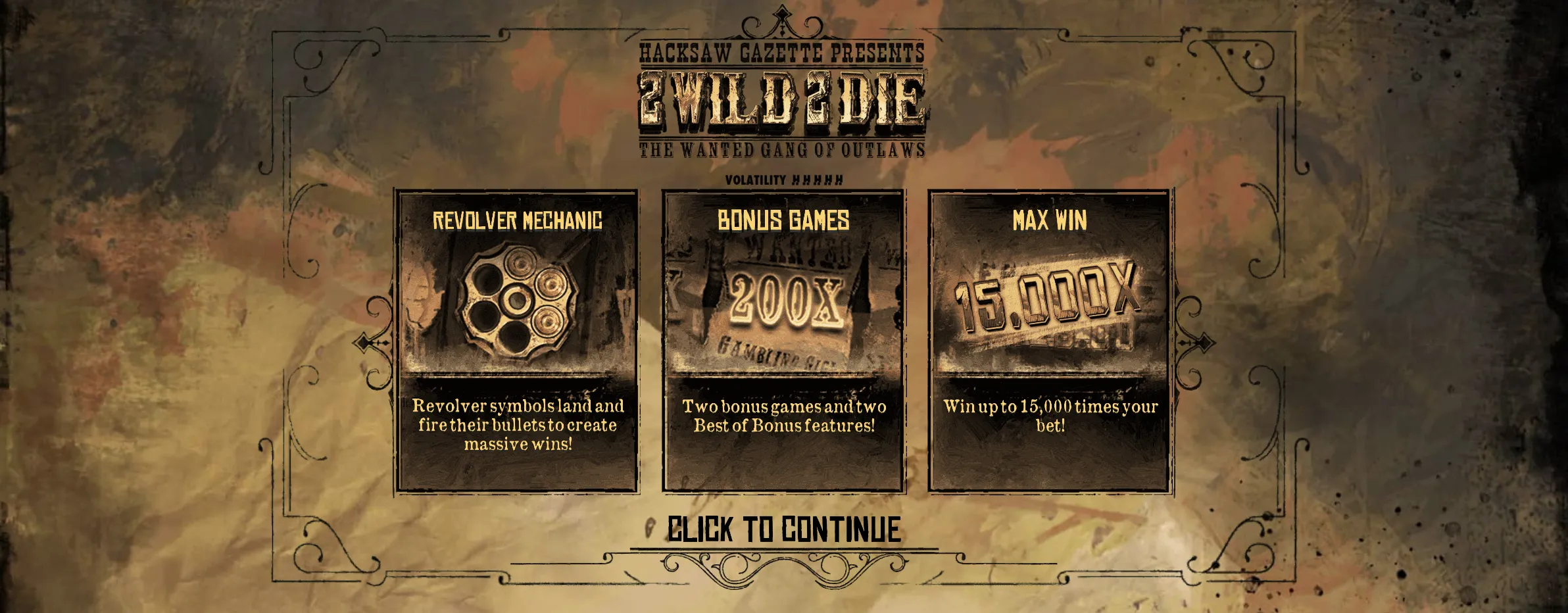
I read 2 Wild 2 Die as a game about keeping things. Its Wild multipliers add rather than multiply, so a line is worth the sum of the multipliers on it, and the 15,000x cap works out to 1,000x of multiplier piled onto top-paying lines. The base game keeps nothing from one spin to the next. Both bonuses are built to keep something: Shootin' Wild holds every Wild Multiplier until the free spins end, and Most Wanted locks Revolver totals on the grid and lets later arrivals add to them. At the default setting the buy menu returns more than a base spin at every price. That is the 7.4: two good ways to accumulate, sold fairly, on a frame that does very little alone.
Shootin' Wild is a familiar format, and Most Wanted is the reason to pick this game
The reel half of the game has close neighbours. Wild West Gold is a western on the same 5x4 payline shape whose free spins keep Wild multipliers sticky until the round ends, which is the Shootin' Wild idea exactly. Hacksaw's own Wanted Dead Or A Wild is another fixed-payline western that gets its big wins from Wild multipliers. What this game adds on the reels is the delivery: Revolvers fire one to six bullets at random cells, a Silver bullet needs a repeat hit on a cell before a multiplier appears, and a Golden bullet makes a Wild Multiplier at once. That is a tidy refinement, not a new idea.
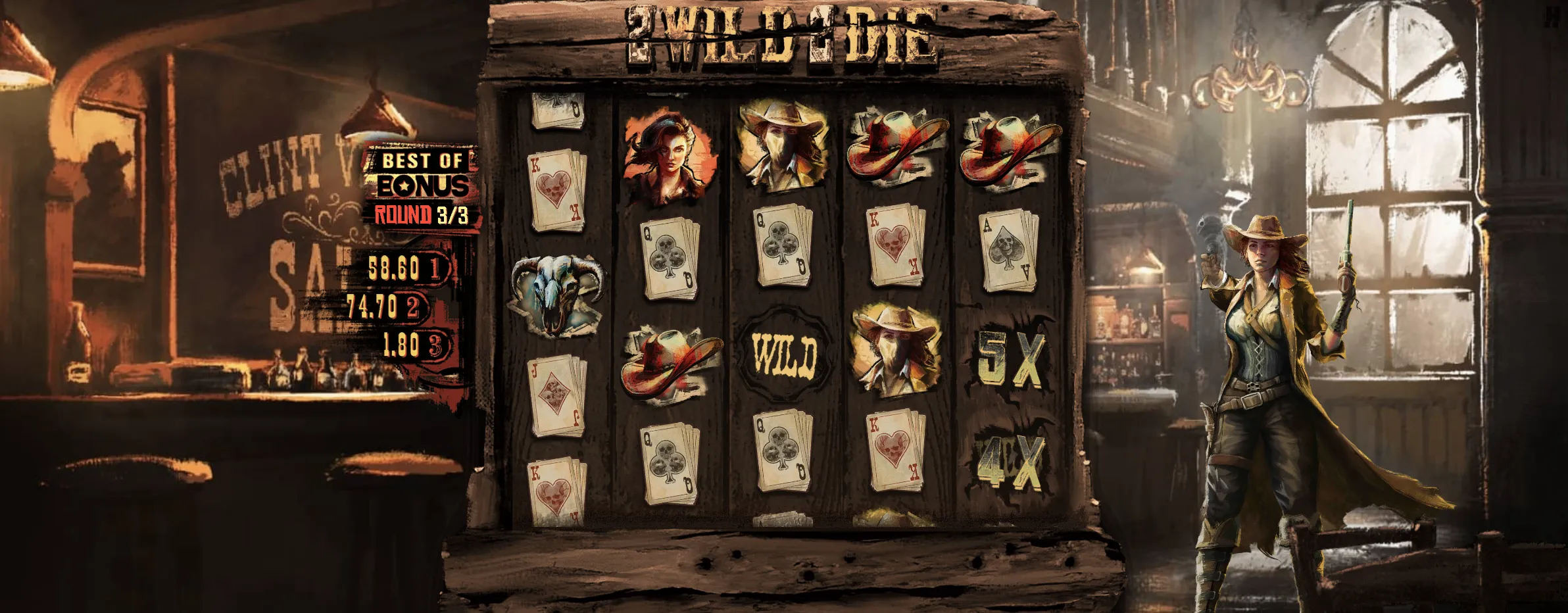
Most Wanted is where it becomes its own game. The lines disappear, the Revolvers shoot six Wanted Posters, and each Silver Revolver locks its total on its cell. I would choose 2 Wild 2 Die over its western neighbours for that round, not for its free spins.
A line can only add, so the cap is a count
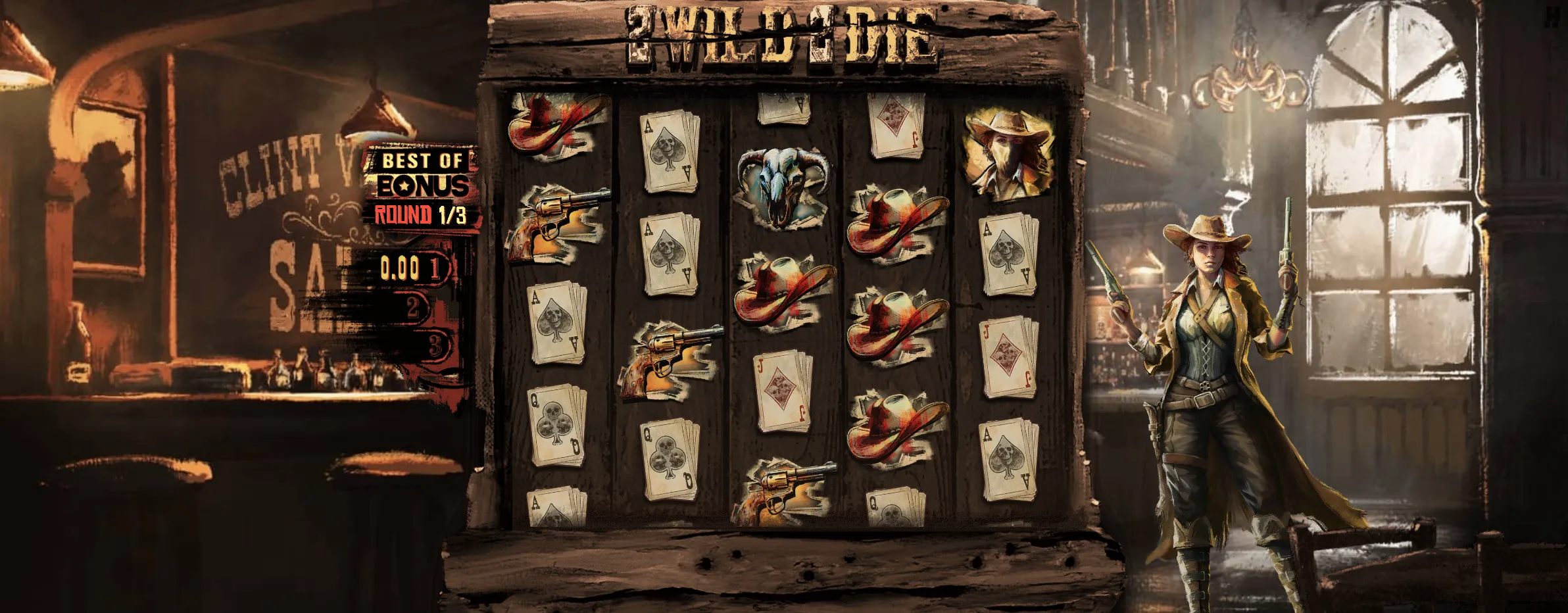
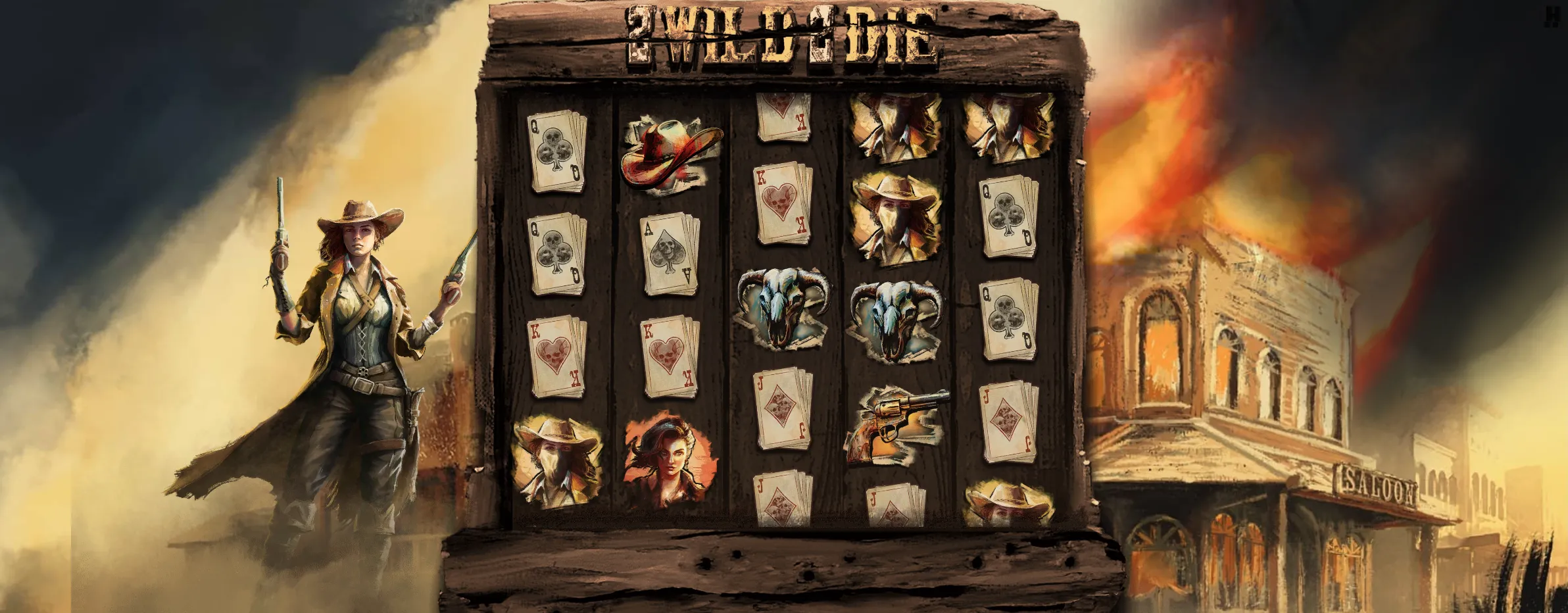
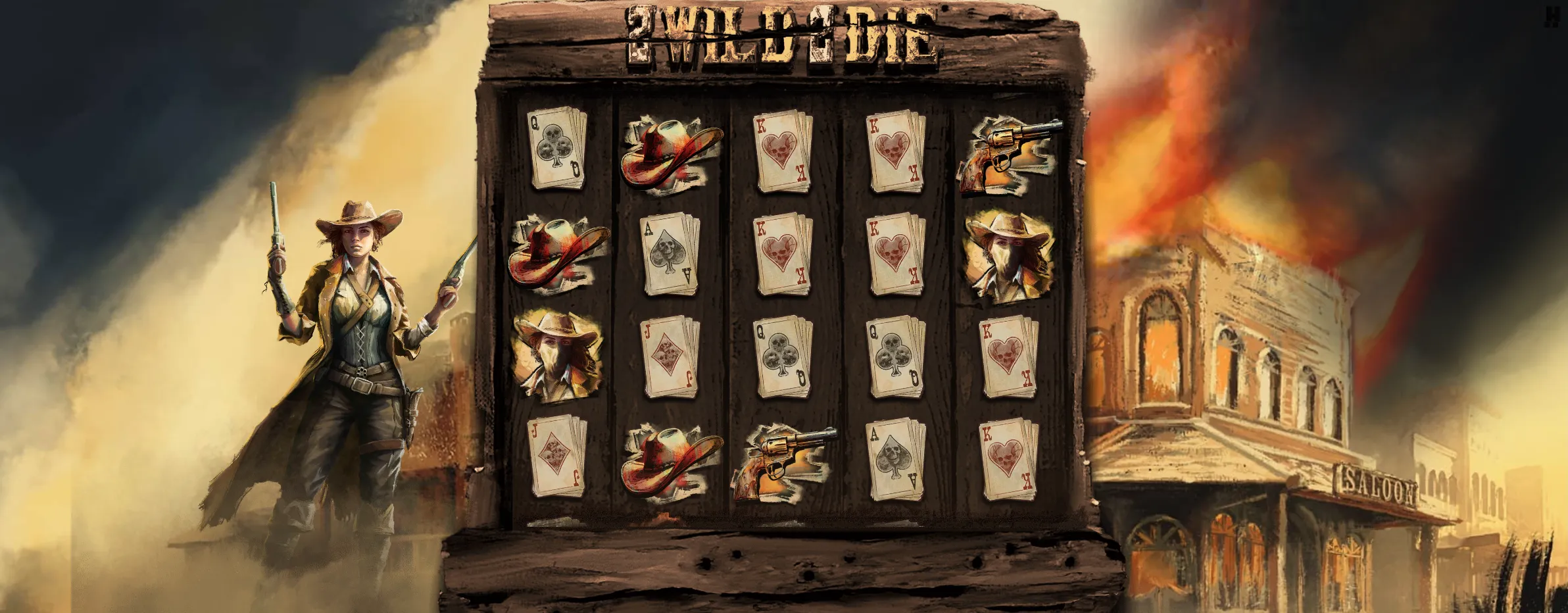
Without a Revolver the paytable is short. The two outlaws pay 15x for five, the other three high symbols 10x, and the four card symbols 0.2x for three, a fifth of the stake. If all 14 lines paid the top 15x at once, the spin would return 210x, which is 1.4% of the 15,000x cap. Base rounds return a win 25.32% of the time at the default setting, so close to three in four pay nothing.
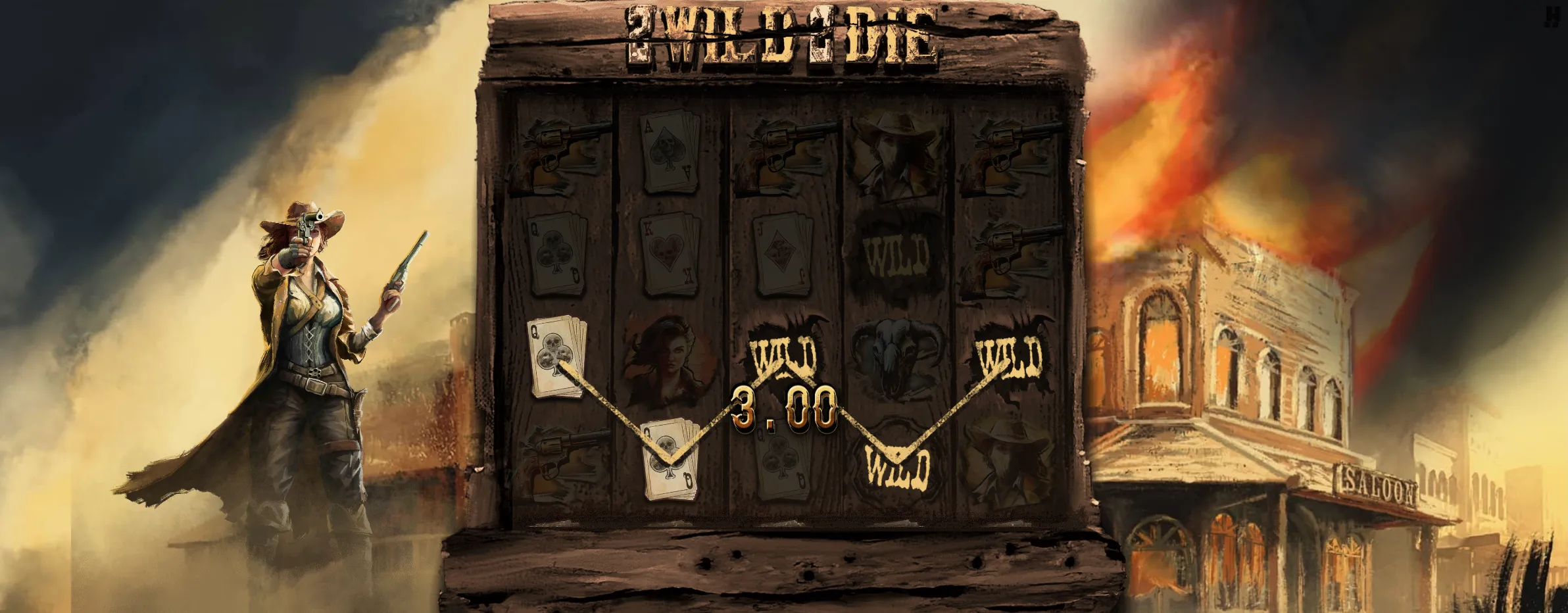
Multipliers cover the other 98.6% of the distance, and the additive rule decides how. Two 200x Wilds on one line make a 400x line multiplier, not a 40,000x one. The cap is exactly 1,000 times the 15x top pay, so on top-paying lines the multipliers, each counted once per paying line it sits on, must add up to 1,000x. Five 200x Wilds on one line do it precisely: five Wilds pay 15x, and 15x times 1,000x is 15,000x. That is also the most any single line can reach, since a line has five cells and no multiplier goes above 200x. One 200x Wild gets there too if it sits in the middle two rows of reel 2 or reel 4, where each cell crosses 5 of the 14 lines, and all five of those lines pay 15x. Where a bullet lands matters as much as the value it brings.
In the base game all of that has to happen inside one spin, because Revolver Wilds last only for the spin there. A 200x Wild completing five outlaws on one line pays 3,000x, a fifth of the cap, and it is gone on the next spin. The cap is open in every mode, the base game included, and the chance of reaching it is 1 in 6,000,000 spins at the default setting. Weighted by that chance, the cap is worth 15,000 divided by 6,000,000, or 0.25 of the 96.25 points of return. The other 96 points come from wins below it, and that is where this game is judged.
Shootin' Wild is front-loaded by construction
The free spins keep the base-game rules and change one thing: any Wild with a multiplier stays on its cell until the round ends. Over ten starting spins, a Wild Multiplier from the first spin counts on all ten, and one from the tenth counts once unless more spins are added. Retriggers pull the other way. Two FS scatters add 2 spins and three add 4, and each added spin gives every sticky multiplier already on the grid one more spin to count, so a retrigger is worth most when the grid is already crowded. A crowded grid is how this round climbs toward the cap, and if it gets there the round stops at 15,000x with any remaining spins forfeited.
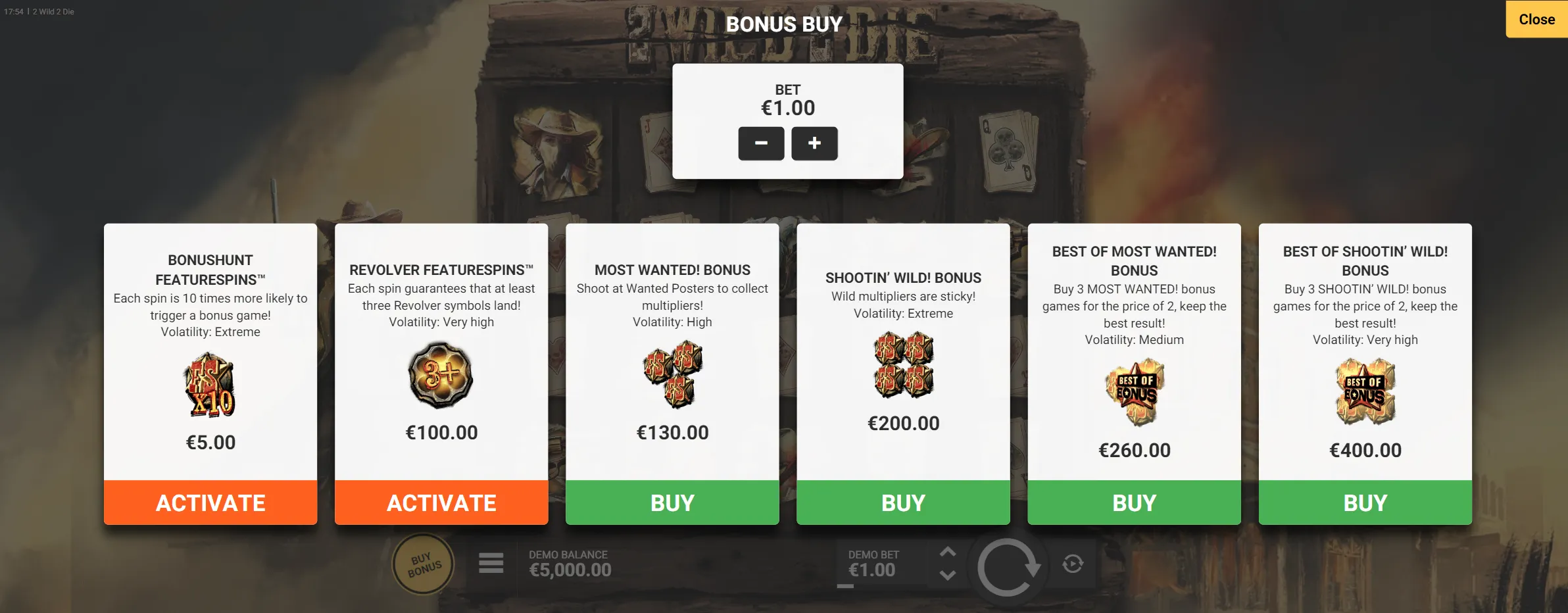
The direct buy costs 200x and returns 96.33%, level with Revolver FeatureSpins for the highest return on the menu: an average cost of 7.34x per buy, with the cap at 75 times the price and extreme volatility. That is a fair price.
In Most Wanted a Golden Revolver is worth more the later it lands
Most Wanted swaps addition for something steeper. Each bullet a Revolver fires hits one of six posters, which either add 2x to 500x to its running total or multiply that total by x2 to x20. On the reels, multipliers only add to each other before they touch a line pay. Here a x20 poster multiplies whatever a Revolver has already collected, so 500x added and then x20 applied is 10,000x on one Revolver, two thirds of the cap from two bullets. Reload symbols fire the locked Silver Revolvers on their reel again with one to six new bullets.
The Golden Revolver is the round's best idea. It fires after every Silver Revolver and Reload symbol, the reverse of the base-game order, and its total is added to every locked Silver value and every Reload value on the grid. Its total therefore counts once per locked value: a 100x Golden on a grid holding ten locked values adds 1,000x. Locked values stay until the round ends, and any Revolver or Reload symbol resets the lives to 3, so a round that keeps producing them keeps raising what the next Golden is worth. It mirrors Shootin' Wild: in both bonuses the late event, a retrigger there and a Golden here, is priced by what the round has already kept.
The buy costs 130x and returns 96.27%, a cost of 4.85x per buy on average, and the cap is about 115 times its price, the highest ratio of the four bonus buys. It is the cheaper bonus, and I rate it the better one.
Best Of buys sell a steadier round, not a better one
Each Best Of costs exactly twice its single buy, plays three full rounds and pays only the highest. Best Of Most Wanted returns 96.27%, the same as the single buy, so the best of three rounds pays on average exactly what two single rounds pay: 250.3x back on 260x. The two rounds thrown away are worth one round between them on average. Best Of Shootin' Wild does marginally worse, 96.30% against 96.33%. What changes is volatility, high to medium for Most Wanted and extreme to very high for Shootin' Wild, and the ceiling relative to the price is what pays for it. The cap does not move, so the best case falls to 57.7 times the price for Best Of Most Wanted and 37.5 times for Best Of Shootin' Wild. A volatility dial at almost no cost in return is fairly priced, but it is not a discount.
The base game is the part to skip
At the default setting no purchase returns less than a base spin: the base game sits at 96.25% and every purchase between 96.27% and 96.33%. BonusHunt FeatureSpins make the case most plainly: 5x the bet for a bonus 10 times as likely doubles the bonus rate per unit staked, at 96.29%. Revolver FeatureSpins cost 100x a spin for at least three Revolvers, return 96.33%, and top out at 150 times the price.
Casinos can also run the game at 94.15%, 92.14% or 88.25%. At 88.25% the expected loss is 11.75 points per 100 staked, a little over three times the 3.75 points at the default, and the rules screen shows the setting in use.
The game suits a player who buys features or runs BonusHunt and wants two differently shaped bonuses at almost the same return, each with a volatility dial. It does not suit someone who wants the reels to hold interest between features. A 15x top pay, 0.2x card wins and a 210x ceiling without multipliers across 14 lines make a waiting room, and that waiting room is the whole distance between this game and an 8.