The twelfth blocker is the game
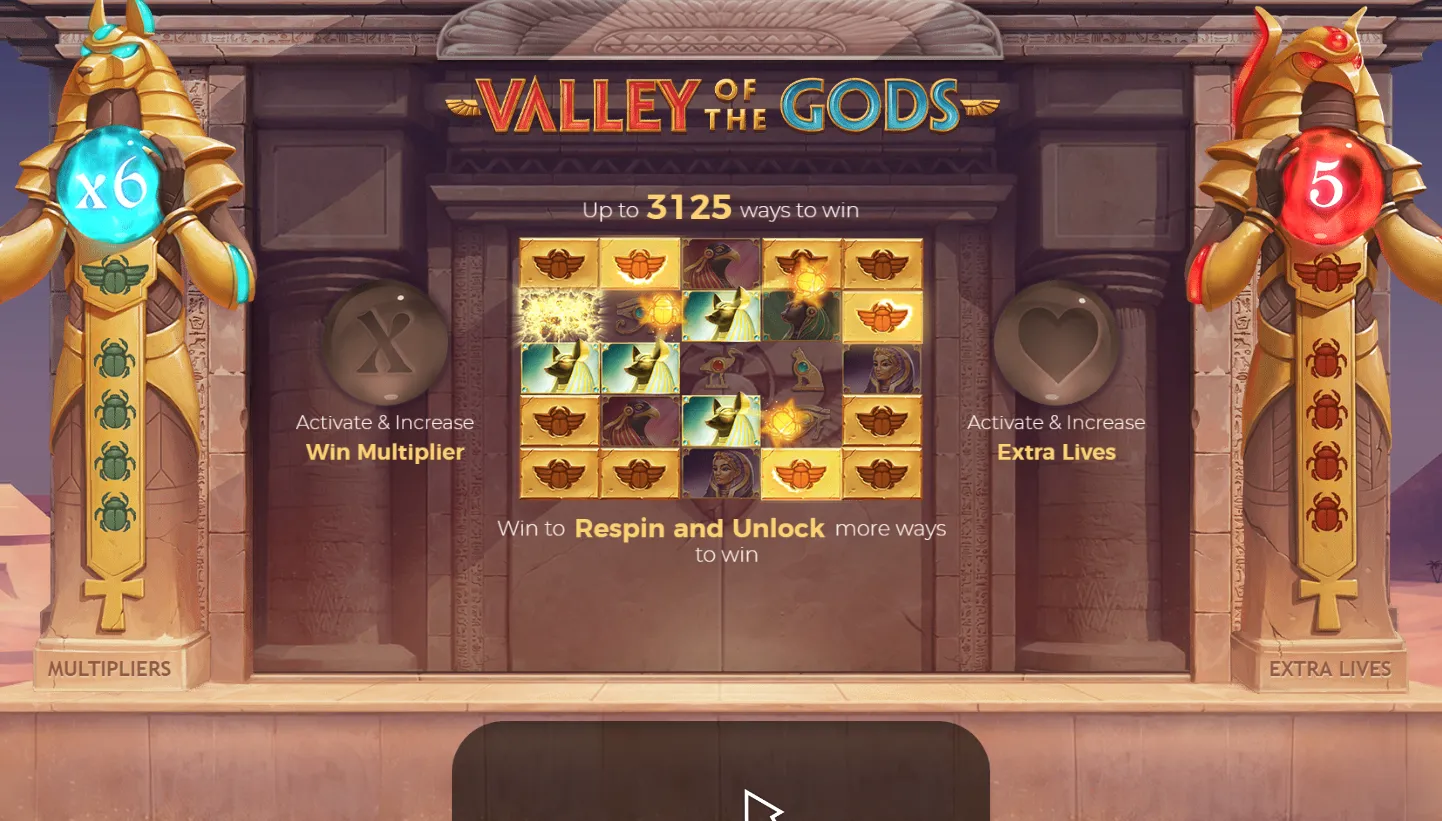
I read Valley Of The Gods as a gate with a game behind it. A paid spin is an attempt to break 12 scarab blockers before a respin misses. Everything worth having, from the 3,125-way grid to the ×2 multiplier and the first life, sits on the far side of that twelfth blocker, and nothing earned there survives into the next paid spin. I find the idea good and legible and the frame around it thin, and the arithmetic below is why I think it deserves exactly a 7.
I would not call the design a one-off. Carol of the Elves runs the same 5×5 engine with 12 ice blockers, a respin on every win and the same multiplier collection with extra lives, so I place this as one dressing of a Yggdrasil engine rather than a standalone invention. Valley Of The Gods 2 is the more revealing relative. It keeps the chain, the lives and the multiplier, then adds more blocked cells on variable reels, more ways and a Wild Reel collection. Read as a set of changes, the sequel names what the original lacks. There is no wild here, no scatter and no free-spins round, so the chain has no second source of help and the base grid has nothing to soften it.
A paid spin is one cell on reel 1 asking a question
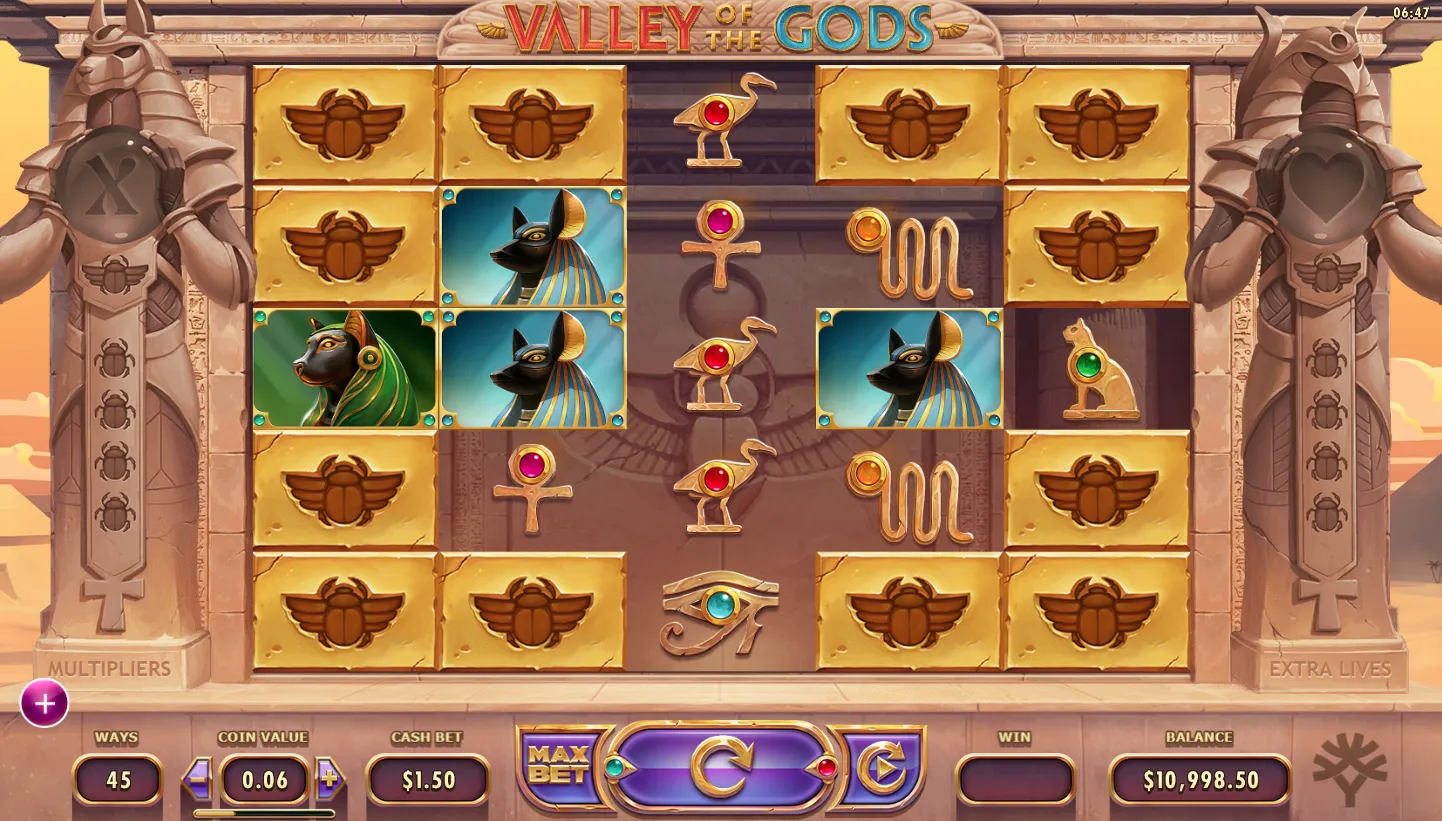
The opening layout is 1 × 3 × 5 × 3 × 1, which is where the 45 ways come from. Reels 1 and 5 show only their middle row, so every one of those ways runs through a single cell on reel 1. Only the symbol in that cell can pay on a paid spin, and if it does not also appear on reels 2 and 3, the spin pays nothing and no chain begins. I count that cell as the narrowest point in the game, and every paid spin passes through it.
The paytable on this grid is modest by design. A bare three-of-a-kind pays 0.24× for the lowest two hieroglyphs and 2× for the top two gods. Value comes from stacking, because extra copies on a reel multiply the way win. With one cell on reel 1, I get a three-of-a-kind stacking to 1 × 3 × 5 = 15 ways at most, which is 30× for a top god. Fill every open cell on reels 1 to 4 with that god and it pays 45 × 6 = 270×. Add the lone cell on reel 5 and the five-of-a-kind reaches 45 × 20 = 900×. That is the ceiling of a paid spin on its own, before any respin, and I make it under a sixth of the 5,800× maximum.
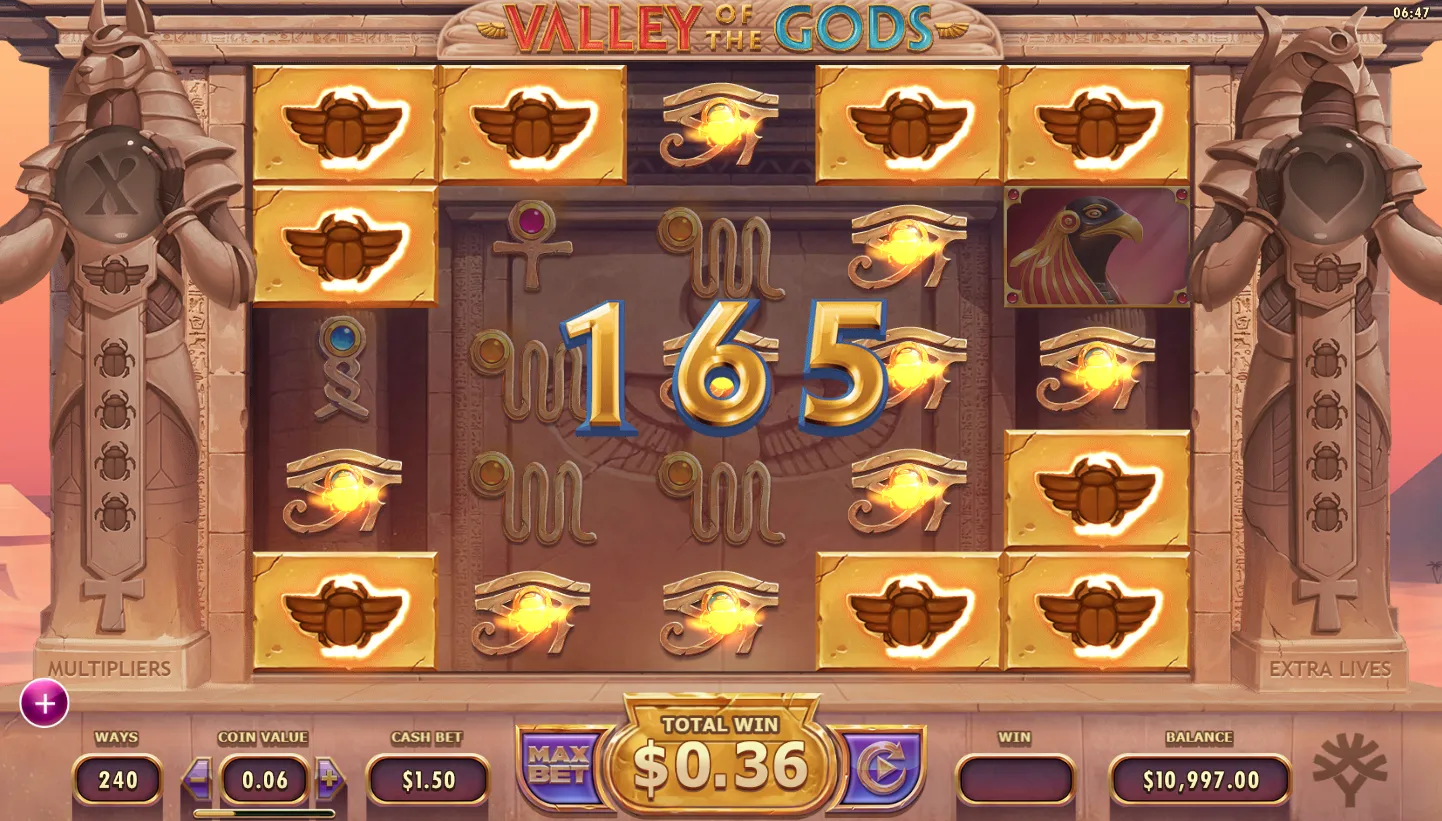
Stacking matters twice, and this is the detail I like most. One winning symbol breaks one blocker, so a bare three-of-a-kind removes 3 of the 12. Once reel 1 has opened, a two, three and two stack pays the three-of-a-kind value 12 times and removes 7. On the opening grid, a single symbol covering all 12 open cells on reels 1 to 4 would clear every blocker in one hit. The plainer route is four bare three-of-a-kinds in a row, and each of those respins has to win, because lives do not exist before the clear. A chain that has broken 11 blockers and then misses pays what it won and resets.
Once the grid opens, the cap binds before the paytable does
The clear swaps the constraint. On the opening grid the paytable is the limit; on the open grid it is the 5,800× cap. My arithmetic here is short: 5,800 ÷ 20 = 290, so 290 ways of a top-god five-of-a-kind at ×1 already equal the cap. At the starting ×2 that falls to 145 ways, under 5% of the 3,125 on offer, and at ×5 it is 58 ways. In capacity terms the open board outruns the cap many times over, so I read the cap, not the symbols, as what decides where the best chains stop. Where a jurisdiction caps the award on a single transaction, the chain and the spin that launched it count as one, and reaching that cap ends the feature immediately.
The multiplier rewards surviving, not the big hit
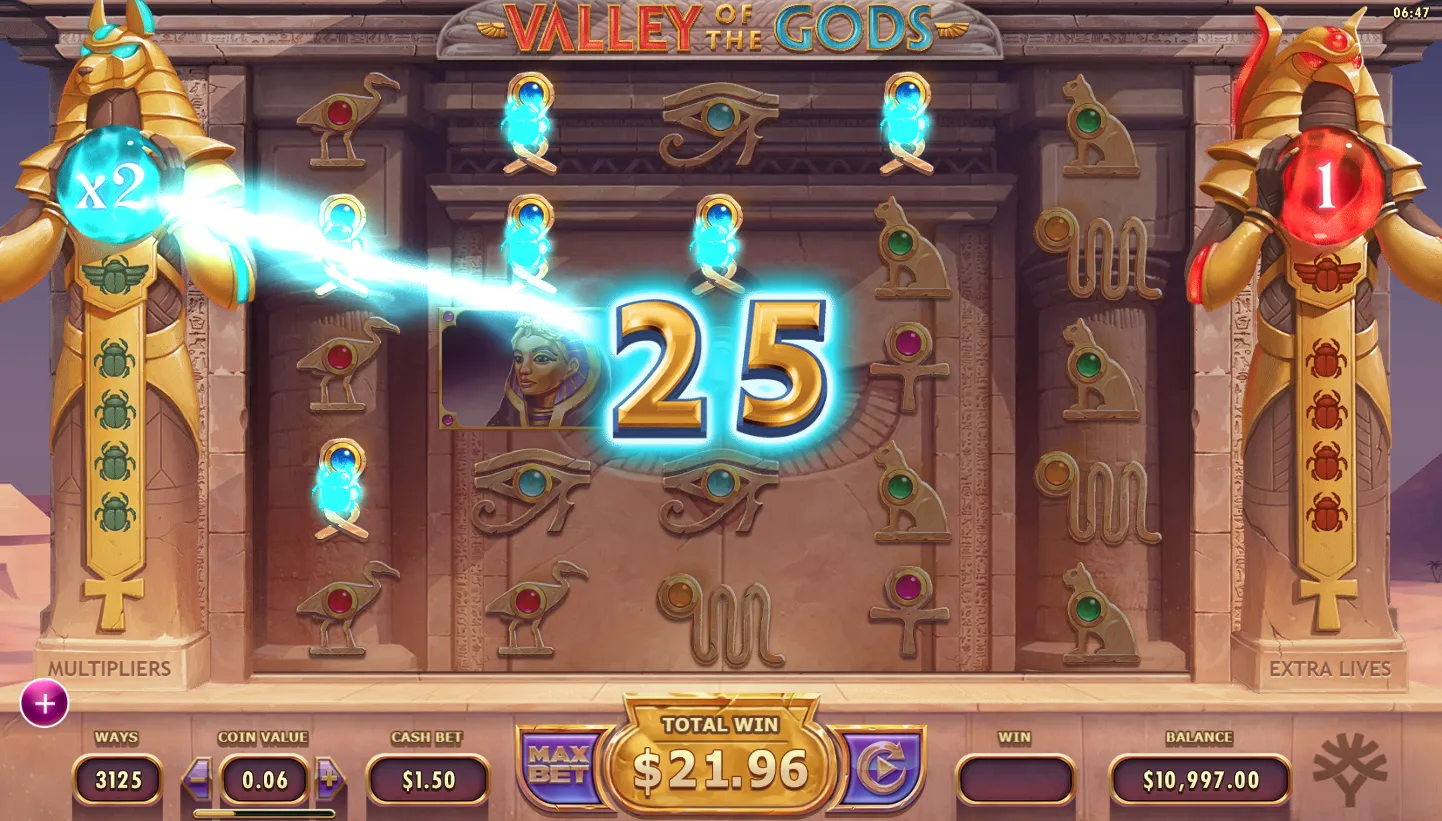
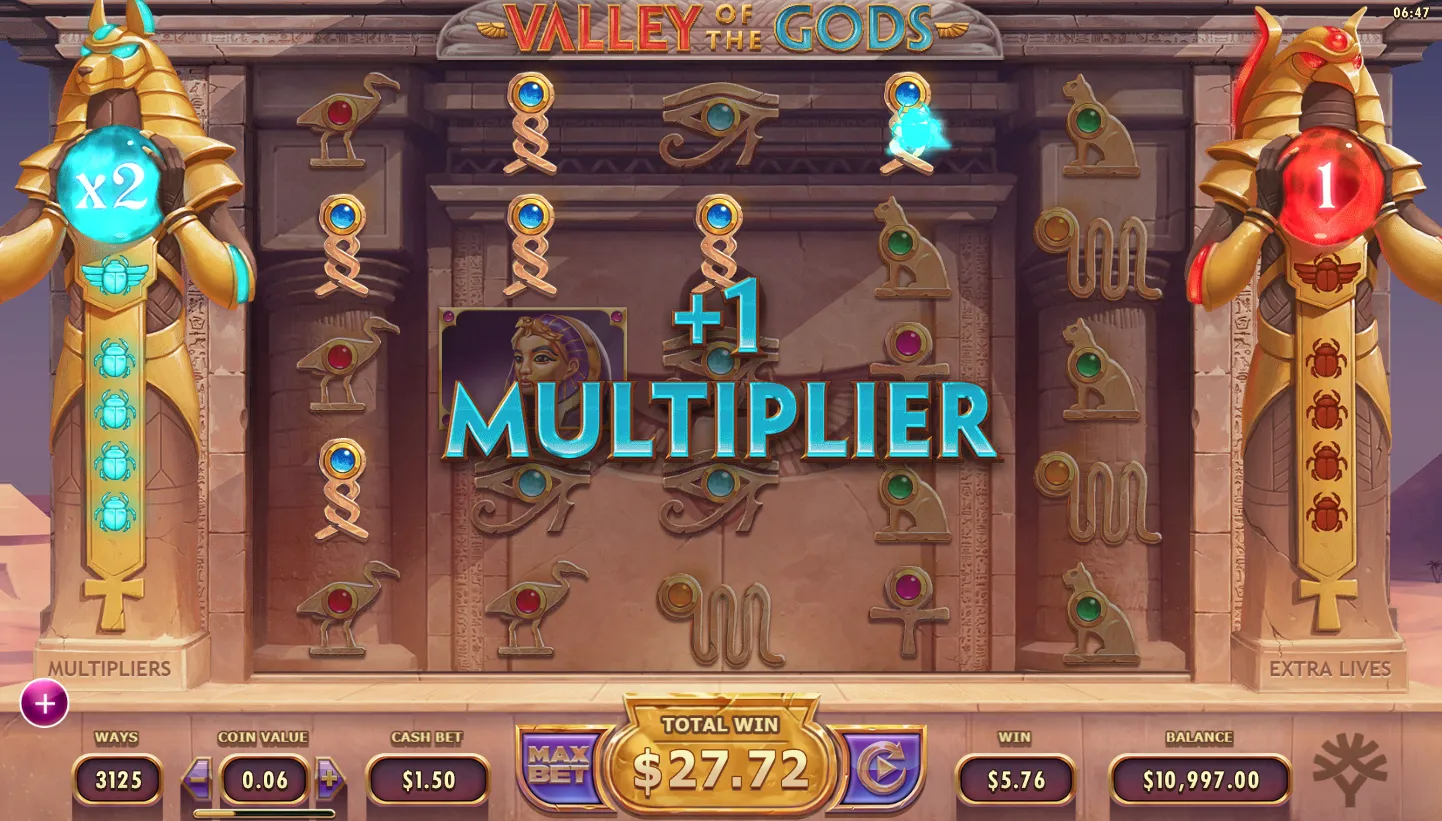
Every 5 blue scarabs add +1 to the multiplier, but a step earned on a respin is added after that respin pays and first counts on the next one. The large stacked hit that pushes the multiplier up is always paid at the old value, and its reward arrives only if the chain goes on. Climbing from ×2 to ×10 takes 8 steps, which I count as 40 blue scarabs.
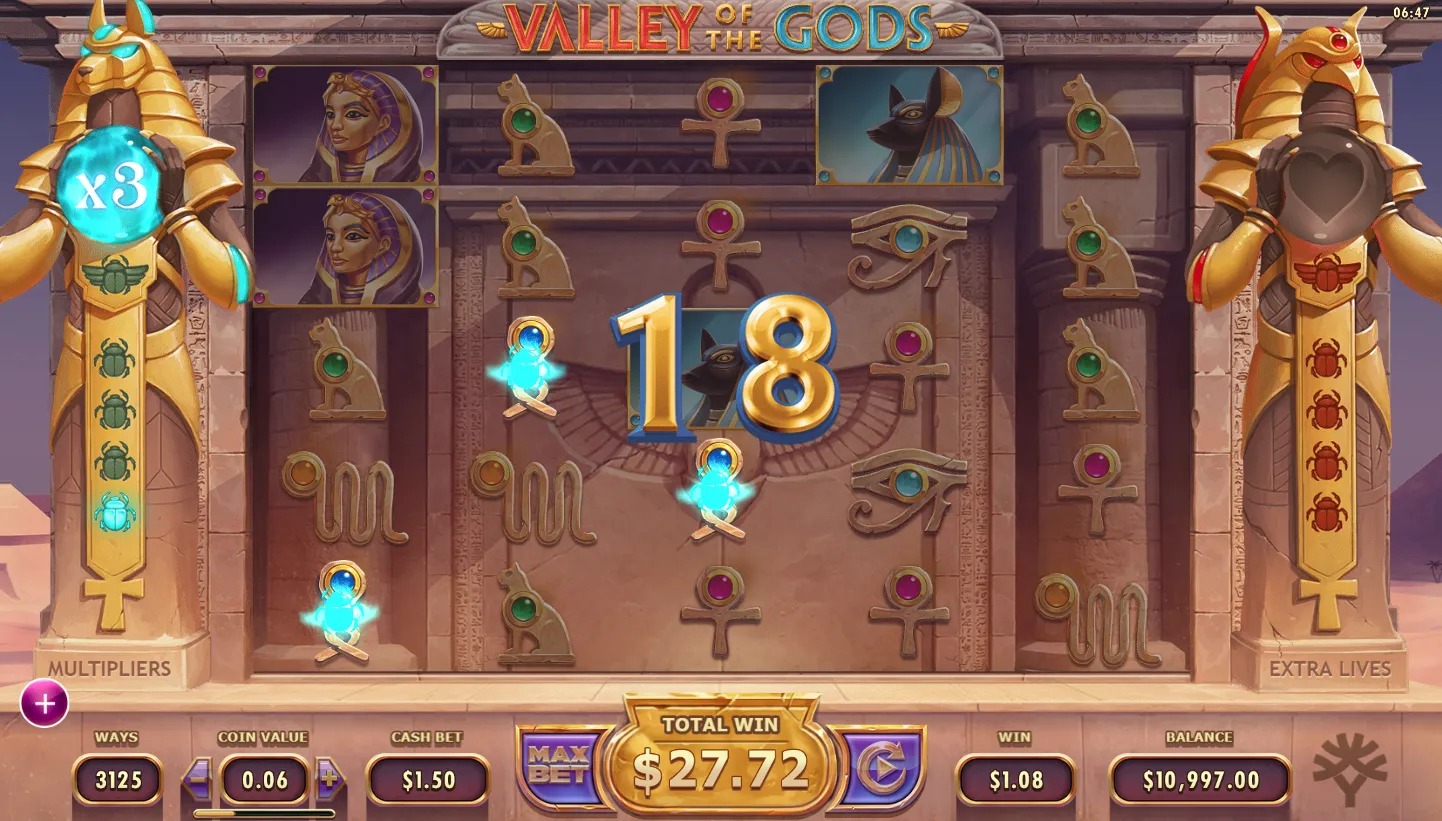
The two collections also compete for the same wins. After the clear, each winning symbol's scarab turns red or blue, feeding lives or the multiplier and never both. A hit whose scarabs go to lives adds nothing to the multiplier, and the reverse holds too. The clear hands over one life, each further life costs 5 red scarabs, and lives only replace losing respins, so they buy time and pay nothing on their own. I rate this as the right design for the tension the game wants: the multiplier is worth building only if the chain survives to use it, and survival is bought with the same scarabs. The flip side is blunt. A clear followed by two misses ends the chain with the multiplier still at ×2 and nothing kept.
Every paid spin starts from nothing
When a chain ends, all 12 blockers return, the multiplier goes and unspent lives disappear. A chain that built a high multiplier and a stock of lives leaves the next paid spin exactly where a dead spin would: 45 ways, one cell on reel 1 and no net. There is no feature buy, so I have nothing to price and there is no way to pay past the gate. The only route to the clear is paid spins on a fixed 25-coin bet between €0.10 and €100.
The 96.2% RTP and high volatility fit that shape as I read it. Bare three-of-a-kinds return between just under a quarter of the stake and twice it, and a paid spin alone tops out at 900×. The large wins sit in long chains, because only a long chain has broken enough blockers to widen the grid and, past the twelfth, to add a multiplier.
I see this suiting a reader who wants one mechanism and nothing else: every win buys a visible blocker, a step or a life, and where the chain stands is never hidden. It does not suit anyone who wants a bonus that keeps progress, a wild to rescue a thin grid or a buy that skips the base game. For the wild, the Wild Reel collection in the sequel is the direct answer. The chain here is a real strength, and I count the one-cell entrance, the missing net before the clear and the full reset as the thin frame around it. One strength held back by everything around it is what a 7 means, and it is what this game is.