The bonus menu is the base game's Wild ladder cut into six slices
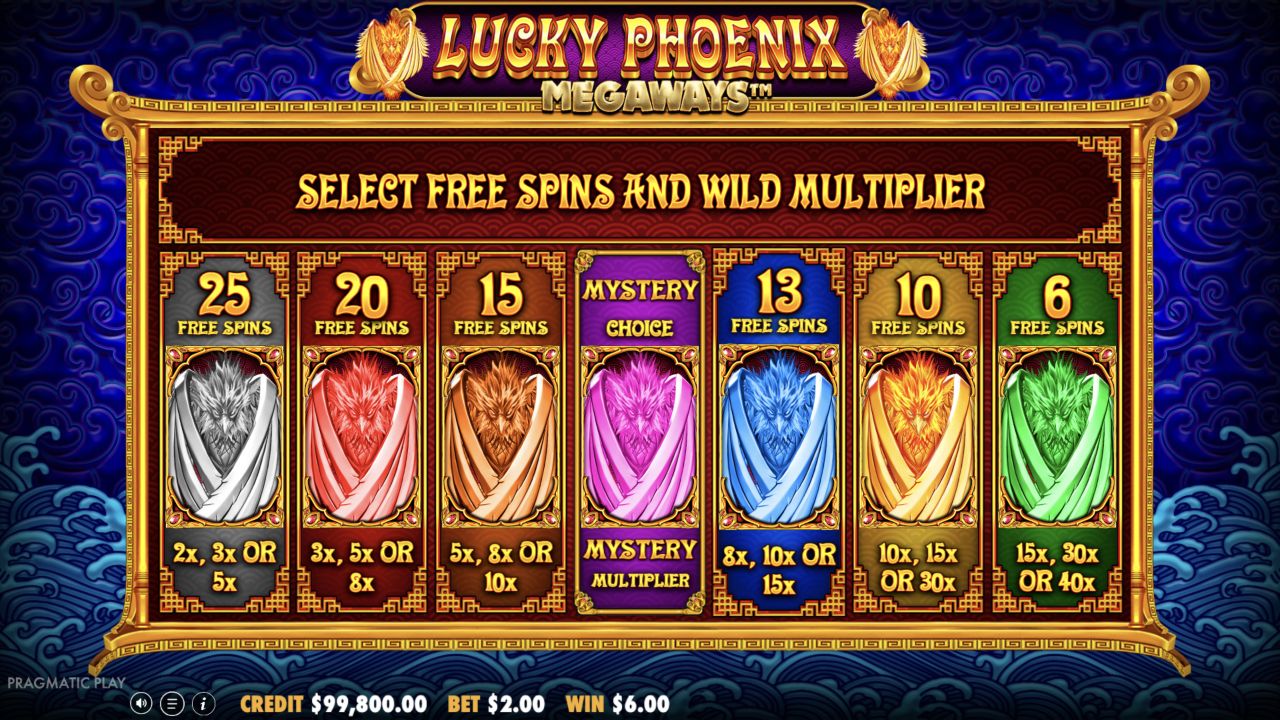
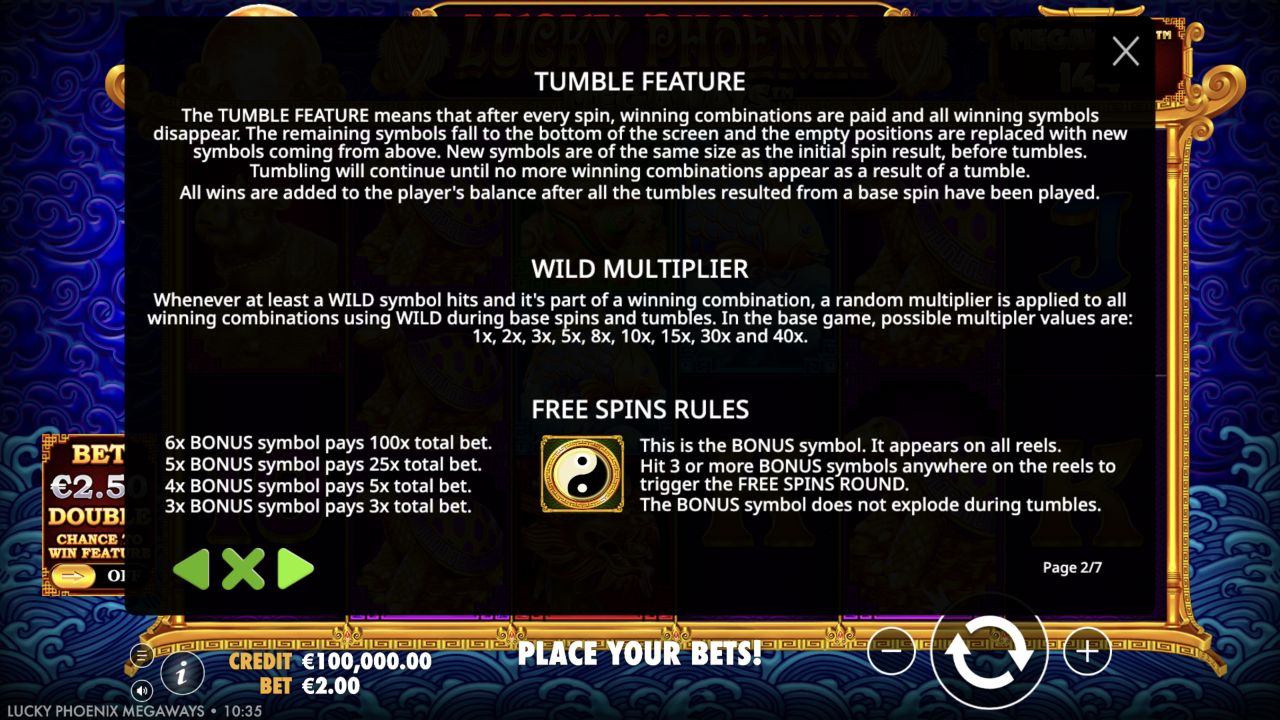
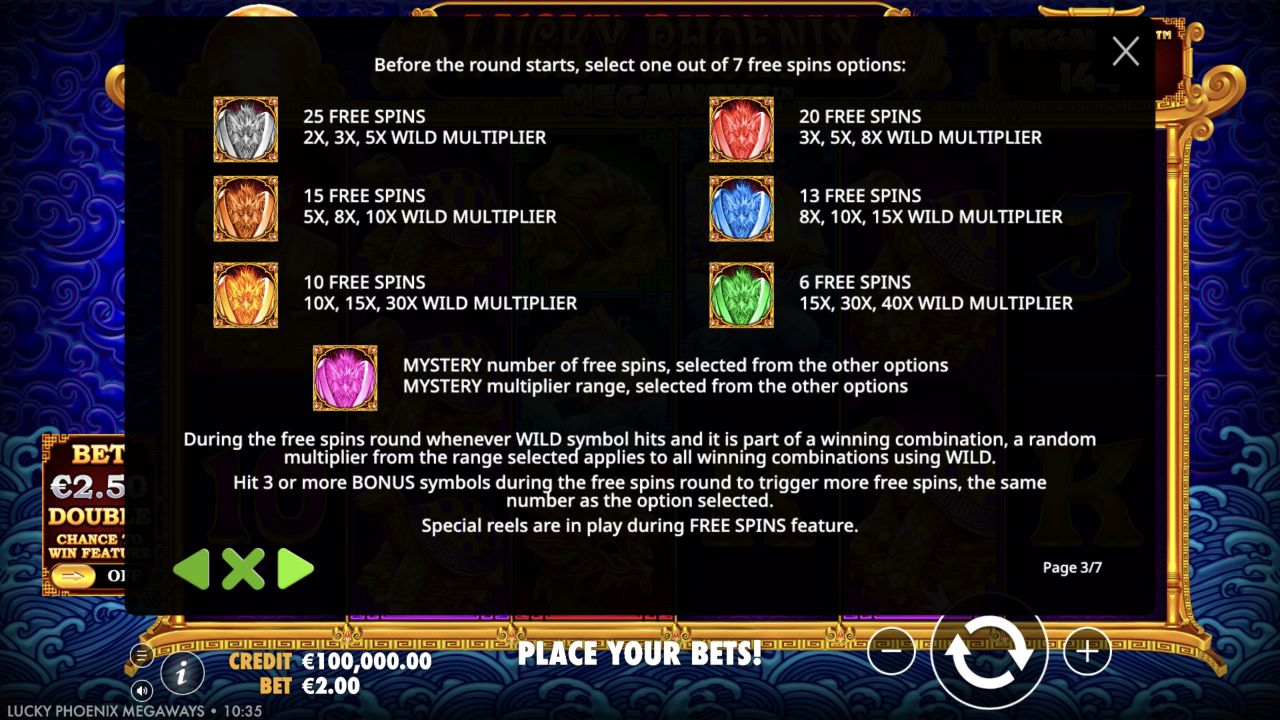
Lucky Phoenix Megaways presents six free-spin rounds, but I count one Wild ladder in the game, and the bonus menu slices it. The base-game Wild draws from nine values, 1× through 40×. Set the 1× aside and eight remain: 2×, 3×, 5×, 8×, 10×, 15×, 30× and 40×. The six fixed free-spin options are exactly the six runs of three neighbouring values on that list, from 2×/3×/5× with 25 spins to 15×/30×/40× with 6. Each option keeps its three values and discards the rest, so the long end gives up the top of the ladder and the short end gives up the bottom. My reading is that this is a real decision about where on the ladder a Wild draws, and that it runs under a 5,000× cap low enough that the steepest slices meet it quickly. That pairing, a genuine choice under a modest ceiling, is what holds a good idea to a competent score.
The ladder is also a familiar Pragmatic Play structure rather than a new one. 5 Lions Megaways is built on the same kind of free-spin risk selection, with tumbles and multiplier Wilds on a Megaways grid, and 5 Lions Megaways 2 expands the spin-versus-multiplier choice into a larger bonus structure. Lucky Phoenix is the compact form of that template: six fixed rungs, a Mystery option, retriggers that repeat the chosen count, and a phoenix and yin-yang skin over the top. Novelty is not the reason to look at it. How cleanly the arithmetic of the choice can be read is.
Going short buys ladder height faster than it cuts spins
On its face the trade is lopsided. From the long end to the short end, starting spins fall from 25 to 6, which leaves 24% of the count. Over the same move the lowest value a qualifying Wild can draw rises from 2× to 15×, seven and a half times higher, and the highest rises from 5× to 40×, eight times higher. Multiplying each option's spins by the middle value of its range gives a figure that climbs at every rung: 75, 100, 120, 130, 150 and 180.
That product is not an expected return, and I do not treat it as one. A Wild's multiplier is drawn only when the Wild takes part in a win, so fewer spins mean fewer chances for that to happen. Choosing 15×/30×/40× does not make 40× the usual draw. What the arithmetic does show is that the ladder is not a flat exchange rate. Whatever balances the short end against the long end sits in the draw odds, and a player picks among the six without knowing which returns most.
Retriggers widen the spin gap rather than closing it. Three or more Bonus symbols during free spins add the count the round started with, so one retrigger takes the long option from 25 to 50 spins in total and the short option from 6 to 12, and the difference grows from 19 spins to 38. The long option also has more spins in which that retrigger can land. Mystery Choice adds no new count and no new range: both come from the same six options. It stacks one draw on top of another, and I see no reason to prefer it over picking a rung deliberately.
Five Dragon ways through a 40× Wild fill the cap
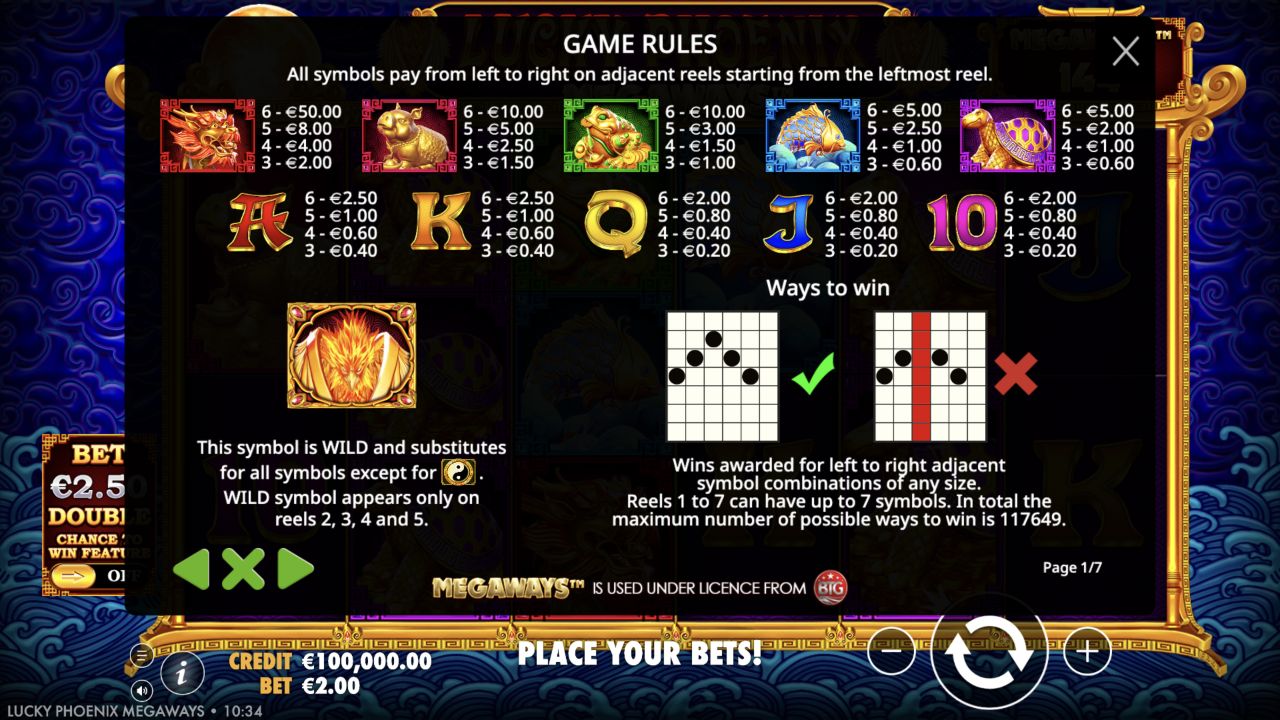
Without a Wild, the paytable is thin. Nine of the ten regular symbols pay 5× or less for six of a kind, and six of them pay the stake or less for five of a kind. Ten, Jack and Queen return a tenth of the stake for three. The Dragon stands apart at 25× for six, five times the next best symbol, and even that way is a two-hundredth of the 5,000× cap.
The Wild changes the scale, and the distance to the cap changes with the slice. A multiplier applies to every winning combination the Wild takes part in, so a six-Dragon way through one 40× Wild pays 1,000×, and five such ways reach 5,000×. Through a 15× Wild, the lowest draw on the six-spin option, that way pays 375×: thirteen of them make 4,875×, and a fourteenth reaches the cap and ends the round there instead of paying 5,250×. At the long end a 5× Wild pays 125× on the same way, and it takes 40 of them to get to the ceiling. Five ways is a small count on a grid whose ways run to 117,649.
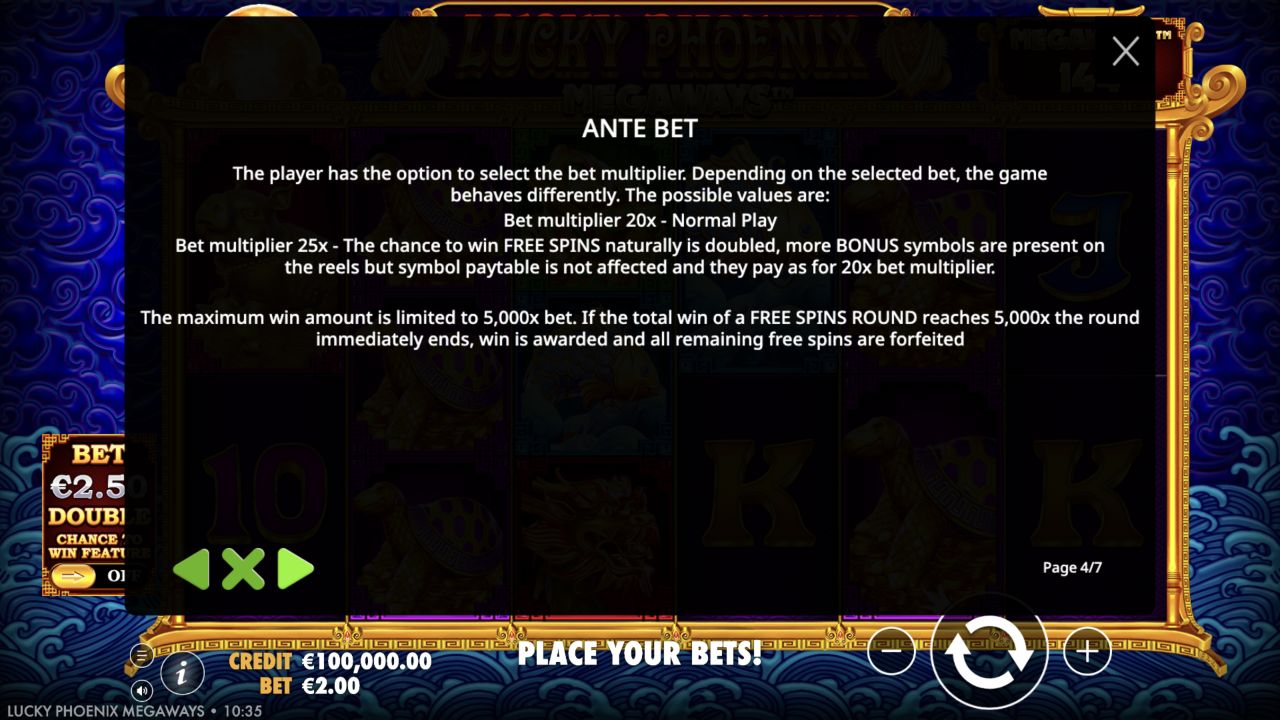
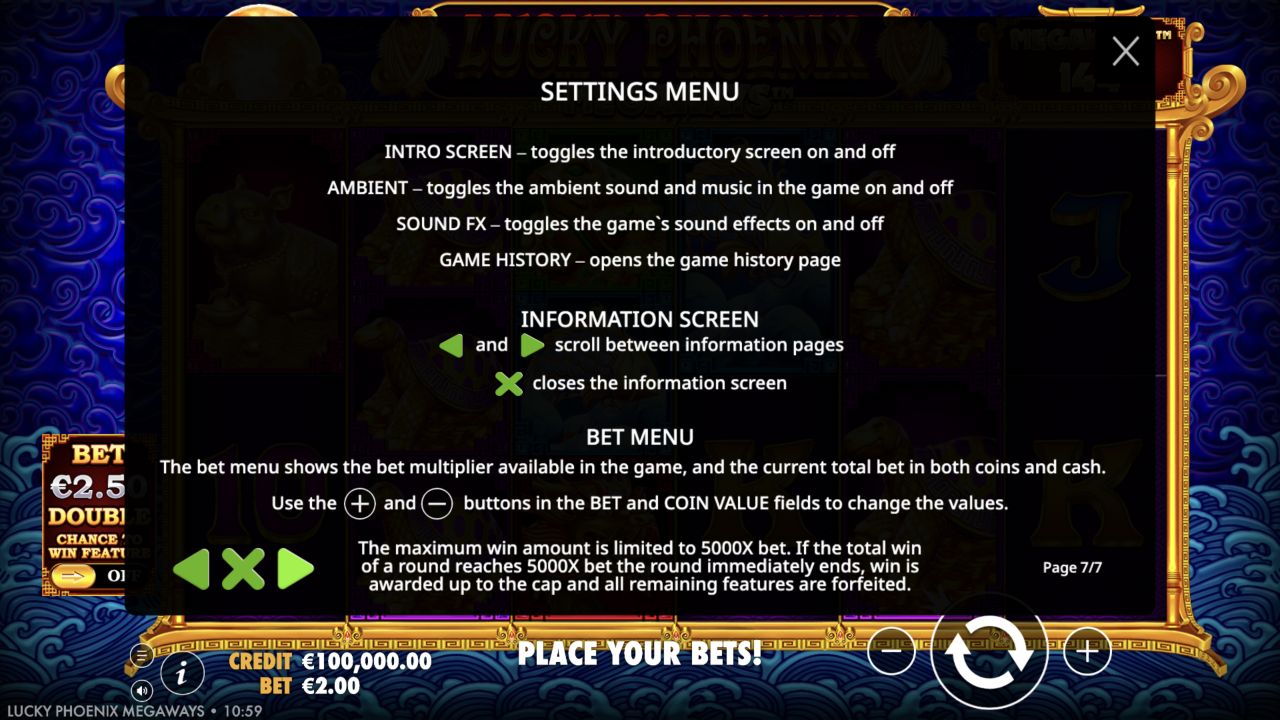
This is why 5,000× is modest for this particular game. The high values that make the short slices worth choosing are the values the cap trims first. Once the total reaches 5,000×, the game pays it, ends the round immediately and forfeits any free spins left, so a six-spin round and a 25-spin round share one maximum. A round near the top of the ladder needs far fewer big ways to reach that maximum, and a round at either end stops there. The limit binds in the base game as well, where a Wild also draws up to 40× and the same five six-Dragon ways reach it.
Ante Bet is fairly priced and the 100× buy is not
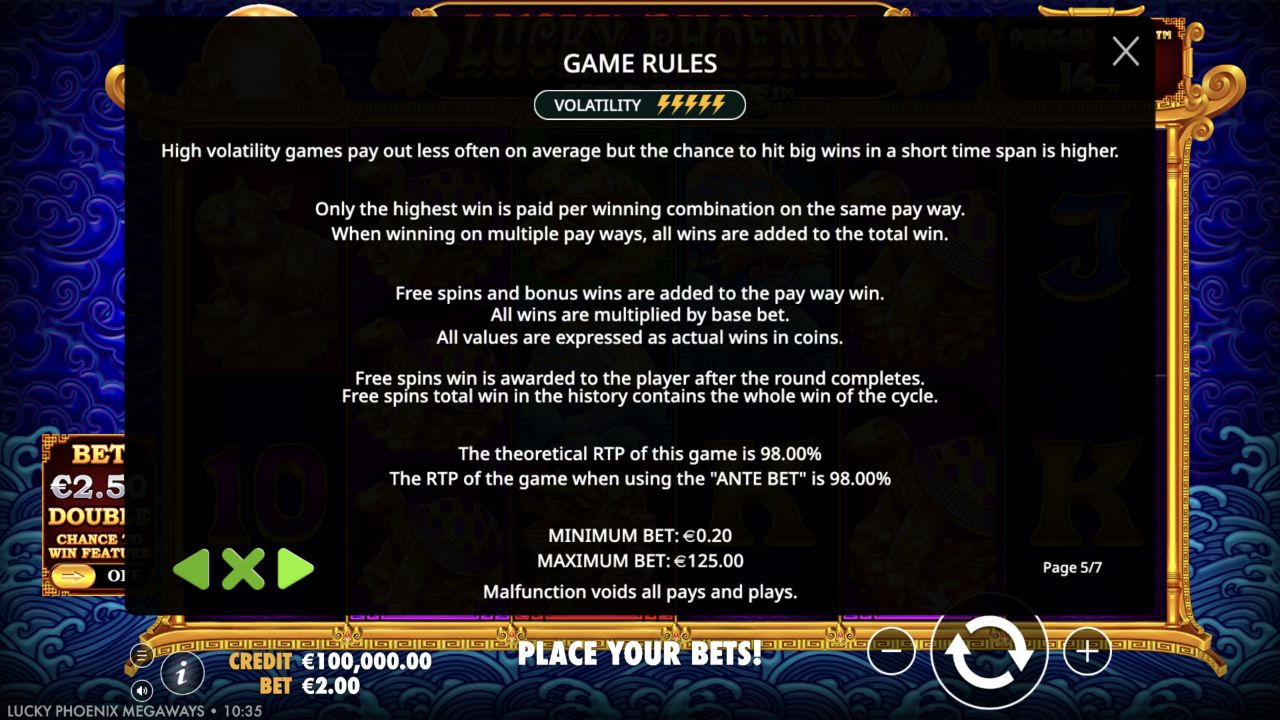
Where a casino runs the 98% setting, the return is unusually generous, and the figure holds for normal play and with Ante Bet on. Ante costs 1.25 times the stake and doubles the chance of a natural free-spin trigger, so the trigger chance per unit staked rises 1.6 times and the expected spend per natural feature falls to 62.5% of the plain-spin figure, at the same 98%. A catch worth knowing: Bonus-symbol pays stay on the normal bet, so six Bonus symbols pay 100× of the normal stake, which is 80× of what an Ante spin costs, and three pay 3×, or 2.4× of it. I would take Ante long before the buy.
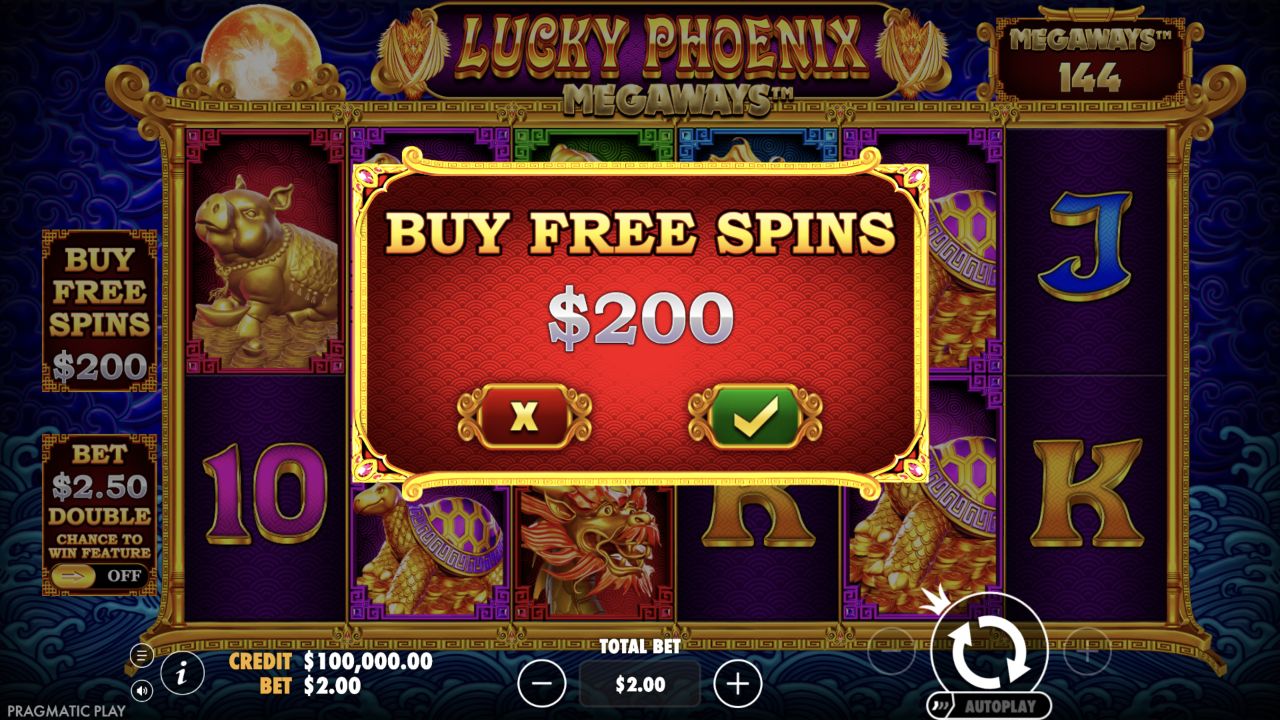
Buy Free Spins costs 100× and opens the same seven-option screen as a natural feature. Its best case is the cap, and 5,000× against a 100× price is 50 times the cost. What the purchase can do below that depends on the rung chosen after paying. On the six-spin option, one six-Dragon way through a 40× Wild returns ten times the price. On the 25-spin option, the same way through its top 5× Wild returns 125×, a quarter more than the price, and through a 2× Wild it returns half the price. A purchase whose ceiling is fifty times its cost, on a high-volatility game, is poor value beside an Ante Bet that doubles the trigger chance for a quarter more per spin. The 98% I credit above belongs to normal play and Ante, and I do not extend it to the purchase, which is also absent from some builds depending on operator and jurisdiction.
The decision earns the game its place, and the ceiling holds it back
The choice is real, and it is the part of the game I rate. A long round of small multipliers and a short round where each qualifying Wild draws at least 15× are different propositions on one screen, and retriggers scale to keep each one true to its size. On the 98% setting, that choice sits on an unusually generous return.
It suits a player who wants to set the shape of a bonus and is content with a 5,000× ceiling. It does not suit anyone who values the ceiling over the decision: without a Wild the best way pays 25×, and with a 40× Wild five Dragon ways reach the cap. A player who knows 5 Lions Megaways will recognise this structure, and 5 Lions Megaways 2 is where the same choice grows into a larger bonus. Lucky Phoenix is a clean, well-returning version of a familiar idea, with a cap that stops its best idea short.