The Wheel rewrites the reveal before it happens
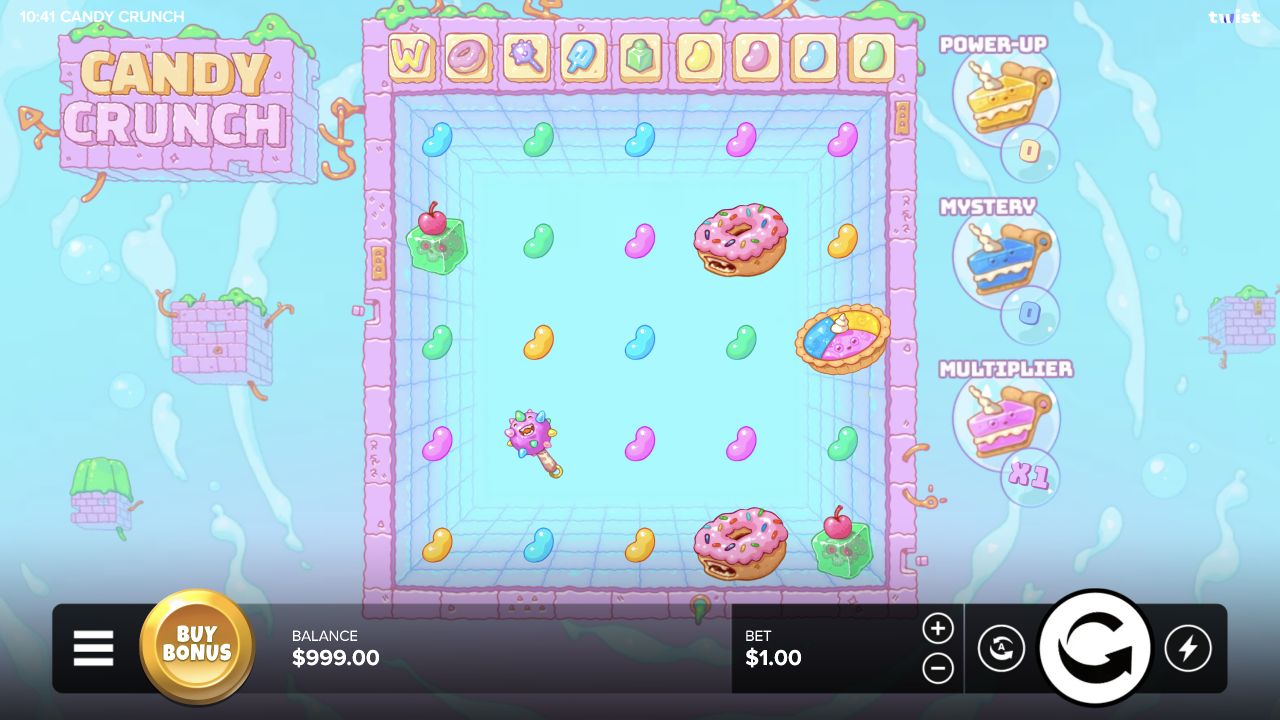
Mystery symbols are a familiar payline device: they land, they become one symbol, the lines pay. Candy Crunch keeps the device and changes the order. When a Wheel symbol lands on a spin where three or more Mysteries already form a winning line, the Wheel resolves first, and it can add Mysteries, strip the weakest symbols from the transform pool or double a global multiplier before any Mystery turns into anything. I count that reordering as a real idea and the reason to look at this game at all. I read the maths as saying three things: the 33-line paytable is too thin to matter by itself, no board gets near the cap without the Wheel's multiplier, and the flaw is the room the game gives what the Wheel builds. A Free Spins award keeps a strong Wheel state for five to ten boards, and no retrigger adds another. A good engine in a short round is what a 7.2 looks like to me.
Without the Wheel, the best regular line is worth ten bets
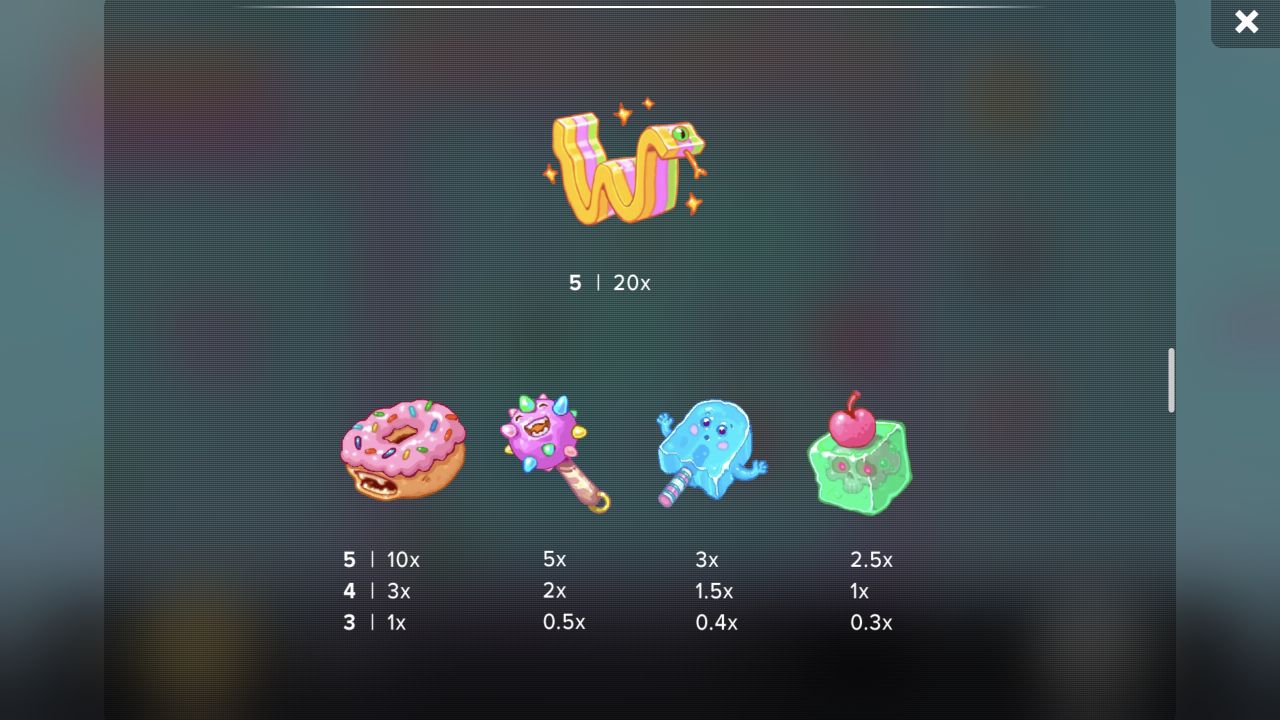
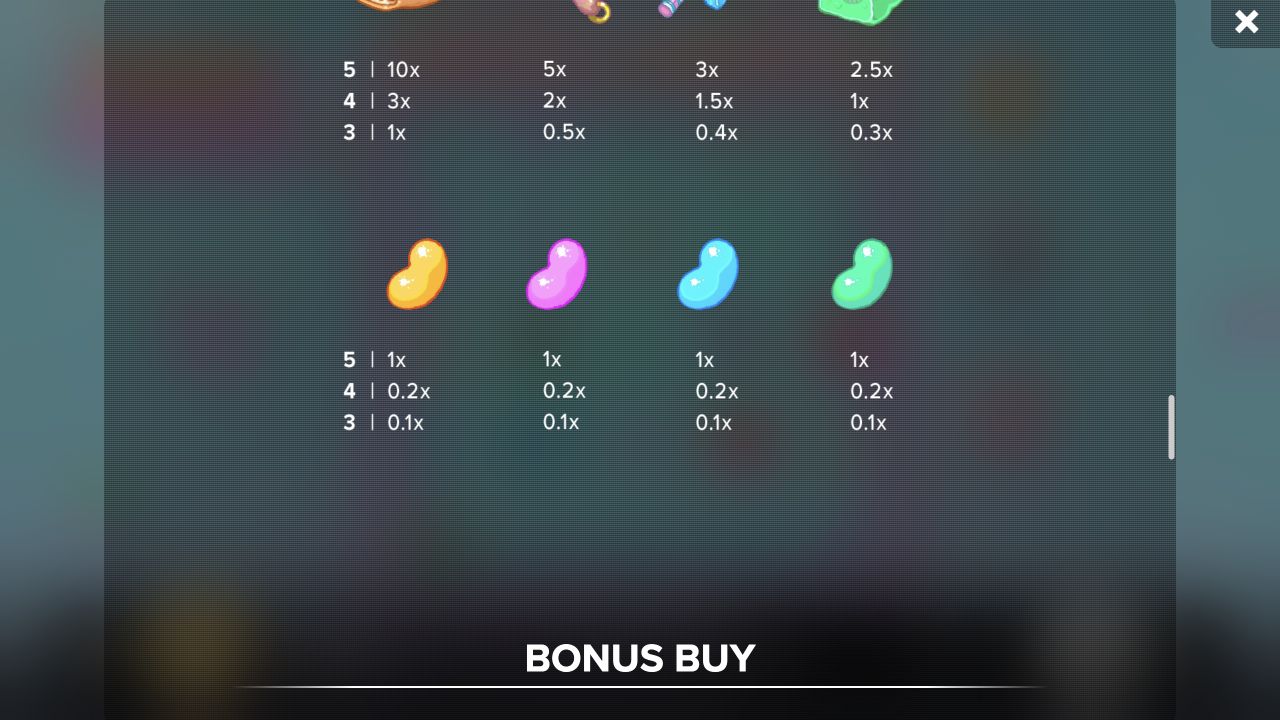
The four jellies pay identically, 0.1× for three, 0.2× for four and 1× for five, so I count half the regular symbols returning at most the stake for a full line. Filled Doughnut, the best regular symbol, pays 10× for five. The Wild pays 20×, and only for five in a line; it has no three- or four-symbol award of its own. Mysteries transform on any spin that ends with them on the board, but a base spin without the Wheel has removed nothing from the pool, so the shared symbol can still be a jelly.
I can work the ceiling out in a few lines. Twenty-five Mysteries turned Wild put five Wilds on all 33 lines, and 33 × 20 = 660× the bet. No board pays more before the multiplier, and 660× is 6.6% of the 10,000× cap. The same full board pays 330× as Doughnuts and 33× as jellies. No single board reaches the cap without a Multiplier result, and neither do ten full Wild boards, the largest Free Spins award, which come to 6,600×. A single board needs at least four Multiplier results: 660× at 16× is 10,560×, which stops at 10,000×.
Before the Wheel appears in the base game, two things have to coincide: the Wheel symbol and a winning line of three or more Mysteries on the same spin. Outside that coincidence a spin is a 33-line slot with a 10× top regular line, and I rate that part of the game as filler.
Every Wheel result shortens the Wheel
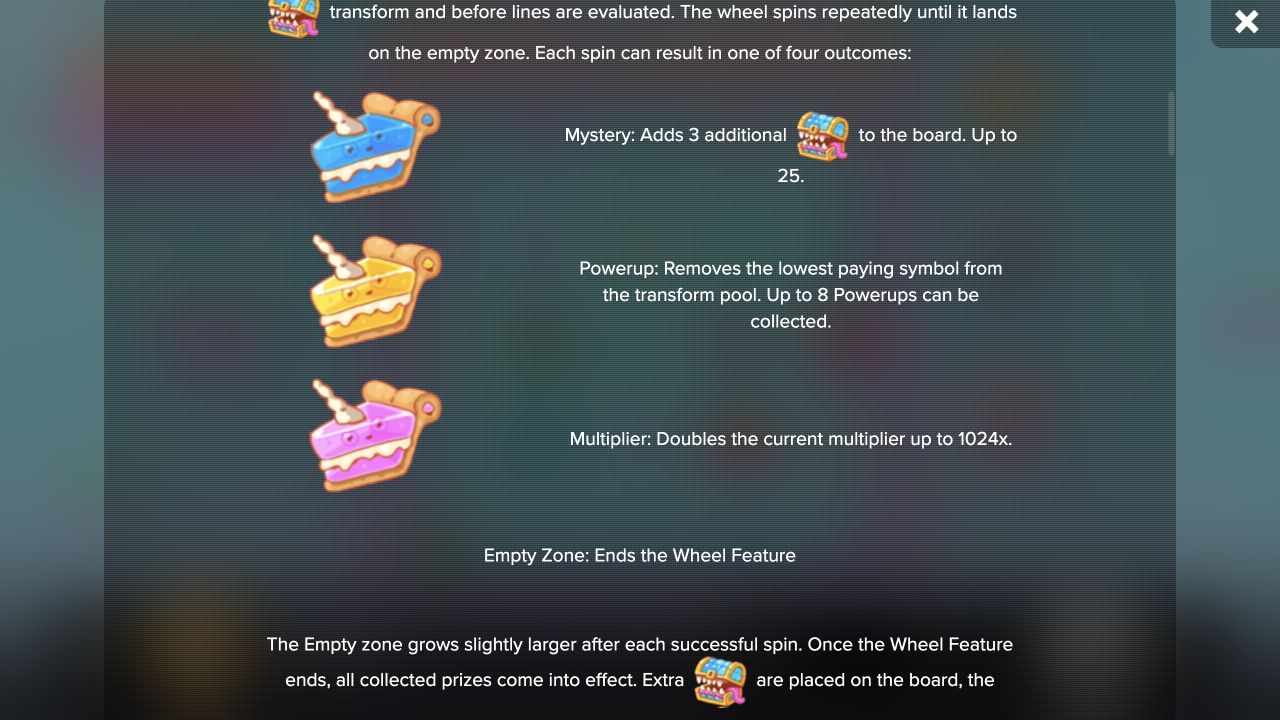
The Wheel spins until it stops on the Empty Zone, and each non-empty result widens that zone. I do not treat Mystery, Powerup and Multiplier as three separate prizes for that reason. They draw on one shrinking budget, and a result spent on one track is a result the other two do not get.
They are not equal claims on it. Powerup removes the lowest symbol left in the pool, and the four equal jellies go first, so the first three Powerups leave the worst transformation exactly where it was. The fourth lifts the floor to Cherry Cake Cube, and the next four step through Blue Frozen Treat, Candy Lollipop, Filled Doughnut and finally Wild alone. The Wild sits in the pool from the start, so Powerups raise the floor of a transformation and not its ceiling. Multiplier raises both.
I worked the trade through on a full 25-Mystery board, where the worst transformation sets the pay the board is sure of, not counting the Mystery results needed to fill it:
| Powerups | Worst full-board pay | Multiplier that guarantees the cap | Wheel results spent |
|---|
| 0 | 33× | 512× | 9 |
| 4 | 82.5× | 128× | 11 |
| 5 | 99× | 128× | 12 |
| 6 | 165× | 64× | 12 |
| 7 | 330× | 32× | 12 |
| 8 | 660× | 16× | 12 |
Nine straight Multipliers is the shortest guaranteed route, and no Powerup count beats it. I read Powerup as insurance against a jelly and Multiplier as the track that scales. Both sit on top of the Mystery track, which is costly in its own right: from exactly three Mysteries, filling the board takes eight Mystery results, because each adds three and the board stops at 25.
The top of the ladder is where the cap bites. At 512×, a 20× board is already 10,240× and capped, and the break-even is 10,000 ÷ 512, about 19.5×. The final doubling to 1,024× changes the result only for boards below that line. A single five-Doughnut line at 1,024× is 10,240× and capped too. The last rung exists for small boards, and it takes ten Multiplier results to reach it.
Ten spins is too little room for what the round builds
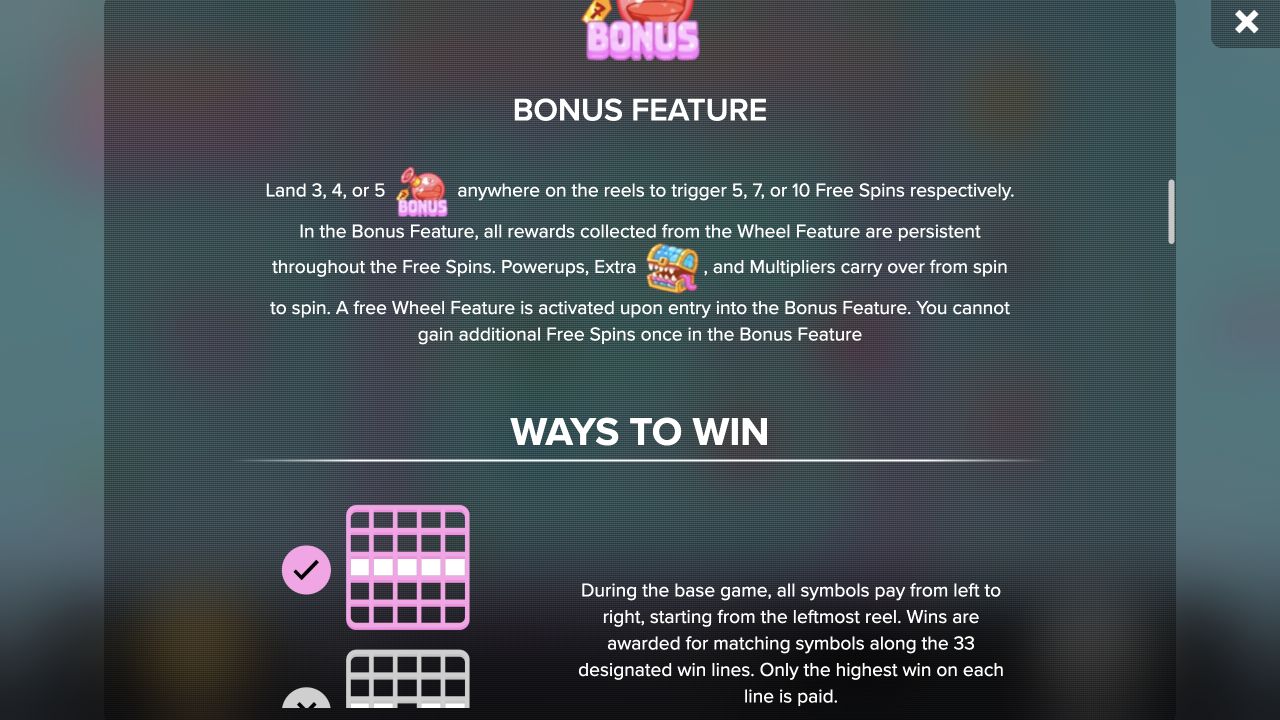
Free Spins are where I think the design makes sense. The round opens with a free Wheel, and its Powerups, extra Mysteries and multiplier stay for every spin that follows, so one good opening pays on every board instead of one. A Wheel inside the round adds to the same state. That is the right structure for a pipeline whose value is set before the lines are scored.
The count undoes it. Three, four or five Bonus symbols award five, seven or ten spins, and the round never retriggers. The same opening state pays on twice as many boards from a five-symbol award as from a three-symbol one, so the Bonus count decides how many boards the Wheel's work gets, and nothing inside the round adds a spin. Take a state with the pool stripped to Wild and a 16× multiplier: every five-Wild line on every board is worth 320×, and a round from three Bonus symbols still ends after five boards. I call that the thin frame in one sentence, and it is the main reason I hold the score in the 7s rather than the 8s.
The buy menu sells shape, not return
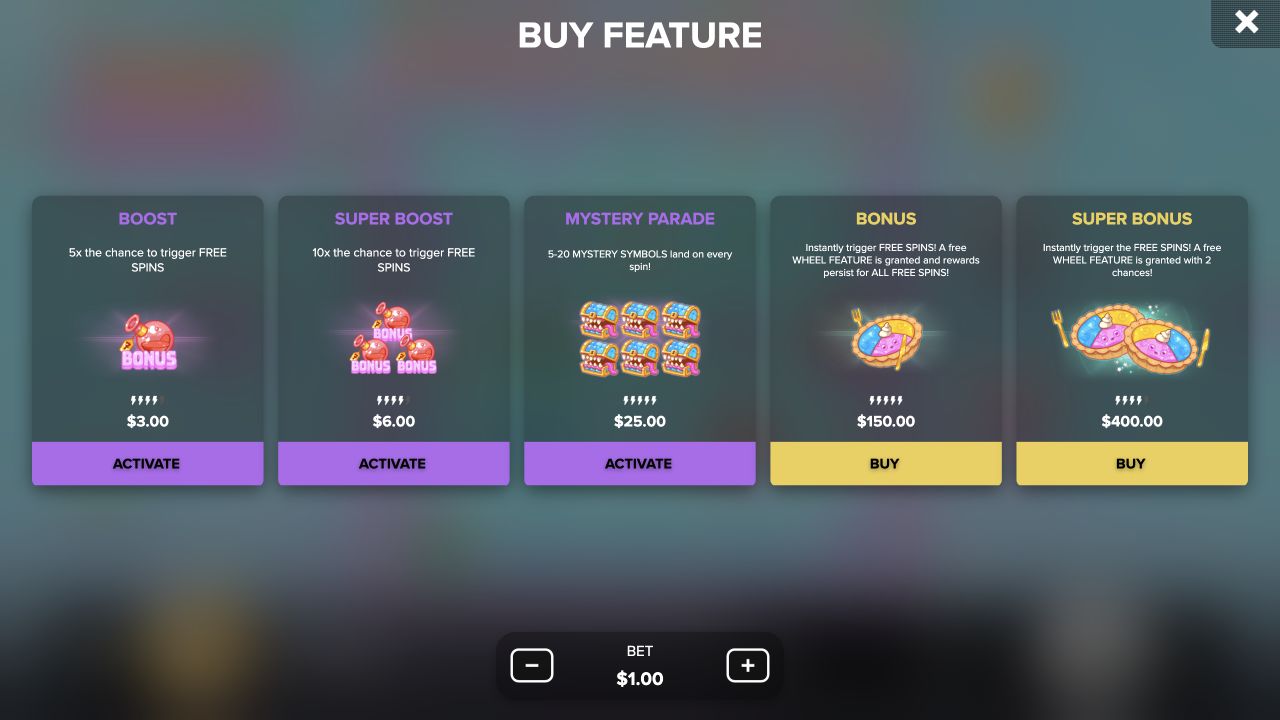
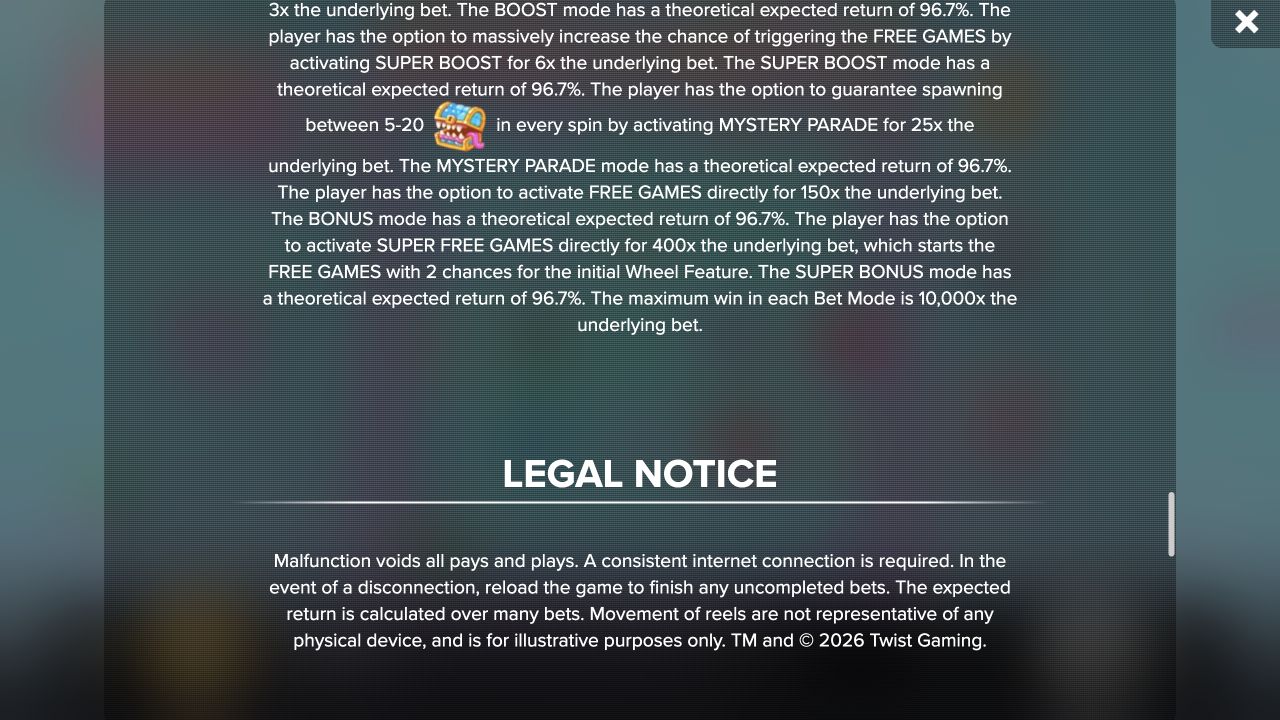
Every paid mode returns more than the 96.647% base, and I find none that returns meaningfully more. The best, 96.698%, is 0.051 points higher, which on a 400× Super Bonus is worth about 0.2 of a bet. What the five routes change is what they put in front of the Wheel.
I read Boost and Super Boost as one offer at two speeds. Boost costs 3× and makes Free Spins five times as likely; Super Boost costs 6× for ten times. Per unit staked, both give about 1.67 times the trigger chance of a normal spin, so the choice is how fast the stake goes, not how efficiently.
Mystery Parade at 25× guarantees five to 20 Mysteries, which is a count and not a win. A single five-Doughnut line returns 0.4 of the spin's price, and the Wheel is not part of the guarantee, so the price buys coverage and leaves the shared symbol and the Wheel to chance. Its best case is bounded at 400 times its price.
The Bonus at 150× puts the cap at 66.7 times its price, and its 96.697% return sets the long-run average round near 145×. The Super Bonus at 400× adds a second chance at the opening Wheel. Its 96.698% puts the long-run average round near 386.8×, the worth of 2.67 Bonus rounds, while the cap falls to 25 times the price. The second chance buys a stronger average start and a flatter ceiling. For a shot at the 10,000× I take the Bonus as the better-shaped purchase. The Super Bonus is for someone who values the opening state over the upside, and at about 13.2 bets of long-run cost per entry against the Bonus's 5, it is the dearest single ticket into the round.
The engine earns the score and the frame limits it
I give the 7.2 to one idea done properly: the Wheel acts on the transformation before the lines see it, and Free Spins keep what it builds. What holds the number down is everything around that idea. The paytable cannot reach 7% of the cap on a board, the base game offers the Wheel only on spins that already hold a Mystery line, the cap turns the top rung of the ladder into help for small boards, and the Free Spins award tops out at ten spins. I see this as a game for someone who reads a slot as a build and treats line pays as background. Anyone who wants the base game to carry weight, or a bonus round long enough to spend a strong start, is better served by a different design.